

Benefits of High Contrast Swim Gear: Safety Guide
Table of Contents
- Why High Contrast Swim Gear Matters for Water Safety
- Understanding Swim Safety Colors and Visibility
- The Science Behind Underwater Visibility
- High-Visibility Swimwear for Different Age Groups
- Open Water Swimming Safety Gear for Lakes and Oceans
- Swimwear Visibility Research and Practical Benefits
- Key Benefits of High Contrast Swim Gear for Families
- Choosing the Right High Contrast Swimwear
Benefits of High Contrast Swim Gear: Safety Guide
Last Updated: July 17, 2026
Understanding the benefits of high contrast swim gear is essential for water safety. Bright & Bold Swimwear has spent years researching how visibility in water directly impacts drowning prevention, particularly for children. High-contrast swimwear, featuring neon, fluorescent, and bold color combinations, makes swimmers dramatically easier to spot in pools, lakes, and oceans. This guide explores the science behind underwater visibility, the specific advantages of high-contrast patterns, and how to choose the right gear for your family's water activities.
When a child disappears underwater, response time matters enormously. High-contrast swim gear reduces that critical gap between a swimmer entering the water and a parent or lifeguard spotting them.
Why High Contrast Swim Gear Matters for Water Safety
Water safety begins with visibility. The human eye processes color and contrast differently underwater than in air. Murky water, shadows, and water surface movement create visual noise that makes spotting a swimmer harder than most parents realize. High-contrast colors cut through that noise. Neon yellow, bright orange, hot pink, and electric lime stand out against blue water and natural environments in ways that pastels, whites, and dark colors cannot.
Lifeguards and parents rely on color recognition and movement detection. When a child wears high-contrast swim gear, both mechanisms work in their favor. The bright color catches attention even in peripheral vision, and the contrast makes the child stand out as distinct from the environment.
This matters across all water environments. In crowded public pools, high-contrast gear helps parents keep eyes on their child. In open water where visibility is compromised by depth and natural coloration, bright colors become essential. Even in backyard pools, high-contrast swimwear provides an extra layer of assurance.
Understanding Swim Safety Colors and Visibility
Not all colors perform equally in water. The science of underwater visibility involves how light behaves in water and how the human eye perceives color at different depths.
Best Colors for Pool Visibility
Neon yellow consistently ranks as the most visible color in water. Yellow wavelengths penetrate water effectively and contrast sharply against blue pools and natural water bodies. Bright orange, hot pink, and electric lime follow closely. These colors work because they sit on the warmer end of the visible spectrum and maintain vibrancy even when viewed through water.
Patterns amplify this effect. A neon yellow swimsuit with white stripes creates multiple visual cues. When a child moves through water, the striped pattern creates a flickering effect that draws attention faster than a solid color alone.
Colors to Avoid in Water
Dark colors, navy, black, brown, and deep purple, disappear in water surprisingly quickly. Pastels and pale colors also perform poorly, blending into the water surface and sky. Red swimwear deserves special mention: while red appears bright in air, it becomes dark and muddy-looking in water because red wavelengths are absorbed quickly.
The Science Behind Underwater Visibility
Understanding why certain colors work requires understanding how light behaves in water.
Light Absorption and Color Wavelengths
Water absorbs different wavelengths at different rates. Red light is absorbed first, within the first few feet of depth. Orange follows, then yellow. Blue and green wavelengths penetrate deepest, which is why deep water appears blue.
This absorption pattern explains color visibility:
- Red wavelengths are absorbed almost immediately, making red nearly invisible below 10-15 feet
- Orange wavelengths remain visible to about 20-30 feet
- Yellow wavelengths penetrate to 30-40 feet or beyond
- Blue and green wavelengths travel farthest but are less useful because the water itself is blue
Neon colors work because they contain additional light energy. Neon yellow isn't just yellow, it's yellow with added brightness that makes it visible even as some wavelengths are absorbed. Contrast matters equally: a bright color against a contrasting background is easier to spot than the same color against a similar background.
Water Conditions and Contrast Impact
Visibility isn't constant. The same swimsuit performs differently depending on water conditions, time of day, and environmental factors.
Clear pool water allows maximum visibility. Neon colors remain vibrant and visible from a distance. Cloudy or chlorinated pool water reduces visibility significantly, making neon colors and high-contrast patterns essential. Open water (lakes, rivers, oceans) presents the biggest challenge, with natural water rarely as clear as a pool and no uniform background. Lighting conditions matter significantly, bright midday sun creates strong contrast, while early morning, late afternoon, or cloudy conditions reduce visibility.
High-Visibility Swimwear for Different Age Groups
Age affects both the need for high-visibility gear and practical considerations for different swimwear types.
Infants and Toddlers
Infants and toddlers (ages 0-3) require the most vigilant supervision and the most visible swimwear. These children cannot swim independently and depend entirely on adult supervision. High-visibility swimwear should be the non-negotiable standard. Neon colors with contrasting patterns work best. One-piece swimsuits in bright colors provide more coverage and visibility than swim trunks alone.
Older Children and Teens
Older children (ages 4-12) and teens (13+) have more swimming ability but still require supervision and benefit from high-visibility gear. As children develop swimming skills, they're more likely to be in deeper pools or open water farther from adults. High-visibility swimwear remains important, though style considerations become more relevant. Many children resist wearing bright colors as they age, so finding high-contrast options that appeal to their aesthetic preferences becomes important.
| Age Group | Best Visibility Colors | Recommended Styles | Key Considerations |
|---|---|---|---|
| Infants (0-2) | Neon yellow, bright orange | One-piece with contrasting accents | Secure fit, maximum coverage |
| Toddlers (2-4) | Neon yellow, hot pink | One-piece or two-piece with patterns | Comfort, ease of movement |
| Younger Children (5-8) | Neon colors with patterns | One-piece, two-piece, or rash guard sets | Style appeal, durability |
| Older Children (9-12) | Neon or bright colors with designs | Two-piece, rash guards, swim sets | Fashion preferences, peer influence |
| Teens (13+) | Bright colors with modern patterns | Rash guards, swim sets, athletic styles | Style, fit, activity-specific needs |
Open Water Swimming Safety Gear for Lakes and Oceans
Open water swimming presents unique visibility challenges. Lakes and rivers have natural coloration that differs from pool environments. A swimsuit highly visible in a pool might not stand out as effectively in open water where the background includes trees, rocks, and natural landscape elements.
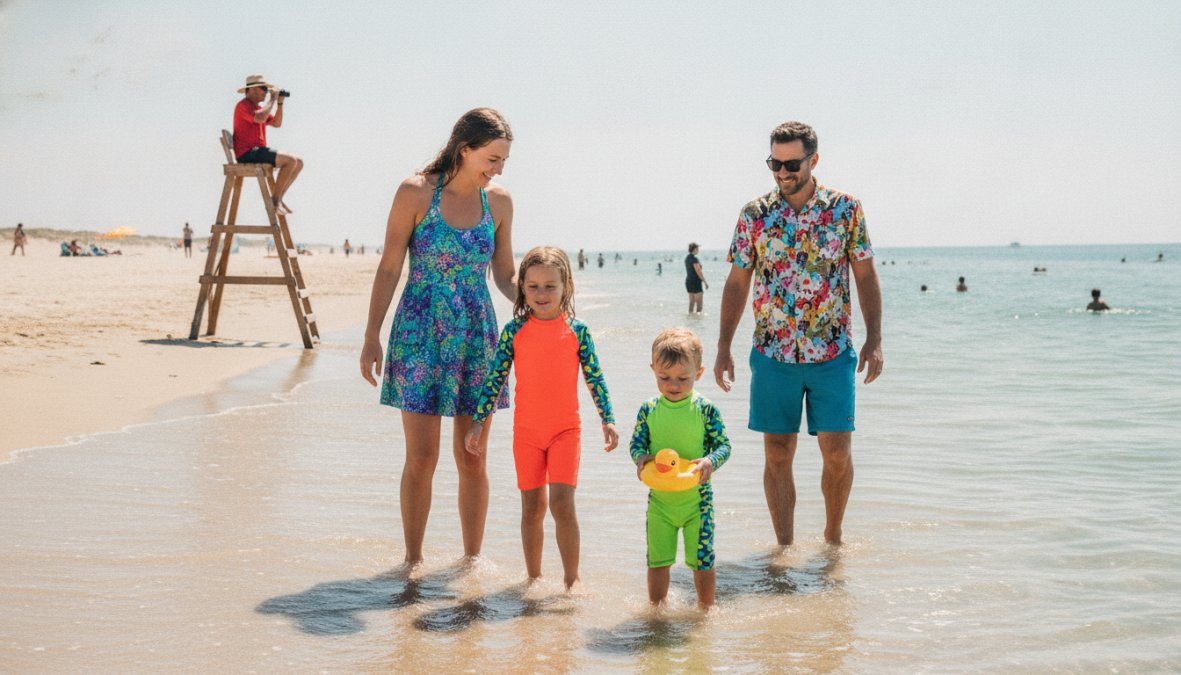
For open water activities, neon colors become even more critical. Bright orange and neon yellow perform exceptionally well because they contrast with green vegetation and brown earth tones. Ocean swimming adds additional factors, salt water clarity varies dramatically by location and season. Cold water swimming often involves wetsuits, which can be ordered in high-contrast colors.
For open water activities, many swimmers combine high-visibility swimwear with additional safety gear. A bright swim cap, a high-contrast rash guard, or a tow float in a bright color adds multiple visibility markers.
Swimwear Visibility Research and Practical Benefits
The connection between high-contrast swim gear and improved safety outcomes is measurable and observable.
How High-Contrast Patterns Improve Response Time
Response time is the critical metric in water safety. Studies on visual recognition in water environments consistently show that high-contrast colors and patterns reduce detection time. When a lifeguard or parent scans water, their eye catches bright colors faster than dark or muted colors. The pattern adds additional visual cues that make the wearer easier to track as they move.
In practical terms, a child in high-contrast swim gear is spotted faster if they slip underwater, drift away, or signal for help. That faster detection translates directly to faster response and better outcomes. Parents who dress their children in high-visibility gear are also more confident in their supervision because they can see their child more easily.
Material Technology and Reflective Elements
Beyond color and pattern, the material of high-contrast swim gear affects visibility. Chlorine-resistant fabrics maintain their color vibrancy longer than standard materials, ensuring high-contrast swimwear remains visible through repeated pool use. Some manufacturers incorporate reflective elements into high-visibility swimwear, adding another visibility layer especially in lower-light conditions.
Bright & Bold Swimwear designs their collection with visibility as the primary function. Their high-contrast colors are selected specifically for water visibility, and their fabric choices prioritize maintaining that visibility through repeated use and chlorine exposure.
Key Benefits of High Contrast Swim Gear for Families
Reduced drowning risk is the primary benefit. Visibility directly impacts response time, and response time impacts outcomes. Peace of mind for parents comes from being able to see their child clearly in water. Easier supervision in crowded environments is a practical advantage at public pools, beaches, and water parks. Improved communication between children and supervisors becomes possible when visibility is high. Builds water confidence in children who know they're wearing gear designed to help adults keep an eye on them. Works across all water environments, pools, lakes, rivers, and oceans.
Choosing the Right High Contrast Swimwear
Selecting high-contrast swim gear involves balancing visibility, fit, durability, and personal preferences.
Start with color. Neon yellow, bright orange, and hot pink are the most visible options. Evaluate pattern options. Patterns add visibility compared to solid colors. Consider fit and comfort. Swimwear that's uncomfortable will be resisted. Check fabric quality. Chlorine-resistant fabrics maintain their color longer. Think about activities. Pool swimming might use a one-piece or two-piece swimsuit, while open water swimming benefits from rash guards. Factor in growth. Children grow quickly, so consider whether styles will be available in larger sizes.
Bright & Bold Swimwear offers a range of high-contrast options designed specifically for water safety. Their collection includes one-piece swimsuits, two-piece options, and rash guards in neon colors with contrasting patterns. Each style is designed with visibility as the primary function, using colors and patterns tested for effectiveness in water environments. Their boys swimsuits and girls swimsuits are available in multiple high-contrast color combinations, allowing families to choose based on their child's preferences while maintaining the visibility benefits that matter most.
Water safety is a family responsibility that begins with making swimmers visible. High-contrast swim gear is one of the most effective tools available for reducing drowning risk and improving response times in water emergencies. The science is clear: bright colors with contrasting patterns save time and, ultimately, lives. Start with best sellers designed specifically for visibility, and give your family the confidence that comes from knowing your child can be seen.
Frequently Asked Questions
What colors are most visible in water for swimming?
Neon yellow, neon orange, and hot pink are among the most visible colors in water because they contrast sharply with typical water backgrounds and absorb less light than darker shades. Bright lime green and electric blue also perform well. These high-contrast colors stand out to lifeguards and parents in both clear and slightly murky water conditions, making them ideal for high contrast swim gear designed for safety.
Why does high contrast swim gear improve drowning prevention?
High contrast swimwear enhances visibility, allowing lifeguards and parents to spot children faster in emergency situations. The bright, high-contrast colors reduce response time by making swimmers easier to locate among water reflections and background elements. Studies on swimwear visibility research show that enhanced visibility directly correlates with quicker emergency response, which is critical for water safety and accident prevention.
How does water affect color visibility differently than on land?
Water absorbs and scatters light wavelengths unevenly, red and orange wavelengths are absorbed first as depth increases, while blue and green penetrate deeper. This is why neon colors perform better in water: they reflect light more effectively and maintain contrast across varying water conditions. Understanding this science helps explain why swim safety colors like neon yellow remain visible in pools, lakes, and oceans where darker or pastel shades fade quickly.
What patterns work best in high contrast swim gear?
Solid neon or bright colors provide the strongest visibility, but high-contrast patterns, like stripes or geometric designs combining bright colors with white, can enhance detection. Patterns break up the outline and draw attention, helping rescuers spot swimmers quickly. Reflective elements on rash guards and one-piece swimsuits add an extra safety layer, especially in low-light conditions or murky water environments.
This article was written using GrandRanker