

Best High-Visibility Rash Guards for Toddlers: 2026 Guide
Table of Contents
- Why High-Visibility Matters: Water Safety & Visibility Testing
- UPF 50+ Sun Protection Standards Explained
- Rash Guard Benefits for Toddlers Beyond Sun Protection
- Top High-Visibility Rash Guards for Toddlers: What to Look For
- Toddler Rash Guard Sizing Guide & Fit Tips
- Caring for Rash Guards to Maintain Protection & Color
- Eco-Friendly & Sustainable Fabric Options
- Group Matching & Sibling Safety: A Practical Approach
Best High-Visibility Rash Guards for Toddlers: 2026 Guide
Last Updated: July 26, 2026
When a toddler disappears into the water during a busy pool day, every second counts. High-visibility colors let parents and lifeguards spot your child instantly, even in crowded conditions. Finding the best high visibility rash guards for toddlers means balancing sun protection, durability, comfort, and that critical visibility factor that can make the difference in water safety. At Bright & Bold Swimwear, we understand this tension between style and safety, and we've built our entire collection around the principle that protective swimwear shouldn't look like a safety vest.
This guide covers everything you need to know about selecting rash guards that genuinely protect your toddler while keeping them visible and comfortable in the water.
Why High-Visibility Matters: Water Safety & Visibility Testing
Drowning happens fast and often silently. A child can slip underwater in seconds, and in the chaos of a busy beach or pool, a toddler in a standard-colored swimsuit becomes nearly invisible. High-visibility colors, neon yellows, oranges, and hot pinks, cut through water glare in ways traditional colors simply cannot.
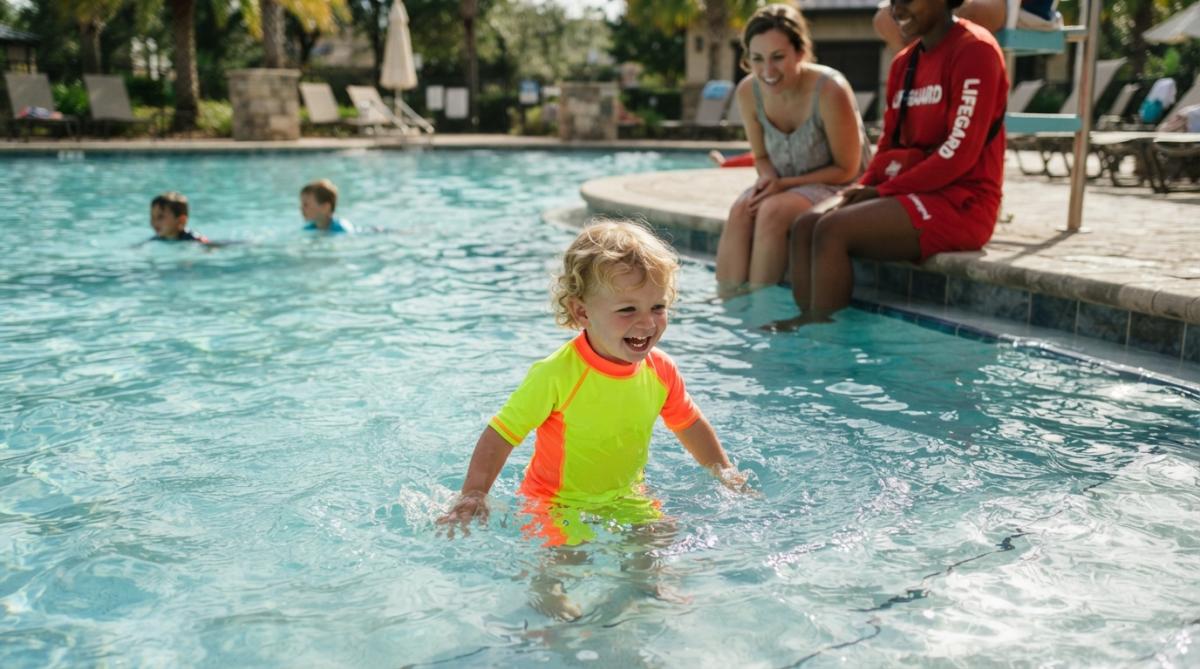
The science is straightforward: neon colors reflect light differently than muted tones. In water environments, where sunlight bounces off the surface and refracts below, these bright hues stand out against the blue-green backdrop. Lifeguards and parents can locate a child wearing a neon rash guard faster than one in navy, white, or pastel colors.
How High-Visibility Colors Improve Detection in Water
Neon dyes absorb UV light and re-emit it as visible light, creating a glow effect that human eyes detect faster than standard colors. Research shows people locate bright, saturated colors 30-50% faster than muted alternatives in chaotic visual environments.
In practical terms, a toddler in a neon rash guard is spotted by lifeguards in roughly 2-3 seconds versus 5-8 seconds for a child in standard color. During a water emergency, those seconds matter. The color works best in daylight conditions, and the effect is even more pronounced underwater because the bright color creates contrast against the darker pool bottom.
The Role of Neon & Bright Colors in Drowning Prevention
High-visibility swimwear is not a substitute for supervision or swim lessons, but it is a meaningful layer of protection. When combined with attentive parenting and lifeguard awareness, neon rash guards reduce response time to a child in distress.
UPF 50+ Sun Protection Standards Explained
UPF stands for Ultraviolet Protection Factor. It measures how effectively a fabric blocks both UVA and UVB rays, the two types of ultraviolet radiation that cause sunburn and skin damage.
UPF 50+ is the highest rating available. It blocks 98% or more of harmful UV rays, allowing only 1-2% to penetrate. For comparison, UPF 30 blocks 96.7% of rays. The jump from UPF 30 to UPF 50+ is small in percentage terms but meaningful for extended water exposure.
Understanding UVA/UVB Ray Protection
Both UVA and UVB rays damage skin differently. UVB rays cause immediate sunburn and are strongest between 10 a.m. and 4 p.m. UVA rays penetrate deeper into the skin, causing long-term damage and premature aging. They're present year-round and pass through clouds.
A quality rash guard blocks both types. Look for fabrics labeled "UPF 50+" rather than just "UPF 50", the plus sign indicates the fabric exceeds the 50 rating. Toddler skin is thinner and more vulnerable than adult skin. A single severe sunburn in childhood increases melanoma risk significantly. Rash guards reduce that risk by providing a physical barrier instead of relying solely on sunscreen, which washes off in water.
Why UPF 50+ Beats Lower Ratings
The difference between UPF 30 and UPF 50+ becomes obvious during full-day beach trips. A toddler wearing UPF 30 protection will show signs of sun exposure after 4-5 hours of water play. UPF 50+ extends that window to 8-10 hours, which covers most beach days without requiring mid-day reapplication.
Additionally, UPF 50+ fabrics tend to use denser weaves and higher-quality materials that resist fading from chlorine and saltwater exposure. The sun protection and durability are linked.
Rash Guard Benefits for Toddlers Beyond Sun Protection
Sun protection is the primary function, but rash guards offer additional benefits. They provide a barrier against chlorine irritation, which can dry out sensitive skin and cause itching. Rash guards also offer minor abrasion protection from scrapes and rough surfaces.
Chlorine vs. Saltwater Durability
Chlorine breaks down elastic fibers and can cause fading, especially in bright colors. Saltwater is less chemically aggressive but causes salt crystals to accumulate in fabric fibers, making the material feel stiff.
The best rash guards for frequent pool use are treated with chlorine-resistant coatings. For saltwater use, rinsing immediately after exposure becomes critical.
Bright & Bold Swimwear designs rash guards specifically for both environments, using fade-resistant dyes and materials engineered to withstand repeated chlorine and saltwater exposure.
Comfort & Skin Sensitivity Considerations
A rash guard your toddler refuses to wear provides zero protection. Comfort is non-negotiable.
Look for soft, stretchy fabrics with flatlock seams, which prevent irritation against sensitive skin. The fit matters too, a rash guard that's too tight restricts movement, while one that's too loose shifts around in the water. The ideal fit allows full range of motion while staying in place.
Some toddlers are sensitive to wet fabric clinging to their skin. For these children, quick-dry technology becomes essential. Consider your toddler's sensory preferences when choosing sleeve length and fit.
Top High-Visibility Rash Guards for Toddlers: What to Look For
When evaluating best high visibility rash guards for toddlers, several factors determine whether a specific option will work for your family.
Material Durability & Fading Resistance
Premium rash guards use polyester blends with spandex (elastane) for stretch and recovery. Look for fabrics labeled as 82% polyester / 18% spandex or similar ratios. Fading resistance depends on dye quality and fabric construction. High-quality options use reactive dyes or special colorfast treatments that maintain brightness for 50+ washes.
Check product reviews specifically for color retention. Parents who've owned the rash guard for a full season can tell you whether the neon brightness persists.
Zipper vs. Pullover: Ease of Use for Toddlers
A pullover rash guard requires pulling the fabric over a wet, slippery toddler, which is awkward. A zipper closure opens the garment flat, making it much easier to slip on and off. Front zippers are standard and work well. Half-zips provide easier on-and-off while maintaining a snug fit.
The downside of zippers: they can pinch skin if your toddler moves too quickly. Quality zippers have guards that prevent pinching. For toddlers under 2, pullovers are often easier. For older toddlers (2-4 years), zippers become worth the minor risk because the convenience is significant.
Quick-Dry Technology & Lightweight Design
Quick-dry fabrics use special weaves that allow water to shed quickly instead of being absorbed. A quality quick-dry rash guard should be mostly dry within 30-45 minutes of leaving the water. Standard fabrics take 1-2 hours to dry, which means your toddler will be uncomfortable in damp clothing for extended periods.
Lightweight design matters for comfort and mobility. The best options weigh less than 3 ounces and feel barely-there on the skin.
Toddler Rash Guard Sizing Guide & Fit Tips
Sizing is where most parents go wrong. A rash guard that doesn't fit properly won't stay visible or comfortable.
Measuring Your Toddler for the Perfect Fit
Measure your toddler's chest at the widest point and their length from the base of the neck to the bottom of the hip. Most brands provide size charts based on these two measurements. The chest measurement is most important for fit.
For length, the rash guard should end at or just below the hip. Always measure while your toddler is standing, not lying down, and measure over a thin shirt to account for the thickness of the rash guard itself.
Room to Grow: Sizing for Durability & Comfort
Toddlers grow quickly, but sizing up too much creates fit problems. A rash guard that's too loose doesn't stay visible in the water and rides up during activity. Buy the correct size for your toddler's current measurements. Rash guards are affordable enough that replacing them annually is reasonable.
| Toddler Age | Typical Chest (inches) | Typical Length (inches) | Recommended Size |
|---|---|---|---|
| 12-18 months | 18-20 | 16-18 | 12M-18M |
| 18-24 months | 20-22 | 18-20 | 2T |
| 2-3 years | 21-23 | 19-22 | 3T |
| 3-4 years | 22-24 | 21-24 | 4T |
Caring for Rash Guards to Maintain Protection & Color
How you care for a rash guard determines how long it lasts and how well it protects.
Washing & Drying Best Practices
Rinse the rash guard in fresh water immediately after pool or ocean use. This removes chlorine, salt, and sunscreen residue before they can damage the fabric.
For regular washing, use cold water and mild detergent. Hot water breaks down elastic fibers and fades dyes faster. Avoid bleach and fabric softeners, both damage the UV-protective coating and elastic. Machine wash on a gentle cycle, or hand wash for maximum durability.
Dry flat or hang-dry in shade. Direct sunlight fades colors. A dryer's heat damages elastic and can cause shrinkage.
Preserving High-Visibility Colors & UV Protection
The neon colors that make a rash guard visible fade fastest. Minimize sun exposure when the garment is not being worn. Store in a cool, dark place rather than in a sunny bathroom or beach bag.
Chlorine exposure degrades both color and UV protection simultaneously. Even with a chlorine-resistant coating, repeated exposure without rinsing causes gradual fading. A rash guard used 3-4 times per week in chlorinated pools will noticeably fade within 8-10 weeks if not rinsed after each use.
The UV protection itself doesn't fade visibly, but the fabric's ability to block rays degrades slightly with each wash. This is another reason replacing rash guards annually is practical.
Eco-Friendly & Sustainable Fabric Options
Parents increasingly want their children's swimwear to come from sustainable sources. Recycled polyester uses plastic bottles or discarded textiles as the base material, reducing waste. The performance is nearly identical to virgin polyester.
Organic cotton blends are softer but less durable than polyester and slower to dry. Bamboo fabric is soft and naturally antimicrobial but tends to be less durable and fades faster.
The most sustainable choice is buying a high-quality rash guard that lasts multiple seasons. A durable polyester rash guard worn for 2-3 years has a lower environmental impact than replacing cheap rash guards annually.
Oeko-Tex certification indicates that a fabric has been tested and verified to contain no harmful substances. This is a meaningful standard for toddler clothing and worth seeking out.
Group Matching & Sibling Safety: A Practical Approach
When multiple toddlers are in the water together, matching high-visibility rash guards create an additional safety layer. If all the children in your family group wear the same bright color, parents and lifeguards can track the entire group at a glance.
This strategy is especially useful at beaches where multiple families gather. Designate a specific neon color for your family or group and ensure all toddlers wear that color during water activities. Matching also simplifies getting dressed, if all your toddlers have the same rash guard, there's no confusion about whose is whose.
Bright & Bold Swimwear offers matching options across their boys swimsuits and [girls swimsuits](https://brightboldswim.com/collections/best-swimsuits-for-girls) collections, making it easy to coordinate siblings or group outings while maintaining the high-visibility protection that makes this strategy worthwhile.
Keeping your toddler safe in the water starts with making them visible. The best high visibility rash guards for toddlers combine UPF 50+ sun protection, fade-resistant neon colors, durable materials, and thoughtful design that makes dressing and wearing them easy. When you prioritize visibility alongside comfort and durability, you're investing in a garment that actually gets worn consistently. Explore Bright & Bold Swimwear's collection of high-visibility rash guards designed specifically for toddler water safety, and discover how the right swimwear gives you peace of mind while your child plays freely in the water.
Frequently Asked Questions
What makes a high-visibility rash guard different from a regular one?
High-visibility rash guards use bright neon, fluorescent, or bold colors (like hot pink, electric yellow, or lime green) that stand out dramatically in water, making it easier for parents and lifeguards to spot your toddler. Regular rash guards often come in pastels or muted tones that blend into water. The high-visibility design is specifically chosen to reduce drowning risk by ensuring your child remains easily visible during pool and beach activities.
What UPF rating should a toddler rash guard have?
UPF 50+ is the gold standard for toddler rash guards, blocking 97.5%-99+% of harmful UVA/UVB rays. UPF 30+ offers moderate protection but UPF 50+ provides superior defense, especially during extended water time. Look for rash guards labeled 'UPF 50+' to ensure your toddler's skin stays protected during summer swimming, beach days, and swim lessons. Higher UPF ratings are particularly important for toddlers, whose skin is more sensitive to sun damage.
How do I care for a rash guard to keep the high-visibility color bright?
Rinse your toddler's rash guard with fresh water immediately after pool or beach use to remove chlorine, salt, and sand. Machine wash in cold water with mild detergent, then air dry flat away from direct sunlight, heat and UV exposure fade vibrant colors over time. Avoid fabric softeners and bleach, which damage the material and fade dyes. Proper care preserves both the high-visibility color and the UPF protection, extending the rash guard's lifespan and effectiveness.
Are long-sleeve or short-sleeve rash guards better for toddlers?
Long-sleeve rash guards offer superior sun protection, covering more skin and blocking more UVA/UVB rays, ideal for extended water time and sensitive skin. Short-sleeve options provide good protection while allowing more freedom of movement for active toddlers. Choose long-sleeve for beach days and all-day swimming; short-sleeve works well for quick pool sessions. Both styles are available in high-visibility colors, so pick based on your toddler's comfort level and how long they'll be in the water.
This article was written using GrandRanker