

Best Sun Safe Swim Clothes: A 2026 Guide
Table of Contents
- What Makes the Best Sun Safe Swim Clothes
- Understanding UPF Swimwear Benefits
- What to Look for in UPF Swimwear
- Sun Protective Swimwear for Kids: Style Meets Safety
- Stylish Sun Protective Swimwear That Kids Actually Want to Wear
- How to Choose the Best Sun Safe Swim Clothes for Your Family
- Common Mistakes When Selecting Sun Safe Swimwear
- Conclusion
Best Sun Safe Swim Clothes: A 2026 Guide
Last Updated: July 23, 2026
When it comes to protecting children in the water, the best sun safe swim clothes shield skin from harmful rays while providing peace of mind for parents and caregivers. According to the American Academy of Dermatology, UV exposure during childhood significantly increases lifetime skin cancer risk, making sun protection during water activities essential. At Bright & Bold Swimwear, we've spent years helping families understand how the right swimwear combines visibility, sun protection, and style. Below, we'll show you exactly how to choose the best sun safe swim clothes for your family, what features actually matter, and why so many parents are making the switch to dedicated sun-protective options.
What Makes the Best Sun Safe Swim Clothes
The difference between regular swimwear and sun safe swim clothes comes down to fabric engineering and intentional design. Standard swimsuits offer zero UV protection; sun protective swimwear uses tightly woven fabrics that block ultraviolet radiation before it reaches the skin, combined with high-visibility colors that keep children visible in the water while providing measurable sun safety.
The best sun safe swim clothes combine three critical elements: fabric density that blocks UV rays, durability that survives chlorine and saltwater exposure, and vibrant colors that make children easy to spot. The fabric's tightness matters more than its thickness, a tightly woven synthetic material blocks more UV than thick, loose-weave cotton. Look for polyester or nylon blends specifically engineered for sun protection.
Understanding UPF Swimwear Benefits
UPF stands for Ultraviolet Protection Factor and measures how much UV radiation a fabric blocks. UPF 50+ swimwear blocks at least 98% of both UVA and UVB rays, the two types of radiation that cause skin damage and increase melanoma risk.
Children wearing UPF 50+ swimwear experience reduced cumulative UV exposure over their lifetime, which directly correlates with lower skin cancer rates. Research from the Skin Cancer Foundation confirms that sun-protective clothing is one of the most effective prevention strategies available, more reliable than sunscreen alone because it doesn't wash off or degrade.
UPF 50+ Protection Explained
UPF 50+ fabrics achieve their protection through tightly packed synthetic fibers that create a barrier absorbing and scattering UV radiation. Some advanced materials incorporate UV-absorbing compounds into the fiber itself, providing additional defense.
The critical part most parents miss: UPF ratings are tested on new, unwashed fabric. After repeated exposure to chlorine, saltwater, and washing, many swimsuits lose effectiveness. The best sun safe swim clothes use chlorine-resistant and saltwater-resistant materials that maintain their UPF rating through 50+ wash cycles. Coolibar, one of the leading sun-protective brands, independently tests their fabrics to ensure protection persists through extended use.
UVA and UVB Ray Blocking
Both UVA and UVB rays contribute to skin damage. UVB rays cause immediate sunburn and are strongest during midday hours. UVA rays penetrate deeper into the skin, causing long-term aging and contributing to melanoma risk year-round, even on cloudy days.
The best sun safe swim clothes block both equally. Water provides minimal UV protection; in fact, water reflects UV radiation, intensifying exposure for swimmers. This is why sun protective swimwear is worn in the water, not just during beach time.
What to Look for in UPF Swimwear
Selecting the right sun safe swim clothes requires evaluating protection, durability, comfort, and whether your child will actually want to wear it.
Fabric Quality and Durability
High-quality sun protective fabrics typically use polyester or nylon blends engineered specifically for UV blocking. These materials should feel smooth and comfortable against the skin with at least 10-15% elasticity to allow natural movement in the water.
When you buy sun safe swim clothes, you want fabric that maintains its integrity after dozens of washes. Look for materials that explicitly state chlorine resistance and saltwater resistance. Brands like Solbari test their fabrics after 50+ wash cycles to ensure the UPF rating holds steady. A tightly woven fabric should feel compact but not uncomfortable.
Chlorine and Saltwater Resistance
Chlorine breaks down elastic fibers, fades colors, and can degrade UV-blocking compounds. Saltwater presents similar challenges. The best sun safe swim clothes use chemically treated fabrics that resist these corrosive environments.
Look for explicit mentions of chlorine and saltwater resistance, this isn't a standard feature on all sun protective swimwear. Inexpensive options often skip this upgrade to save on manufacturing costs, but after 10-15 pool visits, colors fade and fabric integrity degrades.
Sun Protective Swimwear for Kids: Style Meets Safety
A perfectly protective suit that sits unworn in a drawer provides zero benefit. This is why vibrant colors and appealing designs matter as much as technical specs.
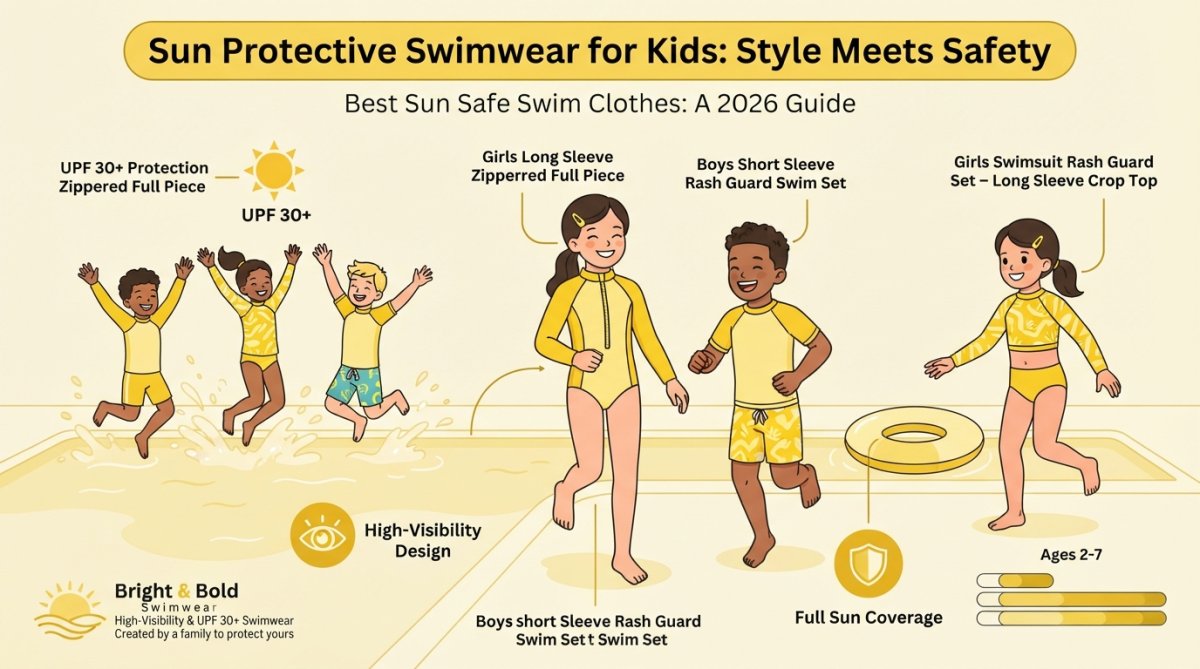
Bright & Bold Swimwear was founded on the principle that sun protection doesn't mean sacrificing style. The brand's high-visibility designs serve dual purposes: they make children easy to spot in the water while providing UPF 30+ protection. Kids are more likely to wear a suit they think looks cool, which means more consistent sun protection throughout the summer. Whether you're shopping for boys swimsuits or girls swimsuits, you'll find options designed to keep children both protected and excited about water time.
Rash Guards and Swim Shirts
Rash guards are loose-fitting, long-sleeved swim tops designed for water sports and sun protection. They're typically made from stretchy polyester or nylon blends that dry quickly and move naturally with the body. For children, rash guards offer full arm coverage and are easy to put on and take off.
The best rash guards feature UPF 50+ fabric, flat-lock seams to prevent chafing, and thumb holes that keep sleeves from riding up. Swim shirts are shorter-sleeved alternatives that provide torso protection while allowing more freedom of movement, working well for children who find long sleeves uncomfortable.
Full-Coverage Swimsuits and Swim Leggings
Full-coverage options provide maximum sun protection by covering the torso, arms, and legs. These suits work particularly well for children with sensitive skin or a family history of skin cancer. Swim leggings pair well with swim shirts or bikini tops for a customizable approach.
The advantage of full-coverage designs is comprehensive protection. A child wearing a full-coverage suit receives protection rivaling sunscreen application, without the need for reapplication. Many families use full-coverage suits for beach days with extended sun exposure and lighter rash guard-plus-shorts combos for pool time.
Stylish Sun Protective Swimwear That Kids Actually Want to Wear
The most advanced UPF fabric won't protect a child who refuses to wear it. Design, color, and style are non-negotiable components of effective sun safe swim clothes.
Vibrant Colors and Designs
Bright, bold colors serve a practical purpose beyond aesthetics. High-visibility colors like neon orange, electric pink, and bright yellow make children significantly easier to spot in the water. Lifeguards and parents can track children more quickly, reducing response time in emergencies.
Beyond safety, vibrant colors appeal to children. A sun protective suit in a fun color or with an appealing pattern is more likely to be worn consistently. The challenge is maintaining these colors, lower-quality dyes fade quickly after chlorine exposure. The best sun safe swim clothes use colorfast dyes that maintain vibrancy through dozens of wash cycles.
Quick-Dry and Lightweight Fabrics
Children don't want to sit in wet, heavy swimwear. Quick-dry fabrics, typically microfiber polyester blends, shed water rapidly and feel light against the skin. Lightweight fabrics are particularly important for extended water play, a heavy suit becomes uncomfortable after an hour; a lightweight option can be worn all day without complaint.
Moisture-wicking properties also matter. Fabrics that move sweat away from the skin keep children comfortable during active play, especially important in warm climates where overheating could be a concern.
How to Choose the Best Sun Safe Swim Clothes for Your Family
Selecting the right sun safe swim clothes requires balancing protection level, durability, style, fit, and budget.
| Factor | Consideration | Best For |
|---|---|---|
| Activity Level | Rash guards suit active swimmers; full-coverage suits work for casual water play | High-energy kids prefer lighter, more flexible options |
| Water Type | Chlorine-resistant fabrics for pools; saltwater-resistant for ocean | Frequent pool users need chlorine durability; beach families need saltwater resistance |
| Climate | Lightweight fabrics in hot climates; layering options in moderate temps | Hot climates benefit from breathable, quick-dry materials |
| Skin Sensitivity | Full-coverage options for sensitive skin; chemical-free fabrics when possible | Children with eczema or allergies need gentle, non-irritating materials |
| Duration of Use | More durable fabrics justify higher upfront cost if worn frequently | Daily swimmers need fabrics that maintain quality through 50+ wash cycles |
Consider Activity Level and Water Type
A child who swims competitively needs different sun safe swim clothes than one who plays casually at the pool. Competitive swimmers benefit from fitted rash guards that move with their body and don't create drag. Consider also how long your child will wear the suit daily, a child in the water for 30 minutes needs different comfort features than one wearing sun protective gear for 4-6 hours at the beach.
Fit, Comfort, and Longevity
Proper fit is essential for both protection and comfort. A suit that's too tight restricts movement; one that's too loose creates gaps where UV rays can penetrate. Most sun protective brands size generously, so sizing down one size from regular swimwear is common.
Comfort features matter for compliance. Flat-lock seams prevent chafing. Thumb holes on rash guards keep sleeves from riding up. Adjustable waistbands allow for growth and fit adjustments. These details determine whether your child will actually wear the suit willingly.
Longevity depends on fabric quality and care. Sun protective swimwear lasts longer when rinsed with fresh water after use, dried in shade, and stored properly. High-quality fabrics maintain their UPF rating and color vibrancy through multiple seasons.
Common Mistakes When Selecting Sun Safe Swimwear
Most parents make predictable mistakes when choosing sun safe swim clothes. The first is assuming all sun protective swimwear is equal. A suit labeled "UPF 50+" from a budget brand may not maintain that rating after a few washes, while premium brands independently test durability.
The second mistake is buying based on adult preferences rather than child preferences. A perfectly protective suit that your child refuses to wear provides zero benefit. Involving children in selection, letting them choose colors or designs they like, dramatically increases the chance they'll actually wear it.
The third mistake is underestimating durability needs. Many parents buy the cheapest option, only to find it fading after a few weeks. Investing in chlorine-resistant and saltwater-resistant fabrics saves money long-term because the suit lasts through an entire season.
The fourth mistake is relying solely on sun protective swimwear without other protection measures. Sun safe swim clothes work best combined with seeking shade during peak UV hours (10 a.m. to 4 p.m.), applying broad-spectrum sunscreen to exposed areas, and wearing UV-blocking hats or visors.
The fifth mistake is ignoring the visibility aspect. High-visibility colors in quality sun protective swimwear serve a critical secondary purpose: making children easier to spot in the water.
Conclusion
Choosing the best sun safe swim clothes requires balancing protection, durability, style, and comfort. The right option depends on your child's activity level, water environment, skin sensitivity, and personal preferences. Bright & Bold Swimwear combines UPF 30+ protection with high-visibility colors designed to keep children both safe from UV rays and easy to spot in the water. The brand's commitment to vibrant, durable designs means children actually want to wear the suits, which translates to consistent sun protection throughout the summer. Start by identifying your family's specific needs, pool versus ocean, casual versus competitive, sensitive skin versus standard, then select a suit that addresses those needs without forcing your child into uncomfortable gear. Sun protection works only when it's worn consistently, which is why style matters as much as science.
Shop Bright & Bold Swimwear's collection of sun protective options, including boys swimsuits and girls swimsuits, designed to help parents keep their children visible and protected in the water.
Frequently Asked Questions
What does UPF mean in swimwear, and how does it differ from SPF?
UPF (Ultraviolet Protection Factor) measures how effectively fabric blocks UV rays, while SPF applies to sunscreen. UPF 50+ blocks 98% of UVA and UVB rays. Unlike sunscreen, sun protective swimwear doesn't wash off or require reapplication, making it a reliable complement to sunscreen for comprehensive sun safety during water activities.
Is UPF 50+ swimwear really effective for sun protection?
Yes. UPF 50+ fabrics are independently tested and certified to block at least 98% of harmful UVA and UVB rays. Many sun protective swimwear brands carry The Skin Cancer Foundation's Seal of Recommendation, confirming their effectiveness. When combined with sunscreen on exposed areas, UPF 50+ swimwear provides excellent defense against UV radiation and helps reduce skin cancer risk.
What materials offer the best sun protection in sun safe swim clothes?
Tightly woven, high-quality nylon and polyester blends provide superior UV blocking without chemicals. Look for fabrics labeled UPF 50+, which use physical blocking rather than chemical additives. Quality materials also resist chlorine and saltwater damage, maintaining their protective properties through repeated washing and sun exposure, ensuring your investment lasts multiple seasons.
How do I know if sun protective swimwear will actually fit my child and stay comfortable?
Choose brands offering detailed sizing charts and read customer reviews about fit. Look for quick-dry, breathable, lightweight fabrics that won't feel heavy or restrictive when wet. Ensure the style, whether rash guard, full-coverage suit, or swim leggings, matches your child's activity level. Many families find that letting their child pick the color or design increases their enthusiasm for wearing protective swimwear consistently.
[EXTERNAL_LINK: American Academy of Dermatology sun protection guidelines | aad.org]
[EXTERNAL_LINK: Skin Cancer Foundation UV protection and clothing recommendations | skincancer.org]
[EXTERNAL_LINK: CDC information on UV radiation and skin cancer prevention | cdc.gov]
This article was written using GrandRanker