

Best Swimming Gear for Toddlers: Safety & Comfort Guide
Table of Contents
- Best Swimming Gear for Toddlers: Essential Equipment Overview
- Life Jackets and Flotation Devices: Safety Gear vs. Training Gear
- Best Toddler Life Jacket for Swimming: Finding the Right Fit
- Swim Diapers and Puddle Jumpers: Pool-Ready Essentials
- Swim Goggles and Vision Protection for Toddlers
- Rash Guards and Sun Protection: UV Safety in the Water
- Toddler Swim Safety Tips and Active Supervision Essentials
- How to Introduce Toddlers to Swimming: Building Water Confidence
Best Swimming Gear for Toddlers: Safety & Comfort Guide
Last Updated: July 3, 2026
Best Swimming Gear for Toddlers: Essential Equipment Overview
Water safety begins with the right gear. Finding the best swimming gear for toddlers means balancing protection, comfort, and visibility. The combination of proper flotation devices, visibility-enhancing swimwear, and active supervision creates the strongest foundation for preventing water-related incidents.
A well-fitted life jacket provides buoyancy. A high-visibility swimsuit ensures you can spot your child instantly. A quality swim diaper prevents accidents during lessons. Each piece works together to create an environment where toddlers can learn and grow in confidence.
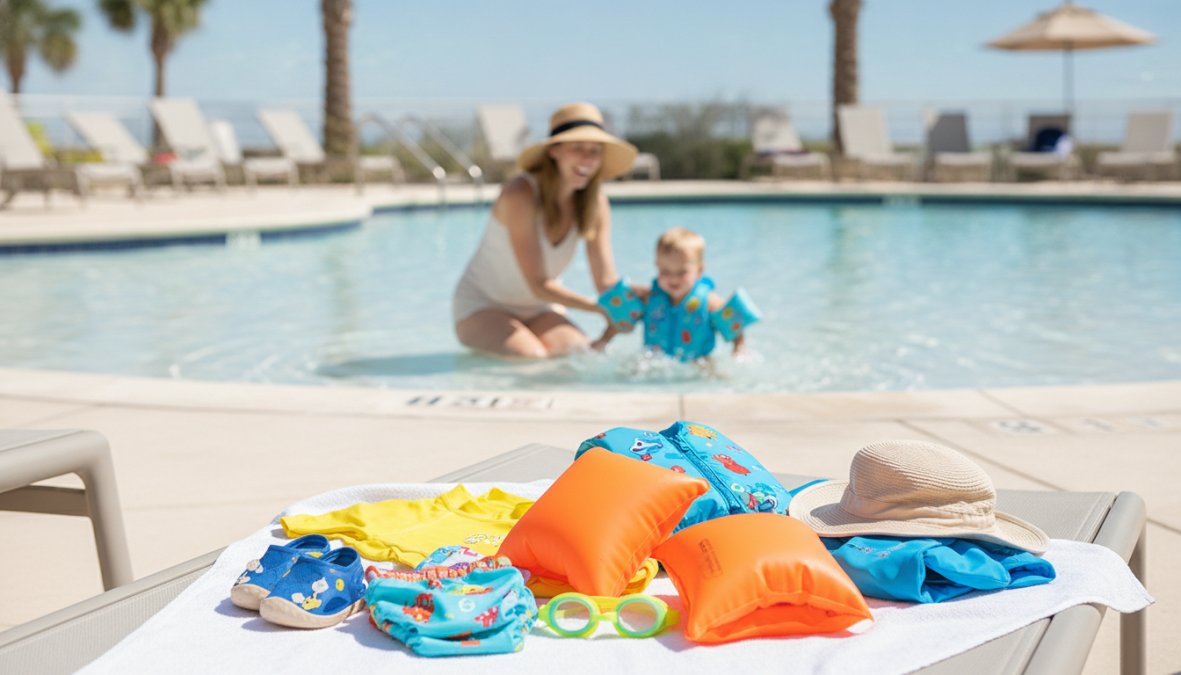
What separates effective gear from the rest comes down to three factors: how well it fits, how visible it makes your child, and whether it supports their natural development in water.
Why the Right Gear Matters for Water Safety
Drowning prevention depends on visibility and supervision. High-visibility swimwear makes an immediate difference, bright colors cut through water reflections and pool lighting in ways neutral tones cannot. Lifeguards and parents struggle to spot children wearing dark colors, even in shallow water.
Proper flotation support prevents panic and builds genuine water confidence. A child who feels secure relaxes, learns faster, and enjoys the experience more.
Key Features to Look For
Start with fit. Gear that's too loose slides down; gear that's too tight restricts movement. Check sizing carefully, as many brands run small or large.
Look for materials that resist chlorine degradation. UPF protection should be at least 30+, which blocks most harmful UV rays. Consider adjustability, toddlers grow rapidly, and gear with adjustable straps extends useful life and ensures a snug fit as your child develops.
Life Jackets and Flotation Devices: Safety Gear vs. Training Gear
Understanding the difference between safety-focused life jackets and training-oriented flotation devices shapes your entire approach to water safety.
US Coast Guard Approved Options
A US Coast Guard approved life jacket represents the highest safety standard. These devices are engineered to keep a child's head above water even if unconscious. The Mustang Survival Lil' Legends exemplifies this category, a Type II PFD with grab handles for quick retrieval and a crotch strap that prevents the vest from riding up.
Coast Guard approved vests work best for boating and open water activities. They're heavier and more restrictive than training gear, which is why they provide superior protection. The trade-off is reduced comfort for extended pool play and potential interference with learning proper swimming technique.
Training Vests and Buoyancy Aids
Training vests like the Splash About Go Splash Swim Vest use removable floats that you can gradually reduce as your child's swimming skills improve. The vest maintains a natural swimming position, allowing your child to practice proper technique.
These vests typically offer UPF 50+ sun protection and feature secure zippers with protective covers. The adjustable buoyancy system means you adjust support as your child progresses. Training vests are ideal for swim lessons and pool play where an adult is in constant contact.
The key limitation is that training vests are not life-saving devices. They require active adult supervision and should never substitute for constant attention.
Best Toddler Life Jacket for Swimming: Finding the Right Fit
Proper fit determines whether a life jacket protects your child or becomes a liability.
How to Fit Swim Gear Properly
Start by checking the weight range. Your child's current weight should fall comfortably in the middle of that range. Fasten all straps and have your child stand still. The jacket should sit snugly without pinching, you should fit one finger under each strap.
Perform the "lift test." With all straps fastened, gently lift your child by the shoulders. If the jacket rides up toward their chin or slips down, it's not fitted correctly. Check arm movement, your child should raise their arms overhead without restriction.
| Fit Check | What to Look For | What Goes Wrong |
|---|---|---|
| Weight range | Child weight in middle of range | Too heavy or light for device |
| Strap tightness | One finger fits under each strap | Too loose (slips) or too tight (restricts) |
| Lift test | Jacket stays in place when lifted | Rides up toward chin or drops down |
| Arm mobility | Full overhead reach possible | Straps restrict shoulder movement |
| Comfort | Child willing to wear repeatedly | Pinching or bulk causes resistance |
Swim Diapers and Puddle Jumpers: Pool-Ready Essentials
Swim diapers prevent accidents in the pool by containing solid waste while allowing water to flow through, preventing pool closure.
Choosing the Right Swim Diaper
Reusable swim diapers like the Splash About Happy Nappy represent the industry standard. Made from 1mm neoprene with double-layer leak-proof design, these fit snugly around the waist and thighs. Most professional swim schools require or accept them.
The Beau and Belle Littles Reusable Swim Diaper offers adjustable snaps that fit children from 6 to 35+ pounds, allowing a single diaper to grow with your child across multiple years. Both styles require proper fastening to ensure a tight seal. When shopping for quality options, Girls swimsuits and Boys swimsuits collections often include coordinating swim diapers and accessories that work well together.
Water Wings and Puddle Jumpers for Beginners
Puddle jumpers like those from Splash About combine a vest design with integrated arm floats. This keeps all flotation in one piece, preventing arm floats from slipping off. Water wings attach to arms and provide flotation without restricting torso movement.
Both puddle jumpers and water wings are training tools, not safety devices. They should never replace active supervision or a proper life jacket in open water.
Swim Goggles and Vision Protection for Toddlers
Goggles protect eyes from chlorine and salt water, reduce the sting that makes toddlers reluctant to open their eyes underwater, and build confidence by allowing clear vision.
The Frogglez Goggles feature a soft neoprene strap that doesn't pull hair, a significant advantage for toddlers. Velcro adjustment allows custom fitting, and the floating design prevents loss. The Zoggs Phantom Mask offers a mask-style design with wider field of vision that feels less intimidating to some toddlers. The TYR Swimple Goggles offer excellent value with durable silicone gaskets and a speed-adjust button.
Sensory-Friendly Goggle Options
Some toddlers experience sensory sensitivities that make standard goggles uncomfortable. Start with goggles in shallow water during calm moments, not during active lesson time. Mask-style goggles often work better for sensory-sensitive children because the wider field of vision feels less confining.
Rash Guards and Sun Protection: UV Safety in the Water
Sun protection matters in water because water reflects UV rays. A rash guard provides UPF protection while allowing comfortable movement and reducing chafing.
The O'Neill Basic Skins Rashguard exemplifies quality construction with UPF 50+ protection and 4-way stretch fabric. Quality matters because cheap rash guards lose elasticity quickly and develop uncomfortable seams after a few washes.
Chlorine-Resistant Fabrics and Durability
Pool chemicals degrade fabric quickly. Quality rash guard fabrics are engineered to resist chlorine degradation while maintaining elasticity and color. The best rash guards use nylon or polyester blends with protective coatings.
Rinse the rash guard in fresh water immediately after pool use. Wash in cool water with gentle detergent and air dry. This routine keeps fabric in good condition through multiple seasons.
Toddler Swim Safety Tips and Active Supervision Essentials
Equipment provides tools, but active supervision provides protection. Constant visual contact means your eyes stay on your child at all times, put your phone away and position yourself where you can reach your child within seconds.
Drowning often happens silently and quickly. A child doesn't splash or call for help as many parents expect. Bright swimwear helps you spot your child instantly even when underwater.
Pool Safety and Water Immersion Readiness
Before formal lessons, many toddlers benefit from gradual water exposure at home. A bathtub or kiddie pool allows your child to experience water at their own pace.
Start with water play involving splashing and pouring. Progress to sitting in shallow water, then to supported floating. Teach basic water safety language like "water is dangerous" and "we always have a grown-up watching."
Drowning Prevention Through Visibility
High-visibility swimwear makes an immediate, measurable difference in supervision effectiveness. Bright colors are processed faster by your brain than muted tones, meaning you're more likely to notice when your child moves to unexpected areas. Explore Swim Accessories that complement bright, visible swimwear options.
Position yourself at pool level rather than standing above. Sit at the water's edge when your child is in the water for fastest response time.
How to Introduce Toddlers to Swimming: Building Water Confidence
The goal of early water exposure is building confidence and comfort, not forcing rapid skill development. Start in warm water and keep initial sessions short, fifteen to twenty minutes accomplishes more than an hour of frustrated participation.
Beginner Swimmers and Swim Training Progression
Formal swim lessons typically begin around age 3. Early lessons focus on acclimation: getting comfortable with water on the face and building positive associations with the pool. Actual swimming skills develop later as comfort and coordination improve.
Parents play an essential role. Children learn faster when a trusted adult is involved. Practicing skills between lessons reinforces what your child learns during formal instruction.
Maintenance and Storage of Swim Gear
Rinse all gear in fresh water immediately after pool use to remove chlorine and salt. Swim diapers should be rinsed and hung to air dry. Goggles need gentle freshwater rinsing, never scrub lenses. Life jackets should dry completely before storage to prevent mold.
Store gear in a cool, dry location away from direct sunlight. Replace equipment when straps no longer hold tension, zippers stick, or flotation seems compromised.
Water safety for toddlers depends on combining the right equipment with consistent supervision and genuine water comfort. The best swimming gear for toddlers is designed specifically for small bodies, built to last through regular use, and engineered to help parents maintain constant visual contact. Start with proper flotation support, add visibility-enhancing swimwear, and commit to active supervision. These three elements create the foundation for safe, confident water experiences. US Coast Guard water safety guidelines for children and American Academy of Pediatrics recommendations on drowning prevention both emphasize that supervision and appropriate flotation devices reduce water-related incidents significantly.
Frequently Asked Questions
What swimming gear do toddlers actually need for pool safety?
Essential best swimming gear for toddlers includes a US Coast Guard-approved life jacket or training vest, a snug-fitting swim diaper, rash guard for UV protection, and age-appropriate goggles. High-visibility swimwear helps parents and lifeguards keep a close eye on children in the water, reducing drowning risk. Kickboards and training aids support swim lessons as your toddler builds water confidence and swimming skills.
How do I choose the right size swim gear for my toddler?
Proper fit is critical for safety and comfort. For life jackets, ensure the crotch strap fits snugly and the vest doesn't ride up when lifted. Swim diapers should fit snugly around the waist and thighs to prevent leaks. Goggles should create a seal without pressing too hard on the face. Rash guards should allow full arm movement without excess fabric. Always check manufacturer sizing charts and have your toddler try gear before water immersion to ensure comfort during swim training.
Are puddle jumpers and water wings safe for toddlers?
Puddle jumpers and water wings are helpful training aids for building water confidence, but they are not US Coast Guard-approved flotation devices and should never replace active supervision. These buoyancy aids work best during swim lessons under professional instruction. They help beginner swimmers develop comfort in the water, but constant adult supervision remains essential. For maximum safety during water activities, pair training gear with proper life jackets when appropriate for the water environment.
How do I maintain and store swim gear to extend its life?
Rinse all swim gear with fresh water immediately after pool or beach use to remove chlorine and salt. Hang rash guards and swim diapers to air dry completely before storing in a cool, dry place. Goggles should be stored in a protective case away from direct sunlight. For reusable swim diapers, follow machine-wash instructions and inspect seams regularly. Proper maintenance prevents mildew, extends durability, and ensures your best swimming gear for toddlers remains safe and comfortable season after season.
This article was written using GrandRanker