

Best Swimsuits for Summer Safety: Complete Guide
Table of Contents
- Why Best Swimsuits for Summer Safety Matter
- High-Visibility Swimsuits for Kids: The First Line of Defense
- Safest Swimsuit Colors for Pools and Open Water
- UV Protection Swimwear Benefits for All-Day Water Safety
- Choosing the Right Fabric and Fit for Active Play
- Drowning Prevention Tips for Summer: Beyond Color and Coverage
- How to Select Best Swimsuits for Summer Safety: A Step-by-Step Guide
- Conclusion: Prioritize Visibility, Protection, and Peace of Mind
Best Swimsuits for Summer Safety: Complete Guide
Last Updated: July 11, 2026
Finding the best swimsuits for summer safety means looking beyond style to features that keep children visible and protected in water. A swimsuit becomes a lifesaving tool when it combines high-visibility colors, proper fit, and UV protection. This guide covers the science of water safety, the colors and fabrics that matter most, and how to choose swimwear that gives parents and lifeguards the visibility needed to keep children safe.
Why Best Swimsuits for Summer Safety Matter
Water safety depends on detectability. A child who stands out in the water can be spotted quickly if they slip beneath the surface or drift away. The difference between a visible child and one lost in visual noise can be seconds, seconds that matter in drowning prevention.
Best swimsuits for summer safety address three core needs: underwater visibility, sun protection, and a secure fit that won't slip during active play. High-visibility colors like neon yellow and fluorescent orange cut through water reflections and shadows. UPF 50+ fabrics block harmful UV rays. A stay-put fit prevents wardrobe malfunctions that distract children or create hazards.
Research shows color choice directly impacts how quickly a child can be located in an emergency. Lifeguards and parents instinctively focus on movement and contrast, exactly what high-visibility swimwear provides.
High-Visibility Swimsuits for Kids: The First Line of Defense
A high-visibility swimsuit serves as an active safety beacon in water. Unlike passive safety gear, the swimsuit becomes part of your child's body in the water, making it impossible to forget or remove.
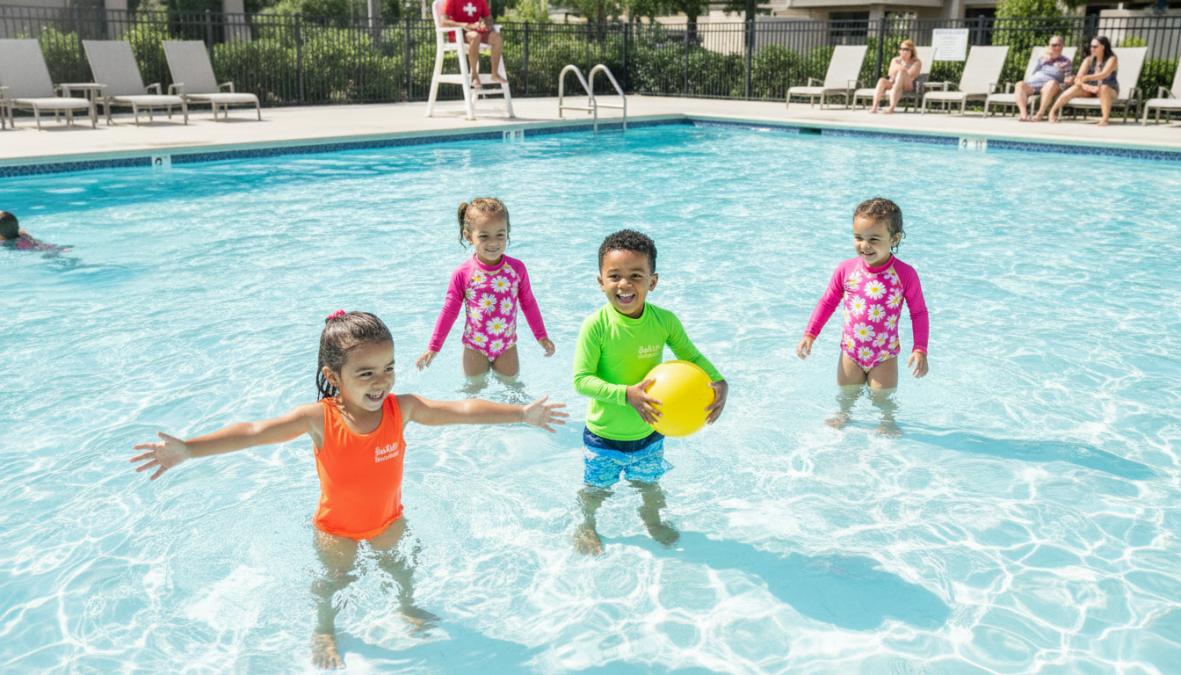
High-visibility swimwear features vibrant neon and fluorescent colors that remain visible even when partially submerged or moving quickly. This visibility extends to parents watching poolside and lifeguards monitoring larger bodies of water. When parents can easily track their child visually, they experience less anxiety and can focus on teaching water skills rather than constantly searching.
How Neon and Fluorescent Colors Improve Detectability
Neon colors reflect light in ways standard colors cannot. A neon yellow swimsuit uses fluorescent properties to appear to glow, creating contrast against almost any water background. Fluorescent fabrics contain phosphorescent dyes that convert UV light into visible light, remaining visible even in dim pool lighting or cloudy conditions.
Detectability testing shows neon yellow and neon orange rank highest for visibility across different water types. Pastel colors disappear into water reflections and lose contrast quickly.
Testing Visibility in Different Water Environments
Water environments vary dramatically in how they affect visibility. Clear chlorinated pool water reflects light uniformly. Lake water contains suspended particles that scatter light. Brackish water creates additional optical challenges.
Before purchasing a swimsuit, test it in your actual water environment. Have your child wear the swimsuit and move through water while you observe from the deck at various distances (10, 20, 30 feet). Note how easily you can track their position when fully versus partially submerged. Repeat testing at different times of day, as lighting significantly affects visibility.
| Water Type | Light Conditions | Best Visibility Color | Contrast Issues |
|---|---|---|---|
| Clear chlorine pool | Bright overhead | Neon yellow, neon orange | Minimal, colors pop |
| Lake water | Variable, morning/afternoon | Neon yellow, bright pink | Particles scatter light; test required |
| Brackish water | Reduced clarity | Neon orange, hot pink | Salt content affects light reflection |
| Ocean water | High glare | Neon orange, yellow | Glare reduces contrast; test essential |
Safest Swimsuit Colors for Pools and Open Water
Color selection is the single most controllable variable in swimsuit safety. The right color makes a child visible; the wrong color makes them invisible.
The safest colors create maximum contrast against water. Water appears blue or green depending on depth and particle content. Neon yellow, neon orange, hot pink, and bright lime green all perform well. Pastel colors, light blue, pale pink, and mint green perform poorly because they blend into water. Navy, black, and dark colors are particularly dangerous because they absorb light and disappear into water shadows.
Neon Yellow vs. Pastel: Which Color Prevents Drowning
Neon yellow prevents drowning more effectively than pastel colors because it creates immediate visual contrast. When a lifeguard or parent scans water, their eye catches neon yellow instantly. Pastel colors require active searching, the observer must focus on the specific area where the child is located.
In drowning prevention, speed matters. A child slipping beneath the surface needs to be spotted within seconds. Testing by water safety organizations confirms neon colors reduce detection time by 50% or more compared to standard colors.
Underwater Contrast in Pools vs. Lakes and Brackish Water
Contrast operates differently in different water environments. A pool with clear chlorinated water and white deck surfaces creates high contrast where even moderately bright colors stand out. A murky lake with dark banks and floating debris creates low contrast where only the brightest colors remain visible.
Lakes and brackish water present additional challenges: suspended particles, variable lighting due to tree cover, and reflections from surrounding landscape. A color that works perfectly in a pool might be marginal in a lake. Water clarity affects contrast, a crystal-clear lake allows visibility at greater depths than a murky lake. In these environments, the brightest neon colors become essential.
UV Protection Swimwear Benefits for All-Day Water Safety
Sun safety and water safety work together. A child spending six hours at the pool faces both drowning risk and severe sun damage. UV protective swimwear addresses sun exposure while maintaining visibility features needed for drowning prevention.
UV damage accumulates over time. Repeated exposure without protection increases lifetime skin cancer risk, especially in children whose protective mechanisms are still developing.
Understanding UPF 50+ Sun Protective Swimwear
UPF 50+ fabric blocks 98% of ultraviolet rays, providing sun protection equivalent to SPF 50+ sunscreen without reapplication every two hours. UPF 30 blocks 97%, while UPF 50+ blocks 98% or more. The difference is small in percentage terms but meaningful over a full day of water activities.
UPF 50+ swimwear is essential for children with fair or sensitive skin, those with a family history of skin cancer, or any child spending more than four hours per day in the sun. High-UPF fabrics tend to be slightly thicker and more durable, maintaining protective properties through multiple seasons of use.
Choosing the Right Fabric and Fit for Active Play
A swimsuit that doesn't stay in place becomes a safety hazard. Fabric and fit determine whether the swimsuit remains secure during active play, diving, jumping, and water slides.
Nylon and spandex blends provide stretch and recovery. Polyester blends offer durability and color retention. The best fabrics combine stretch with durability. Flat-lock seams prevent chafing and hold up better through repeated use. Reinforced seams at stress points prevent tearing during vigorous activity.
A swimsuit that's too large will slip during active play. A swimsuit that's too tight restricts movement. The ideal fit allows full range of motion while staying securely in place. Most quality children's swimwear includes a stay-put waistband design. Test the fit by having your child jump, dive, and spin to ensure the swimsuit stays in place.
Drowning Prevention Tips for Summer: Beyond Color and Coverage
A high-visibility swimsuit is one layer of drowning prevention, not the complete solution. Comprehensive water safety requires multiple overlapping strategies.
Supervision is the most important drowning prevention strategy. Constant, attentive supervision by a trained adult watching the water prevents the majority of child drowning incidents. A high-visibility swimsuit supports this supervision by making the child easier to track visually.
Swimming ability matters significantly. Children who can swim competently are at lower risk than non-swimmers. However, even strong swimmers can panic or encounter unexpected situations. Swimming lessons should be combined with supervision and other safety measures.
Integration with Other Water Safety Gear
A high-visibility swimsuit works best when combined with other safety equipment. U.S. Coast Guard-approved life jackets provide maximum protection for children who cannot swim or are still developing swimming skills. Flotation swimsuits offer built-in buoyancy without air chambers, providing confidence while allowing natural movement.
Rash guards and swim shirts provide UV protection and visibility. Many parents combine a high-visibility rash guard with a matching swimsuit bottom to maximize both sun protection and visibility. Swim Accessories like safety buoys or kickboards in bright colors give non-swimmers something to hold onto while building confidence.
Lifeguard Visibility and Communication
Lifeguards need to see your child to help them. High-visibility swimwear makes the lifeguard's job easier by providing a clear visual reference point. When arriving at a pool, point out your child to the lifeguard: "My daughter is in the neon yellow swimsuit." This creates an additional layer of awareness.
In open water situations (lakes, beaches, ocean), visibility becomes even more critical. Lifeguards monitoring large areas need high-contrast visual markers to spot swimmers quickly. In some beach settings, lifeguards specifically recommend bright colors.
How to Select Best Swimsuits for Summer Safety: A Step-by-Step Guide
Step 1: Assess your water environment. Identify where your child will spend most time in water. Test colors in your specific environment before purchasing.
Step 2: Choose a high-visibility color. Neon yellow and neon orange rank highest for visibility across environments. Hot pink and bright lime green also perform well. Avoid pastels and dark colors.
Step 3: Evaluate sun protection needs. Fair-skinned children and those in sunny climates benefit from UPF 50+. UPF 30+ provides solid protection for most children.
Step 4: Test the fit. Have your child jump, spin, and dive in the suit. The swimsuit should stay in place without slipping. Straps should not dig into shoulders.
Step 5: Check fabric quality. Look for flat-lock seams and reinforced stress points. Thicker, more durable fabrics last longer and maintain color through multiple seasons.
Step 6: Test in water. Bring the new swimsuit to your water environment and observe visibility during actual play. Make adjustments or exchanges while within the return window.
Age-Specific Visibility and Fit Considerations
Different ages have different visibility and fit needs. Younger children (under 5) are at highest drowning risk and benefit most from high-visibility swimwear. Boys swimsuits and girls swimsuits designed with safety in mind offer age-appropriate fits and visibility features for each developmental stage.
Infants and toddlers (under 3) should wear high-visibility swimwear in bright neon colors. Their small size makes them harder to spot. Fit should be snug to prevent slipping. Many parents combine a high-visibility swimsuit with a U.S. Coast Guard-approved life jacket.
Preschoolers (3-5) are developing swimming skills but still require constant supervision. High-visibility swimwear supports this supervision. Fit should allow full movement while remaining secure.
School-age children (6-12) can swim better but still need supervision. High-visibility swimwear remains important, especially in group settings. Fit should accommodate growth.
Teenagers (13+) often resist high-visibility colors, but visibility remains valid. Bright accent colors provide some visibility benefit while accommodating style preferences.
| Age Group | Visibility Priority | Fit Considerations | Recommended Features |
|---|---|---|---|
| Under 3 | Maximum (neon colors) | Snug, secure fit | UPF 30+, flat-lock seams |
| 3-5 | High (bright neon) | Secure with room to move | UPF 30+, durable fabric |
| 6-12 | High (neon or bright colors) | Room to grow, secure fit | UPF 30+, reinforced seams |
| 13+ | Moderate (bright accents) | Full range of motion | UPF 30+, style options |
Conclusion: Prioritize Visibility, Protection, and Peace of Mind
Summer water activities carry inherent risks, but these risks decrease dramatically when children wear swimwear designed specifically for safety. High-visibility colors, proper fit, and UV protection work together to keep children safe while they enjoy the water.
Quality safety swimwear combines high-visibility neon and fluorescent colors, secure stay-put fit, and UPF 30+ protection. The investment in quality safety swimwear pays dividends in both safety and peace of mind. When your child is easily visible in the water and protected from sun damage, you can focus on enjoying summer rather than worrying about hidden dangers.
Frequently Asked Questions
What color swimsuit is safest for summer water activities?
Neon yellow, bright orange, and fluorescent pink are the safest swimsuit colors for visibility in both pools and open water. These high-visibility colors create maximum underwater contrast, making it easier for lifeguards and parents to spot children quickly. Testing shows neon colors remain visible even in murky or brackish water environments, whereas pastel shades blend with water reflections and pool surfaces.
How do high-visibility swimsuits for kids help prevent drowning?
High-visibility swimsuits reduce drowning risk by ensuring children remain easily detectable in the water. Bright colors improve lifeguard visibility and allow parents to maintain constant visual contact during active play. Combined with proper supervision and water safety practices, high-visibility swimwear acts as an extra layer of protection by making it nearly impossible to lose sight of a child in a pool or lake environment.
What are the UV protection swimwear benefits for children?
UPF 50+ sun protective swimwear blocks 98% of harmful UVA and UVB rays, preventing skin damage and reducing skin cancer risk. UV protection swimwear benefits extend beyond the water, children remain protected during water play, active games, and sun exposure. Quality sun protective swimwear with UPF 50+ rating is especially important for all-day summer activities and provides peace of mind for parents concerned about long-term skin health.
Should I prioritize color visibility or UV protection when choosing best swimsuits for summer safety?
The best approach combines both. Look for high-visibility swimsuits that also offer UPF 50+ protection. Many quality options now feature bright, fluorescent colors in sun-protective fabrics, ensuring children stay visible to lifeguards while their skin is shielded from UV damage. Proper fit and full coverage options further enhance safety, making a comprehensive approach to swimwear selection essential for summer water activities.
Finding the right swimsuit means balancing visibility, protection, and your child's comfort. Bright & Bold Swimwear makes this balance possible with high-visibility colors that work in any water environment, UPF 30+ sun protection, and secure fits designed for active play. Browse the collection of boys swimsuits and girls swimsuits, or explore the best sellers to find exactly what your family needs for a safe, confident summer.
This article was written using GrandRanker