

Best UPF 50 Swimsuits for Kids: A 2026 Guide
Table of Contents
- What Is UPF 50+ Protection and Why It Matters for Kids
- Benefits of UPF 50 Swimsuits for Kids' Skin Health
- Best UPF 50 Swimsuits for Kids: Quick Comparison
- How to Choose UPF Swimwear for Toddlers and Young Children
- UPF Swimwear vs. Regular Swimwear: What's the Real Difference
- Chlorine-Resistant UPF Swimwear for Kids: Durability That Lasts
- Sun Safety Tips Beyond the Swimsuit
- Conclusion
Best UPF 50 Swimsuits for Kids: A 2026 Guide
Last Updated: August 2, 2026
When parents choose swimwear for their children, sun protection often ranks second to style and comfort. Yet children receive approximately 80% of their lifetime UV exposure before age 18. Finding the best upf 50 swimsuits for kids means balancing protection with fit, durability, and appeal that keeps kids actually wanting to wear them. At Bright & Bold Swimwear, we understand this challenge because we designed our collection specifically to address it: high-visibility swimwear that protects while helping parents and lifeguards keep children easily visible in the water. Below, we'll show you how to evaluate UPF 50 protection, compare top options, and ensure your child's skin stays protected through every pool day and beach vacation.
What Is UPF 50+ Protection and Why It Matters for Kids
Ultraviolet Protection Factor (UPF) 50+ means the fabric blocks 98% of the sun's ultraviolet rays, allowing only 2% to penetrate to the skin. This is the highest rating available for sun-protective textiles.
A standard cotton t-shirt offers roughly UPF 5 protection, meaning 20% of UV rays reach your child's skin. UPF 50 fabric reduces that to just 2%. For children spending hours at the pool or beach, this difference compounds significantly over a season.
Children's skin is thinner and more vulnerable to UV damage than adult skin. The American Academy of Dermatology emphasizes that sun protection during childhood reduces melanoma risk by up to 40% in adulthood. UPF 50 swimwear works by using tightly woven synthetic fibers, typically nylon or polyester blends, that physically block rays rather than absorbing them.
Benefits of UPF 50 Swimsuits for Kids' Skin Health
Protecting your child's skin during water activities prevents both immediate and long-term damage. A single severe sunburn in childhood doubles melanoma risk in adulthood. Beyond cancer prevention, regular sun damage causes premature aging and age spots that appear decades later.
UPF 50 swimwear provides continuous protection without requiring reapplication. Sunscreen washes off in water and degrades over time, while a UPF swimsuit works every moment your child wears it. This consistency matters especially for active kids who spend entire afternoons in and out of the water.
Children wearing bright, high-visibility UPF swimwear often feel more confident in the water. When swimwear looks appealing with fun colors and designs, children are more likely to wear it without complaint, which means better actual protection.
UPF swimwear also protects against chlorine and saltwater damage to skin. The barrier created by UPF fabric reduces direct contact between harsh water chemicals and delicate skin, resulting in less dryness and irritation after pool or beach days.
Best UPF 50 Swimsuits for Kids: Quick Comparison
Choosing among the best upf 50 swimsuits for kids depends on your priorities: maximum sun protection, fashion appeal, durability, or sustainability. The options below represent different approaches to keeping children protected while keeping them comfortable and willing to wear the suit.
| Brand | Best For | Key Feature | Construction |
|---|---|---|---|
| Bright & Bold Swimwear | Visibility + Protection | High-visibility colors, UPF 30+ | Chlorine-resistant, quick-dry |
| UV Skinz | Maximum Protection | Certified UPF 50+, blocks 98% UV | Saltwater & chlorine resistant |
| Reima | Eco-Conscious Parents | Made from recycled materials | Breathable, quick-drying |
| Coolibar | Comfort & Variety | Soft, lightweight UPF 50+ | Quick-dry, variety of styles |
| Shade Critters | Fashion-Forward Kids | Trendy prints and designs | Premium UPF 50+ fabrics |
| Rad Tod | Toddler Convenience | Front zip rash guards | Easy on/off for young children |
| Honeysuckle Swim | Infants & Toddlers | Inseam zippers for quick changes | Reef-friendly materials |
| MORI | Sustainability | Recycled nylon, UPF 50+ | Breathable, moisture-wicking |
High-Visibility Options
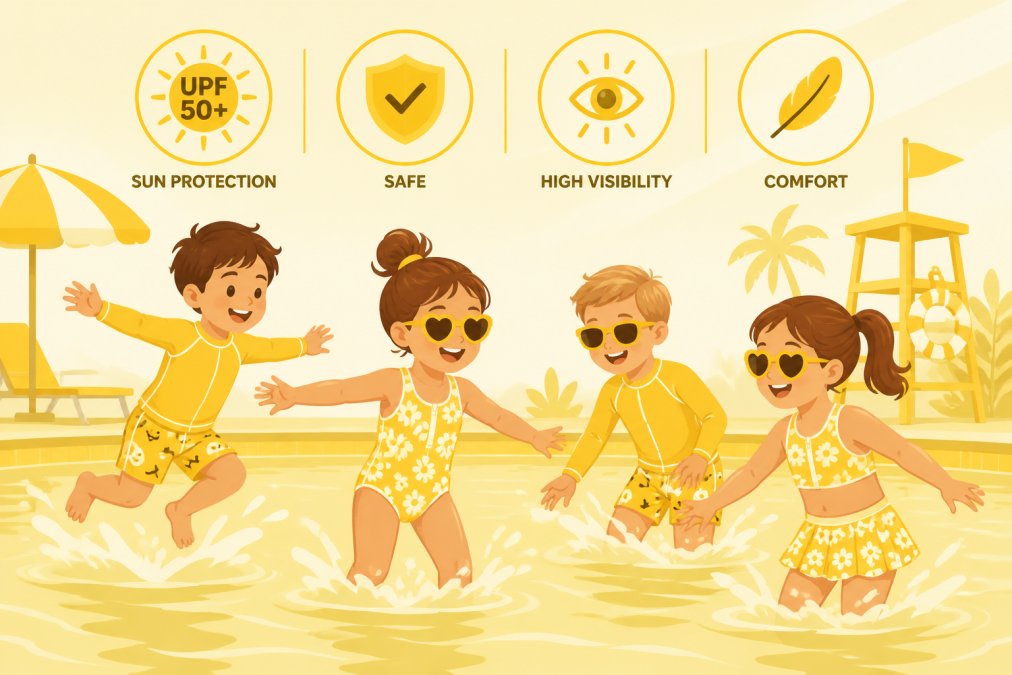
High-visibility swimwear serves dual purposes: sun protection and water safety. Bright colors make children easier to spot in the water, addressing two critical safety concerns simultaneously.
Bright & Bold Swimwear specializes in this intersection. Their collection features vibrant, high-visibility colors, neon yellows, bright oranges, and electric blues, specifically chosen to contrast with water. The brand was created by a family to protect other families, and this mission shows in every design choice. While Bright & Bold Swimwear offers UPF 30+ on select items, the real differentiator is the visibility factor combined with reliable chlorine-resistant construction.
UV Skinz maximizes sun protection to the highest level. Their UPF 50+ certification means independent testing confirms 98% UV blockage. The brand earned the Skin Cancer Foundation's Seal of Recommendation, which few swimwear manufacturers achieve. For families with a history of skin cancer or extremely fair-skinned children, UV Skinz represents the maximum-protection choice.
Eco-Friendly and Sustainable Choices
Reima and MORI manufacture UPF 50+ swimwear from recycled materials, addressing environmental concerns while delivering full sun protection. Reima uses recycled nylon that delivers the same protection as virgin nylon while reducing manufacturing waste. MORI takes a similar approach with recycled nylon that is breathable and moisture-wicking, emphasizing reef-friendly materials for beach-focused families.
Fashion-Forward Designs
Shade Critters creates UPF 50+ swimwear with premium prints and fashionable silhouettes that appeal to kids who care about appearance. A child wearing Shade Critters isn't visibly wearing "sun protection," they're wearing fashionable beachwear that happens to offer UPF 50+ protection. This psychological difference drives actual compliance. For families with older children or teens who have developed fashion preferences, this approach prevents resistance to sun protection.
How to Choose UPF Swimwear for Toddlers and Young Children
Selecting appropriate UPF swimwear for toddlers requires balancing sun protection with practical considerations: ease of diaper changes, comfort during active play, and durability through frequent washing.
For children under three, rash guards with swim diapers offer flexibility. Rad Tod specializes in toddler rash guards with front zippers, solving the frustration of wrestling a wet child into and out of tight-fitting suits. The zipper allows quick changes without removing the entire garment. Honeysuckle Swim takes a similar approach with inseam zippers on infant sunsuits, specifically designed for the diaper-change challenge.
For children three to seven, one-piece suits or rash guard-and-shorts combinations work well. One-pieces provide continuous coverage without gaps that expose skin during active play.
Finding the Right Fit and Comfort
Fit directly impacts whether children will wear the suit. A suit that's too tight restricts movement; too loose, and it shifts during active play, exposing skin. Most UPF brands offer sizing guidance based on height and weight rather than age alone.
Test the fit by having your child move through their typical water activities: swimming strokes, diving, running. Flat-lock seams (where two edges are sewn together smoothly) prevent chafing during hours of wear. Moisture-wicking fabric keeps children more comfortable than standard nylon, pulling sweat away from skin. Quick-dry properties mean the suit dries faster after use, reducing mildew smell and extending garment life.
Breathability prevents overheating during extended wear. Higher-quality UPF swimwear incorporates ventilation or uses lighter-weight fabrics that maintain protection without creating discomfort.
Assessing Durability and Fade Resistance
Chlorine resistance is the primary durability concern. Chlorine degrades standard nylon, causing fading and weakening of fibers. UPF swimwear specifically treated for chlorine resistance maintains color and structural integrity through 50+ wash cycles. Saltwater resistance matters for families who frequent beaches, requiring different fabric treatment than chlorine resistance.
Fade resistance affects both appearance and UV protection. Brands using colorfast dyes maintain both appearance and protection through multiple seasons. Checking customer reviews often reveals which brands fade quickly.
UPF Swimwear vs. Regular Swimwear: What's the Real Difference
Regular swimwear uses nylon or polyester blends optimized for elasticity and softness. The loose weave that enables stretch allows UV rays to penetrate, providing roughly UPF 5-10 protection.
UPF swimwear uses tightly woven nylon or polyester, sometimes with added UV-absorbing compounds like zinc oxide. The tight weave creates a physical barrier that blocks rays before they reach skin. This construction necessarily reduces stretch and can feel slightly stiffer initially, though most quality UPF suits become more comfortable after a few wears.
UPF swimwear weighs more than regular swimwear because the denser weave uses more material, resulting in slower drying times. However, quick-dry technology has narrowed this gap significantly. Cost reflects the material and construction differences, with UPF swimwear costing more because the fabrics, testing, and certification add expense. The protection justifies the investment when calculated over a child's lifetime.
Chlorine-Resistant UPF Swimwear for Kids: Durability That Lasts
Children who swim regularly need chlorine-resistant UPF swimwear. Standard UPF fabrics degrade in chlorinated water, losing both protection and appearance within a season.
Chlorine damages fibers by chemically breaking down polymer chains and stripping dyes from fibers. Chlorine-resistant UPF swimwear uses special treatments applied during manufacturing that create a protective layer around fibers, preventing chlorine from directly contacting the material. Treated fibers maintain structural integrity through 50+ chlorinated-water exposures.
Fabric Technology and Construction
UV Skinz, Coolibar, and Reima all specify chlorine-resistant construction. Four-way stretch fabric represents an advancement in chlorine-resistant UPF construction, allowing children full range of motion without sacrificing protection. Flat-lock seams prevent chafing during hours of wear. Quick-dry technology accelerates water evaporation through specialized fiber construction, keeping children more comfortable and reducing the weight of wet suits.
Care and Maintenance for Long-Term Protection
How you wash and store UPF swimwear directly impacts how long the UPF protection lasts. Most manufacturers specify that UPF ratings remain valid through 50-100 washes.
Rinse the suit immediately after pool or ocean use. Chlorine and salt continue damaging fibers even after your child leaves the water. Hand wash rather than machine wash when possible, using cool water with mild detergent. Air dry rather than machine dry, as heat breaks down fibers. Store in a cool, dry place away from direct sunlight.
Sun Safety Tips Beyond the Swimsuit
UPF swimwear is one layer of sun protection, not the complete solution. Apply broad-spectrum sunscreen to exposed areas, face, ears, tops of feet, and any skin not covered by the swimsuit. Reapply every two hours or immediately after toweling dry.
Seek shade during peak UV hours, roughly 10 a.m. to 4 p.m. If midday swimming is unavoidable, position an umbrella or tent to create shaded areas where children can rest between water play.
Use UV-protective accessories. Wide-brimmed hats shade the face and ears. UV-blocking sunglasses protect eyes and the delicate skin around them. Swim socks or water shoes protect feet, which receive intense UV exposure during beach days.
Teach children about sun safety early. Kids who understand why sun protection matters are more likely to cooperate with wearing protective gear. Monitor for signs of sun damage; if your child develops a sunburn, adjust your protection strategy.
Keeping your child safe in the water involves multiple layers of protection working together. The best upf 50 swimsuits for kids provide reliable sun protection without requiring reapplication or parental memory, making them a cornerstone of any comprehensive sun safety strategy. Bright & Bold Swimwear combines UPF 30+ protection with high-visibility design specifically created to help parents and lifeguards keep children visible and safe. Their collection features stylish options for both boys and girls, along with helpful resources for teaching children to swim. When you're ready to invest in reliable, visible sun-protective swimwear, explore Bright & Bold Swimwear's best sellers to find the right fit for your family's water activities.
Frequently Asked Questions
What does UPF 50+ mean in kids' swimwear?
UPF 50+ means the fabric blocks 98% of ultraviolet rays, including both UVA and UVB radiation. This is the highest protection level available. For kids, UPF 50+ swimwear acts as a physical barrier against harmful sun exposure during water play, reducing the need for frequent sunscreen reapplication and providing consistent protection throughout the day.
How do I choose UPF swimwear for toddlers that they'll actually wear?
Start with fit: measure your child carefully and check sizing guides, as a snug but comfortable fit prevents riding up or slipping. Choose vibrant colors and fun designs your child enjoys, since they're more likely to wear something they like. Look for soft, breathable fabrics with four-way stretch for movement. Consider easy-on, easy-off styles with zippers for quick changes. Test comfort in a pool or bathtub before committing to full-day wear.
Is UPF 50+ swimwear better than regular swimwear for sun protection?
Yes. Regular swimwear offers little to no UV protection. UPF 50+ swimwear blocks 98% of harmful rays, while regular fabrics allow most UV radiation to pass through. This difference is significant for young children whose skin is more sensitive. UPF swimwear also reduces reliance on sunscreen, which can wash off in water, making it a reliable standalone protection option for extended water time.
Will chlorine-resistant UPF swimwear fade after a few washes?
Quality UPF 50+ swimwear with chlorine-resistant construction is designed to resist fading better than standard fabrics. However, all colors fade over time with repeated exposure to chlorine, sun, and washing. To extend vibrancy, rinse the suit in fresh water immediately after pool use, wash in cool water with mild detergent, and air-dry away from direct sunlight. Proper care can significantly slow color loss and maintain UV protection longer.
This article was written using GrandRanker