

Best UV Protection Kids Swimwear: A 2026 Buyer's Guide
Table of Contents
- Why UV Protection in Kids Swimwear Matters
- Understanding UPF 50+ Protection and Sun-Blocking Technology
- Top Styles for Best UV Protection Kids Swimwear
- UPF 50+ Swimwear for Toddlers: Special Considerations
- Key Fabric Technologies: Quick-Dry and Chlorine Resistance
- Real-World Durability Testing and Longevity
- How to Wash UV Protection Swimwear to Maintain Effectiveness
- The Benefits of UPF Clothing Beyond Sunburn Prevention
Best UV Protection Kids Swimwear: A 2026 Buyer's Guide
Last Updated: July 2, 2026
When parents select swimwear for their children, sun safety often takes a backseat to style and comfort. Yet ultraviolet radiation exposure during childhood accounts for a significant portion of lifetime skin damage, making the choice of best uv protection kids swimwear one of the most important decisions you'll make for your family's time at the beach or pool. At Bright & Bold Swimwear, we've spent years helping families navigate this choice, combining high-visibility design with genuine UV protection.
Why UV Protection in Kids Swimwear Matters
Children's skin contains less melanin than adult skin, meaning kids absorb more ultraviolet radiation during water play. A single severe sunburn in childhood increases melanoma risk later in life, a risk that compounds with repeated exposure over years of swimming seasons. Cumulative UV damage creates cellular changes that often don't manifest until adulthood, which is why dermatologists emphasize that sun protection for kids is foundational preventive care.
Modern UV-protective swimwear combines medical-grade sun protection with fabrics designed specifically for water environments. When you choose best uv protection kids swimwear with proper UPF ratings and construction, you're giving your child a wearable shield against the sun's most harmful rays.
Understanding UPF 50+ Protection and Sun-Blocking Technology
UPF stands for Ultraviolet Protection Factor, a measurement indicating how much UV radiation a fabric blocks. A UPF 50+ rating means the fabric allows only 1/50th of the sun's UV rays to pass through, blocking 98% of ultraviolet radiation. This is the gold standard for children's swimwear.
However, UPF ratings aren't standardized the way SPF is for sunscreen. Different manufacturers test fabrics using different methods, which means fabric construction and material quality matter as much as the label itself.
UVA and UVB Ray Blocking Explained
The sun emits two types of UV radiation: UVA and UVB rays. UVB rays are the primary culprit behind sunburns, penetrating the outer layer of skin and causing immediate damage. UVA rays penetrate deeper into the dermis, causing long-term aging and contributing to skin cancer risk.
Quality UV-protective swimwear blocks both types using tight weaves, UV-absorbing dyes, and sometimes reflective minerals. When you see "UPF 50+" on a label, it means the fabric blocks at least 98% of both UVA and UVB radiation.
Chemical-Free vs. Treated Fabrics
Some UV-protective swimwear relies on chemical treatments applied after manufacturing, while others use inherently sun-blocking materials. Chemical treatments like zinc oxide or titanium dioxide work effectively but can wash out over time, especially in chlorinated pools. After 20-30 washes, some chemically treated swimwear loses a portion of its UV protection.
Inherent UV protection comes from the fabric structure itself, tight weaves, special fibers, or UV-absorbing dyes built into the material during manufacturing. This protection doesn't wash out because it's part of the fabric's fundamental structure. Brands like Coolibar use proprietary fabrics with built-in UV absorption, meaning protection lasts the life of the garment. The trade-off is typically price, but inherently protective fabrics prove more durable long-term.
Top Styles for Best UV Protection Kids Swimwear
When shopping for best uv protection kids swimwear, you'll encounter several distinct styles suited to different water activities.
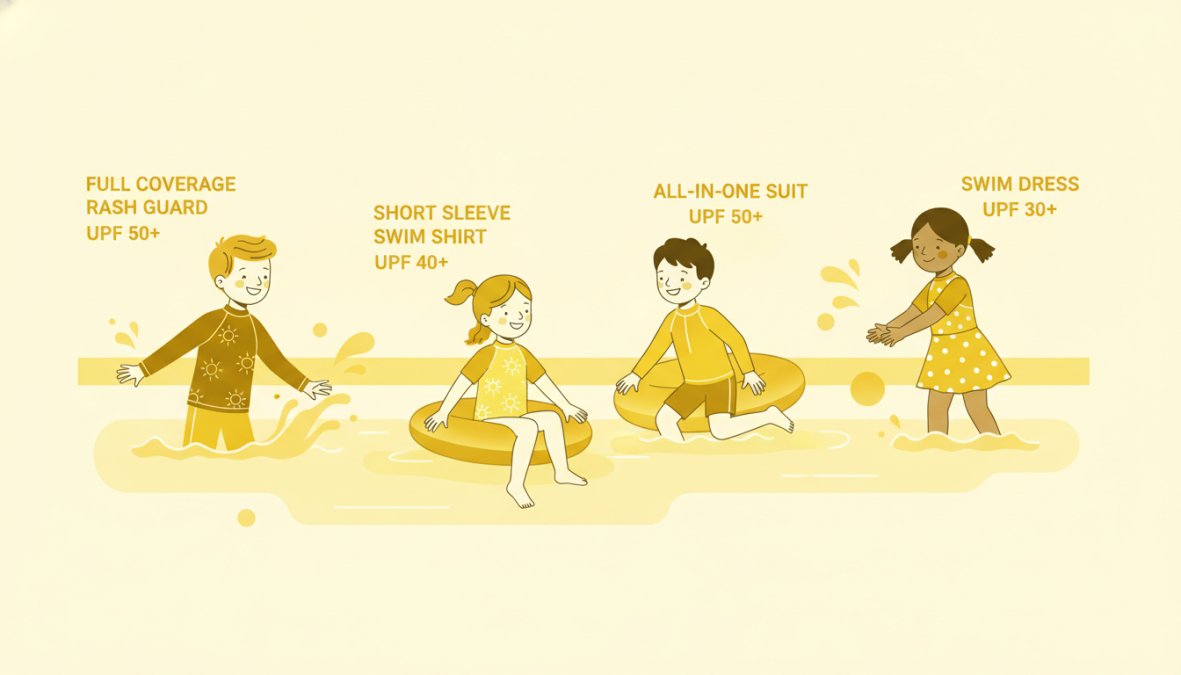
Rash Guards and Swim Shirts
Rash guards are the most popular choice for active swimmers. They're lightweight, quick-drying, and offer full coverage of the torso and arms. Modern rash guards for kids combine functionality with serious UV protection.
The best rash guards feature UPF 50+ fabric, flat-seam construction to prevent chafing, and necklines designed to prevent water pooling. Sleeves typically extend to the wrist, and many include thumb holes to keep sleeves from riding up during activity. Brands like Primary offer affordable, durable rash guards in solid colors that mix and match with any swimsuit bottom. You'll find a variety of styles in our Boys swimsuits and Girls swimsuits collections.
One-Piece Sunsuits and Full-Coverage Options
For maximum protection, one-piece sunsuits extend coverage from the neck down to the ankles and wrists. These are particularly popular for toddlers and young children who spend significant time in the water.
Full-coverage sunsuits eliminate gaps between swimsuit and rash guard that can allow UV rays to reach the skin. They're especially valuable for toddlers who can't reliably reapply sunscreen. The trade-off is convenience, but for beach days or pool parties lasting several hours, the protection is worthwhile. i play. by green sprouts combines full-coverage sun protection with an integrated swim diaper, making it a practical all-in-one solution for infants and toddlers.
Sun Hats and Protective Accessories
Swimwear alone doesn't protect the face, ears, and scalp. A quality swim hat with neck coverage extends UPF protection to these vulnerable zones.
The best swim hats feature wide brims that shade the face and ears, neck flaps extending down the back, secure chin straps, quick-dry materials, and ventilation to prevent overheating. Snapper Rock and Boden offer stylish sun hats that appeal to children, increasing the likelihood they'll actually wear them. Complement your child's swimwear with protective Swim Accessories to complete their sun-safe water outfit.
UPF 50+ Swimwear for Toddlers: Special Considerations
Toddlers can't apply or reapply sunscreen themselves and are often in the water for extended periods. This makes built-in UV protection through clothing critical.
For toddlers under age 4, one-piece sunsuits with UPF 50+ protection offer the most comprehensive defense. When selecting toddler swimwear, prioritize full-length sleeves and legs, secure closures, chlorine-resistant fabrics, and comfortable fits that won't restrict movement. Coolibar specifically designs toddler lines with these priorities, providing neck-to-ankle coverage that remains comfortable enough for toddlers to tolerate.
Key Fabric Technologies: Quick-Dry and Chlorine Resistance
Beyond UPF ratings, fabric technology determines how well swimwear performs in real-world conditions.
Quick-Dry Fabric Technology
Quick-dry fabrics release water rapidly rather than absorbing it. This prevents garments from becoming heavy and uncomfortable, reduces chafing, and allows extended wear. Most quality UV-protective swimwear uses nylon-spandex blends with moisture-wicking properties that pull water away from skin and allow rapid evaporation.
Quick-dry technology becomes especially important for kids in swim lessons or full beach days. A garment that stays wet will be abandoned for a regular t-shirt, defeating UV protection's purpose.
Chlorine and Saltwater Resistance
Chlorine degrades many fabrics over time, breaking down elastic fibers and fading colors. For frequent pool users, chlorine resistance is essential to maintain both appearance and UV-protective properties. Lands' End has built their reputation on chlorine-resistant swimwear designed for frequent swimmers, maintaining elasticity and color through dozens of exposures.
Saltwater presents different challenges, with salt crystals causing stiffness and degradation. Swimwear designed for beach use should be rinsed thoroughly in fresh water after each session. Brands like Cabana Life engineer fabrics for both chlorine and saltwater environments.
Real-World Durability Testing and Longevity
UPF ratings are tested under controlled laboratory conditions. Real-world use, repeated washing, chlorine exposure, sun exposure, and general wear, affects how long that protection lasts.
Quality UV-protective swimwear maintains its UPF rating through at least 50-75 wash cycles when cared for properly. Budget options may lose effectiveness after 20-30 washes. Higher-quality brands like Coolibar or Patagonia often prove more economical than cheaper alternatives requiring replacement after one season.
Patagonia's approach is instructive: they design kids' swimwear from recycled materials with reinforced seams and premium elastic. Their Ironclad Guarantee replaces garments that fail due to manufacturing defects, reflecting confidence in fabric quality.
When evaluating durability, examine seam construction (flat seams last longer), elastic quality, fabric weight, and brand reputation for longevity through parent reviews.
How to Wash UV Protection Swimwear to Maintain Effectiveness
Proper care preserves UV protection and extends garment life.
Rinse immediately after use in cool, fresh water within 30 minutes of water exposure. Hand wash when possible in cool water with mild detergent designed for delicate fabrics, gently agitating for 2-3 minutes. Avoid chlorine-based bleach, which breaks down elastic. Air dry completely in shade, never use a dryer. Store properly in a cool, dry place once completely dry.
Following these steps extends UV-protective swimwear's effective lifespan by 50% or more.
The Benefits of UPF Clothing Beyond Sunburn Prevention
While preventing acute sunburn is the immediate benefit, long-term advantages extend far deeper. Childhood sun exposure accounts for 50-80% of lifetime skin cancer risk. By providing consistent UV protection during peak sun-exposure years, UPF swimwear meaningfully reduces melanoma and non-melanoma skin cancer risk in adulthood.
UV damage accumulates in skin's collagen and elastin, causing premature wrinkles, age spots, and leathery texture. Children wearing UPF protection consistently experience significantly less photoaging by age 40. For children with photosensitivity disorders, UPF clothing is medical necessity. Additionally, children who grow up with sun protection as normal water-activity practice are more likely to maintain sun-protective habits as adults.
The evidence is clear: investing in quality UV-protective swimwear is one of the highest-return preventive health decisions parents can make.
Choosing swimwear that protects your child from harmful UV rays doesn't mean sacrificing style or comfort. Bright & Bold Swimwear combines UPF 30+ protection with high-visibility design that helps lifeguards and parents keep eyes on children in the water. Our Best Sellers collection features vibrant, safe swimwear for both boys and girls, along with rash guards and swim sets that make sun protection part of everyday water play.
| Style | Coverage Level | Best For | Key Benefit |
|---|---|---|---|
| Rash Guard | Torso and arms | Active swimmers, water sports | Lightweight and quick-drying |
| One-Piece Sunsuit | Neck to ankles | Toddlers, extended water time | Maximum coverage, no gaps |
| Swim Shirt | Torso only | Pool lessons, casual swimming | Comfortable and easy to remove |
| Full-Coverage Set | Complete body | Beach days, sensitive skin | Comprehensive protection |
EXTERNAL SOURCES CITED:
American Academy of Dermatology sun safety guidelines
Skin Cancer Foundation UV protection standards
CDC recommendations for child sun safety
Frequently Asked Questions
What does UPF mean in kids' swimwear?
UPF stands for Ultraviolet Protection Factor. UPF 50+ swimwear blocks 97-99% of UVA and UVB rays, providing the highest level of sun-blocking protection available. This rating means only 1-3% of harmful ultraviolet radiation reaches your child's skin when wearing the garment. Higher UPF ratings are particularly important for extended water activities and sensitive skin.
Do kids still need sunscreen if they wear UV protection swimwear?
Yes, dermatologists recommend combining UV protection swimwear with broad-spectrum sunscreen. While best UV protection kids swimwear covers most of the body, exposed areas like the face, ears, hands, and tops of feet still need sunscreen protection. Reapply sunscreen every two hours and after water play for optimal protection against both UVA and UVB rays.
How do I choose the right size for UV protection swimwear?
Proper fit is essential for sun protection. Swimwear should fit snugly but comfortably without restricting movement or causing chafing. Check the manufacturer's size chart carefully, as sizing varies by brand. For best UV protection kids swimwear, avoid oversized fits that allow water to pool underneath, and ensure rash guards and swim shirts cover the shoulders and torso completely.
Does UV protection in swimwear wash out over time?
High-quality UV protection in swimwear is built into the fabric itself and does not wash out with proper care. However, chlorine exposure and sun damage can gradually degrade fibers, reducing longevity. To maintain effectiveness, rinse swimwear in fresh water after each use, wash in cold water with mild detergent, and air dry. Following care instructions helps preserve sun-blocking properties for multiple seasons.
This article was written using GrandRanker