

Bright Colored Swimsuits for Kids: A Safety Guide
Table of Contents
- Why Bright Colored Swimsuits for Kids Matter
- High Visibility Swimwear for Kids: Understanding Neon and Fluorescent Colors
- Best Swimsuit Colors for Water Safety
- UV Protection in Kids Swimwear: Sun Safety Beyond Visibility
- Durable Fabrics and Maintenance of Neon Swimwear
- Building a Complete Water Safety System
- Conclusion
Bright Colored Swimsuits for Kids: A Safety Guide
Last Updated: July 14, 2026
When your child is splashing in the pool or playing in the ocean, can you spot them instantly from across the deck? Bright colored swimsuits for kids aren't just about fashion, they're a critical safety layer that helps parents and lifeguards keep constant visual contact with children in the water. Below, we'll walk you through everything you need to know about choosing high-visibility swimwear that keeps your child safe while they have fun.
Why Bright Colored Swimsuits for Kids Matter
Water safety begins with visibility. When children wear bright colored swimsuits, they become easier to locate in chaotic pool environments where dozens of swimmers might be present. The human eye naturally gravitates toward high-contrast, vibrant colors, and in an emergency, those extra seconds of immediate recognition can be lifesaving.
Supervision works best when you can actually see your child clearly. A child in a dark or muted-colored swimsuit blends into water far more easily than one wearing neon. When bright colored swimwear is combined with active supervision, you've created a two-layer safety system.
Drowning happens silently and quickly. Unlike in movies, struggling children often don't call out or thrash dramatically. A bright colored swimsuit acts as a visual anchor, a constant point of reference that your eyes naturally track, even when momentarily distracted. The investment in high-visibility swimwear is modest compared to the peace of mind it provides.
High Visibility Swimwear for Kids: Understanding Neon and Fluorescent Colors
Neon and fluorescent colors work differently than regular bright colors. They absorb ultraviolet light and re-emit it as visible light, creating a glow effect that makes them appear to shine even in low-light conditions. This is why neon swimwear stands out in ways that regular bright colors cannot match.
The difference between regular bright pink and neon pink is significant. Regular pink might be visible at 20 feet. Neon pink remains visible at 50+ feet, even in overcast conditions. Quality matters more than you might think, cheaper neon dyes fade quickly and lose their visibility advantage within weeks of sun exposure.
Neon Orange, Pink, and Green: Which Colors Work Best
Neon orange reigns as the most visible color in water. Lifeguards and water safety professionals consistently choose neon orange for rescue equipment because it cuts through visual clutter better than any other color. Neon yellow-green (lime or chartreuse) ranks second, creating exceptional contrast in both blue water and on sandy beaches.
Neon pink has grown in popularity, particularly for girls' swimwear. While slightly less visible than orange or yellow-green at extreme distances, neon pink still outperforms all regular colors and provides excellent visibility in typical pool and beach scenarios. The key advantage: children are more willing to wear it, which means they'll actually keep the swimsuit on.
Neon green works well for darker water environments like lakes or deeper pools where water absorbs more light. The worst choice is dark colors, navy, black, dark purple, or dark green, which absorb light and virtually disappear in water.
Color Contrast Testing by Water Type
Water clarity dramatically affects color visibility. In crystal-clear pool water with bright overhead lighting, moderately bright colors perform reasonably well. But in murky lake water, cloudy beach conditions, or evening pool time, only true neon colors maintain reliable visibility.
Ocean water presents unique challenges. The constant movement of waves, the angle of sunlight, and the presence of sand and debris all reduce visibility. Neon colors handle these conditions far better than standard bright colors. Overcast days and evening swim times are when visibility matters most and challenges are greatest, neon maintains visibility through re-emission of UV light when natural contrast is reduced.
Best Swimsuit Colors for Water Safety
The best swimsuit colors for water safety are unambiguously the neon family: orange, yellow-green, pink, and green. Safety researchers have tested this extensively, and the data is clear: neon colors reduce the time required to visually locate a child by 50-75% compared to standard bright colors.
Fluorescent Hues for Maximum Spotting
Fluorescent colors are the gold standard for spotting children in water. The most effective fluorescent swimwear combines a neon base color with a slightly reflective finish, ensuring visibility in bright sunlight and in lower-light conditions. Fluorescent colors maintain their advantage even when partially submerged, with a child's head and shoulders remaining visually distinct from the water background.
The psychological effect of fluorescent colors matters too. When you see bright neon, your brain automatically flags it as important. Your parental instinct to track a neon-colored child is stronger than your instinct to track a child in a regular color, even if you're not consciously aware of it.
Age-Specific Safety Considerations
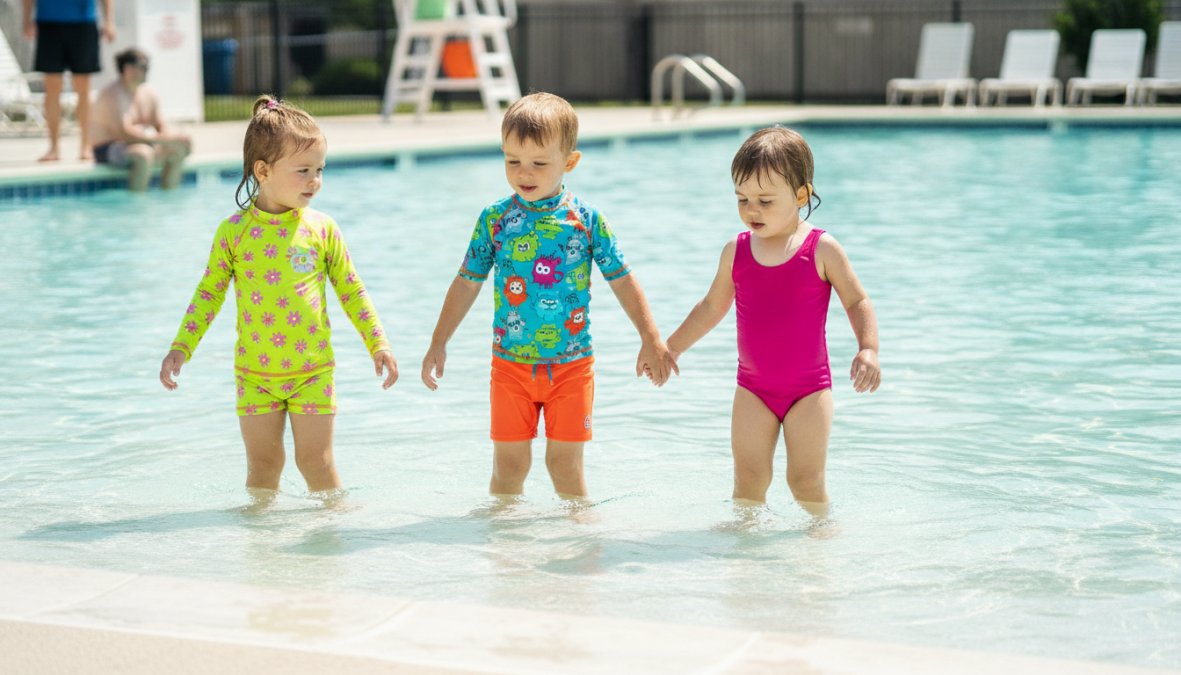
Toddlers and preschoolers (ages 1-4) need maximum visibility because they move unpredictably and tire quickly. Full-coverage rash guards in neon colors provide both visibility and sun protection for young swimmers who are most vulnerable in water.
School-age children (ages 5-10) benefit from bright colored swimsuits but may have stronger style preferences. Offering neon options in trendy cuts ensures they'll actually wear the protective swimwear. Pre-teens and teens (ages 11+) sometimes resist bright colors, viewing them as babyish. Offering neon options in current styles, color-block designs, or asymmetrical cuts helps them feel confident while staying visible.
Children with sensory sensitivities may struggle with bright colors or certain fabric textures. In these cases, the brightest color your child will comfortably wear is the right choice. A child in a moderately bright swimsuit they'll actually keep on provides more protection than an ideal neon suit they'll remove in protest.
UV Protection in Kids Swimwear: Sun Safety Beyond Visibility
Sun protection and visibility work together in quality kids' swimwear. While bright colors help you spot your child, UPF-rated fabrics protect their skin from harmful ultraviolet radiation. Unprotected sun exposure during childhood increases melanoma risk by 75% later in life.
UPF 50+ Standards and What They Mean
UPF 50+ is the highest sun protection rating available for fabrics. It represents the gold standard for children's swimwear, blocking at least 98% of UV rays across both UVA and UVB spectrums. Achieving high UPF ratings requires tightly woven materials and specialized fabric construction.
The durability of UPF protection matters. Lower-quality swimwear loses its UPF rating after a few washes as fabric fibers break down. Premium swimwear maintains its UPF protection throughout an entire season of regular use.
Combining Visibility with Sun Protection
The ideal kids' swimwear combines neon visibility with UPF 50+ sun protection. Full-coverage designs, rash guards, swim shirts, and full-length leggings provide maximum sun protection while increasing visibility by expanding the neon-colored surface area.
Parents often ask whether regular sunscreen plus a regular swimsuit provides adequate sun protection. The answer is no. Sunscreen washes off in water and requires frequent reapplication. UPF-rated swimwear provides consistent, maintenance-free sun protection that lasts throughout the swimming session.
Durable Fabrics and Maintenance of Neon Swimwear
Neon fabrics are more delicate than regular swimsuit materials. The specialized dyes and treatments that create the bright color can break down if exposed to harsh chemicals, excessive heat, or rough handling. Understanding how to care for bright colored swimwear extends its lifespan and maintains its visibility advantage.
The most common mistake parents make is tossing neon swimwear into regular laundry. Chlorine, detergents, and hot water all fade neon dyes rapidly.
Quick-Dry Materials for Active Play
Quick-dry fabrics keep children comfortable during extended water play and reduce time for drying, which means less time for mildew to develop. Premium quick-dry swimwear uses synthetic blends, typically polyester, spandex, and nylon combinations, that shed water efficiently and maintain color brightness even after repeated wetting and drying cycles.
Mesh-lined swimwear offers additional benefits beyond quick-drying. The mesh lining provides breathability, reduces chafing, and allows water to drain quickly rather than clinging to the fabric.
Keeping Neon Colors Vibrant: Care Tips
Rinse your child's swimwear immediately after water exposure. Fresh water removes chlorine and salt that would otherwise fade the neon dyes. Wash neon swimwear separately in cold water with gentle detergent. Hot water opens fabric fibers, allowing dyes to escape. Air dry in the shade, direct sunlight fades dyes over time. Store clean, dry swimwear in a cool, dark place away from heat and light.
Replace neon swimwear annually if your child swims regularly. The specialized dyes gradually fade despite careful maintenance, and a noticeably duller swimsuit reduces visibility protection.
| Care Step | Method | Frequency | Impact |
|---|---|---|---|
| Rinse | Fresh water immediately after use | After every swim | Removes chlorine/salt that fades dyes |
| Wash | Cold water, gentle detergent, separate load | 2-3 times per week | Prevents chemical damage to neon fibers |
| Dry | Air dry in shade | After every wash | Preserves color and prevents mildew |
| Store | Cool, dark location | Between seasons | Maintains dye vibrancy for next year |
Building a Complete Water Safety System
Bright colored swimwear is one essential component of water safety, but it works best within a comprehensive system. Active supervision remains the foundation. No swimwear color, no matter how bright, replaces an attentive adult watching the child continuously. Bright colored swimwear enhances your ability to supervise effectively by making your child easier to track visually.
Swimming lessons teach children skills that reduce drowning risk. Even excellent swimmers can experience emergencies, and bright colored swimwear protects them regardless of their skill level.
Integrating Bright Swimwear with Other Safety Gear
Flotation devices, when appropriate for your child's age and swimming ability, combine effectively with bright colored swimwear. A child wearing a neon swimsuit and a bright-colored flotation vest becomes nearly impossible to miss. Swim caps in bright colors add another visibility layer, particularly for children with dark hair.
Rash guards in neon colors provide both sun protection and visibility while offering a psychological comfort benefit for children who feel self-conscious about their bodies. A child who feels confident in their swimwear is more likely to wear it consistently, which means consistent safety protection.
Family Matching Sets for Easier Supervision
Coordinating swimwear colors across family members creates a visual system that makes supervision easier for everyone. When multiple children wear the same neon color, you can track them as a group. Family matching sets serve a practical purpose beyond aesthetics, parents wearing bright colored swimwear alongside their children model water safety awareness.
Extended family gatherings and large group outings benefit enormously from coordinated bright colored swimwear. Assigning each family unit a specific neon color allows supervisors to instantly identify which children belong to which adults, reducing confusion during group water activities.
Water safety isn't about creating fear, it's about creating systems that let children play freely while you maintain confident supervision. Bright colored swimsuits for kids form the foundation of visual safety, making it dramatically easier to keep track of your child in water environments. Bright & Bold Swimwear specializes in this exact need, combining maximum visibility with UPF 50+ sun protection and durable quick-dry fabrics that maintain their brightness throughout the season. Your child deserves swimwear that works as hard as you do to keep them safe. Explore our boys swimsuits and girls swimsuits to find the perfect combination of safety, comfort, and style for your family's water adventures.
Frequently Asked Questions
Why are bright colored swimsuits better for kids?
Bright colored swimsuits, especially neon and fluorescent options, create high contrast against water and pool surroundings, making children significantly easier to spot for parents and lifeguards. This enhanced visibility is a proven water safety strategy that helps reduce drowning risk by ensuring adults can quickly locate children in the water, even in busy pool environments or during active play.
What color swimsuit is most visible in water?
Neon orange, neon pink, and neon green are among the most visible colors in water due to their fluorescent properties and high contrast against blue water backgrounds. These colors work particularly well in natural sunlight and remain visible even in deeper water or crowded pool settings. The visibility advantage makes these hues ideal for water safety applications.
How does UV protection in kids swimwear work alongside visibility?
High-visibility swimwear with UPF 50+ protection offers dual benefits: the bright colors ensure children remain easily spotted in water, while the UV-protective fabrics shield their skin from sun damage. Many modern bright colored swimsuits combine fluorescent dyes with sun-protective materials, allowing parents to address both water safety and sun protection simultaneously during pool and beach time.
Do bright colored swimsuits fade faster than regular swimwear?
Neon and fluorescent fabrics can fade over time with chlorine exposure and sun exposure, but proper care helps maintain vibrancy. Rinse swimwear in fresh water after each use, avoid prolonged direct sunlight when drying, and store in a cool, dry place. Quality bright colored swimwear from reputable brands is designed to resist fading better than budget alternatives, making durability and maintenance important considerations.
This article was written using GrandRanker