

Durable Swimsuits for Kids Swim Lessons: A Complete Guide
Table of Contents
- Why Durability Matters in Durable Swimsuits for Kids Swim Lessons
- Understanding Chlorine-Resistant Swimwear for Kids
- Best Fabric for Kids Swimsuits: Nylon, Polyester, and Blends
- Swimsuit Fit for Swim Lessons: Comfort Meets Durability
- How to Care for Kids Swimwear to Extend Its Life
- Key Features That Define Durable Kids Swimwear
- Budget vs. Longevity: Making the Right Investment
- Eco-Friendly and Sensory-Friendly Options
Durable Swimsuits for Kids Swim Lessons: A Complete Guide
Last Updated: July 29, 2026
Why Durability Matters in Durable Swimsuits for Kids Swim Lessons
Kids' swimsuits take a beating from chlorine, frequent washing, sand, sun, and constant stretching. For families investing in regular swim lessons, durability is the difference between replacing a suit every month and keeping one intact for an entire season.
This guide from Bright & Bold Swimwear covers what makes durable swimsuits for kids swim lessons different from standard options. Most parents buy whatever's on sale, then wonder why the elastic gives out after six weeks of twice-weekly lessons. The real issue is that they're buying suits designed for occasional beach trips, not sustained pool use.
When you're in the water three, four, or five times a week, fabric choice, construction quality, and proper care become everything. A suit built to last can handle 50+ pool sessions without visible degradation, while a cheap alternative starts showing wear after 10.
Understanding Chlorine-Resistant Swimwear for Kids
Chlorine breaks down elasticity, fades colors, and weakens fibers at a molecular level. Chlorine-resistant fabrics use specific fiber blends and chemical treatments that slow degradation. The best options incorporate nylon-elastane or polyester with protective coatings that create a barrier between the chlorine and the fiber structure.
How Chlorine Degrades Traditional Fabrics
Standard swimsuits absorb chlorine directly into the fiber. The chlorine oxidizes the elastane, the stretchy component that gives a swimsuit its snug fit. Once elastane breaks down, the suit loses its shape permanently, sagging around the legs and losing snugness.
Degradation happens fastest in warm pools with frequent chlorine exposure. A suit worn once a week might last six months; the same suit worn four times a week in a heated pool can fail in four weeks.
What Makes Fabric Truly Chlorine-Resistant
Chlorine-resistant fabrics use tighter weaves and protective chemical treatments. Nylon fibers are naturally more resistant to chlorine than polyester, though both can be treated to improve performance. The key is the elastane-to-nylon ratio and a protective coating that reduces chlorine absorption.
A truly chlorine-resistant suit maintains its color and elasticity through 40-50 pool sessions. According to American Academy of Pediatrics guidance on swim safety, proper swimwear maintenance extends usable life significantly.
Best Fabric for Kids Swimsuits: Nylon, Polyester, and Blends
Fabric composition determines everything about durability. Two identical-looking suits can perform completely differently based on their fiber blend.
Nylon-Elastane Blends and Four-Way Stretch
Nylon-elastane blends are the gold standard for durable swimsuits for kids swim lessons. Nylon is naturally more resistant to chlorine than polyester, and when combined with elastane (spandex), it creates fabric that stretches in all directions while maintaining shape.
Four-way stretch means the fabric stretches and recovers horizontally, vertically, and diagonally, providing full range of motion without restriction. Nylon-elastane blends typically use an 80/20 or 85/15 ratio. The higher the nylon content, the more durable and chlorine-resistant the suit, though too much nylon can feel stiff. The 80/20 sweet spot balances durability with comfort.
Polyester: Durability and Quick-Dry Benefits
Polyester dries faster than nylon and offers good chlorine resistance when properly treated. High-quality polyester blends can last nearly as long as nylon options, especially with a protective chlorine-resistant coating.
A polyester suit dries in 2-3 hours in sunlight versus 4-5 hours for nylon. For kids with back-to-back lessons, polyester is practical. The trade-off is slightly faster color fading and elasticity loss compared to premium nylon blends.
Fully Lined vs. Unlined: What Lasts Longer
A fully lined suit has a second layer of fabric on the inside, providing extra durability, preventing transparency, and adding a barrier between the child's skin and outer fabric. Fully lined suits last longer because the inner lining absorbs stress and protects the main fabric from friction.
Unlined suits feel lighter and dry faster but wear out more quickly in high-use situations. For kids in regular lesson programs, fully lined is worth the slight weight penalty.
| Feature | Fully Lined | Unlined |
|---|---|---|
| Durability | 40-50+ sessions | 25-35 sessions |
| Drying Time | 4-5 hours | 2-3 hours |
| Transparency | No | Possible |
| Comfort | Excellent | Good |
Swimsuit Fit for Swim Lessons: Comfort Meets Durability
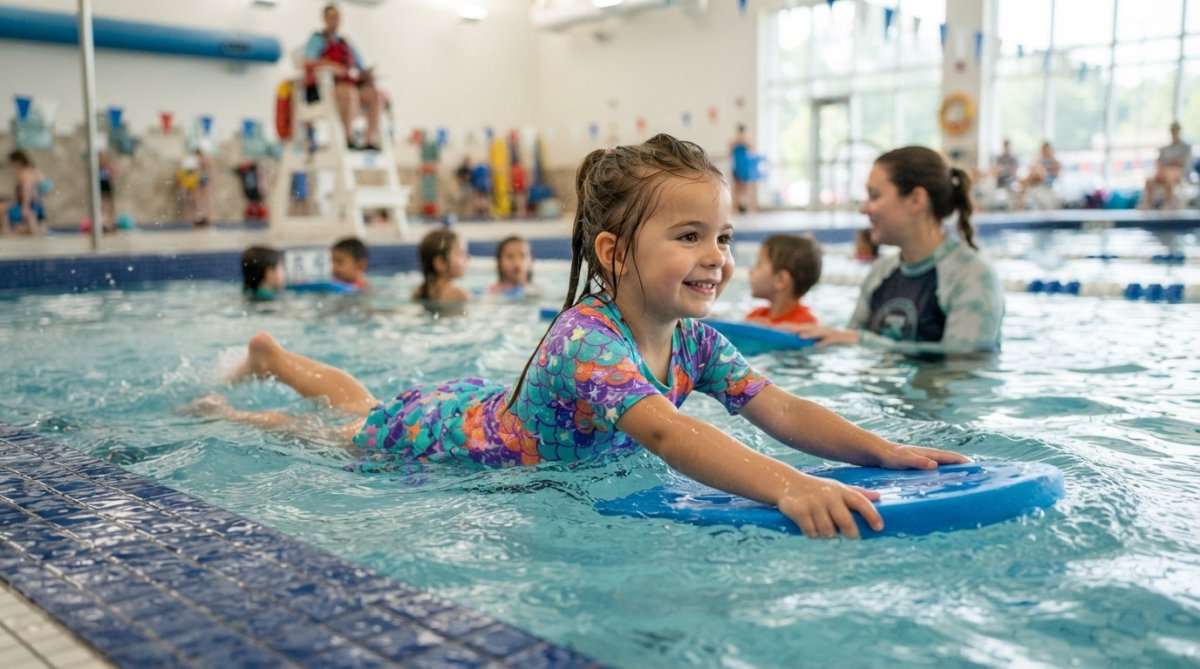
A well-fitting suit is a durable suit. When a swimsuit fits incorrectly, it degrades faster because the fabric is under constant stress or flopping around in the water.
Getting the Right Snug Fit Without Restriction
A snug fit means the suit sits close to the body without gaps or excess fabric. You should be able to fit one finger between the suit and your child's body at the shoulders and hips. If you can fit two fingers, it's too loose. If you can't fit any, it's too tight.
A suit that's too loose shifts in the water, creating friction points that wear through faster. A suit that's too tight restricts movement and creates uncomfortable pressure points. The snug fit should feel secure without being restrictive, allowing your child to raise their arms fully overhead, bend forward, and kick comfortably.
One-Piece vs. Two-Piece: Which Lasts Longer
One-piece suits are more durable for swim lessons. They have fewer seams, meaning fewer points where the suit can fail. Two-piece suits have additional seams at the waistline, creating more opportunities for elasticity loss and seam separation.
One-piece suits also stay in place better during active movement. For a child focused on learning strokes and technique, a one-piece eliminates distractions and movement issues.
How to Care for Kids Swimwear to Extend Its Life
The best swimsuit will fail quickly without proper care. Most parents rinse their swimsuit under the shower and hang it to dry. Proper care can double or triple how long a suit lasts.
Rinsing and Washing Best Practices
Rinse your child's swimsuit immediately after every pool session with fresh water. Rinse from the inside out, working water through the fabric to remove chlorine, salt, and sand. Spend at least 30 seconds rinsing, paying special attention to the crotch area and leg openings.
After rinsing, wash the suit by hand in cool water with a mild detergent designed for swimwear. Soak for 5-10 minutes, then gently agitate the fabric. Never use a washing machine, hot water, bleach, or fabric softeners, all damage the protective coatings and accelerate elastane breakdown.
Drying, Storage, and Seasonal Maintenance
Hang the suit in the shade to dry. Direct sunlight accelerates fading and can damage protective coatings. A shaded area with air circulation dries the suit in 4-6 hours. Never use a dryer; heat destroys elastane and causes permanent shrinkage.
Store the suit in a cool, dry place away from direct sunlight. Avoid plastic bags, which trap moisture and encourage mildew. A mesh bag or cotton pillowcase allows air circulation. At the beginning and end of each season, do a deep rinse with a specialized swimwear cleaner to remove chlorine buildup that regular rinsing misses.
Key Features That Define Durable Kids Swimwear
Specific construction features separate suits that last a full season from ones that fail halfway through.
Seam Integrity and Secure Straps
Seams are the failure point on most swimsuits. Look for suits with flat-lock seams, which overlap fabric edges and stitch through both layers, creating a seam as strong as the fabric itself.
Shoulder straps should be reinforced at attachment points. Check the leg openings and waistband, these areas experience the most stress during active movement. Quality suits have binding along the edges that prevents fraying and maintains elasticity longer than simple hemmed edges.
UPF 50+ Sun Protection and Fade Resistance
UPF 50+ protection blocks 98% of UVA and UVB rays. For kids in swim lessons spending 30-60 minutes in direct sunlight, built-in sun protection eliminates the need for sunscreen on covered areas.
Fade resistance is tied to the dyes used and protective coatings applied to the fabric. High-quality dyes bond strongly to fibers and resist both chlorine and UV fading. A bright color that stays vibrant through 40+ pool sessions indicates quality dyes and protective treatments.
Moisture-Wicking and Quick-Dry Technology
Moisture-wicking fabrics pull water away from the skin to the outer surface, where it evaporates. This keeps kids more comfortable during lessons and reduces time spent sitting in wet fabric. A quick-dry suit dries in 3-4 hours in sunlight versus 5-6 hours for standard suits.
Budget vs. Longevity: Making the Right Investment
The cheapest swimsuit isn't the cheapest option when you account for replacement frequency. A suit that costs half as much but lasts one-quarter as long is actually four times more expensive per wear.
Calculate the real cost by dividing the price by expected pool sessions. A suit that costs more but lasts 50 sessions is cheaper per session than a suit that costs less but fails after 15 sessions. A child in two lessons per week uses a suit for 25 weeks per season. A durable suit might cover two full seasons; a cheap suit might not make it through one.
Bright & Bold Swimwear designs suits specifically for frequent pool use, with high-visibility colors that stay vibrant through extended chlorine exposure. The durable construction and chlorine-resistant fabric mean families aren't replacing suits every month, they're getting a full season or more from a single purchase.
Eco-Friendly and Sensory-Friendly Options
Durability and sustainability often align. A suit that lasts longer uses fewer resources overall because fewer suits need to be manufactured and discarded.
Sustainable Materials Without Sacrificing Performance
Recycled polyester made from plastic bottles performs nearly identically to virgin polyester, drying quickly and resisting chlorine well. Nylon made from recycled fishing nets offers the same durability and chlorine resistance as virgin nylon while addressing ocean plastic pollution.
Suits made from sustainable materials are still subject to the same durability rules, seam quality, fabric weight, and protective coatings determine lifespan. The environmental benefit comes from using reclaimed materials rather than producing new plastic.
Sensory-Friendly Swimwear for Sensitive Kids
Some children have sensory sensitivities that make standard swimsuits uncomfortable. Sensory-friendly swimsuits address these issues with flat seams, tag-free construction, and smooth fabric finishes.
A sensory-friendly suit is still durable if it uses the same quality materials and construction as standard options. A child who's comfortable in their suit is more likely to wear it consistently, which means better value from the purchase.
Getting the right durable swimsuits for kids swim lessons means looking beyond price and brand recognition. Focus on fabric composition, construction quality, fit, and proper care. A suit built with chlorine-resistant nylon-elastane blends, flat-lock seams, and reinforced straps will outlast cheaper alternatives by months.
Bright & Bold Swimwear creates high-visibility swimsuits designed to keep children visible and safe in the water while holding up to the demands of regular lessons. The vibrant colors are engineered to resist chlorine fading, the construction uses reinforced seams and secure straps, and the fits are designed for comfort and range of motion. When you invest in a suit built for durability, you're investing in a season of consistent, comfortable lessons without the frustration of premature wear. Shop Best Sellers to find the right fit for your child's lesson program.
Frequently Asked Questions
What is the best material for kids' swimsuits for swim lessons?
Nylon-elastane blends and polyester are top choices for durable swimsuits for kids swim lessons. Nylon-elastane offers excellent four-way stretch and range of motion, while polyester provides superior chlorine resistance and fade resistance. Fully lined options add durability and comfort. Look for fabrics with moisture-wicking properties and quick-dry technology to withstand frequent pool use and maintain seam integrity over time.
How can I make my child's swimsuit last longer in chlorine?
Extend your swimsuit's life by rinsing it immediately after pool use with fresh water to remove chlorine residue. Wash in cold water with mild detergent, avoid fabric softeners, and air-dry flat away from direct sunlight. Store in a cool, dry place and rotate between two suits if possible. Choose chlorine-resistant fabrics from the start, these are engineered to resist chlorine degradation better than standard swimwear, making them a smart investment for kids in regular swim lessons.
What features should I look for in a durable kids swimsuit?
Prioritize seam integrity, secure straps, and fade-resistant construction. Look for UPF 50+ sun protection to prevent material breakdown from UV exposure. Four-way stretch fabrics provide better durability through repeated movement. Fully lined suits offer longer-lasting comfort and coverage. Quick-dry technology reduces moisture retention that can weaken fibers. High-visibility options add an extra safety benefit, helping parents and lifeguards keep a close eye on children in the water during lessons.
Are expensive swimsuits always more durable for kids' swim lessons?
Not necessarily. Durability depends on fabric quality, construction, and care, not just price. Mid-range options with chlorine-resistant nylon-elastane blends, fully lined construction, and reinforced seams often outlast cheaper alternatives and cost less than premium brands. The real value comes from choosing the right fabric composition, proper maintenance, and realistic expectations about outgrowing. Investing in a quality suit that your child will actually wear comfortably often provides better long-term value than a high-priced option they resist.
This article was written using GrandRanker