

How to Pick Swimwear for Swimming Lessons
Table of Contents
- How to Pick Swimwear for Swimming Lessons: A Parent's Guide
- Understanding Chlorine-Resistant Swimwear for Durability
- Swimwear for Kids Swimming Lessons: Style & Coverage Options
- Fit and Comfort for Active Movement
- UV Protection and Sun Safety in Swim Lesson Attire
- Swim Lesson Accessories That Enhance Performance
- Swimwear for Adult Swimming Lessons: Different Needs
- Facility-Specific Dress Codes and Modesty Considerations
How to Pick Swimwear for Swimming Lessons
Last Updated: July 31, 2026
Learning how to pick swimwear for swimming lessons involves understanding more than just finding something that fits. The right choice protects your child, supports active movement in the water, and builds confidence during those crucial early lessons. At Bright & Bold Swimwear, we've worked with families and swim schools to identify the key factors that separate gear that works from gear that merely exists in your drawer.
The stakes are real. Your child spends weeks building comfort in the water, and the wrong swimsuit can undermine that progress, either through constant adjustment, loss of visibility, or discomfort that makes them reluctant to return. This guide walks you through the specific decisions you'll face, the trade-offs involved, and the practical details most parents discover only after buying their third or fourth suit.
Understanding Chlorine-Resistant Swimwear for Durability
Chlorine breaks down fabric faster than most parents expect. A regular cotton-blend swimsuit can fade, lose elasticity, and develop holes within a season of twice-weekly lessons. Chlorine-resistant materials are engineered to withstand repeated exposure without degrading at the same rate.
The standard for durability is a blend of spandex and polyester. This combination offers several advantages: polyester provides the structural integrity to resist chlorine's chemical breakdown, while spandex delivers the stretch and recovery you need for active movement. When you see "chlorine-resistant" on a label, you're typically looking at a polyester-spandex blend in ratios ranging from 80-20 to 88-12 (polyester to spandex).
Elasticity matters more than most guides acknowledge. A suit with poor shape retention will sag within weeks, creating drag in the water and requiring constant hitching up during lessons. High-quality spandex maintains its elasticity through 50+ wash cycles, while lower-grade blends lose recovery after 15-20 washes. This is why a suit that costs more upfront often outlasts two cheaper alternatives.
The longevity difference is substantial. A chlorine-resistant suit typically survives one full season of lessons (roughly 40-50 pool sessions) with minimal fading or elasticity loss. A non-chlorine-resistant suit often shows visible wear after 20 sessions. For families doing back-to-back lessons or multiple children in the water, durability compounds savings quickly.
Swimwear for Kids Swimming Lessons: Style & Coverage Options
The style you choose affects both safety and comfort. Your decision here shapes how your child moves, how visible they are in the water, and whether they'll actually want to wear the suit to lessons.
One-Piece vs. Bikini & Rash Guard Sets
One-piece swimsuits offer maximum coverage and security. The suit stays in place during active movement, eliminating the constant adjustment that frustrates young swimmers. For children ages 2-5, one-piece designs reduce distraction and let them focus on learning rather than managing their clothing.
Two-piece rash guard sets provide different advantages. A rash guard top stays secure over the torso while offering arm mobility that some children prefer. The short or long sleeves add sun protection, a critical factor if lessons run through summer months. Many children find rash guards more comfortable for extended water time because the top doesn't ride up during vigorous movement.
The choice often depends on your facility's dress code and your child's modesty preferences. Some pools have no requirements; others prefer one-piece suits for young children. Ask your swim school before purchasing, as changing your mind mid-session is frustrating and costly.
Bright & Bold Swimwear offers both styles with high-visibility colors that help lifeguards and parents keep a clear visual line on children in the water. Our Girls swimsuits and Boys swimsuits collections feature both one-piece and rash guard options designed for the active movement swimming lessons demand, with UPF 30+ protection built into many styles.
Strap Width and Secure Fit
Strap width directly impacts security and comfort during lessons. Thin string straps look sleek but offer minimal support during vigorous movement, they can slip off shoulders or dig in uncomfortably during kicking drills. Wide straps, particularly racerback or bladeback designs, distribute pressure across the shoulder and back, staying secure through any movement your child makes.
A racerback strap configuration pulls the straps inward toward the spine, creating a V-shape down the back. This design prevents shoulder slippage and reduces the tendency for straps to dig into the neck. Bladeback designs (sometimes called "cutout back") offer similar security while allowing more shoulder blade mobility.
For children in active swim lessons, wide straps are worth the aesthetic trade-off. Your child spends 30-45 minutes kicking, reaching, and moving in ways that test strap placement constantly. A suit that requires adjustment every few minutes becomes a frustration rather than a tool for learning.
Fit and Comfort for Active Movement
The fit determines whether your child can move freely or feels restricted. A snug fit is essential, loose suits create drag and shift during movement, while overly tight suits restrict breathing and arm motion.
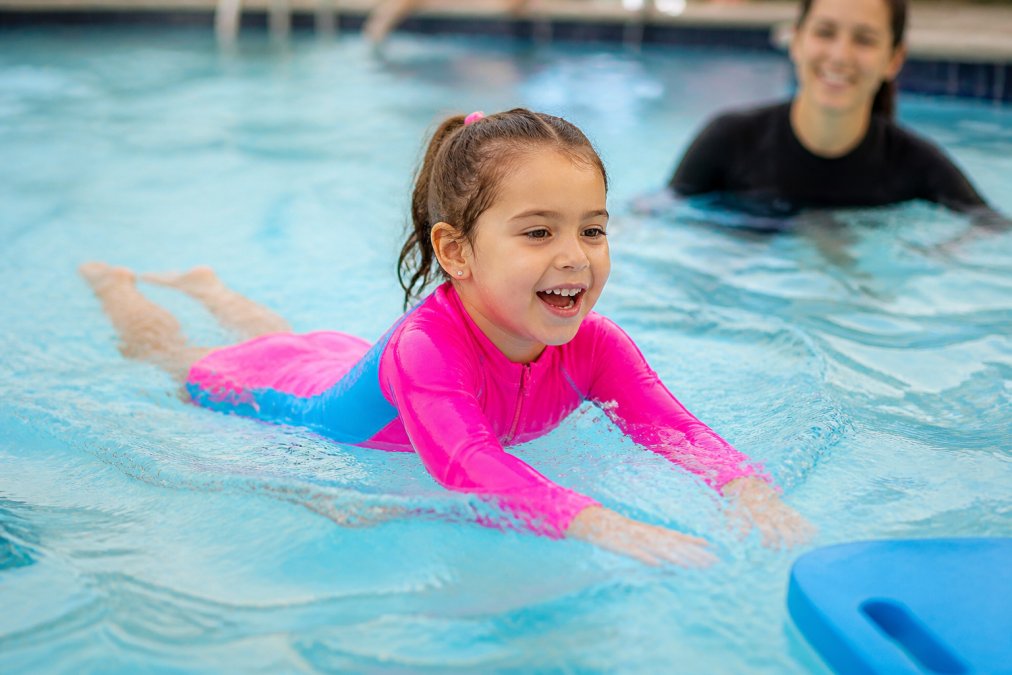
Snug Fit Without Restriction
A proper fit sits snugly against the body without leaving marks or cutting into skin. You should be able to fit one finger under the leg opening and at the shoulders. If you can fit more than one finger, the suit is too loose; if you can't fit any, it's too tight.
Test the fit through movement, not just standing still. Have your child raise their arms overhead, bend forward, and make swimming motions. The suit should move with them without bunching, riding up, or creating pressure points. Many children's first instinct is to size up for comfort, but oversized suits create the opposite effect, they shift and bunch during active movement.
Shape Retention and Elasticity
Shape retention is the suit's ability to bounce back to its original form after stretching. High-quality spandex fibers maintain this property through dozens of wash cycles. Lower-grade blends lose elasticity quickly, leaving suits baggy and uncomfortable.
Test shape retention by stretching the fabric gently and releasing. Quality suits snap back immediately; poor-quality suits return slowly or incompletely. This matters because a suit that loses elasticity early becomes uncomfortable and unsafe, it shifts during movement and loses the snug fit that keeps your child secure in the water.
UV Protection and Sun Safety in Swim Lesson Attire
Sun exposure during swim lessons is cumulative, particularly for lessons that run through late spring and summer months. A rash guard with UPF protection reduces harmful UV exposure significantly.
UPF 30+ protection blocks approximately 97% of UVB rays. UPF 50+ blocks 98%. For young children with sensitive skin, UPF-rated rash guards are a practical addition that requires no extra effort, your child wears the protection automatically during lessons.
Long sleeves provide more coverage than short sleeves, but short sleeves still offer meaningful protection when the fabric carries a UPF rating. The choice between long and short depends on water temperature and your child's comfort preference. Warm-water facilities often favor short sleeves; cooler pools make long sleeves more appealing.
Bright & Bold Swimwear's rash guard sets include UPF 30+ protection built into the fabric, so your child gets sun safety without needing to apply and reapply sunscreen before and after lessons.
Swim Lesson Accessories That Enhance Performance
Accessories extend the functionality of your swimwear and support your child's learning. The right additions make lessons more comfortable and help your child focus on technique rather than managing discomfort.
Swim goggles are essential once your child is comfortable putting their face in the water. Quality goggles prevent chlorine irritation, reduce glare, and help children see underwater, a confidence builder that accelerates learning. Avoid goggles that fog easily or leak; they create frustration and distract from lessons.

Bright & Bold Swimwear's Swim Accessories collection includes colorful goggles designed for ages 3-12 in bright colors that match the high-visibility approach to water safety. Colorful goggles also make it easier to spot your child in the water.
Swim caps protect hair from chlorine while keeping hair out of eyes during lessons. For children with longer hair, a cap is nearly essential, loose hair in the face creates constant distraction during drills.
Hooded towels designed for post-lesson warmth speed up drying and help your child stay comfortable during the transition from pool to changing area. Quality microfiber towels dry faster than standard cotton, reducing the time your child spends damp and cold.
Swimwear for Adult Swimming Lessons: Different Needs
Adults in swim lessons have different priorities than children. Comfort during extended water time, professional appearance, and performance-oriented features matter more.
Adults typically prefer one-piece suits or swim trunks with fitted tops. Coverage preferences shift toward modesty and fit rather than the visibility considerations that drive children's choices. A well-fitting one-piece suit allows full range of motion without creating self-consciousness during lessons.
For adults, chlorine-resistant durability becomes even more important. If you're committing to weekly lessons over several months, a quality suit will outlast cheaper alternatives by many months. The upfront investment pays off through durability and consistent fit throughout your learning journey.
Adult swimmers also benefit from rash guards, particularly if lessons occur outdoors or in facilities with strong sun exposure. Long sleeves provide arm protection while allowing the shoulder mobility that adult swimmers need for proper stroke technique.
Facility-Specific Dress Codes and Modesty Considerations
Before purchasing, understand your facility's requirements. Some pools have strict dress codes; others have none. Public pools often require one-piece suits for young children; private swim schools may allow rash guard sets.

Modesty considerations vary by family and facility. Some parents prefer maximum coverage for their children; others prioritize comfort and mobility. Your child's own preferences matter too, a self-conscious child will resist wearing something they feel uncomfortable in, regardless of how practical it might be.
Ask your swim instructor about typical attire at your facility. You'll see what other children wear, which helps you understand the norm and make choices that fit your comfort level. Bright & Bold Swimwear offers both full-coverage rash guard options and traditional one-piece designs, so you can match your facility's culture while maintaining high-visibility safety features.
Post-lesson care extends the life of your swimwear significantly. Rinse your child's suit in fresh water immediately after lessons to remove chlorine, salt, and sweat. This simple step prevents the chemical breakdown that shortens suit life. Hang suits to dry rather than using a dryer, heat damages spandex and causes premature elasticity loss.
| Decision Point | Best Choice | Why It Matters | Timeline |
|---|---|---|---|
| Material | Chlorine-resistant polyester-spandex blend | Survives 40+ pool sessions without fading or elasticity loss | Visible by week 3 of lessons |
| Style | One-piece for beginners, rash guard for sun protection | One-piece provides security; rash guard adds UV protection | Choose before first lesson |
| Strap Design | Wide racerback or bladeback | Prevents shoulder slippage during active movement | Affects comfort every session |
| Fit | Snug with one-finger test | Proper fit prevents shifting and drag | Test before purchase |
| Sun Protection | UPF 30+ for summer lessons | Reduces cumulative UV exposure over season | Matters more for outdoor pools |
| Accessories | Goggles and cap for extended lessons | Goggles build confidence; cap prevents hair distraction | Add as child progresses |
| Facility Match | Confirm dress code before purchasing | Wrong style creates awkward conversations mid-season | Check in week 1 |
Picking the right swimwear for swimming lessons removes one obstacle from your child's path to water confidence. The right suit stays in place, moves with your child, and lasts through a full season of lessons without degradation. Bright & Bold Swimwear's high-visibility designs combine durability with the safety-first approach that helps parents and lifeguards maintain clear visual contact throughout lessons. Start with a quality chlorine-resistant suit that fits properly, add sun protection through rash guards or UPF-rated fabric, and watch your child's comfort and confidence grow alongside their swimming skills.
Frequently Asked Questions
What kind of swimsuit is best for swimming lessons?
The best swimsuit for swimming lessons combines a snug, secure fit with chlorine-resistant fabric and shape retention. For children, rash guard sets or one-piece styles offer full coverage and protection. Look for racerback or bladeback designs that keep straps in place during active movement. High-visibility colors help instructors and parents monitor your child, while UPF protection adds sun safety during outdoor lessons.
What material should I choose for chlorine-resistant swimwear?
Look for swimwear made from polyester-spandex blends, which resist chlorine degradation better than standard materials. These fabrics maintain elasticity and color vibrancy through repeated pool exposure. Avoid 100% cotton or low-quality synthetics that fade quickly and lose shape. Quality chlorine-resistant materials ensure your investment lasts through multiple seasons of lessons and practice.
How do I know if the fit is right for swim lesson activities?
A proper fit allows snug contact with your child's body without restricting arm or leg movement. The swimsuit should stay in place during active movement, kicking, and diving without riding up or slipping. Racerback straps prevent shoulder slippage during freestyle motions. Test the fit by having your child raise their arms, bend, and move, they should feel secure and comfortable, not constrained.
Why is UV protection important in swim lesson swimwear?
Children spend extended time in direct sunlight during outdoor lessons and pool time. UPF 30+ protection in swim lesson attire reduces harmful UV exposure and skin damage risk. Long-sleeve rash guards offer maximum sun safety while maintaining comfort and mobility. This added protection is especially important for fair-skinned children or those with sun sensitivity, making UV-protective swimwear a practical investment in long-term skin health.
This article was written using GrandRanker