

How to Prevent Pool Accidents: 8 Essential Safety Layers
Table of Contents
- Understanding Pool Accident Risks: Why Prevention Matters
- Layer 1: Constant Adult Supervision and Water Watcher Awareness
- Layer 2: Physical Barriers, Pool Fencing, Gates, and Drain Covers
- Layer 3: Water Safety Rules for Kids and Swimming Skills
- Layer 4: Safety Equipment, Life Jackets, Floats, and Visibility
- Layer 5: Best Pool Alarms for Safety and Smart Home Integration
- Layer 6: CPR Training for Pool Owners and Emergency Preparedness
- Pool Safety Checklist: Your Maintenance and Risk Reduction Guide
Last Updated: July 13, 2026
Understanding Pool Accident Risks: Why Prevention Matters
Pool-related injuries remain a leading cause of unintentional injury for children. Effective prevention requires layering multiple safety measures so that if one fails, others catch the gap. This guide walks you through eight essential safety layers that, when combined, dramatically reduce risk.
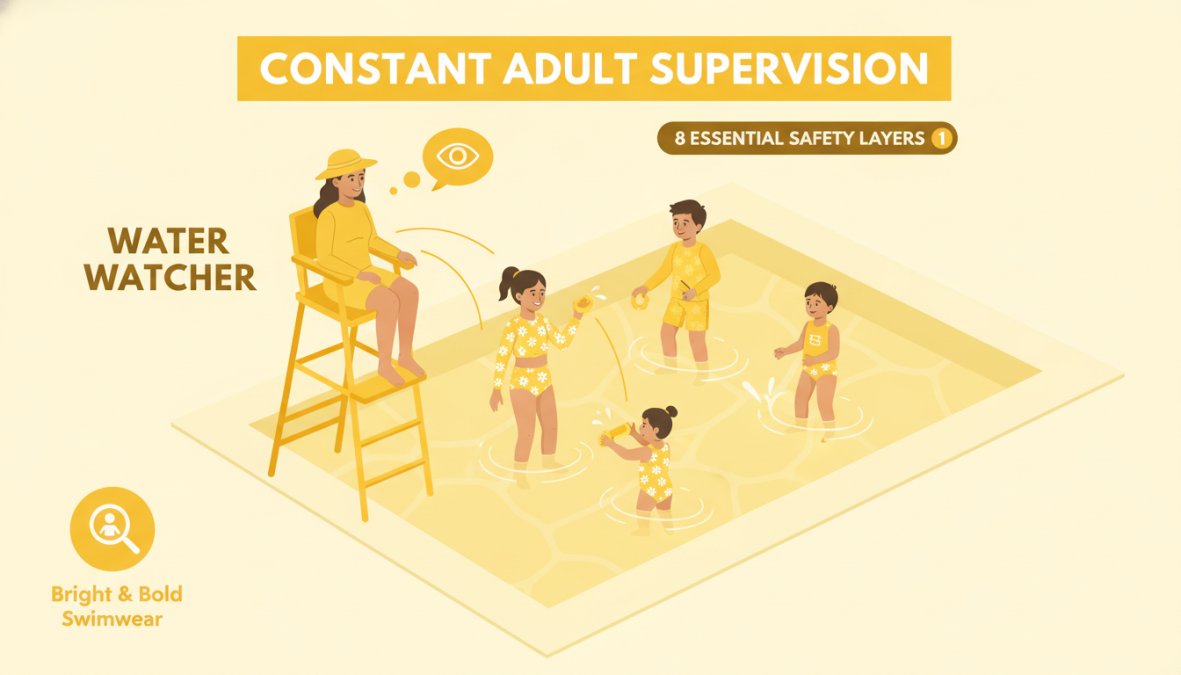
Layer 1: Constant Adult Supervision and Water Watcher Awareness
Supervision is the single most powerful tool for preventing pool accidents. A designated adult must maintain uninterrupted visual contact with anyone in or near the water at all times, no phones, no distractions, no exceptions.
Recognizing the signs of drowning
Most people imagine drowning as dramatic splashing and calls for help. In reality, a drowning child is often silent. The head tilts back, mouth at water level, eyes glassy or closed. Watch for these specific warning signs: vertical body position in the water, inability to move toward safety, gasping or irregular breathing, and lack of coordinated limb movement. If you see any of these, assume it's an emergency and act immediately.
Designated water watchers and rotation systems
When multiple adults are present, assign one person as the active water watcher for a specific time period, typically 15-30 minutes. This person's sole job is watching the water. They don't supervise other children on land, answer phones, or engage in conversation. Rotate watchers on a schedule using a clipboard with names and times. When the designated watcher's shift ends, they explicitly hand off responsibility to the next adult, who acknowledges they're taking the role.
Layer 2: Physical Barriers, Pool Fencing, Gates, and Drain Covers
Physical barriers create the second line of defense by preventing unsupervised access to the pool.
Four-sided fencing and self-closing gates
The most effective barrier is a four-sided fence that completely surrounds the pool, separating it from the house and yard. The fence should be at least four feet high (five feet is better for older children). The fence must have self-closing, self-latching gates that open away from the pool and latch at a height a small child cannot reach, typically 54 inches or higher. Test the latch regularly. A latch requiring two actions to open is more effective than a simple push-button. Check the fence regularly for gaps and repair any damage immediately.
Anti-entrapment drain covers and suction hazard prevention
Drain suction can trap a child underwater in seconds. Modern pools must have anti-entrapment drain covers that meet safety standards. Check drain covers regularly to ensure they're properly fitted and undamaged. If you have an older pool with a single main drain, add a secondary drain or install a drain safety valve that prevents suction from exceeding safe levels.
Layer 3: Water Safety Rules for Kids and Swimming Skills
Teaching children water safety awareness and swimming competency creates a third protective layer.
Age-appropriate swimming lessons and competency milestones
Swimming lessons should begin early. Children as young as one year can start water orientation and survival skills training. By age four, many children can learn basic swimming strokes and water safety principles. Lessons should be continuous; a year off means skills deteriorate significantly. Look for instructors certified by organizations that emphasize water safety and survival skills. A competent child swimmer should be able to: enter the water safely, float on their back for extended periods, move toward safety, and call for help.
Teaching water safety awareness and near-drowning prevention
Teach children: never run near the pool, never swim alone, always tell an adult where they're going, and never assume they can handle deeper water. Explain that even good swimmers can get in trouble if they slip, hit their head, or panic. Discuss what to do if they see someone in distress: get an adult immediately rather than attempting a rescue themselves. Make water safety rules consistent and enforce them every single time.
Layer 4: Safety Equipment, Life Jackets, Floats, and Visibility
Appropriate safety equipment serves as a fourth layer of protection.
Choosing ASTM-approved life jackets for different ages
A properly fitted ASTM-approved life jacket can keep a child's airway above water even if they're unconscious. For children who are weak swimmers, non-swimmers, or around unfamiliar water, a life jacket is essential. Select a jacket rated for your child's weight and age. Check that the jacket has: multiple straps that fasten securely, a crotch strap (critical to prevent the jacket from riding up), and proper weight rating. Test it in shallow water first.
High-visibility swimwear for better spotting in water
A child in dark swimwear blends into pool water, making them harder to spot quickly. Bright, high-visibility colors, neon yellow, bright orange, hot pink, make a child stand out against the water. Bright & Bold Swimwear specializes in high-visibility children's swimwear designed to help parents and lifeguards keep a clear eye on children in the water. Available in boys swimsuits and girls swimsuits, our collection combines safety with style. Combine high-visibility swimwear with other safety layers, visibility helps supervision work better but isn't a replacement for active watching.
Layer 5: Best Pool Alarms for Safety and Smart Home Integration
Pool alarms provide a fifth layer by alerting adults to unexpected water entry or disturbance.
Types of pool alarms: surface, immersion, and perimeter
Surface alarms detect waves or disturbances on the water surface. Immersion alarms are worn by the swimmer, typically a wristband or clip, and activate when submerged. Perimeter alarms detect when someone crosses a boundary around the pool. The most effective approach combines multiple alarm types: a perimeter alarm catches unauthorized approach, a surface alarm detects unexpected water entry, and a wristband alarm provides backup for young children.
Connecting alarms to smart home systems for real-time alerts
Modern pool alarms can send alerts to your smartphone, allowing you to respond immediately even if you're inside the house. Set up alerts to go to multiple phones if possible. Test the system regularly to ensure notifications are working and that you respond quickly when you receive them.
Layer 6: CPR Training for Pool Owners and Emergency Preparedness
The sixth layer addresses what happens if an accident does occur.
Getting certified and staying current with CPR skills
Every adult who supervises children around water should be CPR-certified. CPR certification requires a course (typically 4-6 hours) where you learn chest compressions, rescue breathing, and how to use an AED (automated external defibrillator). Certification is valid for two years, after which you need recertification. Know where the nearest AED is located. In an emergency, every second counts.
First aid kits and emergency action plans
Keep a well-stocked first aid kit poolside with bandages, antibiotic ointment, pain relievers, antihistamines, tweezers, triangular bandages, elastic wraps, and emergency contact information. Create a written emergency action plan specifying: who calls 911, where the nearest phone is, the pool's address, location of the first aid kit, location of the AED, and emergency contact numbers. Post this plan where everyone can see it and practice it occasionally.
Pool Safety Checklist: Your Maintenance and Risk Reduction Guide
Maintaining your pool safely requires ongoing attention to equipment, rules, and compliance.
| Task | Frequency | Impact |
|---|---|---|
| Check gate latch and fence for gaps | Weekly | Prevents unauthorized access |
| Inspect drain covers for damage | Weekly | Prevents entrapment hazards |
| Test pool alarms and smart home notifications | Monthly | Ensures early warning system works |
| Check water chemistry and filtration | Daily | Prevents waterborne illness |
| Inspect life jackets for wear or damage | Monthly | Ensures equipment reliability |
| Review supervision plan with all caregivers | Before each season | Ensures everyone knows their role |
| Recertify CPR training | Every 2 years | Maintains emergency response skills |
| Drain and clean skimmer baskets | Weekly | Maintains proper water circulation |
Monthly and seasonal maintenance safety tasks
Monthly: Test all alarms. Inspect the fence, gates, and latches for damage. Check that drain covers are secure. Verify that life jackets fit properly. Review your emergency action plan with anyone who supervises the pool. Seasonally: Have a professional inspect the pool structure, plumbing, and drain system. Check that all ASTM-standard safety equipment is present and functional. Update emergency contact information.
Compliance with ASTM standards and local safety regulations
Know what safety requirements apply to your pool. ASTM International publishes standards for pool safety equipment: drain covers must meet ASTM F413, life jackets must meet ASTM F1123, and fencing must meet ASTM F1908. Check with your local health department or building inspector to understand your specific requirements. Compliance is both a legal requirement and crucial for safety.
Preventing pool accidents requires commitment to multiple layers of protection working together. Supervision catches the moment something goes wrong. Barriers prevent access. Swimming skills and safety awareness help children. Equipment provides backup. Alarms alert you to danger. CPR training lets you respond effectively. Ongoing maintenance ensures everything works when needed.
The most important step you can take right now is implementing constant, attentive supervision. Everything else builds on that foundation. High-visibility swimwear like our best sellers at Bright & Bold Swimwear makes supervision more effective by ensuring children remain visible at all times. Combined with the other layers in this guide, you create an environment where children can enjoy water safely.
Frequently Asked Questions
What are the most common causes of pool accidents and how can I prevent them?
Pool accidents typically result from lack of supervision, inadequate barriers, weak swimming skills, and failure to recognize drowning signs. Prevention requires layers of protection: constant adult supervision, physical barriers like fencing and drain covers, swimming lessons, life jackets for weak swimmers, pool alarms, and CPR training. No single measure is foolproof, combining multiple safety strategies significantly reduces risk and creates a safer environment for all pool users.
What should be included in a comprehensive pool safety checklist?
A pool safety checklist should cover: four-sided fencing with self-closing gates, anti-entrapment drain covers meeting ASTM standards, functioning pool alarms, accessible life jackets and safety equipment, CPR certification for supervisors, clear water safety rules, regular drain and equipment maintenance, emergency contact information, and first aid supplies. Review this checklist monthly and before each swimming season. Include items specific to your pool type, residential or public, and your local safety compliance requirements.
How effective are pool alarms and what types work best?
Pool alarms are highly effective as part of a layered safety approach. Surface alarms detect waves and disturbance, immersion alarms trigger when a person enters water, and perimeter/gate alarms alert when barriers are breached. Smart home integration allows real-time alerts to your phone. However, alarms should never replace supervision. Combining alarms with constant adult watching, barriers, and CPR training creates the strongest defense against pool accidents and near-drowning incidents.
Why is CPR training important for pool owners, and how often should I get certified?
CPR training is critical because quick response in the first minutes after a drowning can save a life. Pool owners and regular supervisors should obtain CPR certification and renew it every two years to stay current with guidelines. Many organizations offer courses specifically for water-related emergencies. Combined with first aid knowledge and an emergency action plan, CPR certification empowers you to respond confidently if an accident occurs, dramatically improving survival outcomes.
This article was written using GrandRanker