

How to Spot Child Underwater: Essential Signs & Safety
Table of Contents
- How to Spot Child Underwater: Visual Cues Every Parent Should Know
- Signs of Drowning vs. Playing: Know the Difference
- Secondary Drowning and Delayed Symptoms: What Parents Must Monitor
- Drowning Prevention Tips for Parents: Reducing Risk Before It Happens
- What to Do After a Near Drowning Incident: Immediate and Follow-Up Care
- Drowning Detection Systems and Technology: Modern Safety Tools
- How to Spot Child Underwater in Different Contexts: Pools, Beaches, and Open Water
- Conclusion: Vigilance, Visibility, and Confidence in Water Safety
How to Spot Child Underwater: Essential Signs & Safety
Last Updated: July 6, 2026
How to Spot Child Underwater: Visual Cues Every Parent Should Know
Drowning happens silently and quickly, often in less than two minutes and within arm's reach of a supervising adult. A child in genuine aquatic distress rarely makes noise. Instead, they experience "instinctive drowning response," where their body's survival reflex prevents them from calling out.
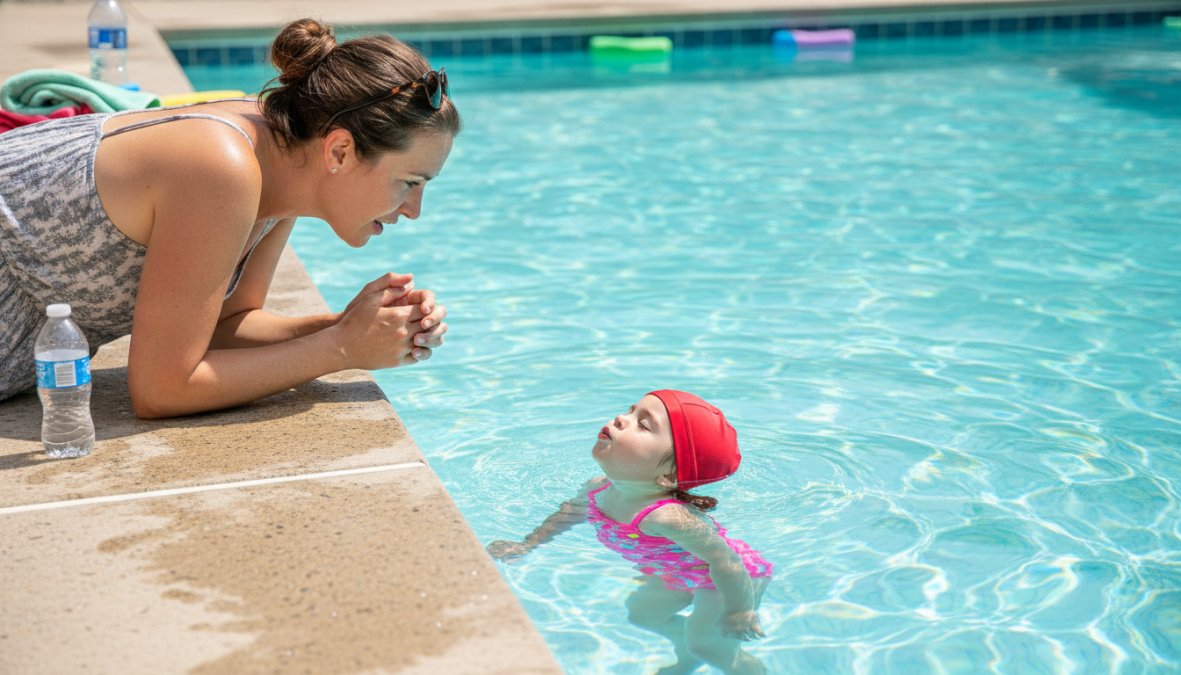
A drowning child's mouth will be at water level with their head tilted back slightly. Their eyes may be glassy or unfocused, and their body will be vertical in the water rather than horizontal. They may show signs of respiratory distress, including rapid breathing or persistent coughing. These are subtle movements, not the thrashing Hollywood portrays, which is why vigilant supervision matters so much.
According to the American Academy of Pediatrics, most child drowning deaths occur during moments when supervision lapses, even briefly. Recognition is your first line of defense.
The Silent Nature of Aquatic Distress
Drowning is called "silent" because it lacks obvious warning signs. A child experiencing aquatic distress cannot wave, yell, or swim to safety. Their body's involuntary response, the instinctive drowning response, takes over, making it impossible to voluntarily control their airway or call for help.
During this response, the child's larynx closes to prevent water from entering the lungs, making it impossible for them to cry out. Their arms may move downward in an attempt to push themselves up, but they cannot reach outward to grab a rescuer. The entire sequence typically lasts only 20 to 60 seconds before hypoxia affects their brain function and consciousness.
Secondary drowning occurs when a child appears to recover after a water-related incident, only to experience serious complications hours later. Water in the lungs triggers inflammation and fluid accumulation, which gradually impairs oxygen absorption.
Physical Indicators to Watch For
Recognizing the physical signs of a child in distress underwater requires knowing exactly what drowning looks like:
Head Position and Facial Expression: A drowning child's head will be tilted back or turned to the side with their mouth open. Their eyes often appear glassy or unfocused. Expression alone is not a reliable indicator.
Body Posture: A child in genuine aquatic distress will be vertical or nearly vertical in the water. Their legs may not be moving, or they may paddle weakly downward. A child trying to stay afloat horizontally uses their legs to kick; a child in distress cannot maintain this position.
Respiratory Signs: Listen for gasping, choking, or persistent coughing. A child who has inhaled water will show signs of respiratory distress, rapid or shallow breathing, wheezing, or difficulty catching their breath.
Collarbone and Rib Retractions: When a child struggles to breathe, the skin around their ribs and collarbone may pull inward. This indicates significant work of breathing and requires immediate medical evaluation.
Nostril Flaring: A child working hard to breathe may flare their nostrils. Combined with other signs like retractions or rapid breathing, this signals respiratory distress.
Signs of Drowning vs. Playing: Know the Difference
Distinguishing between a child playing and a child in genuine distress is essential. Many near-drowning incidents occur because parents mistake the signs of drowning for normal water play.
Behavioral Red Flags During Water Time
A child playing in water typically moves with purpose and direction. A child in distress remains relatively stationary or moves without clear intention. Playing children call out, laugh, and engage with others. A child in aquatic distress is silent or makes only gasping or choking sounds. They cannot respond to your voice.
| Behavior | Playing | In Distress |
|---|---|---|
| Head position | Varied, moving | At or below water level |
| Mouth | Closed or open while speaking | Open, at water level |
| Responsiveness | Answers when called | Silent or unresponsive |
| Body movement | Purposeful swimming or play | Vertical, minimal movement |
| Breathing | Normal, rhythmic | Gasping, rapid, or shallow |
Age-Specific Cues for Different Developmental Stages
Toddlers (Ages 1-3): Toddlers have minimal swimming ability and tire quickly. Watch for any child who is silent and vertical in the water. A toddler who stops moving or has a blank expression needs immediate assistance.
Preschoolers (Ages 3-5): Preschoolers may have some water comfort but limited swimming skills. Watch for rapid exhaustion, inability to reach the edge, or sudden quietness after initial splashing.
School-Age Children (Ages 6-10): School-age children may have swimming lessons but often overestimate their ability. Watch for signs they're struggling to stay afloat, rapid head movements, inability to move toward safety, or signs of respiratory distress.
Older Children (Ages 11+): Older children are more likely to experience secondary drowning after a water-related incident. Watch for lethargy, confusion, difficulty staying awake, or persistent coughing in the hours following water activities.
Secondary Drowning and Delayed Symptoms: What Parents Must Monitor
Secondary drowning represents a critical hidden danger. A child can appear to recover completely from a water-related incident, only to develop serious respiratory complications hours later.
Understanding Dry Drowning and Pulmonary Edema
When a child inhales water or experiences prolonged submersion, their airway and lungs become irritated. Even if the child coughs out the water and seems fine, inflammation begins in the airways and lungs. This inflammation causes fluid to accumulate in the lungs, a condition called pulmonary edema.
As fluid builds up, the lungs' ability to absorb oxygen decreases. The child's oxygen saturation drops, even though they're breathing normally. This process can take hours to develop, which is why a child who seemed fine at 2 PM may show serious symptoms by bedtime.
Understanding the Timeline: Symptoms of secondary drowning typically appear within 1-24 hours of the water-related incident. Some children show signs within minutes, while others may not display symptoms until the following day.
Post-Incident Monitoring Timeline and Warning Signs
After any water-related incident, implement a structured monitoring protocol.
Immediate (First 30 minutes): Watch for persistent coughing, wheezing, or difficulty breathing. Check the child's color; pale or bluish skin indicates oxygen deprivation. Observe their alertness and responsiveness.
Short-term (2-4 hours): Monitor for lethargy or unusual tiredness. A child who is difficult to wake may be experiencing hypoxia. Watch for persistent coughing or wheezing and take the child's temperature.
Extended (4-24 hours): This is the critical window for secondary drowning. Watch for persistent coughing or wheezing, rapid or shallow breathing, difficulty staying awake or confusion, chest pain, vomiting, fever, or lethargy.
Drowning Prevention Tips for Parents: Reducing Risk Before It Happens
Prevention is always superior to rescue. Understanding how to reduce drowning risk protects your child far more effectively than relying on rescue skills alone.
Supervision Strategies and Active Watching Techniques
Active supervision means watching your child with undivided attention, not passive observation while scrolling your phone.
Designated Watcher Approach: Assign one adult to be the "water watcher" during any water activity. This person's sole responsibility is watching the children in and around the water. They do not drink alcohol, use their phone, or engage in other activities. When this person needs a break, another designated adult takes over.
Positioning for Visibility: Position yourself where you can see the entire water area. Sit at pool level rather than standing for a better view of children underwater. Maintain a clear line of sight at all times.
Constant Head Counts: Regularly count the children in the water and verify each child's location every few minutes. Know where every child is at all times.
Recognize Fatigue: Watch for signs that a child is tiring. Reduced movement, slower swimming, or difficulty staying afloat indicates it's time to exit the water.
Using High-Visibility Swimwear to Keep Children Visible
Visibility is a critical layer of protection. High-visibility swimwear helps you spot your child instantly and helps lifeguards monitor large groups more effectively.
Bright & Bold Swimwear designs children's swimsuits specifically to enhance visibility in water. Vibrant colors, neon pink, bright orange, electric yellow, stand out dramatically against blue water. This visibility advantage is particularly important in busy pools, at beaches, or in open water where multiple children are present.
What to Do After a Near Drowning Incident: Immediate and Follow-Up Care
If your child experiences a near-drowning incident or significant water aspiration, immediate and follow-up care are critical.
Emergency Response and When to Call Emergency Medical Services
Immediate Actions: If your child is unresponsive and not breathing, begin CPR immediately. Call emergency medical services immediately. Do not wait to see if the child improves.
If the Child is Conscious: Keep the child warm and calm. Do not give them anything to eat or drink. Place them in the recovery position, on their side with their head tilted back. Monitor their breathing and responsiveness while waiting for emergency services.
Transport to Hospital: Emergency medical services will transport your child to the hospital for evaluation. Do not refuse transport, even if the child seems fine.
Hospital Triage and Oxygen Saturation Monitoring
Upon arrival at the hospital, medical staff will assess your child's respiratory status. Oxygen saturation, the percentage of oxygen in the blood, is the critical measurement. Normal oxygen saturation is 95% or higher.
Medical staff will place a pulse oximeter on your child's finger or toe to monitor oxygen saturation continuously. If saturation is low, supplemental oxygen will be provided. Chest X-rays may be taken to assess for fluid in the lungs.
Post-Discharge Monitoring: After discharge, continue monitoring your child for warning signs of secondary drowning. If any symptoms develop, return to the hospital immediately.
Drowning Detection Systems and Technology: Modern Safety Tools
Wearable drowning detection devices use motion sensors and algorithms to identify the specific movements associated with drowning. These devices detect the characteristic vertical position and reduced movement of a child in distress, alerting caregivers within seconds.
Automated pool monitoring systems use underwater cameras and artificial intelligence to detect drowning in real time. Facilities using these systems report faster response times and improved safety outcomes.
How to Spot Child Underwater in Different Contexts: Pools, Beaches, and Open Water
The signs of aquatic distress remain consistent across different water environments, but context influences how you supervise and respond.
Context-Specific Spotting Techniques and Environmental Factors
Swimming Pools: Pools offer the clearest visibility. However, busy pools with many children create visual challenges. Use high-visibility swimwear to distinguish your child from others. Never assume lifeguards are watching your specific child.
Beaches and Open Water: Open water presents greater challenges. Waves, currents, and murky water reduce visibility. Maintain closer physical proximity to your child. Consider using a wrist tether that connects you to your child. High-visibility swimwear becomes even more critical.
Beaches with Lifeguards: Lifeguard presence provides additional protection but does not eliminate your responsibility for supervision. Position yourself where you can see both your child and the lifeguard station.
Rivers and Lakes: Moving water creates additional hazards. Currents can carry a child away from safety. Supervise children in these environments with extreme caution. Consider life jackets for children who cannot swim strongly.
Water Parks and Splash Pads: Shallow water creates a false sense of security. Children can still drown in inches of water. Maintain constant supervision even in shallow areas.
Conclusion: Vigilance, Visibility, and Confidence in Water Safety
Drowning remains a leading cause of unintentional injury death among children, yet it is largely preventable through proper supervision, education, and preparation. Understanding how to spot child underwater transforms your ability to protect your child in any water environment.
The most effective protection combines three elements: knowledge of drowning signs, active supervision, and enhanced visibility. When you know what to look for, the vertical position, the glassy eyes, the silent struggle, you can intervene in seconds. When you supervise actively with undivided attention, you eliminate dangerous gaps. When your child wears high-visibility swimwear like Bright & Bold Swimwear, you can spot them instantly even in crowded pools or busy beaches.
Bright & Bold Swimwear's high-visibility designs combine vibrant colors that stand out dramatically against water with comfortable, stylish swimsuits your child will actually want to wear. Explore our selection of boys and girls swimsuits designed specifically for safety and visibility, and give yourself the confidence that comes from knowing your child is as visible as possible in the water.
Frequently Asked Questions
What does a drowning child actually look like underwater?
A drowning child may not thrash or call for help as parents often expect. Instead, look for a vertical or tilted head position, glassy eyes, mouth at water level, persistent coughing or gasping, nostril flaring, and signs of respiratory distress. The child may appear motionless or struggle quietly. These physical indicators of aquatic distress happen quickly and silently, making active supervision and knowing how to spot child underwater critical for safety.
How long does it take for a child to drown, and why is it silent?
A child can experience a life-threatening water emergency in as little as 2 minutes, with brain damage possible in 4-6 minutes. Drowning is often silent because the child's body prioritizes breathing reflex over calling for help. Water in the lungs triggers involuntary gasping and coughing rather than shouting. This silent drowning phenomenon is why visual supervision and knowing physical indicators, like work of breathing changes, lethargy, and confusion, are essential for spotting distress.
What is secondary drowning, and what symptoms should I watch for after a water incident?
Secondary drowning (also called dry drowning) occurs when water enters the lungs and causes delayed respiratory distress or pulmonary edema hours after a near-drowning incident. Watch for persistent coughing, shallow breathing, lethargy, confusion, or unusual behavior within 24 hours post-incident. Seek emergency medical care if oxygen saturation drops or breathing becomes labored. A post-incident monitoring timeline of at least 24 hours is recommended, with hospital evaluation for any water aspiration incident.
How can I prevent drowning and make spotting my child easier in the water?
Drowning prevention combines active supervision, teaching water safety skills, and using high-visibility tools. Maintain constant, focused attention on your child, avoid distractions and position yourself within arm's reach of young swimmers. Bright, high-visibility swimwear makes spotting your child underwater significantly easier, especially in pools with reflective surfaces or busy beach environments. Enroll children in swimming lessons, establish clear water rules, and consider drowning detection systems for added safety layers.
External Sources Referenced:
[EXTERNAL_LINK: American Academy of Pediatrics drowning prevention guidance | aap.org]
[EXTERNAL_LINK: CDC Unintentional Drowning: Get the Facts | cdc.gov]
[EXTERNAL_LINK: International Life Saving Federation aquatic safety research | ilsf.org]
This article was written using GrandRanker