

How to Wash UPF 50 Swimwear Properly
Table of Contents
- Why Proper Care Matters for UPF 50 Swimwear
- Rinse Immediately After Water Exposure
- Choosing the Best Detergent for UPF Swimwear
- Hand Washing vs. Machine Washing Your UPF Suit
- How to Remove Sunscreen Stains from Swimwear
- How to Dry UPF Clothing Without Damaging Protection
- Does UPF Wash Out of Clothing with Repeated Laundering
- Avoiding Common Care Mistakes
Last Updated: August 6, 2026
Why Proper Care Matters for UPF 50 Swimwear
Your child's UPF 50 swimsuit is a critical layer of protection against harmful ultraviolet rays. Unlike regular swimwear, UPF-protective garments use special synthetic fibers engineered to block the sun's damaging rays. That protection only lasts if you care for the suit properly.
The fabric's UV-blocking properties depend on fiber integrity. Chlorine, saltwater, sunscreen oils, and heat degrade these fibers over time. Improper washing erodes the very protection you bought the suit for. At Bright & Bold Swimwear, we've watched parents invest in high-quality protective suits only to see UV protection fade faster than necessary due to improper care.

This guide walks you through maintaining your UPF 50 swimwear so it keeps protecting your child season after season. You'll learn when to rinse, what detergent works best, whether your washing machine is safe, and how to avoid mistakes that damage fabric elasticity and UV-blocking longevity.
Rinse Immediately After Water Exposure
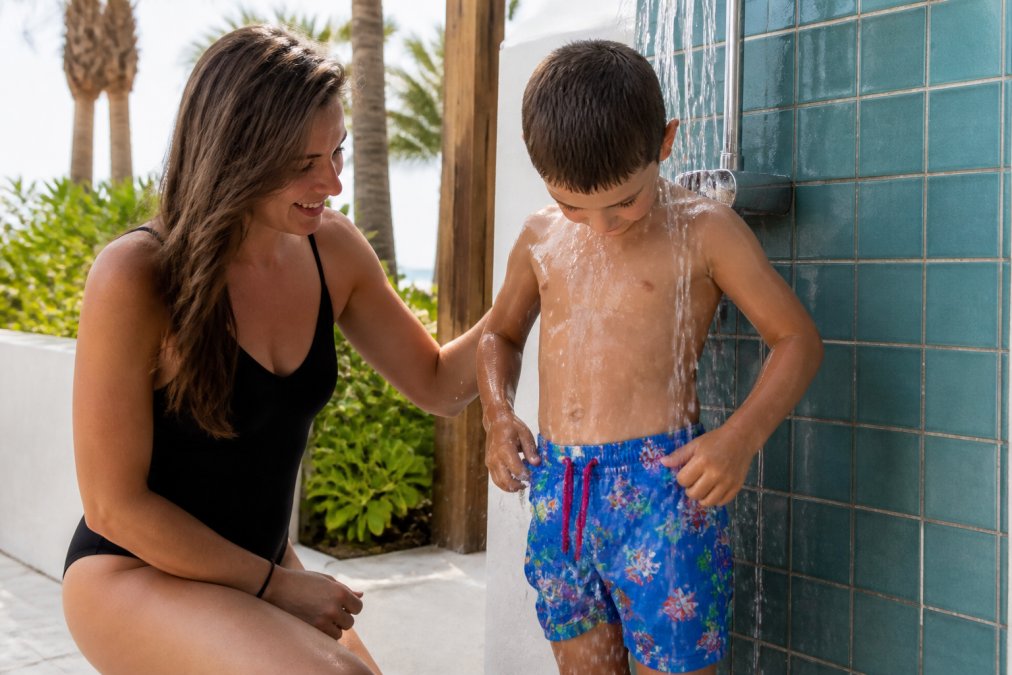
The moment your child steps out of the pool or ocean, chlorine, salt, and mineral residue begin bonding to the fabric fibers. A cold water rinse within minutes of water exposure is essential to preserve both color and UV protection.
Use fresh, clean water, not pool or ocean water. Rinse thoroughly under an outdoor shower, hose, or bucket at home. Pay special attention to areas where sunscreen accumulates: shoulders, chest, and anywhere lotion was applied. These residues don't just stain; they interfere with how synthetic fibers reflect and absorb UV rays.
Rinse for at least 30 seconds of continuous water flow. Work the water through the fabric by gently squeezing the material to dislodge chlorine and salt crystals before they set. If your child swam in saltwater, a slightly longer rinse removes stubborn residue that causes faster fading.
A thorough cold water rinse immediately after pool or beach time removes the majority of harmful chemicals before damage occurs. This single step extends UV protection more than any other measure.
Choosing the Best Detergent for UPF Swimwear
Not all detergents are suitable for swimwear. The wrong soap strips the UV-blocking coating, fades colors, or damages elastic fibers. Your detergent choice matters as much as your washing method.
Look for mild detergent specifically formulated for delicate fabrics or swimwear. Avoid "heavy-duty," "stain-fighting," or "color-safe" labels, these contain harsher chemicals that break down protective fibers and fade vibrant colors. Standard laundry detergents contain enzymes and bleaching agents that actively damage synthetic fibers.
Liquid detergents are preferable to powder formulas. Powder leaves residue in seams and elastic areas that's difficult to rinse completely. Liquid detergent dissolves thoroughly in cool water and rinses cleanly. Use only about half the recommended amount.
Look for products labeled "gentle," "delicate," or "designed for swimwear." Avoid fabric softeners entirely, they coat fibers and interfere with UV protection. The same applies to bleach, color-safe bleach, and chlorine products.
Hand Washing vs. Machine Washing Your UPF Suit
Tossing the swimsuit in the washing machine with regular laundry is one of the fastest ways to damage UPF protection and elastic fibers. Hand washing is the gold standard, but if you must use a machine, specific precautions are essential.
Hand washing is gentlest and recommended for maximum longevity. Fill a sink with cool water, never hot or warm, which damages synthetic fibers and fades colors. Add mild detergent and stir to dissolve. Submerge the swimsuit and soak for 5-10 minutes. Gently agitate in soapy water, paying attention to sunscreen residue or visible stains. Use your fingers to work detergent through the fabric, but avoid wringing or twisting.
Rinse thoroughly under cool running water until all soap is gone. Soap residue breaks down fibers and can irritate skin. Keep rinsing until water runs clear.
If using a machine, select the gentlest cycle available ("delicate" or "hand wash"). Place the swimsuit in a mesh laundry bag to protect it from drum agitation. Use cool water only and the shortest cycle. Add mild detergent and run alone, washing the suit solo reduces friction and mechanical stress.
Machine washing on a gentle cycle is acceptable if done correctly, but hand washing is always preferable. Even gentle machine cycles create more stress on synthetic fibers than gentle hand washing.
How to Remove Sunscreen Stains from Swimwear
Sunscreen stains are challenging, especially with mineral-based sunscreens containing zinc oxide or titanium dioxide. If left untreated, they can set permanently and interfere with UV-blocking properties.
Treat stains before washing. Rinse the area with cool water to remove loose residue. Apply mild detergent directly to the stain and gently rub with your fingers or soft cloth. Let it sit 5-10 minutes to break down sunscreen oils. Rinse thoroughly with cool water. If the stain remains, repeat rather than scrubbing harder, which damages fibers. For stubborn stains, try a gentle stain remover designed for delicate fabrics. Apply sparingly, let sit briefly, and rinse thoroughly. Never use bleach or oxygen-based removers, these break down protective fibers and cause permanent discoloration.
Some parents succeed with a paste made from mild detergent and cool water. Apply to the stain, let sit 10-15 minutes, and rinse thoroughly.
Prevention is easier than treatment. Encourage your child to rinse off sunscreen before putting on their UPF swimsuit, or apply sunscreen after dressing. If applying before, let it dry and set before putting on the suit to reduce fresh sunscreen transfer to fabric.
How to Dry UPF Clothing Without Damaging Protection
How you dry your child's UPF swimsuit is as important as how you wash it. High heat and direct sunlight damage synthetic fibers and reduce UV-blocking properties. Air drying in shade is the correct method.
After washing, gently squeeze out excess water without wringing or twisting. Lay the swimsuit flat on a clean, dry towel in a shaded area. Shade is critical, direct sunlight fades vibrant colors and potentially damages UV-blocking fibers. A covered porch, shaded deck, or indoor location away from windows works perfectly.
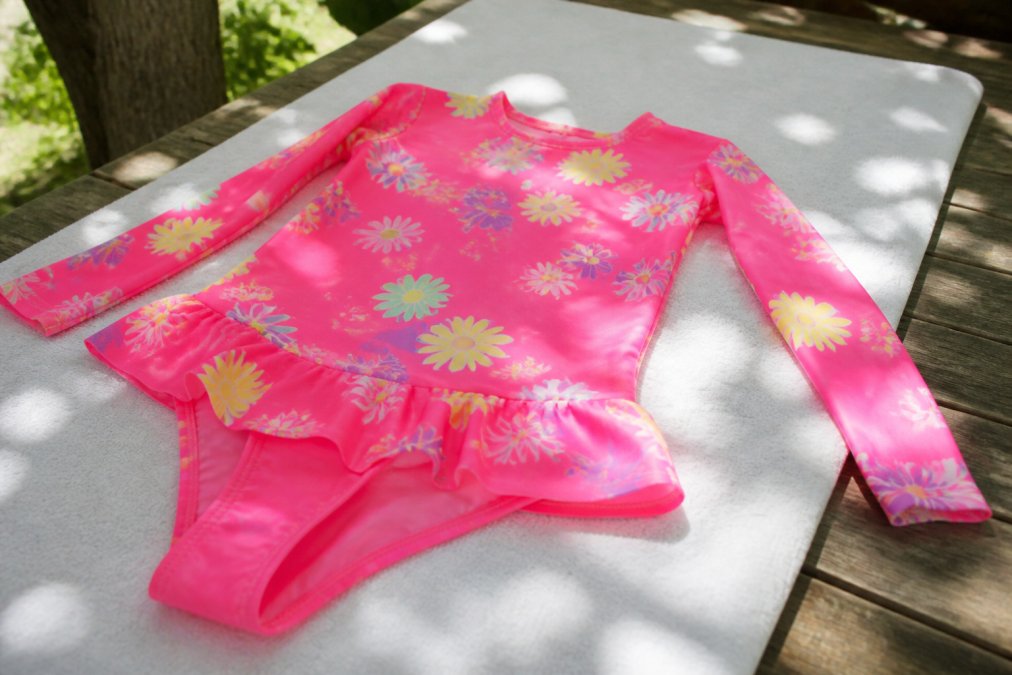
If still quite wet, gently roll it in the towel to absorb moisture, but avoid wringing. Lay flat again on a fresh, dry towel. The suit should dry naturally within a few hours in shade. In humid climates, a fan pointed toward (not directly on) the suit speeds drying without introducing heat.
Never use a clothes dryer, even on the lowest setting. Tumbling and heat harm synthetic fibers and elastic components. Heat causes fibers to contract and can permanently damage the UV-blocking coating.
Avoid hanging the wet swimsuit by straps or elastic, as water weight stretches these components. Flat drying is gentler on the garment's structure. If hanging is necessary, use a padded hanger and support the suit's weight.
Once completely dry, store in a cool, dry location away from direct sunlight. UV rays degrade fibers even when unworn, so a drawer or closet is better than near a window.
Does UPF Wash Out of Clothing with Repeated Laundering
UPF protection is built into synthetic fibers themselves, not a coating that washes off. Fibers are engineered at the molecular level to absorb and reflect ultraviolet rays. The protection doesn't "wash out" in the traditional sense, but repeated exposure to harsh chemicals, heat, and mechanical stress degrades those fibers over time, reducing UV-blocking effectiveness.
With proper care, cold water rinses, mild detergent, gentle hand washing, and air drying in shade, your child's UPF 50 swimsuit maintains protection through many seasons of regular use.
Protection gradually diminishes with each wash cycle, but degradation rate depends entirely on care practices. A suit washed incorrectly weekly loses effectiveness much faster than one cared for properly and washed monthly. The difference can be measured in years.
To maximize UPF longevity, minimize washing frequency. Rinse with fresh water immediately after pool or beach time, and wash only when visibly dirty or after multiple days of use. This extends the life of both UV protection and vibrant colors that keep your child safe and visible in water.
Avoiding Common Care Mistakes
Understanding predictable care mistakes helps you protect your investment and keep your child safe.
The first major mistake is using hot or warm water. Many assume warmer water cleans better, but for synthetic fibers, heat is destructive. Hot water weakens fibers and sets stains permanently. Always use cool or cold water.
The second mistake is mixing UPF swimwear with regular laundry. Friction and mechanical stress from washing with jeans, towels, and other items damage fibers. The suit gets tangled, stretched, and exposed to unnecessary agitation. Washing alone reduces damage significantly.
Using fabric softener is another common error. It coats fibers and interferes with UV protection. Avoid all fabric conditioning products on UPF swimwear.
Many parents also store swimsuits in direct sunlight or damp environments. UV rays degrade fibers even when unworn, and moisture promotes mildew. Store in a cool, dry, dark location, a drawer or closet is ideal.
Finally, don't assume a "UPF 50" label requires no special care. That rating is only valid when fabric is in good condition. Improper care degrades fibers and reduces protection below the labeled rating.
| Common Mistake | Why It Damages UPF Protection | The Right Approach |
|---|---|---|
| Hot water washing | Heat weakens synthetic fibers and sets stains | Always use cool or cold water |
| Machine drying | Heat and tumbling permanently damage fibers | Air dry flat in shade only |
| Fabric softener | Coats fibers and blocks UV-blocking properties | Avoid all conditioning products |
| Mixing with regular laundry | Friction and mechanical stress damage fibers | Wash alone or with only delicate items |
| Direct sunlight storage | UV rays degrade fibers even when suit isn't worn | Store in cool, dark, dry location |
| Bleach or harsh chemicals | These break down synthetic fibers | Use only mild, gentle detergents |
Caring for your child's UPF 50 swimwear properly ensures maximum protection for multiple seasons. The investment in high-visibility, UV-protective swimwear from Bright & Bold Swimwear is designed to keep your child safe and visible in the water, but that protection depends on maintenance. By following these care guidelines, immediate rinsing, cool water washing, gentle drying, and proper storage, you're maintaining the very protection that makes it worth buying. Browse our Boys swimsuits and Girls swimsuits, along with our Swim Accessories to complete your water-safe collection, and get started with swimwear you can trust to protect your family season after season.
Frequently Asked Questions
How many times can you wash UPF clothing before it loses its protection?
UPF protection is built into the fabric itself and does not wash out with proper care. High-quality UPF swimwear maintains its ultraviolet protection factor through hundreds of washes when you follow recommended care steps: rinse immediately, use mild detergent, hand wash when possible, and air dry. The protection comes from the synthetic fibers and fabric construction, not a surface coating. However, poor care practices like chlorine exposure without rinsing, hot water, and heat drying can degrade the fibers over time and reduce garment longevity.
Can you put UPF clothing in the dryer?
No, machine drying damages UPF swimwear. High heat breaks down the synthetic fibers that provide sun protection and causes elastic to lose its stretch. Always air dry your UPF suit by laying it flat in a shaded area or hanging it indoors. Direct sunlight can fade vibrant colors, so avoid line-drying in full sun. Proper air drying preserves both the UV-blocking properties and the garment's shape, ensuring your child's suit stays comfortable and protective season after season.
How do you remove sunscreen stains from swimwear?
Sunscreen leaves oily residue that regular washing won't remove. Rinse the suit immediately with fresh water, then apply a small amount of mild dish soap directly to the stained area and gently rub with your fingers before a full wash. For mineral-based sunscreens, which can be especially stubborn, soak the suit in cool water with mild detergent for 15-30 minutes before washing. Never use hot water or bleach, as these damage the UV-blocking synthetic fibers. Once the stain lifts, rinse thoroughly and air dry flat.
Does chlorine damage UPF 50 swimwear?
Chlorine causes fiber breakdown if not rinsed away promptly. Always rinse your child's UPF suit with fresh water immediately after pool time to remove chlorine residue and salt water. Chlorine degradation happens over time when the chemical sits on synthetic fibers, weakening the fabric's elasticity and durability. Saltwater residue has a similar effect. The key is quick action: rinse right away, then wash with mild detergent within a few hours. This simple step prevents chemical exposure from shortening your suit's lifespan and keeps the UV-blocking protection intact.
This article was written using GrandRanker