

Long Sleeve vs Short Sleeve Swim Sets: Which Protects Kids Best
Table of Contents
- Long Sleeve vs Short Sleeve Swim Sets: Key Differences at a Glance
- Sun Protection and UV Exposure: Why Coverage Matters
- UPF 50+ Swimwear Benefits and How They Work
- Mobility and Range of Motion in Water
- Rash Guard vs Swim Shirt: Understanding the Differences
- How to Choose Swimwear for Sensitive Skin
- Thermal Regulation and Water Temperature Comfort
- Long Sleeve vs Short Sleeve: Which Wins for Different Activities
Long Sleeve vs Short Sleeve Swim Sets: Which Protects Kids Best
Last Updated: August 3, 2026

When it comes to keeping children safe in the water, the choice between long sleeve vs short sleeve swim sets matters more than most parents realize. At Bright & Bold Swimwear, we've worked with families to understand how coverage, visibility, and comfort intersect, and why that intersection determines whether kids actually want to wear protective swimwear. This guide breaks down the real differences so you can make the choice that works for your child's age, activity level, and your family's priorities.
Long Sleeve vs Short Sleeve Swim Sets: Key Differences at a Glance
Long sleeve swim sets extend protection down the forearms, while short sleeve versions stop at the shoulder. Long sleeve designs typically feature UPF 30+ ratings that block 97% of harmful ultraviolet radiation across the entire arm and torso. Short sleeve rash guards still offer strong UPF protection to the shoulders and upper arms, the areas that burn fastest, but leave the forearms exposed unless paired with sunscreen or water sleeves.

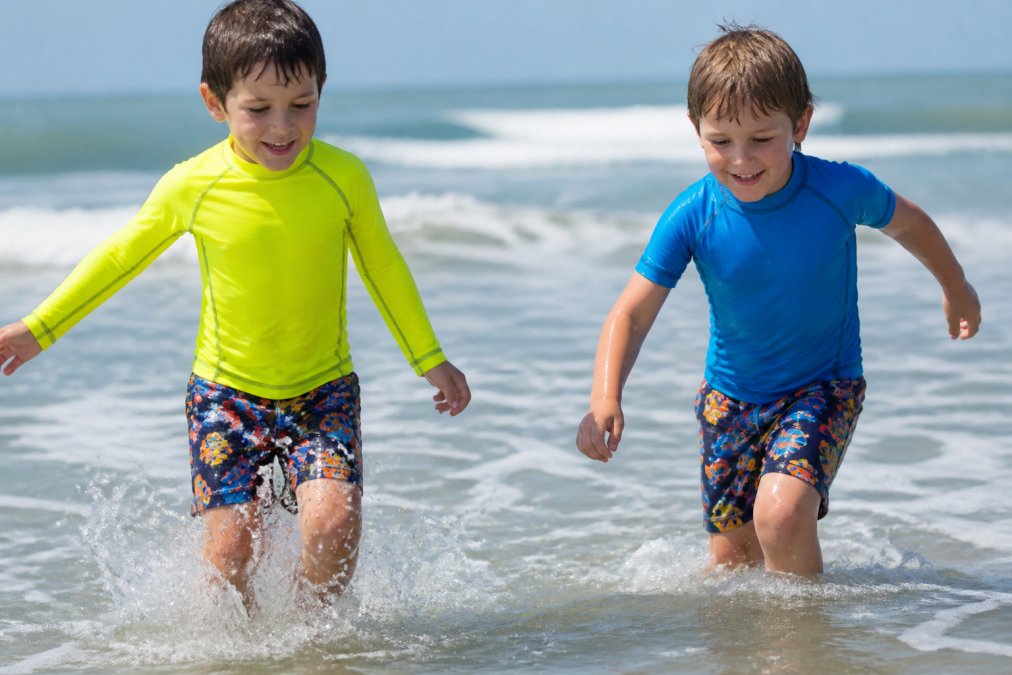
In real water scenarios, a child in a long sleeve swim set stays protected during a full day at the beach without frequent sunscreen reapplication. A child in short sleeves needs sunscreen on forearms and hands, which washes off every 60-90 minutes according to dermatology guidelines.
Bright & Bold Swimwear designs both options in high-visibility neon colors so parents and lifeguards can spot children instantly in the water. The longer sleeves extend this visibility down the arms, making the child even easier to track.
Temperature regulation differs slightly. Long sleeves provide a thin thermal layer helpful in cooler water (below 75°F), while short sleeves allow faster heat dissipation in very warm conditions. For most US pool and beach temperatures, this difference is minimal, both dry quickly with modern quick-dry fabrics.
Sun Protection and UV Exposure: Why Coverage Matters
Unprotected sun exposure during childhood increases lifetime skin cancer risk significantly. According to the American Academy of Dermatology, one blistering sunburn in childhood doubles the risk of melanoma later in life. This is why UPF-rated swimwear matters for water time.
UPF (Ultraviolet Protection Factor) measures how effectively fabric blocks UV rays. A UPF 30+ rating means the fabric allows only 1/30th of the sun's UV radiation to pass through, blocking 97% of harmful rays. UPF 50+ blocks 98%. Both dramatically outperform unprotected skin.
Long sleeve swim sets with UPF 30+ protection cover the forearms, which are high-risk areas often forgotten during sunscreen application. Kids fidget, sunscreen washes off during swimming, and forearms spend hours in direct sun during beach days. A long sleeve rash guard eliminates that variable entirely.
Short sleeve versions protect the shoulders, chest, back, and upper arms, the areas receiving the most intense UV exposure when a child is in the water. The shoulders especially benefit because they're angled toward the sun and difficult for kids to self-apply sunscreen to evenly.
The real-world advantage of long sleeves is convenience. For families with young toddlers (ages 2-4) who won't sit still for sunscreen touch-ups, long sleeves reduce stress and provide continuous protection.
UPF 50+ Swimwear Benefits and How They Work
While most quality children's rash guards offer UPF 30+ protection, some premium options provide UPF 50+. The difference is straightforward: UPF 50+ blocks 98% of UV rays versus 97% for UPF 30+. For a child spending 6-8 hours at the beach on a sunny day, that 1% compounds. Over a full summer season, UPF 50+ delivers measurably less cumulative UV exposure.
Higher UPF ratings typically involve tighter weave density, specialized UV-blocking dyes, or both. Modern UPF 50+ swimwear still breathes, dries quickly, and stretches for active movement. The fabric feels nearly identical to UPF 30+ to the touch.
Research from the Skin Cancer Foundation emphasizes that UPF 50+ is particularly valuable for children with fair skin, family history of skin cancer, or time spent in high-altitude or reflective environments (beaches with white sand, snow-covered mountains, water that reflects sunlight intensely).
For most children in typical US pool and beach settings, UPF 30+ provides excellent protection. UPF 50+ is the premium choice for families prioritizing maximum safety or children with specific risk factors.
| UPF Rating | UV Rays Blocked | Best For |
|---|---|---|
| UPF 30+ | 97% | Standard sun protection, most children |
| UPF 50+ | 98% | Maximum protection, fair skin, high-risk environments |
Mobility and Range of Motion in Water
Children need freedom of movement to swim, play, and build water confidence. A swimsuit that restricts motion discourages wear and limits physical activity.
Long sleeve swim sets can feel slightly more restrictive at first because fabric extends down the arms. However, modern designs use stretch fabrics with 4-way elasticity and raglan sleeves (which angle from the neck down to the underarm) to minimize restriction. A well-designed long sleeve rash guard allows full shoulder rotation and arm extension.

Short sleeve rash guards offer marginally more freedom in the shoulders since there's no fabric below the elbow. For very active children doing competitive swimming or water sports, this difference might be noticeable. For recreational pool time and beach play, the difference is minimal with modern construction.
The real mobility factor is sleeve fit, not length. A snug, stretchy sleeve that hugs the arm without binding allows full range of motion regardless of length.
Bright & Bold Swimwear designs both long and short sleeve sets with flatlock seams (seams that lie flat against skin) and strategic stretch panels to maximize mobility.
Rash Guard vs Swim Shirt: Understanding the Differences
Parents often use "rash guard" and "swim shirt" interchangeably, but there are subtle differences.
A rash guard is a fitted, athletic-style top designed specifically for water sports. It's made from quick-dry, stretchy fabric and hugs the body to reduce drag. Rash guards are ideal for active water play, surfing, paddleboarding, and competitive swimming.
A swim shirt is a looser-fitting athletic top, typically with more room in the torso and sleeves. It's also made from quick-dry fabric but prioritizes comfort and ease of movement. Swim shirts are ideal for casual pool time and children who prefer a less fitted garment.
For young children (ages 2-7), the distinction matters less because both serve the same purpose: UV protection and visibility. The choice comes down to fit preference.
All quality versions, whether rash guard or swim shirt, long or short sleeve, should have UPF 30+ protection, quick-dry technology, and chlorine resistance. The brand and construction matter more than the semantic label.
How to Choose Swimwear for Sensitive Skin
Children with eczema, psoriasis, or generally sensitive skin need extra consideration when selecting swimwear. Chlorine, salt water, and sun exposure can all trigger reactions or worsen existing conditions.
For sensitive skin, look for swimwear made from high-quality nylon or polyester blends specifically designed for durability and comfort. Avoid cheap synthetic blends that trap moisture or have rough seams. Flatlock seams are essential, they eliminate the chafing that can irritate sensitive skin.
Long sleeves provide an advantage for sensitive-skin children because they reduce direct sun exposure (which can trigger flare-ups in some conditions) and protect against chlorine contact on the arms.
Rinse swimwear immediately after pool or ocean time. Chlorine and salt left on the fabric degrade both the suit and skin health.
For sensitive skin, fit is equally important as fabric. A suit that's too tight creates pressure points and chafing; one that's too loose allows water and chlorine to slosh around inside. Bright & Bold Swimwear designs include size ranges specifically for different body types so you can find a fit that's snug without being restrictive.
Thermal Regulation and Water Temperature Comfort
Water temperature affects how comfortable your child feels and how long they want to stay in the water.
Long sleeve swim sets provide a thin thermal layer that helps retain body heat in cooler water (below 75°F). This is particularly valuable for children ages 2-5, who have higher surface-area-to-body-mass ratios and lose heat more quickly. In a heated pool (typically 82-86°F), this thermal benefit is minimal. In ocean water (typically 65-75°F depending on region and season), a long sleeve rash guard noticeably extends comfort.
Short sleeve rash guards allow faster heat dissipation, making them better for very warm water conditions (above 85°F) or for children who run hot. In typical US summer conditions, the difference is small because water temperatures rarely exceed 85°F for extended periods.
The fabric's thickness matters as much as sleeve length. Modern quick-dry swimwear uses lightweight, breathable materials that don't create the heavy, waterlogged feeling of older cotton-blend suits.
For families in cooler climates or planning cold-water activities, long sleeves make a measurable comfort difference. For warm-climate families or summer-only swimming, short sleeves are equally comfortable.
| Water Temperature | Best Sleeve Choice | Why |
|---|---|---|
| Below 70°F | Long sleeve | Provides thermal layer; extends comfort duration |
| 70-80°F | Either (slight advantage to long) | Long sleeves add minimal warmth; short sleeves allow heat dissipation |
| Above 80°F | Short sleeve | Allows faster cooling; prevents overheating |
Long Sleeve vs Short Sleeve: Which Wins for Different Activities
Different water activities have different demands. Your choice should match what your child actually does in the water.
For swim lessons and pool training: Long sleeve rash guards are increasingly popular in swim schools because they provide continuous sun protection during extended pool time and make children highly visible to instructors. Short sleeve versions work equally well for indoor pools where UV exposure isn't a factor.
For beach days: Long sleeves win here. Extended sun exposure, reflective sand, and the difficulty of reapplying sunscreen on a fidgety toddler make full-arm coverage valuable.
For casual pool play: Either works. If your child spends 1-2 hours at a community pool, short sleeves with sunscreen on forearms are sufficient. For all-day pool parties or frequent visits, long sleeves reduce the sunscreen reapplication burden.
For water sports (paddleboarding, kayaking, water aerobics): Short sleeve rash guards are standard because they allow maximum mobility and don't create drag.
For sensitive-skin children: Long sleeves provide extra protection against chlorine and sun exposure, making them the better choice regardless of activity type.
For younger toddlers (ages 2-4): Long sleeves are often easier because they simplify sun protection management.
For older children (ages 5-7) who are independent swimmers: Short sleeves work well if your child is responsible about sunscreen and you're comfortable managing reapplication.
The activity and your child's age matter more than any absolute rule.
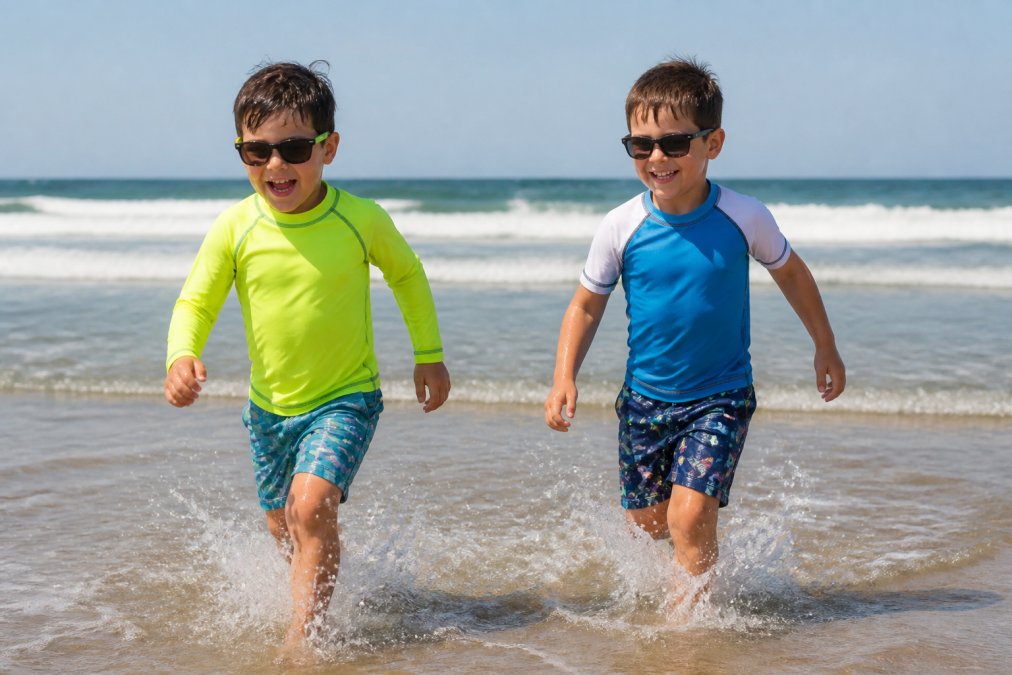
Choosing between long sleeve vs short sleeve swim sets comes down to balancing sun protection, thermal comfort, mobility, and your family's specific water routine. Long sleeves excel for extended sun exposure and younger children; short sleeves prioritize mobility and work well for warm-water activities with supplemental sunscreen. Both options from Bright & Bold Swimwear feature UPF 30+ protection, high-visibility colors that help you spot your child instantly in the water, and quick-dry fabrics designed for active kids. Explore both styles in the boys swimsuits and girls swimsuits collections to find the fit and coverage that works best for your child's age and water activities.
Frequently Asked Questions
Are long sleeve swim sets better for sun protection than short sleeve?
Long sleeve swim sets offer more UV coverage because they protect the entire arm and shoulder area, which are highly prone to sunburn. Short sleeve options leave forearms and upper arms exposed to direct sun. Both types should carry a UPF 30+ rating, but long sleeves reduce the total skin area requiring additional sunscreen, making sun safety easier to maintain throughout the day.
Do long sleeve swim sets restrict movement or slow down swimming?
Quality long sleeve swim sets are designed with stretch fabrics and raglan sleeves that allow full range of motion for swimming strokes. Modern rash guard materials use moisture-wicking, quick-dry fabrics that won't feel heavy or restrictive in water. Many competitive swimmers and surfers wear long sleeves without performance loss. The key is proper fit and fabric technology, not the sleeve length itself.
How do I choose swimwear for sensitive skin?
Look for swim sets made from chlorine-resistant fabrics with flatlock seams to prevent chafing. Choose UPF 30+ rated materials that block harmful rays without requiring constant sunscreen reapplication, which can irritate sensitive skin. Avoid suits with rough seams or tight elastic. Test the fabric against your child's skin before committing, and consider long sleeves as a barrier between sensitive skin and direct sun exposure.
Will my child actually wear a long sleeve swim set, or will they find it uncomfortable?
Most children adapt quickly to long sleeve swim sets when they're designed with comfort in mind. Look for lightweight, stretchy materials that don't feel heavy or restrictive. Bright, appealing colors and fun designs help children feel excited rather than restricted. Many parents find that pairing long sleeves with visible sun protection messaging, like explaining how the suit keeps them safe, makes kids more willing to wear them.
What's the difference between a rash guard and a swim shirt?
Rash guards are typically fitted, athletic-style tops designed for active water sports with flatlock seams and stretch fabric. Swim shirts are often looser-fitting cover-ups worn over swimsuits. For swim sets intended for pool and beach activities, rash guards provide better performance because they stay in place during movement and offer consistent UPF protection. Swim shirts work well for casual water play but may shift or ride up during active swimming.
This article was written using GrandRanker