

Child Lost at Crowded Beach? 7 Steps to Take Now
Table of Contents
- The 3-3-3 Rule: Your First Response When a Child Goes Missing
- How to Teach Your Child to Identify Lifeguards (Before You Arrive)
- Immediate Action: Alerting Lifeguards and Beach Patrol
- The 'Shout Description' Technique for Crowd Communication
- Essential Emergency Contact Wristbands for Beach Days
- Best Swimming Gear for Toddlers That Improves Visibility
- Post-Incident Support: Talking to Your Child After the Scare
- Your Beach Safety Checklist for Next Time
- Frequently Asked Questions
Last Updated: September 7, 2026
Every parent knows the stomach-drop feeling: you look down at the sand where your toddler was playing, and they are gone. In a crowded space, panic can set in within seconds. Knowing what to do if child gets lost at crowded beach is a critical piece of emergency protocol that every caregiver should memorize before the trip, because the first moments with a lost child beach search are the most decisive. This guide from Bright & Bold Swimwear walks you through a calm, structured response designed to reunite you with your little one as quickly as possible.
The most effective approach is a layered prevention and response strategy. The 3-3-3 Rule gives you an immediate action plan, while preparation techniques like teaching landmark identification and using visual aids reduce the chance of a lost child situation ever escalating. Below, we will show you exactly how to implement these steps, from the first moment of panic to the post-incident conversation.
The 3-3-3 Rule: Your First Response When a Child Goes Missing
The first three minutes after you realize your child is missing are the most critical (peer-reviewed research). The 3-3-3 Rule is a simple framework that structures your immediate action: look for three minutes, listen for three minutes, and then alert authorities. This prevents wasted time and frantic, disorganized searching.
Start by scanning the immediate area within a 30-foot radius. Children often wander short distances to inspect a shell or a sandcastle. Call their name loudly and listen for a response over the sound of the waves. If you do not spot them quickly, do not continue searching alone. Immediately report the missing person to the nearest lifeguard station or beach patrol officer, providing a clear visual description and their last known location. Time is your enemy in these first moments, and a coordinated search is far more effective than a solo one.
How to Teach Your Child to Identify Lifeguards (Before You Arrive)
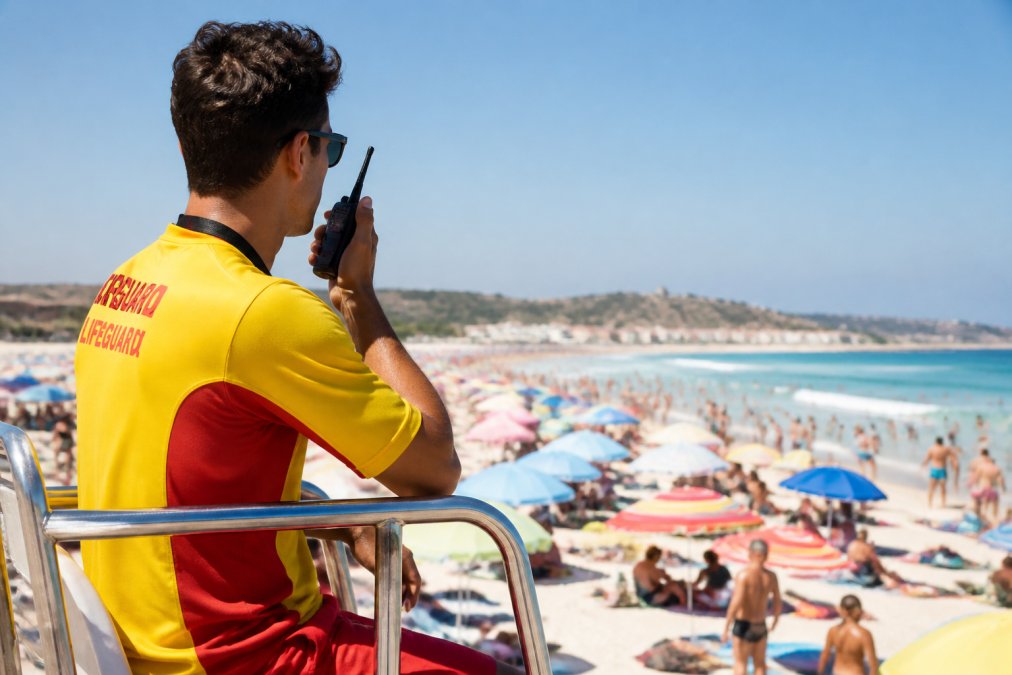
Preparation is your strongest prevention strategy, and it starts long before you reach the sand. Teaching your child to identify lifeguards is a key water safety skill that helps them to seek help from a trusted adult. A lifeguard station, with its tall chair and distinctive flags, is a highly visible landmark that children can learn to recognize.
Explain to your child that lifeguards wear bright uniforms and sit in high chairs to watch over everyone. Practice the "shout description" technique at home: have your child practice saying, "I am lost," and then describing what they see. Role-play a scenario where they approach a lifeguard or a parent with another child and ask for help. Also, establish a designated meeting point, such as a specific lifeguard station or a large, unique umbrella, in case you get separated. This gives your child a concrete goal and reduces the panic of being alone in a crowded space.
Immediate Action: Alerting Lifeguards and Beach Patrol
Once you have alerted the authorities, your role shifts from searcher to information provider. The lifeguard and beach patrol teams are trained in search coordination and crowd management. Provide them with a detailed visual description of your child, including their swimsuit color, hair color, age, and any distinctive features. This is where high-visibility clothing becomes a critical tool for incident response.

A child in a bright, neon swimsuit is significantly easier to spot in a crowd and from a lifeguard's elevated vantage point. When you report a lost child, the ability to say "they are wearing a bright orange rash guard" gives the search team a clear target. Many beaches also have established emergency protocols, so follow the instructions of the public safety officer on scene. They may initiate a beach-wide alert or coordinate a systematic search grid. Your primary job is to stay at the lifeguard station as a point of contact in case your child is found and brought there.
The 'Shout Description' Technique for Crowd Communication
Effective communication with the crowd around you can turn dozens of strangers into a search party. The 'shout description' technique is a way to mobilize nearby adults without causing chaos. Instead of a vague "I can't find my son," you issue a clear, specific call for help.
Stand in one place and shout a concise, structured description: "I need help! I have lost a child. He is 4 years old, wearing a bright green swimsuit with a shark on it. He was last seen near the water's edge." Ask people to look around them and report any sighting to you or the nearest lifeguard, turning the whole lost child beach area into a coordinated search zone. This technique is most effective when paired with high-visibility clothing, as the specific colors and patterns give the crowd a clear visual target to lock onto. It converts passive bystanders into active participants in the search, dramatically increasing the eyes on your child.

Essential Emergency Contact Wristbands for Beach Days
Emergency contact wristbands are a simple, low-tech tool that provides a vital layer of security. These waterproof bands can be written on with a permanent marker and worn on a child's wrist or ankle, containing your phone number and your child's name. They are a form of visual identification that allows any adult who finds your child to contact you immediately, bypassing the need for a public address system. packing for beach vacations.
For toddlers who cannot yet speak their name or your phone number, this is an invaluable communication tool. Many parents also use them to note important medical information, such as allergies. When combined with a designated meeting point and a clear instruction to "stay put," a wristband gives your child a passive way to be identified and returned to you. It is a small step that offers immense peace of mind during a family day out.
Best Swimming Gear for Toddlers That Improves Visibility
Choosing the right swimwear is a critical, proactive step in lost-child prevention. The goal is to make your child a high-contrast visual target against the sandy and watery backdrop of a beach. This isn't just about style; it's about creating a moving landmark that your eyes, and a lifeguard's, can lock onto instantly. Bright & Bold Swimwear offers a range of boys swimsuits and girls swimsuits designed with high-visibility colors and patterns to help keep your little one easily spotted.
The Science of Color and Contrast
Not all bright colors are created equal. The most effective hues for beach visibility are those that sharply contrast with the environment. Neon orange, chartreuse (a vivid yellow-green), and bright pink are excellent choices (the CDC). These colors are not naturally found in large quantities in sand or water, making them stand out. Conversely, light blue, white, and pastel colors can blend in with the sky, foam, and reflections, making a child much harder to spot.
Patterns and Design Matter
Solid, high-visibility colors are the most effective. While fun, busy patterns can break up the silhouette of a child's body, making them harder to distinguish from a distance. If you prefer a pattern, choose one with large, solid blocks of a neon color. A full-coverage rash guard and swim trunks provide more visible surface area than a small swimsuit. This also has the added benefit of offering UPF 30+ sun protection on select items, solving two safety issues at once (the FDA).
The 'Swimsuit Color' Rule
A simple rule many water safety advocates recommend is to avoid dressing your child in swimwear that is the same color as the pool floor or, in this case, the ocean floor and sand. A bright, contrasting color is your first line of defense. When you arrive at the beach, take a moment to visually locate your child's swimsuit color in your mind. This primes your brain to spot them quickly in a crowd.
Beyond Swimwear: High-Visibility Accessories
If your child refuses to wear a long-sleeve rash guard, or if you want an extra layer of visibility, consider a high-visibility swim cap. A bright, neon cap is an excellent visual marker that can be seen from a lifeguard's elevated chair. Some parents also use temporary, waterproof tattoos with their phone number, which serve a dual purpose of identification and visibility if they are brightly colored. You can also browse swim accessories for additional visibility-boosting options.
Post-Incident Support: Talking to Your Child After the Scare
The moment of reunion is overwhelming, but the care you provide afterward is just as important. The psychological preparation for parents includes knowing how to handle the emotional aftermath. Children process fear and stress differently than adults, and a scary experience can linger. Your goal is to reassure them and reinforce their trust in you and in the safety systems you have in place.
Get down to their eye level, hug them, and let them know they are safe. Avoid scolding or expressing anger, which can compound their fear. Instead, calmly and positively reinforce what they did right, such as staying put or finding a lifeguard. Talk through the experience in simple terms, asking them what they saw and felt. This conversation is an opportunity to review your prevention strategies for next time, reminding them of the designated meeting point and the importance of staying close. Post-incident trauma support is about restoring their sense of security so the beach remains a place of joy, not anxiety.
Your Beach Safety Checklist for Next Time
Preparation transforms a potentially terrifying event into a manageable one. A simple, repeatable checklist before you leave the house ensures you have the right tools and that your child knows the plan. This proactive approach is the heart of a solid prevention strategy. Beyond the gear, it involves a crucial psychological component for both you and your child.
The Pre-Trip Family Briefing
A successful beach day starts with a conversation, not just packing. Before you leave the house, gather the family for a two-minute safety briefing. This isn't a scary lecture; it's a positive and empowering game plan. Use this time to:
- Establish the 'Meeting Point': Show your child a picture of the specific landmark you will aim for, like a lifeguard station with a distinctive flag. Explain that if you get separated, this is where you will both go.
- Role-Play the 'What If': Ask your child, "What will you do if you can't see me?" The correct answer is to "stay put" and look for a lifeguard. Practice the physical action of walking to a lifeguard and saying, "I am lost. My name is [Name]."
- Assign the 'Water Watcher': If you are with another adult, explicitly assign one person to be the designated 'Water Watcher' for a set period (e.g., 15 minutes). This person should not be on their phone, reading, or socializing. Their only job is to watch the children in the water. This prevents the dangerous assumption that "someone else is watching."
Managing Parental Panic: A Psychological Strategy
The moment you realize your child is missing, your brain's amygdala will trigger a fight-or-flight response. This is a physiological reaction that can impair clear thinking. To counter this, you must have a pre-planned, cognitive strategy. The 3-3-3 Rule is your anchor. By focusing on the concrete steps of looking, listening, and alerting, you override the panic and force your brain into a logical, task-oriented mode. Take one deep breath and repeat the rule to yourself. This is a practiced skill, and having it memorized before you need it is the key to maintaining situational awareness during a search.
The Final On-Sand Checklist
- Before You Go: Dress your child in high-visibility swimwear from our Best Sellers collection. Write your phone number on a waterproof emergency contact wristband and secure it on their wrist. Take a photo of your child in their exact outfit that day, this is your most accurate description tool if they get lost.
- On Arrival: Identify the nearest lifeguard station and establish a designated meeting point, like a specific flag or landmark. Point it out to your child and have them repeat it back to you.
- The Briefing: Remind your child of the rules: stay close, ask a lifeguard for help if lost, and "stay put" if they cannot find you. Practice the "shout description" with them so they know their own name and your last name.
- During the Day: Maintain situational awareness of your child's location at all times, especially near the water's edge. Take turns with another adult to be the designated "watcher" so vigilance does not lapse.
Frequently Asked Questions
What is the first thing you should do if your child goes missing at the beach?
The first step is to immediately alert a lifeguard or a member of the beach patrol. Give them a detailed visual description of your child, including their swimsuit color, and your last known location. Do not search on your own first. Lifeguards are trained for this exact scenario and can initiate a coordinated search of the water and the shore faster than you can alone. Time is critical, so report it instantly.
What is the 3-3-3 rule for kids?
The 3-3-3 Rule is a simple framework that structures your immediate action: look for three minutes, listen for three minutes, and then alert authorities. This prevents wasted time and frantic, disorganized searching.
How can high-visibility swimwear help prevent a lost child situation?
High-visibility swimwear uses bright, neon colors that contrast sharply with the blues and greens of ocean water and the sand. This makes it much easier for a parent or lifeguard to quickly spot a child in a crowd or in the water. When you can see your child at all times, you reduce the window of time they could wander off and get lost in the first place, which is a core prevention strategy.
How does the 'clapping' technique work for finding lost children?
The clapping technique is a crowd-management strategy used after a child is reported missing. Once you alert the lifeguard or beach patrol, they may ask everyone nearby to clap their hands rhythmically. This creates a distinct sound that helps break through the noise of a busy beach. The lost child, who may be confused or scared, can follow the sound to find a safe adult or the lifeguard station.