

Neon Swimsuits for Toddler Safety: Complete Guide
Table of Contents
- Why Neon Swimsuits Matter for Toddler Water Safety
- Safest Swimsuit Colors for Kids: What Research Shows
- UPF 50+ Toddler Swimsuits: Sun Protection and Durability
- Drowning Prevention for Toddlers: Beyond Swimsuit Color
- Toddler Water Safety Tips: A Practical Checklist
- Choosing High-Visibility Neon Swimsuits: What to Look For
- Conclusion
Neon Swimsuits for Toddler Safety: Complete Guide
Last Updated: July 21, 2026
Why Neon Swimsuits Matter for Toddler Water Safety
Water safety begins with visibility. When a toddler wears neon swimsuits, they become instantly identifiable in any aquatic environment. Bright, high-contrast colors reduce response time for parents and lifeguards when supervision is needed. A child in neon stands out against water, tile, and surrounding swimmers in ways that traditional swimsuit colors cannot match.
A toddler in a dark or pastel swimsuit blends into pool surroundings, creating dangerous blind spots. Neon colors, particularly yellow, orange, and pink, create visual contrast that makes a child's location instantly apparent. This visibility advantage is rooted in how human vision processes color and light underwater.
Drowning prevention depends on multiple layers of protection, but visibility is the foundation. If a caregiver cannot quickly spot a child in distress, response time delays. Neon swimwear eliminates that first critical barrier. Combined with active supervision, swim lessons, and life jackets, high-visibility swimsuits form part of a comprehensive water safety strategy.
The visibility advantage in different water environments
Visibility challenges vary by water type. In chlorinated pools with clear water and bright overhead lighting, neon swimsuits create sharp contrast against the blue. In natural lakes or oceans, murky water and variable sunlight create different dynamics. Neon colors perform consistently across all environments because they reflect maximum visible light.
In pools, yellow and orange neon swimsuits stand out most effectively. The chlorinated water absorbs certain wavelengths of light, and neon colors compensate by reflecting maximum visible light back to observers. In lakes and natural water bodies, neon pink and bright orange maintain contrast even when water clarity is compromised. Ocean environments involve waves and currents, but neon orange and pink remain effective because they maintain brightness even when partially submerged.
How underwater visibility science supports bright color choices
Water absorbs certain wavelengths of light more readily than others. Red light is absorbed first, followed by orange, then yellow. Neon colors work against this natural light absorption by reflecting maximum light across the visible spectrum. A neon yellow swimsuit reflects light with exceptional efficiency, remaining visible even in suboptimal lighting conditions.
The human eye processes contrast faster than color alone. A neon swimsuit creates maximum contrast against typical water backgrounds, reducing the mental processing time required to locate your child. This speed matters in emergency situations.
Safest Swimsuit Colors for Kids: What Research Shows
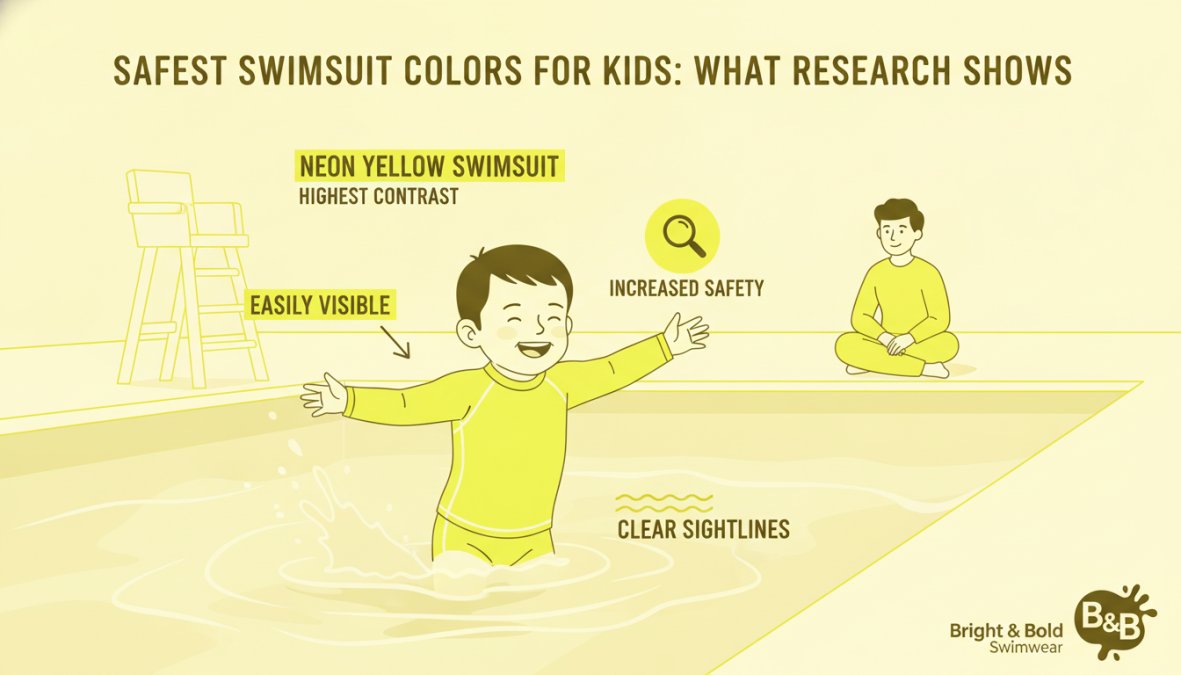
The safest swimsuit colors for kids are those that maximize visibility and contrast. Neon yellow, orange, and pink consistently outperform all other color choices in visibility studies and real-world water environments.
Neon yellow, orange, and pink: why these stand out
Neon yellow is the gold standard for water visibility, creating maximum contrast against blue water and maintaining visibility in variable lighting. Neon orange performs exceptionally well in natural water bodies where sediment and algae reduce water clarity. Neon pink provides excellent contrast in pools and maintains visibility in natural water, making it ideal for parents who want high visibility without traditional yellow or orange.
All three colors share a critical characteristic: they reflect light efficiently across the visible spectrum. A child wearing any of these colors becomes easier to spot, faster to locate, and easier to track visually during active play.
Colors to avoid: blue, white, and dark patterns
Blue swimsuits blend into blue water, making a toddler nearly invisible in a pool. White and light-colored swimsuits create less contrast than neon and reflect glare, making it harder to track a moving child in bright sunlight. Dark colors, navy, black, dark green, dark purple, absorb light rather than reflect it, making them nearly invisible in water.
Busy patterns and multi-color designs break up the child's silhouette, making them harder to locate visually. Pastel colors lack the brightness and light-reflection properties of true neon colors and fail as safety choices.
UPF 50+ Toddler Swimsuits: Sun Protection and Durability
Sun protection matters as much as water visibility for toddler safety. UPF 50+ swimsuits block 98% of ultraviolet rays, protecting sensitive toddler skin from sunburn and long-term UV damage. High-visibility neon swimsuits that include UPF 50+ protection provide comprehensive safety coverage.
Material composition and visibility preservation
Neon swimsuit materials must balance two competing demands: maximum UV protection and maximum light reflection for visibility. High-quality neon swimsuits use synthetic fabrics, typically polyester or nylon blends, engineered to reflect light while blocking UV rays. Quality neon dyes maintain their brightness and reflective properties even when exposed to chlorine, salt water, and UV rays.
Fabric weight and weave structure affect both UV protection and visibility. Tighter weaves provide better UV blocking but can reduce light-reflection properties. Quality manufacturers balance these factors, creating fabrics that maintain high visibility while providing genuine UPF 50+ protection.
Care and maintenance to keep neon colors vibrant
Neon swimsuit colors fade when exposed to chlorine, salt water, and sunlight. Rinse the swimsuit immediately after water exposure using fresh water to remove chlorine and salt. Wash in cold or lukewarm water with mild detergent designed for delicate fabrics. Air-dry in a shaded area rather than using a dryer, which damages elastic and degrades neon dyes.
Store neon swimsuits in a cool, dry place away from direct sunlight. Replace swimsuits when colors noticeably fade or when fabric shows signs of wear, as a faded neon swimsuit loses its safety effectiveness.
Drowning Prevention for Toddlers: Beyond Swimsuit Color
Neon swimsuits are one layer of a comprehensive drowning prevention strategy. They address visibility, but drowning prevention requires multiple overlapping safety measures. Active supervision, swim lessons, life jackets, and water safety knowledge form the complete protection system.
Drowning happens quickly and silently. A child can slip underwater in seconds without making noise or drawing attention. This is why visibility alone, while essential, isn't sufficient.
Supervision, swim lessons, and life jackets
Active supervision means constant, focused attention on the child in and around water. Caregivers should maintain visual contact at all times and position themselves where they can reach the child quickly. A neon swimsuit makes this supervision more effective by ensuring the child remains visually identifiable.
Swim lessons teach toddlers basic water safety and survival skills, reducing drowning risk significantly. Children who receive formal swim instruction develop water comfort, breath control, and basic survival reflexes. Life jackets provide additional flotation and support, particularly for young toddlers still developing swimming skills.
The combination of visibility through neon swimwear, active supervision, and life jackets creates redundant safety layers. If one element fails, others remain in place to protect the child.
Toddler Water Safety Tips: A Practical Checklist
Water safety requires consistent application of multiple strategies. This checklist provides a practical framework for combining high-visibility neon swimwear with other essential safety measures.
| Safety Element | Action | Frequency |
|---|---|---|
| Neon swimwear | Dress child in neon yellow, orange, or pink swimsuit | Every water exposure |
| Supervision | Maintain constant visual contact and stay within arm's reach | Continuous during water time |
| Life jacket | Use Coast Guard-approved flotation device | For weak swimmers or non-swimmers |
| Swim lessons | Enroll in structured water safety instruction | Ongoing, age-appropriate |
| CPR training | Learn infant/child CPR techniques | Initial training + annual refresher |
| Water rules | Establish clear entry/exit rules and designated play areas | Before each water session |
| Barriers | Use gates, fencing, or alarms around pools | Permanent installation |
| Buddy system | Ensure children swim in pairs with adult supervision | Every water exposure |
Combining neon swimwear with layered safety strategies
Neon swimwear functions most effectively when combined with active supervision. The high visibility makes supervision easier and more effective, but it doesn't replace the need for constant attention. Swim lessons teach children water competency and survival skills that no swimsuit can provide. Life jackets add flotation support that extends the safety margin. Water barriers prevent unsupervised water access. CPR training for caregivers represents the final layer of protection.
Choosing High-Visibility Neon Swimsuits: What to Look For
Selecting the right neon swimsuit involves evaluating visibility, fit, comfort, sun protection, and durability. Quality varies significantly across brands and price points.
Fit, comfort, and style considerations
Proper fit is essential for both safety and comfort. A swimsuit that's too loose will shift during water play, potentially revealing less visible areas. A swimsuit that's too tight restricts movement and creates discomfort. Measure your toddler carefully and consult size charts before purchasing, as different manufacturers use different sizing standards.
Comfort features matter because a child who refuses to wear the swimsuit provides zero safety benefit. Look for soft, non-irritating elastic, flat seams that don't chafe, and quick-dry materials. Style considerations shouldn't override safety, but they matter for encouraging consistent wear. Children who like the appearance of their swimsuit are more likely to wear it without complaint.
Rash guards provide additional sun protection and reduce chafing, particularly useful for toddlers with sensitive skin or extended beach days. A neon rash guard combined with neon swim shorts creates maximum visibility while providing comprehensive coverage.
Real-world performance in pools, lakes, and oceans
Neon swimsuits perform differently across water environments due to varying water clarity, lighting conditions, and background colors. In chlorinated pools with clear water and controlled lighting, neon yellow and orange swimsuits provide maximum visibility. In natural lakes and ponds, neon pink and bright orange maintain visibility better than yellow due to sediment and algae. Ocean environments combine multiple visibility challenges, but neon orange and pink maintain visibility even when partially submerged by waves.
Quality neon swimsuits maintain their visibility performance across all these environments. The investment in premium neon swimwear ensures consistent protection regardless of where your child swims.
Toddler water safety requires a comprehensive approach that combines visibility, supervision, and water competency. Neon swimsuits provide the visibility foundation that makes supervision more effective and response times faster. Combined with active supervision, swim lessons, and life jackets, high-visibility swimwear represents a genuine advancement in drowning prevention.
Bright & Bold Swimwear specializes in high-visibility neon swimsuits designed specifically for toddler safety. Our collection features UPF 50+ protection, durable neon colors that maintain brightness through multiple seasons, and thoughtful designs that balance safety with comfort and style. Start with Bright & Bold Swimwear's best sellers and give your child the visibility advantage that makes water time safer and more enjoyable.
Additional Resources
For more information on water safety and drowning prevention, consult these authoritative sources:
According to the CDC's water safety guidelines, active supervision and multiple layers of protection are essential for preventing childhood drowning.
The American Academy of Pediatrics' water safety recommendations specifically address the importance of visibility in supervision and recommend high-contrast clothing for toddlers in water environments.
The USA Swimming Foundation's drowning prevention resources provide comprehensive guidance on swim lessons, supervision, and layered protection strategies that complement high-visibility swimwear.
Frequently Asked Questions
What are the best colors for toddler swimsuits for visibility?
Neon yellow, orange, and pink are the most visible colors in water because they contrast sharply with the blue environment and maintain brightness even when partially submerged. These fluorescent hues cut through water glare and are easily spotted by parents and lifeguards. Avoid blue, white, dark colors, and busy patterns, which blend into water or create visual confusion. High-contrast neon swimsuits significantly improve rescue time in emergencies.
Do neon swimsuits really make a difference for water safety?
Yes. Neon swimsuits enhance visibility in various water environments, pools, lakes, and oceans, by using light-absorbing and reflecting properties that make children stand out. Combined with UPF 50+ sun protection and proper supervision, neon swimwear is a practical layer in a comprehensive drowning prevention strategy. While not a substitute for active supervision and swim lessons, the enhanced visibility provides critical extra seconds for rescue if needed.
What is UPF 50+ and why is it important for toddler swimwear?
UPF 50+ means the fabric blocks 98% of UVA and UVB rays, protecting delicate toddler skin during extended water time. High-quality neon swimsuits with UPF 50+ protection maintain their vibrant color and visibility properties longer than standard swimwear. Proper care, rinsing after chlorine exposure, air-drying, and avoiding harsh detergents, preserves both the sun protection rating and the neon brightness that makes the swimsuit effective for safety.
What other safety measures should I take when my toddler is swimming?
Neon swimsuits work best as part of a layered approach: constant, attentive supervision from an adult within arm's reach; age-appropriate swim lessons to build water confidence and skills; properly fitted life jackets for weak swimmers; and clear water safety rules. Lifeguards and rescue personnel also benefit from high-visibility swimwear, but active parental supervision remains the primary drowning prevention tool for toddlers in any water setting.
This article was written using GrandRanker