

Safety Gear for Public Pools: Essential Equipment Guide
Table of Contents
- Essential Safety Gear for Public Pools: An Overview
- Life-Saving Rescue Equipment Every Pool Needs
- Pool First Aid Kit Requirements and Contents
- AED Requirements for Swimming Pools
- Personal Protective Equipment for Pool Staff
- How to Maintain Pool Rescue Equipment
- Safety Fencing, Signage, and Perimeter Protection
- Staff Training and Emergency Drill Integration
Safety Gear for Public Pools: Essential Equipment Guide
Last Updated: July 9, 2026
Essential Safety Gear for Public Pools: An Overview
When a child goes missing in a swimming pool, rescuers have minutes, sometimes seconds, to act. Effective water safety starts with visibility and preparation. Every public pool facility must maintain comprehensive rescue equipment, first aid supplies, and emergency response systems. This guide covers the complete inventory of safety gear that facilities need to operate legally, protect swimmers, and respond effectively when emergencies occur.
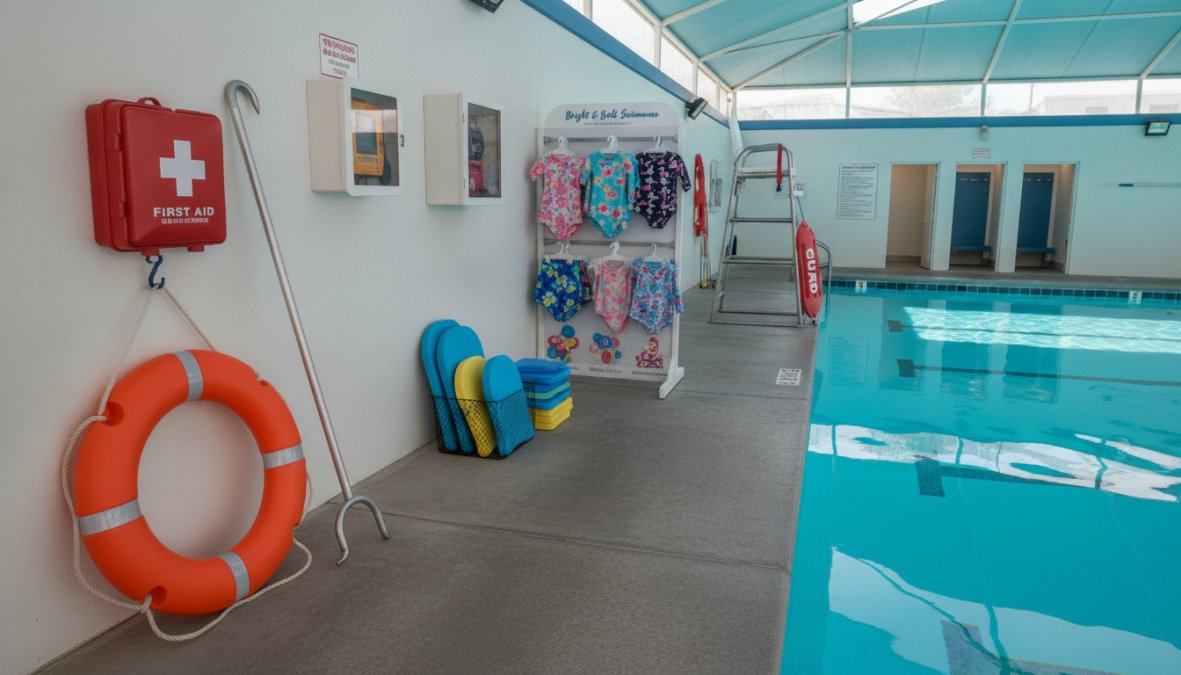
Life-Saving Rescue Equipment Every Pool Needs
Every public pool requires immediate-access rescue equipment positioned within arm's reach of lifeguards. These tools bridge the gap between a swimmer in distress and a trained rescuer who can reach them safely.
Ring Buoys and Rescue Tubes
A ring buoy is a circular flotation device, typically 20-24 inches in diameter, designed for quick deployment to a struggling swimmer. Rescue tubes, elongated foam devices approximately 40-45 inches long, offer more versatility because they provide flotation while allowing rescuers to maintain contact and control during extraction. Coast Guard-approved ring buoys must be readily accessible and mounted on the pool deck within 10 feet of lifeguard stations.
Reach Poles and Shepherd's Hooks
A reach pole is a long, lightweight aluminum or fiberglass rod (typically 8-15 feet) that allows a rescuer to extend assistance without entering the water. A shepherd's hook features a curved hook at the end, making it easier to secure a victim's arm or torso. Facilities should position at least two reach poles on the deck, one at each end of the pool, and inspect them regularly for cracks, corrosion, or loose connections.
Pool First Aid Kit Requirements and Contents
A properly stocked first aid kit transforms minor incidents into manageable situations and buys time during serious emergencies. Public pools must maintain kits accessible to all staff and clearly marked with signage.
Core First Aid Supplies
Every pool first aid kit needs antiseptic wipes, sterile gauze pads, adhesive bandages in multiple sizes, elastic bandages for sprains, antibiotic ointment, trauma pads, scissors, tweezers, CPR masks, eyewash bottles for chlorine exposure, and both latex and nitrile gloves. Include pediatric-specific supplies to address real-world scenarios involving children.
Trauma and Emergency Items
Tourniquet kits are increasingly recommended for severe limb bleeding. Emergency blankets help prevent shock in injured swimmers. Biohazard disposal bags allow staff to contain contaminated materials safely and meet regulatory requirements.
Expiration Tracking and Inventory Management
Implement a quarterly inventory audit. Create a spreadsheet listing every item, its expiration date, and verification date. Assign one staff member responsibility for this audit. Remove any expired items and replace them immediately. For items with no printed expiration date, replace every 3 years or immediately if damaged.
Post-Incident Sanitization Protocol
After any first aid response, items that contacted blood or bodily fluids must be sanitized or discarded:
- Immediately after use: Remove all items that contacted blood, saliva, or bodily fluids and place them in a biohazard disposal bag.
- Restock immediately: Replace removed items the same day.
- Non-contact items: Wipe down with a disinfectant wipe (70% isopropyl alcohol) and air-dry.
- CPR masks: Discard and replace. Do not reuse under any circumstances.
- Documentation: Log the incident, what was used, what was discarded, and what was restocked.
Storage and Environmental Conditions
Store your first aid kit in a cool, dry location away from direct sunlight and extreme temperature fluctuations. If your facility has multiple pools, maintain satellite first aid kits at different locations so staff never have to travel more than 30 seconds to reach supplies.
| Maintenance Task | Frequency | Duration | Documentation |
|---|---|---|---|
| Visual inspection and expiration check | Quarterly | 20 minutes | Inventory log |
| Full kit replacement assessment | Annually | 1 hour | Equipment inventory |
| Post-incident sanitization and restock | Immediate | 15-30 minutes | Incident log |
| Environmental condition review | Monthly | 5 minutes | Storage log |
AED Requirements for Swimming Pools
An Automated External Defibrillator (AED) can restart a heart in sudden cardiac arrest. Most states now require at least one AED on-site for public pools. Position the AED in a visible, climate-controlled location near the main pool entrance or lifeguard station. Staff must be trained in AED operation; modern devices provide voice prompts, but training removes hesitation in critical moments. Check the device monthly to ensure the battery has adequate charge and pads haven't expired.
Personal Protective Equipment for Pool Staff
Lifeguards and pool operators face exposure to bloodborne pathogens, chlorine fumes, and communicable illnesses. Nitrile gloves are essential, they're latex-free and provide adequate barrier protection during first aid response. Face masks protect staff when performing rescue breathing or CPR. Eye protection prevents splashes of pool water or blood from contacting mucous membranes. Some facilities provide staff with designated PPE kits stored at lifeguard stations so nothing delays response.
How to Maintain Pool Rescue Equipment
Equipment sitting unused deteriorates. A ring buoy exposed to UV sunlight loses structural integrity. Reach poles corrode. Rescue tubes absorb water and lose buoyancy. Systematic maintenance prevents failures when equipment is needed most.
Inspection Schedules and Documentation
Establish a monthly inspection routine. Check ring buoys for cracks, fading, or soft spots indicating water absorption. Test rescue tubes by submerging them, they should float immediately and support weight. Inspect reach poles for bends, corrosion, or loose connections. Document every inspection with date, inspector name, condition notes, and any repairs made.
Create a simple checklist:
- Ring buoy: condition, attachment secure, visibility good
- Rescue tube: flotation test passed, no tears or damage
- Reach pole: straightness verified, no rust or cracks
- CPR mask: clean, seal intact, stored properly
- First aid kit: supplies present, nothing expired
- AED: battery charged, pads not expired, device responsive
Post-Incident Sanitization and Storage
After any rescue or first aid response, equipment used must be sanitized before returning to service. Ring buoys and rescue tubes should be washed with soap and water, then air-dried completely. Never store wet equipment; moisture promotes mold and material breakdown. Store equipment in a cool, dry location away from direct sunlight.
| Maintenance Task | Frequency | Duration | Documentation |
|---|---|---|---|
| Visual inspection | Monthly | 15 minutes | Inspection log |
| Functional testing | Quarterly | 30 minutes | Test results |
| Sanitization after use | Immediate | 10-15 minutes | Incident log |
| Annual replacement assessment | Yearly | 1 hour | Equipment inventory |
| Deep cleaning | Biannually | 1-2 hours | Cleaning log |
Safety Fencing, Signage, and Perimeter Protection
Four-sided fencing with self-closing, self-latching gates is the standard requirement in most jurisdictions. Post clearly visible signs indicating maximum depth, no running, no diving in shallow areas, and emergency contact numbers. Ensure signage is legible from the pool deck and in multiple languages if your community requires it. Keep the pool perimeter clear of obstacles that could impede emergency response.
Staff Training and Emergency Drill Integration
Equipment sitting in a storage room is worthless if lifeguards don't know how to deploy it under pressure. Integration of safety gear into mandatory staff drills transforms equipment from compliance checkboxes into genuine life-saving capability.
Quarterly Scenario-Based Drills
Lifeguards must practice rescue scenarios at least quarterly. Design drills around specific scenarios that could realistically occur at your facility:
Scenario 1: Unresponsive child in deep end Lifeguard spots child on pool bottom, initiates rescue using rescue tube, second staff member calls 911, third staff member retrieves AED, fourth staff member clears other swimmers. Practice CPR on a training mannequin for 2 minutes while waiting for EMS.
Scenario 2: Conscious struggling swimmer, panic response Lifeguard approaches with rescue tube, practices verbal commands: "Grab the tube, don't grab me." Practice the extraction technique and towing the swimmer to the ladder.
Scenario 3: Reach-pole rescue Lifeguard deploys reach pole to a weighted dummy in the water. Practice securing the dummy and extracting toward the ladder.
Scenario 4: Severe bleeding on deck Staff member identifies the injury, retrieves first aid kit and applies direct pressure with sterile gauze. Applies a tourniquet if bleeding doesn't stop within 2 minutes. Documents the incident and sanitizes the first aid kit afterward.
Documentation and Accountability
After each drill, complete a drill report that includes date, scenario, staff participants, time from detection to rescue completion, any equipment failures, corrective actions, and signatures. Keep these reports in a binder or digital file.
New Staff Onboarding and Competency Verification
When new lifeguards or pool operators join your staff, they must complete scenario-based drills before working independently. Create a new-staff checklist:
- CPR/AED certification verified (current within 2 years)
- Lifeguard certification verified (current within 2 years)
- Orientation to facility layout completed
- Equipment location and function walkthrough completed
- First aid kit contents and post-incident protocol reviewed
- Scenario-based drill participation (at least 2 scenarios)
- Competency sign-off by facility manager
Do not allow new staff to work unsupervised until all items are checked off. When outfitting your facility with quality swimwear for swim lessons and training programs, Swim Accessories can help ensure both staff and young swimmers have reliable gear that supports safety and comfort in the water.
Post-Incident Debrief and Continuous Improvement
If an actual rescue or medical emergency occurs, conduct a formal debrief within 24 hours. Discuss what went well, what could have gone better, whether equipment functioned as expected, whether communication between staff worked, and what will change in your next drill. Document the debrief and share findings with all staff.
Additional Resources
For regulatory guidance on public pool safety standards, consult CDC water safety recommendations. The American Red Cross Lifeguard Manual covers rescue techniques and emergency response procedures. For AED placement and maintenance requirements, American Heart Association guidelines offer detailed specifications that most state regulations align with.
Frequently Asked Questions
What safety equipment is required by law for public pools?
Public pools must maintain safety gear for public pools including rescue tubes, ring buoys, reach poles, first aid kits, AEDs, CPR masks, and life vests. Specific regulatory requirements vary by jurisdiction and pool classification. Most facilities must comply with local health department codes, which typically mandate rescue equipment within arm's reach of lifeguards, accessible first aid supplies, and functional AEDs in accessible locations. Consult your local regulatory authority for exact compliance standards.
What are the essential items in a pool first aid kit requirements?
A comprehensive pool first aid kit requirements should include antiseptic wipes, trauma pads, gauze, adhesive bandages, elastic wraps, CPR masks, trauma shears, tourniquets, emergency blankets, and eyewash solutions. Include both minor-injury supplies and emergency response items. Store kits in waterproof, clearly labeled containers accessible to lifeguards. Regularly inspect and replace expired items. Consider keeping duplicate kits at different pool locations for rapid access during emergencies.
How often should public pool safety equipment be inspected?
Safety equipment should be inspected daily before pool opening and documented in maintenance logs. Rescue equipment like ring buoys, rescue tubes, and reach poles need functional checks weekly. First aid kits require monthly inventory reviews to replace used or expired items. AEDs need monthly battery and pad checks per manufacturer guidelines. Annual professional inspections by qualified technicians ensure all equipment meets regulatory standards and safety compliance requirements.
Are AEDs mandatory in public swimming pools?
AED requirements for swimming pools depend on local regulations and pool classification. Many jurisdictions now mandate AEDs at public pools, especially those serving high traffic volumes. Even where not legally required, AEDs are strongly recommended as lifesaving devices for cardiac emergencies. Ensure staff receive AED training and that devices are placed in visible, accessible locations. Check your state and local health department guidelines for specific AED requirements for swimming pools in your area.
This article was written using GrandRanker