

Sun Protection for Beach Days: The Complete Guide
Table of Contents
- Understanding UV Rays and Sun Exposure
- Sunscreen Application Best Practices
- How Long Does Sunscreen Last in the Sun
- Sun-Protective Clothing for Adults and Children
- Best Reef-Safe Sunscreen for Beach Protection
- Shade and Structural Sun Protection at the Beach
- After-Sun Care and Skin Recovery for Beach Days
- Sun-Safe Habits for Families at the Beach
Sun Protection for Beach Days: The Complete Guide
Last Updated: June 30, 2026
When you're planning a day at the beach, sun protection for beach days isn't just a nice-to-have, it's essential for keeping your family safe and healthy. At Bright & Bold Swimwear, we understand that parents want their children visible and protected simultaneously, which is why sun safety matters as much as visibility in the water. Research shows that harmful UV exposure accumulates quickly during beach outings, with peak intensity occurring during midday hours when families are most active. Below, we'll show you exactly how to layer protection strategies that work together, from broad-spectrum sunscreen to UPF-rated clothing, so you can enjoy the beach with confidence.
Understanding UV Rays and Sun Exposure
UV radiation damages skin at the cellular level, triggering inflammation, premature aging, and in severe cases, skin cancer risk. Two types of UV rays reach Earth's surface: UVA rays penetrate deeply into the skin and cause long-term damage, while UVB rays burn the surface. Both require protection. The cumulative effect of sun exposure matters more than any single beach day, each unprotected session adds to your lifetime UV load.
Peak sun hours run from 10 a.m. to 3 p.m., when UV intensity peaks at roughly three times the strength of early morning or late afternoon rays. If you can, schedule beach time outside this window. Morning sessions before 10 a.m. or evening outings after 4 p.m. provide the same fun with significantly lower UV exposure. When midday beach time is unavoidable, shade structures become your best friend.
Sunscreen Application Best Practices
Broad-spectrum sunscreen protects against both UVA and UVB radiation, making it the foundation of any sun protection for beach days strategy. SPF 30 blocks approximately 97% of UVB rays, while SPF 50 blocks 98%, a modest difference that matters most for extended beach time or sensitive skin. The real issue isn't which SPF you choose; it's how much you apply and how often you reapply.
Most people apply far too little sunscreen. The recommended amount is one ounce (about a shot glass full) for your entire body. That's roughly a quarter-teaspoon for your face alone. When people skimp on quantity, they reduce the effective SPF dramatically, applying half the recommended amount can cut protection in half.
Water-resistant formulas are non-negotiable for beach days. Standard sunscreen washes off in minutes once you enter the water. Water-resistant sunscreen maintains protection for 40 or 80 minutes of swimming or sweating, depending on the label. Even so, reapplication is critical. After toweling off or every 40-80 minutes in water, apply sunscreen again. This rhythm matters more than finding the "perfect" product.
How Long Does Sunscreen Last in the Sun
Sunscreen reapplication timing is where most beach-day protection fails. Sunscreen doesn't gradually weaken, it stops working when it washes off, rubs off, or breaks down from UV exposure. Water-resistant sunscreen lasts 40-80 minutes of active water time, but many variables affect this. Toweling off, sweating heavily, and friction from clothing all reduce protection faster.
A practical reapplication schedule works better than watching the clock. Reapply sunscreen after you exit the water and towel off, before heading back in. If you're staying on the sand, reapply every two hours. If you're in and out of the water frequently, reapply after each swim session. For children, set a timer on your phone, it's easy to lose track during play.
| Scenario | Reapplication Timing | Key Factor |
|---|---|---|
| Swimming continuously | Every 40 minutes | Water-resistant claim |
| In and out of water | After each exit and towel dry | Friction and water exposure |
| Beach lounging (no water) | Every 2 hours | Sweat and UV breakdown |
| High-sweat activity (sports) | Every 60 minutes | Perspiration reduces efficacy |
| After eating/drinking | Immediately | Hands touch face frequently |
Sunscreen bottles often feel like they last forever, but they don't. Once opened, sunscreen degrades over time. Check the expiration date before beach season starts. Old sunscreen may separate or lose potency, leaving you with false confidence in protection.
Sun-Protective Clothing for Adults and Children
UPF 50 rash guards and swim shirts offer a convenient alternative to constant sunscreen reapplication. UPF (Ultraviolet Protection Factor) works similarly to SPF, UPF 50 blocks approximately 98% of UV rays. Unlike sunscreen, rash guards don't wash off or require reapplication. They're particularly valuable for children who spend extended time in water or have sensitive skin.
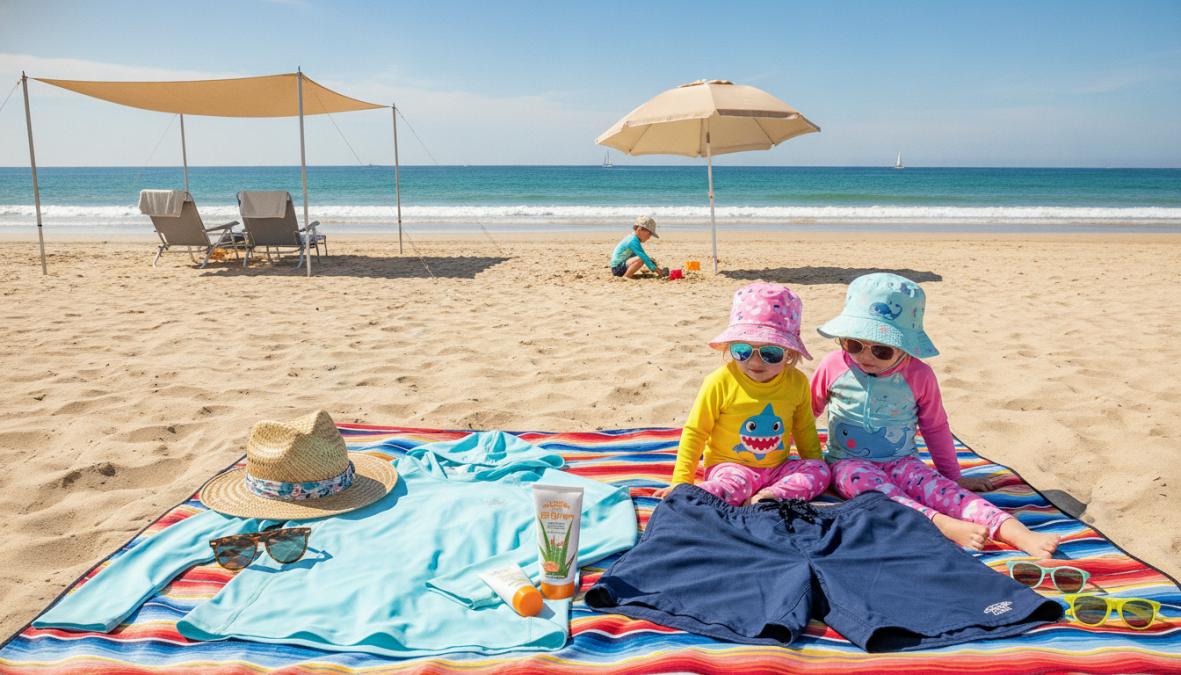
Bright & Bold Swimwear specializes in high-visibility swim options that combine sun protection with the safety visibility that helps parents and lifeguards keep watch. Their rash guards and swim sets feature UPF 30+ protection on select items, meaning children stay protected while remaining highly visible in the water. This dual-purpose design removes the choice between visibility and sun safety, you get both.
Protective accessories extend coverage beyond what clothing alone provides. Wide-brimmed hats (at least 3 inches all around) shade the face, ears, and neck, the areas most prone to sun damage and skin cancer. UV-blocking sunglasses protect the delicate eye area and reduce glare-related eye strain. Beach cover-ups made from lightweight, breathable fabric allow you to stay covered without overheating.
Best Reef-Safe Sunscreen for Beach Protection
Reef-safe sunscreen matters if you're swimming in or near coral ecosystems. Conventional sunscreens contain oxybenzone and octinoxate, chemicals that damage coral DNA and disrupt reproduction. Many tropical destinations and some U.S. states now restrict or ban these ingredients.
Reef-safe sunscreen uses mineral active ingredients, zinc oxide and titanium dioxide, instead of chemical filters. These minerals sit on top of skin and reflect UV rays rather than absorbing them. The tradeoff is texture: mineral sunscreens often feel thicker and leave a white cast on skin. Newer formulations have improved significantly, though some whiteness remains.
If you're visiting a coral reef area, check local regulations before your trip. Some destinations require reef-safe products, and vendors often carry compliant options. If reef-safe sunscreen isn't available locally, apply it before entering the water rather than reapplying in the water. This reduces the amount of product entering the marine environment.
Shade and Structural Sun Protection at the Beach
Beach canopies and portable shade structures reduce UV exposure dramatically without requiring sunscreen reapplication or protective clothing. A simple pop-up canopy creates a shaded zone where family members can rest, eat, and recover from sun exposure. UV-blocking beach umbrellas work similarly, though they cover less area.
The effectiveness of shade depends on its completeness. A beach umbrella angled to block direct overhead sun still allows reflected rays to reach you from sand and water. Position shade structures to block both direct and side angles. Bring enough shade for your entire family, trying to share one umbrella during peak sun hours means someone gets burned.
Finding natural shade at the beach is ideal but often limited. Beach cliffs, dense vegetation, or pier structures can provide relief. Check your beach's layout before arriving. If natural shade is scarce, arriving early to claim a shaded spot near existing structures (pavilions, restrooms) helps. Late afternoon beach sessions naturally provide longer shadows as the sun angle drops.
After-Sun Care and Skin Recovery for Beach Days
Sun exposure depletes skin hydration and triggers inflammation even when you don't burn visibly. After-sun care accelerates recovery and prevents long-term damage. Start with hydration, drink plenty of water throughout the day and after beach time. Dehydrated skin looks worse and heals slower.
Apply after-sun balm or moisturizer within an hour of sun exposure while skin is still slightly damp. This locks in hydration that sun exposure depleted. Look for products containing aloe vera, which soothes inflammation, or ceramides, which restore the skin barrier. If you do get sunburned, after-sun balms with menthol provide cooling relief.
For sun-sensitive skin or those prone to heat rash, cool (not cold) baths or showers help. Avoid harsh soaps that strip remaining moisture. Pat skin dry gently rather than rubbing. If sunburn is severe, accompanied by chills, fever, or blistering, seek medical attention. Mild sunburn typically resolves within a week with consistent moisturizing and hydration.
Sun-Safe Habits for Families at the Beach
Teaching children sun safety early builds lifelong protection habits. Explain UV rays in age-appropriate terms: "The sun's invisible rays can hurt your skin, so we wear sunscreen and shirts to keep you safe." Make sun protection routine rather than punishment. When kids see parents applying sunscreen and wearing hats, they're more likely to cooperate.
Keeping children visible and protected simultaneously is possible with strategic choices. Bright & Bold Swimwear's high-visibility swimwear makes children easy to spot in the water while their UPF protection reduces sun damage. Bright, neon colors aren't just for fashion, they're safety tools that help lifeguards and parents maintain visual contact.
Establish a sun safety routine: apply sunscreen 15 minutes before water entry, reapply after each swim, wear protective clothing during peak hours, and take shade breaks every 60-90 minutes. Make it a family activity rather than individual tasks. When everyone follows the same schedule, it becomes normal rather than bothersome.
| Age Group | Key Vulnerabilities | Best Protection Strategy |
|---|---|---|
| Infants (0-6 months) | Immature skin barrier, no sunscreen approved | Protective clothing, shade, avoid direct sun |
| Toddlers (6 months-3 years) | Sensitive skin, frequent water entry | Rash guards, frequent reapplication, shade structures |
| Children (3-12 years) | Extended play time, forgetfulness | High-visibility protective clothing, supervised reapplication, shade breaks |
| Teens (12+) | Peer pressure to skip protection | Education on long-term damage, stylish protective options |
| Adults | Cumulative UV damage from childhood | Comprehensive sun protection, regular skin checks |
Protecting your family from sun damage doesn't require choosing between safety and fun. By combining broad-spectrum sunscreen, protective clothing, strategic shade, and smart timing, you create a comprehensive sun protection for beach days approach that lets everyone enjoy the water confidently. Bright & Bold Swimwear's high-visibility swim options remove the tension between visibility and sun protection, children stay protected while remaining easy to spot. Start with one or two strategies from this guide and build from there. Consistency matters far more than perfection. The American Academy of Dermatology's sun safety guidelines and CDC recommendations for skin cancer prevention support the multi-layered approach we've covered. Your beach days will be safer, more enjoyable, and worry-free when protection becomes routine. Shop Bright & Bold Swimwear's best sellers to find high-visibility rash guards and swim sets that combine sun protection with the visibility every parent deserves.
Frequently Asked Questions
What is the best sun protection for a full day at the beach?
The best sun protection combines multiple strategies: apply broad-spectrum SPF 30 or higher sunscreen every two hours, wear UPF 50 sun-protective clothing like rash guards, use a wide-brimmed hat and UV-blocking sunglasses, and stay in shade during peak sun hours (10 am-3 pm). For families, high-visibility swimwear helps parents keep children in sight while they play safely. This layered approach provides comprehensive photoprotection and reduces skin cancer risk significantly.
How often should you reapply sunscreen at the beach?
Reapply sunscreen every two hours, or immediately after swimming, sweating, or toweling off. Water-resistant formulas may last longer, but even these require reapplication. Don't wait until you feel burnt, by then, UV damage has already occurred. Keep sunscreen accessible in a beach bag and set a phone reminder to ensure consistent reapplication throughout your beach day for optimal sun protection.
Is SPF 30 or SPF 50 better for sun protection for beach days?
SPF 50 offers slightly more protection than SPF 30, blocking approximately 98% of UVB rays versus 97%. However, both are effective when applied generously and reapplied regularly. The difference is minimal if you're diligent with reapplication every two hours. Choose based on your skin type: fair or sun-sensitive skin benefits from SPF 50, while SPF 30 is adequate for most people with consistent reapplication and complementary sun-safe habits.
What are the best sun-protective clothing options for the beach?
Look for UPF 50 rash guards, swim shirts, and beach cover-ups made from tightly-woven fabrics. These garments block UVA/UVB radiation effectively. Pair them with wide-brimmed hats, UV-blocking sunglasses, and lightweight long-sleeve beach cover-ups for maximum protection. For children, high-visibility sun-protective swimwear combines safety with photoprotection. Wet fabric offers less protection, so reapply sunscreen under clothing and replace wet cover-ups with dry ones periodically.
This article was written using GrandRanker