
7 Surprising Tips to Boost Swimsuit Visibility in 2026
Imagine watching your child leap into the water, surrounded by splashing swimmers and shifting sunlight. Could you spot them instantly if you had to? Swimsuit visibility is not just about picking a favorite color—it is a vital safety factor every parent, lifeguard, and swimmer should consider.
In 2026, new research and technologies are transforming how we think about swimsuit visibility, making it more important than ever to choose wisely. This article uncovers seven research-backed tips to help you dramatically improve how visible you or your loved ones are in any aquatic setting.
We will break down the science behind color choices, contrast, innovative materials, and clever accessories. You will discover actionable solutions to help you make the safest, smartest decisions this swim season. Ready to make a difference? Let us dive in.
The Science Behind Swimsuit Visibility
Understanding swimsuit visibility starts with how light interacts with water. When sunlight enters a pool or lake, water absorbs and scatters the rays, changing how we perceive color. This scientific principle is at the heart of why some swimsuits pop while others nearly vanish beneath the surface.
How Light Behaves Underwater
Water changes the way colors appear. Certain hues, like red, lose their intensity and disappear first as depth increases. In contrast, blue and green light travel further underwater, making these colors look less vibrant but more persistent.
However, this does not mean blue or green are good choices for swimsuit visibility. Instead, neon shades such as yellow and pink remain highly visible because they reflect more light and resist scattering. Alive Solutions’ tests show fluorescent colors are easy to spot even in low-light or deeper water settings.
Factors Impacting Visibility
Several elements influence swimsuit visibility. Water clarity is crucial: clear water lets more light through, while murky, algae-rich water scatters and absorbs light, making some colors fade quickly.
Depth also matters. The deeper the swimmer, the less visible their suit becomes. Pools with light bottoms make bright suits stand out, while dark or natural bodies of water can hide muted colors. Open water introduces floating debris and plant life, further affecting visibility.
Importance of Contrast and Movement
Contrast is a powerful tool for increasing swimsuit visibility. High-contrast patterns and color blocking break up a swimmer’s outline, making them easier to spot in both calm and busy aquatic settings.
Movement can help or hinder visibility. Splashes and waves may draw attention to a swimmer, but they can also distort colors or create surface glare, making it harder to see muted tones. Choosing a suit with bold contrast ensures the swimmer stands out even in motion.
Real-World Data
Independent studies have confirmed the impact of color choice on swimsuit visibility. Neon yellow, pink, and orange consistently outperform blues, greens, and pastels in both pools and lakes.
For example, research by Alive Solutions and others found that neon orange was the most visible in lakes and pools, regardless of depth or water clarity. These findings are reinforced in detailed swimsuit color visibility tests, which provide real-life comparisons and visual evidence to guide safer swimwear choices.
Ultimately, prioritizing swimsuit visibility is a simple yet crucial step for anyone responsible for water safety.
7 Surprising Tips to Boost Swimsuit Visibility in 2026
Choosing the right swimwear is about more than just personal style. In 2026, swimsuit visibility is at the forefront of water safety conversations, driven by new research and innovative materials. Below, discover seven surprising, research-backed tips to dramatically enhance swimsuit visibility for every swimmer, from toddlers to adults. Each tip is practical, easy to implement, and designed to help you make informed, life-saving decisions this swim season.
1. Choose Fluorescent and Neon Colors for Maximum Impact
When it comes to swimsuit visibility, color selection is your most powerful tool. Research consistently shows that neon and fluorescent shades—especially pink, yellow, and orange—outperform every other color in both clear and murky water. These colors appear to "glow" underwater, making swimmers easy to spot from a distance or among crowds.
For example, visibility tests by Alive Solutions identified neon orange as the top performer in lakes, as well as in pools with both light and dark bottoms. Neon pink and yellow closely followed, maintaining high visibility even in just 18 inches of water. Fluorescent hues stand out against blue, green, or plant-rich backgrounds, ensuring your child or loved one won't blend in.
Why do these colors work so well? Water absorbs and scatters light, causing reds and darker shades to disappear quickly beneath the surface. Neon colors, however, reflect light more effectively, retaining their brightness and contrast even as depth or water clarity changes. This makes them invaluable for both safety and peace of mind.
Here's a quick comparison of color performance:
| Color | Visibility in Clear Water | Visibility in Murky Water |
|---|---|---|
| Neon Orange | Excellent | Excellent |
| Neon Yellow | Excellent | Excellent |
| Neon Pink | Excellent | Good |
| Blue/Green | Poor | Very Poor |
| Pastels | Poor | Poor |
When shopping for swimwear, look for labels like "fluorescent" or "high-visibility." These indicate the use of materials and dyes designed for maximum brightness. For a more detailed breakdown, check out the Best Swimsuit Color for Visibility to make informed choices for every member of your family.
Remember, swimsuit visibility is not just a trend—it's a proven safety essential for both kids and adults. Prioritizing neon colors can make a life-saving difference.
2. Opt for High-Contrast Patterns and Color Blocking
Beyond color, the pattern of a swimsuit can greatly influence swimsuit visibility. Swimsuits that combine two or more bright, contrasting colors are significantly easier to spot than single-color suits. Patterns like stripes, bold geometric shapes, or color blocking break up the body’s outline, making swimmers stand out even in crowded or visually complex environments.
For example, neon pink and orange combinations performed exceptionally well in pool visibility tests. High-contrast patterns are especially valuable in busy aquatic settings, where distractions and visual noise make it harder for lifeguards or parents to focus on one swimmer.
When selecting swimwear, avoid monochromatic designs that blend with the pool or natural water backgrounds. Instead, opt for suits with contrasting trims, sleeves, or panels. These details not only enhance style but also add an extra layer of safety by increasing swimsuit visibility.
Consider these pattern strategies:
- Select horizontal or vertical stripes in neon shades.
- Choose suits with bold graphics or geometric designs.
- Look for color-blocked panels that mix bright, opposing colors.
Swimsuit visibility is amplified when patterns are large and distinct, rather than small or subtle. In summary, investing in high-contrast patterns and color blocking is a simple, effective way to make any swimmer easier to identify in water.
3. Prioritize Visibility Over Fashion Trends
It is tempting to follow the latest swimwear trends, but not all fashionable choices are created equal when it comes to swimsuit visibility. Many popular styles feature muted tones, earth colors, or pastels, which may look chic but can significantly reduce how easily a swimmer is seen underwater.
Social media and influencer culture often promote aesthetics over safety. However, data shows that blue swimsuits—though they dominate fashion feeds—are among the least visible options in aquatic environments. In tests conducted by swim instructors and safety experts, blue suits nearly disappeared even in calm, clear water.
When shopping, make visibility your primary criterion. Test how a swimsuit looks in water and under various lighting conditions before purchasing. Encourage brands and retailers to expand their offerings of high-visibility options for all ages, not just children.
Tips for balancing style and safety:
- Choose neon shades in trendy cuts or designs.
- Layer with high-contrast accessories to boost swimsuit visibility.
- Avoid colors that mimic water or pool surroundings.
Staying informed and making deliberate choices can help ensure that swimsuit visibility is never compromised for the sake of fleeting trends.
4. Leverage Reflective and UV-Responsive Materials
In 2026, swimwear technology is advancing rapidly, offering new solutions to increase swimsuit visibility beyond traditional neon fabrics. Swimsuits with integrated reflective strips or UV-reactive materials are now available, providing an extra layer of detection in varying conditions.
Reflective elements are highly effective during early morning, dusk, or indoor pool sessions when natural light is limited. These features bounce light back to the observer, making the swimmer up to 50 percent more noticeable, according to industry reports. UV-responsive materials are another innovation—they change color or intensity under sunlight, giving a dynamic boost to swimsuit visibility.
Some brands have introduced suits that "light up" under UV or LED pool lights, further enhancing visibility during evening swims or in shaded areas. To maximize safety, pair reflective swimsuits with matching accessories such as hats, wristbands, or even swim caps.
Key considerations when choosing these materials:
- Look for swimwear labeled "reflective" or "UV-reactive."
- Test the reflective effect by shining a flashlight or using pool lights.
- Combine with neon colors for optimal swimsuit visibility.
Investing in cutting-edge fabrics is a forward-thinking strategy, ensuring swimmers remain visible regardless of changing light or environment.
5. Accessorize for Enhanced Detection
Swimsuit visibility does not stop at the suit itself. Accessories play a crucial role in boosting detection, particularly for children and group outings. Brightly colored goggles, swim caps, and floaties can supplement the visibility of even the brightest swimsuits, creating multiple points of reference for supervisors and lifeguards.
Choosing accessories in neon or contrasting shades ensures that a swimmer's head, arms, or legs remain visible even if the torso is submerged or obscured by splashing. For example, kids' hooded towels and vivid goggles help maintain visibility both in and out of the water.
Practical tips for maximizing accessory impact:
- Replace faded or sun-bleached gear each season to maintain brightness.
- Coordinate group accessories for easy identification during classes or outings.
- Layer multiple neon items for amplified swimsuit visibility.
Safety experts recommend using high-visibility accessories even if the swimsuit is already bright. Layering colors multiplies the effect, making swimmers easier to spot in any scenario.
6. Consider Water Type and Activity When Selecting Colors
Not all aquatic environments are the same, and swimsuit visibility requirements can vary dramatically depending on the water type and activity. Pools, lakes, oceans, and rivers each present unique challenges for spotting swimmers, and the best color for one setting may not be ideal for another.
For murky or plant-rich water, neon yellow and orange are the top choices, as they remain visible against muddy or algae-laden backgrounds. In clear pools, neon pink and green excel, standing out sharply against blue-tiled bottoms.
Here’s how to optimize your selection:
- For lakes with muddy bottoms, opt for neon orange and yellow.
- In clear pools, prioritize neon pink or green.
- For open water activities like boating or paddleboarding, choose the brightest, most contrasting shades available.
Adjusting your swimwear choices based on location, time of day, and expected crowd levels ensures maximum swimsuit visibility. Keeping a selection of suits for different environments is a smart, proactive safety measure.
Swimsuit visibility should be tailored to both the activity and the setting, ensuring every swimmer can be quickly identified no matter where they are.
7. Test Visibility Before You Swim—Don’t Rely on Assumptions
One of the most overlooked tips for improving swimsuit visibility is to test it yourself before heading into the water. Conducting a quick "visibility test" in your own pool or at a local lake can reveal how a swimsuit performs in real-world conditions.
To do this, submerge the swimsuit and observe its appearance from different angles, depths, and lighting situations. Alive Solutions' research involved dropping colored clothing into water to evaluate actual visibility, a tactic you can easily replicate at home.
Make this a family activity by involving children in the process. Teach them why color choice matters and how it can impact their safety. Share your findings with other parents or swim groups to help raise awareness about swimsuit visibility.
Additional tips for effective testing:
- Re-test older swimsuits, as fading can significantly diminish visibility.
- Document your results with photos for future reference.
- Update your swimwear collection as needed to ensure optimal safety.
By actively testing before you swim, you take control of swimsuit visibility and help prevent dangerous assumptions that could compromise safety.
The Hidden Dangers of Low-Visibility Swimwear
Swimsuit visibility is a critical yet frequently overlooked component of water safety. When a swimmer’s suit blends into the aquatic environment, the risk of delayed rescue or unnoticed distress increases significantly. Understanding the consequences of low-visibility swimwear is essential for making informed, life-saving choices.
Risks Associated with Poor Visibility
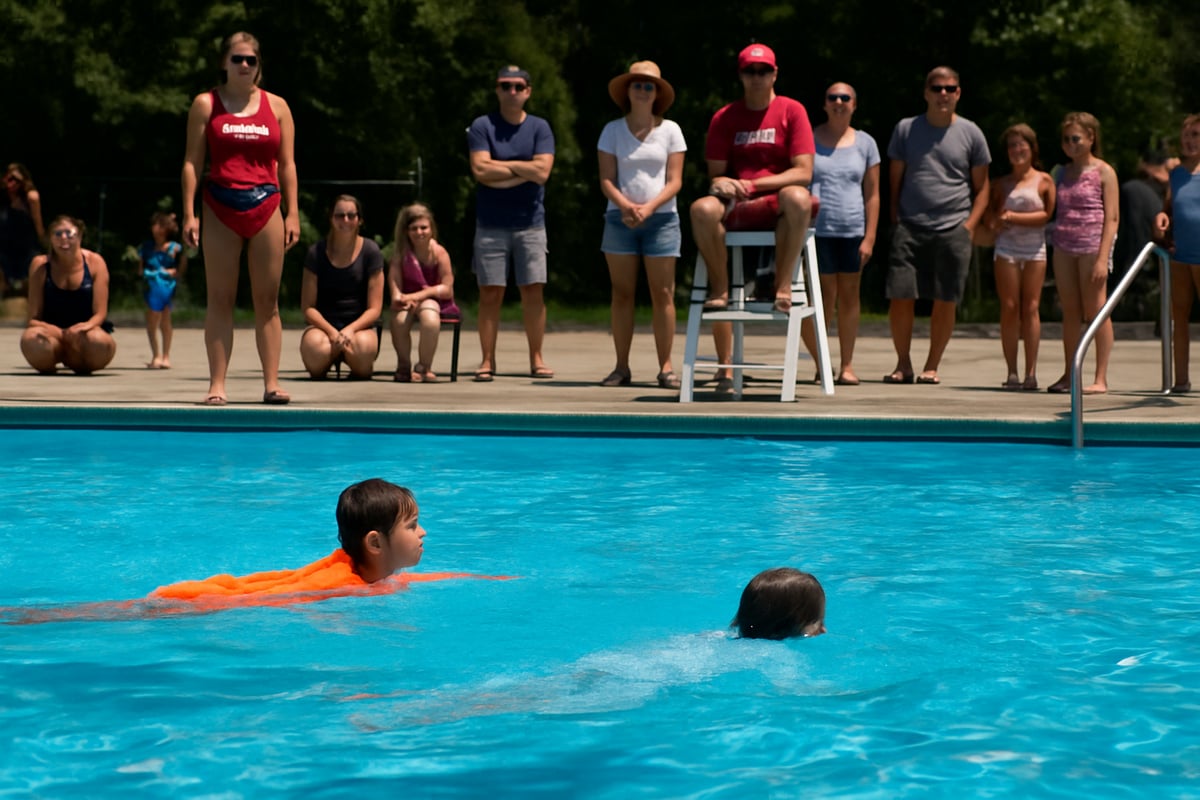
Wearing swimwear in muted tones, blues, or greens can make a swimmer nearly invisible below the surface. Supervisors and lifeguards may struggle to spot a child in distress, even in calm water. According to the National Drowning Prevention Alliance, drowning is the leading cause of unintentional injury death for children ages 1 to 4.
A real-world demonstration by a swim instructor on TikTok showed how a blue swimsuit “disappeared” within seconds underwater. The risk is not theoretical—it is a daily concern at pools and beaches worldwide. For a detailed discussion on which colors to avoid, see Colors Not to Wear in the Pool.
Choosing the right suit is more than a style preference; it directly impacts swimsuit visibility and, ultimately, swimmer safety.
Impact of Water Disturbance and Group Settings
Swimsuit visibility is further compromised in busy aquatic environments. Splashing, waves, and crowded pools create surface agitation that can obscure swimmers, especially those wearing low-contrast swimwear.
In group settings, it is common for supervisors to lose sight of children for crucial moments. Surface glare and low-light conditions, such as dusk or indoor pools, amplify the problem. Even a brief lapse in visibility can delay response time during emergencies.
When multiple swimmers wear similar muted colors, distinguishing individuals becomes challenging. This underscores the importance of selecting swimwear that maximizes contrast and stands out from the environment.
Statistics and Data
Research from Alive Solutions reveals that muted or pastel colors are often undetectable, even in just 18 inches of water. In contrast, neon shades maintain visibility regardless of surface movement or water clarity. The table below summarizes these findings:
| Swimsuit Color | Visibility in Water |
|---|---|
| Neon Orange/Yellow | High |
| Neon Pink/Green | High |
| Blue/Green/Pastel | Low |
| Black or White | Variable |
For a comprehensive overview of color performance and safety, consult the Swimsuit color safety guide, which details aquatic tests and real-world outcomes.
Low-visibility swimwear increases the risk of undetected incidents and delayed rescues. Swimsuit visibility should be prioritized as a simple, effective strategy to enhance safety for all swimmers.
Expert Insights and Future Innovations in Swimsuit Visibility
New technologies are transforming swimsuit visibility for swimmers of all ages. In 2026, brands are introducing UV-reactive fabrics, color-changing materials, and even LED-integrated swimwear. These innovations help swimmers stand out in both natural and artificial light, making detection easier for supervisors and lifeguards. Smart fabrics are also being developed to monitor submersion time and send alerts if someone remains underwater too long. For a detailed comparison of these advancements with older styles, see High Visibility Swimwear vs Traditional Suits.
Emerging Technologies and Materials
The future of swimsuit visibility is driven by material science. UV-reactive swimwear changes color and intensity in sunlight, while LED panels and reflective strips enhance visibility at dawn or dusk. Smart textiles are being tested that can detect prolonged submersion, alerting nearby adults or lifeguards. These tools offer a proactive way to improve safety and make swimmers more visible in any environment.
Expert Recommendations
Water safety experts stress that swimsuit visibility can make a life-saving difference. Organizations like the NDPA and Aquatic Safety Connection recommend neon hues and high-contrast patterns as best practices. Swim instructors emphasize that bright, contrasting colors are essential for rapid identification, especially in emergencies. For more on expert perspectives and real-world examples, visit Impact of swimsuit color on water safety.
Parental and Community Education
Public education is vital for raising awareness about swimsuit visibility. Campaigns now highlight the importance of color choice alongside supervision and swimming lessons. Partnerships between brands and safety organizations, such as Bright & Bold Swimwear and the NDPA, bring practical guidance to families. Parents are encouraged to involve children in choosing visible swimwear, turning safety into a shared responsibility.
Looking Ahead
The swimwear industry is shifting toward designs that prioritize swimsuit visibility. More brands are adopting neon colors, reflective details, and smart features in their collections. Ongoing research will continue to refine which colors and materials work best in various water conditions. As demand grows for functional, safety-first swimwear, consumers can expect even more innovative options in the coming years.
Key Arguments and Insights
Combining education, technology, and thoughtful design is the most effective way to reduce drowning risks. Swimsuit visibility should be a top priority for parents, lifeguards, and swim instructors alike. As knowledge spreads and products improve, everyone can play a role in making aquatic environments safer. Informed choices and advocacy will continue to drive positive change in the swimwear industry.
After exploring these seven research-backed tips, you can see how much of a difference the right swimsuit can make for your child’s safety and visibility—whether at the pool, lake, or beach. As parents ourselves, we understand peace of mind comes from knowing your little one stands out, no matter where they swim. If you’re ready to take the next step and put these expert recommendations into action, discover our collection of vibrant, high-contrast swimwear designed just for kids. You can make a smart, safety-first choice this season when you Shop Bestsellers Now.