

Tips for Watching Kids at Pool: 7 Essential Safety Strategies
Table of Contents
- Why Active Supervision Is Non-Negotiable for Pool Safety
- Designate a Water Watcher: The First Line of Defense
- Establish Clear Pool Safety Rules for Kids
- How to Prevent Drowning at the Pool: Layered Protection
- Best Life Jackets for Kids and Flotation Devices
- Emergency Preparedness and CPR Certification
- Practical Tips for Watching Kids at Pool in Real Situations
- Make Your Child Visible: High-Visibility Swimwear Advantage
Tips for Watching Kids at Pool: 7 Essential Safety Strategies
Last Updated: July 12, 2026
Drowning is a leading cause of unintentional injury death for children, yet many parents underestimate risks during pool time. At Bright & Bold Swimwear, we understand that watching kids at pool requires intentional strategies, clear communication, and layered protection. This guide covers seven essential safety practices that separate casual pool visits from genuinely protected environments.
Why Active Supervision Is Non-Negotiable for Pool Safety
Passive supervision, scrolling your phone or chatting while poolside, creates dangerous gaps in protection. Active supervision means eyes on children at all times, understanding where each child is and whether they're safe.
Understanding the Risks of Distraction
Your brain cannot divide attention equally between a phone conversation and water safety. When distracted, your response time to a struggling child increases dramatically, those extra seconds matter in drowning situations where children often go silent and slip underwater quietly, unable to call for help.
Designate a Water Watcher: The First Line of Defense
The water watcher system assigns explicit responsibility to one adult at a time. This person has one job: watch the children in the water. They should be positioned where they can see all children without obstruction, within arm's reach of young or weak swimmers, and know basic CPR and first aid.
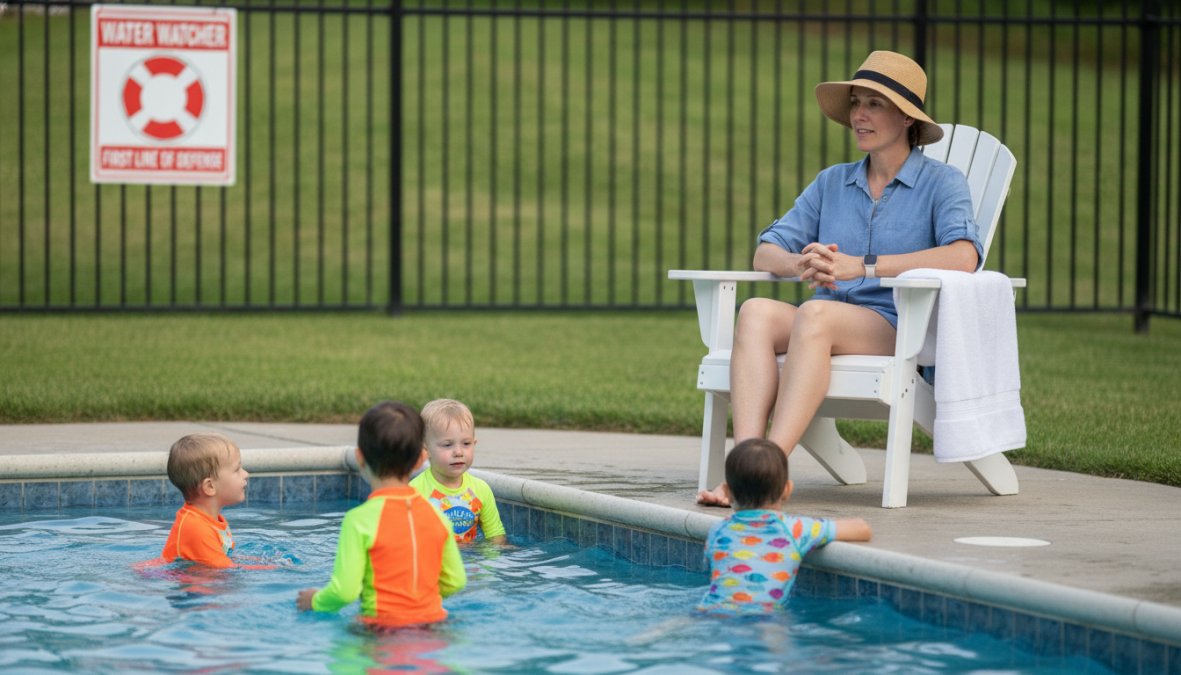
How to Rotate Supervision Duties
In group settings, rotation prevents fatigue and maintains consistent attention. Establish a system where one designated adult watches for 15-30 minutes, then another takes over. Before switching, the incoming watcher must confirm they have clear sight lines.
A practical approach:
- Assign specific time blocks (e.g., 2:00-2:30 PM, 2:30-3:00 PM)
- Brief the incoming watcher before the current one steps back
- Keep a written schedule so everyone knows their slot
- Ensure backup watchers are present and aware
Water Watcher Tags and Visibility Tools
Water watcher tags, badges, or armbands make the designated supervisor instantly visible to other adults and children. This prevents confusion about who's responsible for supervision.
:::pro-tip If your pool doesn't provide tags, assign a visible marker, a colored wristband, hat, or towel, so everyone knows who's actively supervising. :::
Establish Clear Pool Safety Rules for Kids
Children follow rules when they understand the reason and when rules are enforced consistently. Clear, age-appropriate rules create structure and reduce impulsive decisions.
Effective pool rules should be stated positively and explained before entering the water:
- Always enter the water feet first, never headfirst
- Stay within your assigned zone
- No running on the deck
- Use the buddy system, always have a partner in the water
- No pushing, dunking, or roughhousing
- Listen immediately when an adult calls your name
Age-Appropriate Rules and Boundaries
Rules should match what children can realistically follow. A 3-year-old cannot remember a five-point safety plan. A 10-year-old can manage more complex expectations. Adjust rules and supervision intensity based on each child's age, swimming ability, and maturity level.
How to Prevent Drowning at the Pool: Layered Protection
Drowning prevention relies on multiple layers of protection working together: supervision, barriers, skills, and emergency response. When all links are strong, the system works.
Swim Lessons and Skill Assessment
Swim lessons teach water confidence and basic survival skills, but they don't make children drowning-proof. A child who has completed lessons still needs active supervision, barriers, and flotation devices if they're weak swimmers. Lessons reduce risk but don't eliminate it.
When enrolling children in swim lessons, look for instructors who teach water safety alongside technique. Children should learn to float on their back, recognize when they're in trouble, and exit water safely.
Barrier Protection and Pool Fencing
Barriers prevent unsupervised access to water. A properly installed fence, self-closing gate, and locked door create obstacles that slow a child's access long enough for an adult to intervene.
Effective barriers include:
- Four-sided fencing around the pool (at least 4 feet high)
- Self-closing, self-latching gates that lock
- Drain covers meeting current safety standards
- Alarms on doors and gates leading to the pool
- Pool covers and safety nets when not in use
Barriers work best combined with supervision. A fence alone won't stop a determined toddler if an adult isn't watching, but a fence combined with supervision creates strong protection.
Best Life Jackets for Kids and Flotation Devices
Life jackets are one of the most effective tools for preventing drowning. A US Coast Guard approved life jacket keeps a child's head above water and reduces energy required to stay afloat, especially important for weak swimmers and young children.
US Coast Guard Approved Options
Not all flotation devices are created equal. Inflatable armbands and pool noodles do not provide reliable flotation. A US Coast Guard approved personal flotation device (PFD) is specifically designed and tested to keep a person's head above water even if unconscious.
Look for the US Coast Guard approval label on any life jacket. For children, Type II or Type III PFDs are most common for recreational water use.
When and How to Use Flotation Aids
Life jackets should be worn by non-swimmers or weak swimmers, regardless of water depth. A child can drown in inches of water. For children learning to swim, a life jacket allows them to focus on building skills without fear of sinking.
When using a life jacket, ensure it fits properly. The jacket should not ride up over the child's chin or slip down past their shoulders. Straps should be snug but not uncomfortable.
Emergency Preparedness and CPR Certification
Despite all preventive measures, emergencies can happen. CPR certification is not optional for anyone supervising children in water. CPR training teaches you how to recognize cardiac arrest and perform chest compressions and rescue breathing. In the critical minutes before emergency responders arrive, CPR can mean the difference between life and death.
Beyond CPR, emergency preparedness includes knowing where the nearest AED is located, having a phone immediately available to call 911, and knowing basic first aid for water-related injuries.
Building Your Pool Safety Kit
A pool safety kit should be accessible poolside and include:
- A first aid kit with bandages, antiseptic, and pain relief
- A rescue tube or reaching pole
- A CPR face shield or barrier device
- A phone for calling 911
- Emergency contact information for all children present
Practical Tips for Watching Kids at Pool in Real Situations
Managing Multiple Children and Group Dynamics
Watching multiple children becomes exponentially harder. The water watcher system becomes even more critical in group settings.
When supervising multiple children:
- Assign each child a specific zone (shallow end for younger kids, deep end for stronger swimmers)
- Use the buddy system, pair children together
- Establish a hand signal system so children can alert you if someone is missing
- Count children regularly, every few minutes
- Keep stronger and weaker swimmers separated unless a strong swimmer is assigned to supervise
Recognizing Drowning Signs and Taking Action
Drowning happens quickly and often silently. Watch for these signs:
- Head tilted back, mouth at water level
- Inability to move toward safety
- Glassy or unfocused eyes
- Vertical position in water
- Gasping or irregular breathing
- Silent struggle
If you see these signs, remove the child from water immediately. If they're conscious, get them warm and dry and monitor breathing. If they're unconscious, call 911 and begin CPR.
Make Your Child Visible: High-Visibility Swimwear Advantage
One of the most underrated tools in pool safety is visibility. A child wearing bright, high-visibility swimwear is easier to spot in water and easier to track during group swimming.
Bright & Bold Swimwear specializes in high-visibility options designed to help parents and lifeguards keep eyes on children. Vibrant colors and bold patterns make children stand out in water, reducing the cognitive load on supervisors. When a child is visually distinct, your brain registers their location faster.
Bright & Bold Swimwear offers functionality and style, children can wear high-visibility swimwear they actually like, making them more willing to wear it consistently. The UPF 30+ protection on select items adds another layer of safety by protecting skin from sun damage.
| Safety Layer | Strategy | Impact |
|---|---|---|
| Supervision | Designate active water watcher | Immediate response to distress |
| Barriers | Fencing, gates, alarms | Prevents unsupervised access |
| Skills | Swim lessons and water safety | Increases child's confidence and survival ability |
| Flotation | US Coast Guard approved life jacket | Keeps head above water |
| Visibility | High-visibility swimwear | Faster visual tracking and location |
| Emergency Response | CPR certification and first aid kit | Effective response if incident occurs |
| Rules | Clear, age-appropriate expectations | Reduces risky behavior |
Watching children at the pool requires intentionality, preparation, and honest assessment of your own limitations. The strategies covered here, active supervision, designated watchers, clear rules, layered protection, appropriate flotation, emergency readiness, and visibility, work together to create a genuinely safe environment.
Start with the water watcher system at your next pool visit. Assign one person to focus entirely on supervision and rotate every 20-30 minutes. Pair this with high-visibility swimwear from Bright & Bold Swimwear, which makes tracking children easier. Add a life jacket for non-swimmers, establish clear rules, and ensure CPR certification is current. Explore our Best Sellers and Girls swimsuits to find high-visibility options that work for your family.
Frequently Asked Questions
What are the most important pool safety rules for kids?
The most critical pool safety rules for kids include: always having a designated water watcher providing arm's reach supervision, requiring US Coast Guard approved life jackets for weak swimmers, establishing non-negotiable rules about running on deck and diving in shallow water, and ensuring all children know to never enter the pool without an adult present. Additional rules should cover appropriate water entry methods, buddy systems, and immediate reporting of any distress signals or drowning signs.
How do you supervise multiple children at a pool?
When watching multiple children, designate one adult as the primary water watcher, their sole responsibility is active supervision of all swimmers. Use a water watcher tag or vest to make the designated adult visible to other caregivers. Establish a buddy system where children pair up and stay together. Position yourself where you can see all swimmers at arm's reach distance. Rotate supervision duties every 15-20 minutes to prevent fatigue-related lapses in attention. Keep a first aid kit and rescue equipment nearby, and ensure at least one adult is CPR certified.
What should you look for to recognize drowning signs at the pool?
Drowning often looks different than portrayed in movies. Watch for: a child's head low in the water or tilted back, struggling to keep mouth above water, gasping or unable to call for help, thrashing or flailing that seems frantic, glassy or unfocused eyes, and skin that appears pale or bluish. A silent child in distress may show vertical body position, inability to move toward safety, or sudden loss of coordination. Weak swimmers and young children are at highest risk. Trust your instincts, if something looks wrong, it probably is. Respond immediately with rescue equipment or direct intervention.
Why is a designated water watcher important for pool safety?
A designated water watcher is essential because it eliminates confusion about who is responsible for supervision. When everyone assumes someone else is watching, dangerous gaps in attention occur. A single adult assigned this role, wearing a water watcher tag or vest if supervising a group, maintains focused, uninterrupted attention on swimmers. This person avoids distractions like phones, conversations, or food, keeping their eyes on the water at all times. Rotating this duty every 15-20 minutes prevents fatigue. This layered approach to active supervision significantly reduces drowning risk and ensures rapid emergency response if needed.
This article was written using GrandRanker