

UPF 50 Swimsuits for Kids: Complete Sun Safety Guide
Table of Contents
- Why UPF 50 Swimsuits for Kids Matter
- UPF 50 vs SPF 50: What's the Real Difference?
- Sun-Safe Swimwear Features to Look For
- Styles for Boys and Girls: Finding the Right Fit
- Long Sleeve Swimsuits for Kids: Extended Coverage
- Sizing and Growth Guides for UPF 50 Swimwear
- How to Wash UPF Clothing to Maintain Protection
- Beach and Pool Safety Beyond UPF 50 Swimsuits
UPF 50 Swimsuits for Kids: Complete Sun Safety Guide
Last Updated: June 28, 2026
When it comes to protecting children from harmful UV rays, UPF 50 swimsuits for kids represent one of the most effective tools available to parents and caregivers. At Bright & Bold Swimwear, we understand that sun protection is about creating layers of defense that keep children safe during their most active outdoor moments. This guide walks you through everything you need to know about selecting, caring for, and maximizing the benefits of UPF 50 swimwear for your family.
The stakes are real: childhood sun exposure significantly increases lifetime risk of skin cancer. That's why choosing the right swimwear matters as much as any other safety decision you make for your children.
Why UPF 50 Swimsuits for Kids Matter
UPF 50 swimsuits block 98% of ultraviolet radiation, both UVA and UVB rays, that penetrate regular clothing and cause cumulative skin damage. Children's skin is thinner and more vulnerable than adult skin, and their cells haven't yet developed protective mechanisms. A child who experiences severe sunburns before age 18 has double the lifetime risk of melanoma compared to children who avoid significant sun exposure.
Many parents rely on SPF 30 sunscreen alone, but sunscreen requires reapplication every two hours, washes off in water, and depends on proper application technique. UPF 50 swimwear provides continuous, reliable protection for the entire duration of water play without reapplication or washoff concerns.
UPF 50 vs SPF 50: What's the Real Difference?
SPF (Sun Protection Factor) applies only to sunscreen and measures protection against UVB rays. UPF (Ultraviolet Protection Factor) applies to fabrics and measures protection against both UVA and UVB rays combined. A UPF 50 fabric blocks 98% of both types of harmful rays, while SPF 50 sunscreen blocks 98% of UVB rays but offers less comprehensive UVA protection.
UPF protection is permanent, built into the fabric during manufacturing. SPF protection degrades, washes away in water, and requires reapplication every 80 minutes of water exposure. A UPF 50 swimsuit maintains its protective properties through the entire swimming season and beyond.
The practical difference: A child wearing a UPF 50 rash guard can play in water all day without sun protection degrading. The same child in regular swimwear with only sunscreen needs reapplication multiple times during a few hours of play.
Sun-Safe Swimwear Features to Look For
Not all swimwear labeled "UPF" provides equal protection. Understanding what to evaluate ensures you're getting the protection you're paying for.
Physical blockers (like zinc oxide or titanium dioxide) are typically preferred in swimwear because they reflect UV rays and remain stable in water and sunlight. Chemical blockers can degrade faster when wet and exposed to chlorine.
Quick-dry and chlorine-resistant fabrics extend the life of your investment. Quality UPF 50 swimsuits use specially treated synthetic blends that resist chlorine absorption, maintain elasticity through repeated washing, and dry quickly.
Look for these specific features:
- Certified UPF 50+ rating (tested to ISO 18061 or equivalent standards)
- Chlorine-resistant fabric that maintains color after 20+ wash cycles
- Flatlock or sealed seams to prevent chafing
- Quick-dry technology
- Reinforced seams at stress points
Styles for Boys and Girls: Finding the Right Fit
The right style depends on your child's age, activity level, and personal comfort.
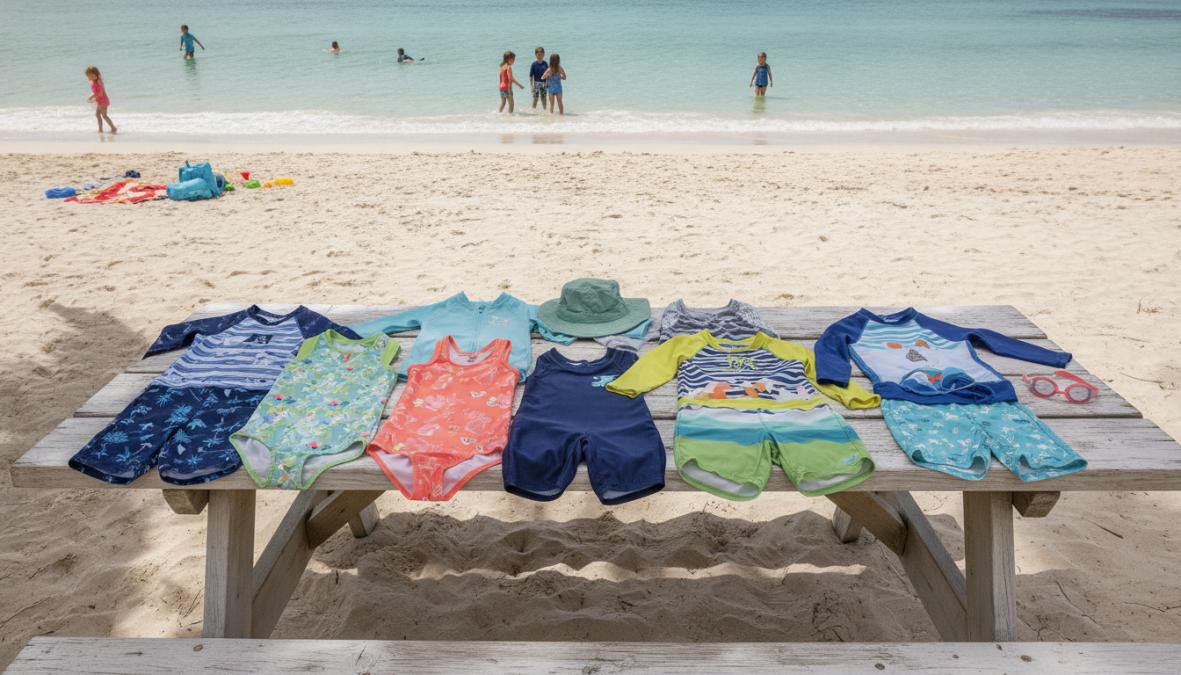
Rash guards offer the most coverage with the least restriction. These fitted shirts extend from shoulders to hips and are designed specifically for water sports. They pair with board shorts or swim trunks for boys, or with swim skirts or leggings for girls. Our Boys swimsuits and Girls swimsuits collections feature a range of styles designed for active water play.
One-piece swimsuits and tankinis for girls provide full torso coverage in a single garment. One-pieces are ideal for younger children and competitive swimmers. Tankinis offer the coverage of a one-piece with easier bathroom access.
Bright & Bold Swimwear specializes in high-visibility options that combine sun protection with the safety benefit of making children easily spotted in water. The vibrant colors help lifeguards and parents keep visual track of children while providing reliable UPF 30+ protection.
Long Sleeve Swimsuits for Kids: Extended Coverage
Neck-to-knee surf suits represent the gold standard for sun protection, leaving only hands, feet, and face exposed. They're ideal for children with fair skin, a family history of skin cancer, or who spend extended time in intense sun.
Extended coverage options include long-sleeve rash guards, full-length leggings, neck-to-knee suits, and hooded swim shirts. Quality long-sleeve options use moisture-wicking technology that pulls sweat away from skin and allows air circulation, preventing the clammy feeling that makes kids want to remove protective gear.
Active play options like long-sleeve rash guards are popular with kids because they feel like athletic wear. Children who perceive their swimwear as "cool" rather than "medical" are more likely to wear it without complaint.
Sizing and Growth Guides for UPF 50 Swimwear
Proper fit determines whether your child will actually wear the swimsuit and whether it provides adequate coverage. A suit that's too loose gaps at the armholes and leaves skin exposed.
Infant and toddler sizing (newborn to 24 months) requires careful attention because growth is rapid. Measure your child's chest and length, then compare to brand-specific size charts. One-piece suits with snap closures or full zippers are ideal for this age.
Children's sizing (2-8 years) offers more variety in styles. Involve children in selection, but prioritize coverage over style preference. Look for suits with adjustable waistbands that accommodate growth spurts.
Active kids (ages 8+) need suits designed for movement. Suits need secure leg openings, waistbands that don't slip, and enough stretch for full range of motion.
How to Wash UPF Clothing to Maintain Protection
The way you care for UPF swimwear directly impacts how long the protective properties last.
Rinse the suit in fresh water immediately after chlorine or saltwater exposure. This is the single most important maintenance step. Wash in cool water with mild detergent designed for delicate fabrics. Avoid bleach, fabric softener, and harsh detergents that break down elastic fibers.
Dry flat or hang to dry. High heat from dryers damages elastic and degrades UV protection. Store in a cool, dry place away from direct sunlight.
With proper care, a quality UPF 50 suit maintains its protective properties through 40-60 wash cycles, roughly one full season of regular use (2-3 times per week). Poor care can reduce lifespan to 10-15 washes.
Beach and Pool Safety Beyond UPF 50 Swimsuits
Sun-protective swimwear is one layer of a comprehensive sun safety strategy. Combine UPF 50 swimsuits with:
- Broad-spectrum sunscreen (SPF 30+) applied to exposed skin 15 minutes before water play
- Reapply sunscreen every 80 minutes of water exposure
- Seek shade during peak sun hours (10 AM to 4 PM)
- Use UV-protective sunglasses
- Wear a wide-brimmed hat (3+ inches all around)
- Plan water activities during early morning or late afternoon
- Consider Swim Accessories like rash guard hoods and swim caps for additional coverage
Supervision remains the most critical safety factor for young children. Keeping children in UPF 50 swimwear makes them more visible in water, supporting your supervision efforts. Water safety skills and swimming lessons are independent from sun protection but equally important.
| Protection Layer | Purpose | Effectiveness | Best Used When |
|---|---|---|---|
| UPF 50 Swimwear | Continuous UV blocking during water play | Blocks 98% of UV rays | In water or at beach/pool |
| Broad-spectrum Sunscreen | Additional protection on exposed skin | SPF 30+ blocks 97% of UVB rays | Applied to face, ears, feet, exposed areas |
| Shade | Reduces overall UV exposure | Blocks 50-75% of UV rays | During peak sun hours (10 AM-4 PM) |
| UV Sunglasses | Protects eyes and eyelid skin | Blocks 99-100% of UVA/UVB | Worn outdoors in bright conditions |
| Wide-brimmed Hat | Protects scalp, face, ears, neck | Blocks 50-80% of UV to covered areas | When out of water during sunny periods |
Protecting your child's skin from UV damage is one of the most impactful health decisions you can make as a parent. UPF 50 swimsuits for kids provide reliable, continuous protection during water play without the reapplication hassles of sunscreen alone.
Start with a suit that fits well and that your child actually wants to wear. Bright & Bold Swimwear offers high-visibility designs that combine UPF 30+ protection with the safety benefit of making children easily visible in water. Pair swimwear with consistent sunscreen application, shade-seeking during peak sun hours, and strong water supervision. These layered approaches create comprehensive protection that keeps your family safer throughout the summer season.
Frequently Asked Questions
Is UPF 50 swimwear worth it for kids?
Yes. UPF 50 swimsuits for kids provide essential protection by blocking 98% of harmful UVA and UVB rays during water activities. Since children's skin is more vulnerable to sun damage and repeated exposure increases skin cancer risk later in life, investing in certified UPF 50+ swimwear is a meaningful part of sun-safe practices. Combined with supervision and additional sunscreen on exposed areas, these garments significantly reduce harmful sun exposure during beach and pool time.
What's the difference between UPF 50 and SPF 50?
SPF (Sun Protection Factor) measures protection against UVB rays only and applies to sunscreen. UPF (Ultraviolet Protection Factor) measures protection against both UVA and UVB rays and applies to clothing. UPF 50 fabric blocks 98% of harmful rays, whereas SPF 50 sunscreen blocks about 98% of UVB rays. For swimwear, UPF ratings are more reliable because the protection doesn't wash away like sunscreen does in water.
How do I choose the right size UPF 50 swimsuit for my child?
Measure your child's chest, waist, and length from shoulder to knee. Most brands offer size charts organized by age and height. For growing children, choose a size that fits snugly without restricting movement, you should be able to fit one finger under the armhole. Consider buying slightly larger if your child is between sizes, as UPF swimwear maintains its protective properties even with room to grow. Check return policies in case adjustments are needed.
Do kids still need sunscreen if they wear UPF 50 swimsuits?
Yes. While UPF 50 swimsuits provide excellent protection for covered areas, sunscreen is still essential for exposed skin like the face, ears, neck, and any gaps where fabric doesn't cover. Apply broad-spectrum, water-resistant sunscreen (SPF 30+) 15 minutes before water activities and reapply every two hours or immediately after swimming. Using both UPF clothing and sunscreen creates comprehensive sun-safe protection.
This article was written using GrandRanker