

Why UPF 50 Is Important: Complete Sun Protection Guide
Table of Contents
- Why UPF 50 Is Important for Your Skin Health
- How UPF 50 Works: The 1/50th Rule Explained
- UPF vs SPF Difference: What You Need to Know
- Key Factors Affecting UV Protection in Fabric
- How to Choose Sun-Protective Clothing for Your Family
- Does UPF Clothing Wash Out? Degradation Over Time
- Why UPF 50 Is Worth the Investment for Sun Safety
- Conclusion: Making UPF 50 Part of Your Family's Sun-Safe Habits
Last Updated: June 25, 2026
Skin cancer is the most common cancer in the United States, and understanding why UPF 50 is important is one of the most practical steps any family can take toward meaningful sun protection. The difference between standard clothing and UPF 50 rated fabric is not a marketing claim, it is a measurable, testable shield against ultraviolet radiation that causes real, cumulative damage. Below, we cover exactly how UPF 50 works, what affects its performance, and how to choose and maintain sun-protective clothing that actually delivers on its promise.
According to the Skin Cancer Foundation's sun protection guidelines, UV radiation is responsible for the vast majority of skin cancer cases, and children who experience repeated sunburns face a significantly elevated lifetime risk of melanoma.
Why UPF 50 Is Important for Your Skin Health
Understanding UV Radiation and Skin Damage
Ultraviolet radiation reaches the earth's surface in two primary forms: UVA and UVB rays. UVB rays are the main cause of sunburn and skin cancer development. UVA rays penetrate more deeply into the skin, driving premature aging and DNA damage that increases melanoma risk. Both types cause cumulative harm across years of exposure.
A white cotton t-shirt, damp from a pool or sweat, may offer as little as UPF 5 protection, allowing 20% of UV radiation through. UPF 50 fabric allows only 2% through, a significant difference that matters most for children whose skin is thinner and more vulnerable.
The Role of UPF 50 in Melanoma and Skin Cancer Prevention
Skin cancer prevention relies on more than sunscreen. Clothing coverage is more reliable because it does not require reapplication every two hours, does not wash off in water, and does not miss large areas of skin. Dermatologists widely recommend sun-protective clothing as a primary defense layer, particularly for children and people with fair skin or a family history of melanoma.
How UPF 50 Works: The 1/50th Rule Explained
A UPF 50 garment allows 1/50th of the sun's UV radiation to reach the skin, blocking 98% of both UVA and UVB rays. The rating is determined by laboratory testing that measures UV radiation passing through a fabric sample, giving consumers a standardized, verifiable number.
Here is what the UPF scale looks like in practice:
| UPF Rating | UV Blocked | UV Transmitted | Protection Level |
|---|---|---|---|
| UPF 15-24 | 93-96% | 4-7% | Good |
| UPF 25-39 | 96-97% | 3-4% | Very Good |
| UPF 40-50 | 97-98% | 2-3% | Excellent |
| UPF 50+ | 98%+ | Less than 2% | Maximum |
Every hour your child spends outdoors in UPF 50 clothing reduces their UV dose substantially. Over a childhood of summers, that adds up to significant cumulative protection.
UPF vs SPF Difference: What You Need to Know
SPF (Sun Protection Factor) measures a sunscreen's ability to block UVB rays only. UPF measures a fabric's ability to block both UVA and UVB rays across the full UV spectrum.
Why Clothing Protection Matters More Than You Think
Sunscreen requires correct application (most people apply too little), reapplication every two hours, and immediate reapplication after swimming. In practice, especially with active children, this rarely happens consistently. UPF 50 clothing eliminates these variables, the protection is built into the garment and does not diminish with activity.
Treat UPF clothing and sunscreen as complementary tools. Cover as much skin as possible with rated garments, then apply broad-spectrum sunscreen to exposed areas like the face, neck, and hands.
Key Factors Affecting UV Protection in Fabric
Fabric construction determines UV protection far more than most shoppers expect. The garment rating reflects a specific combination of weave, fiber type, color, and density that was tested under controlled conditions.
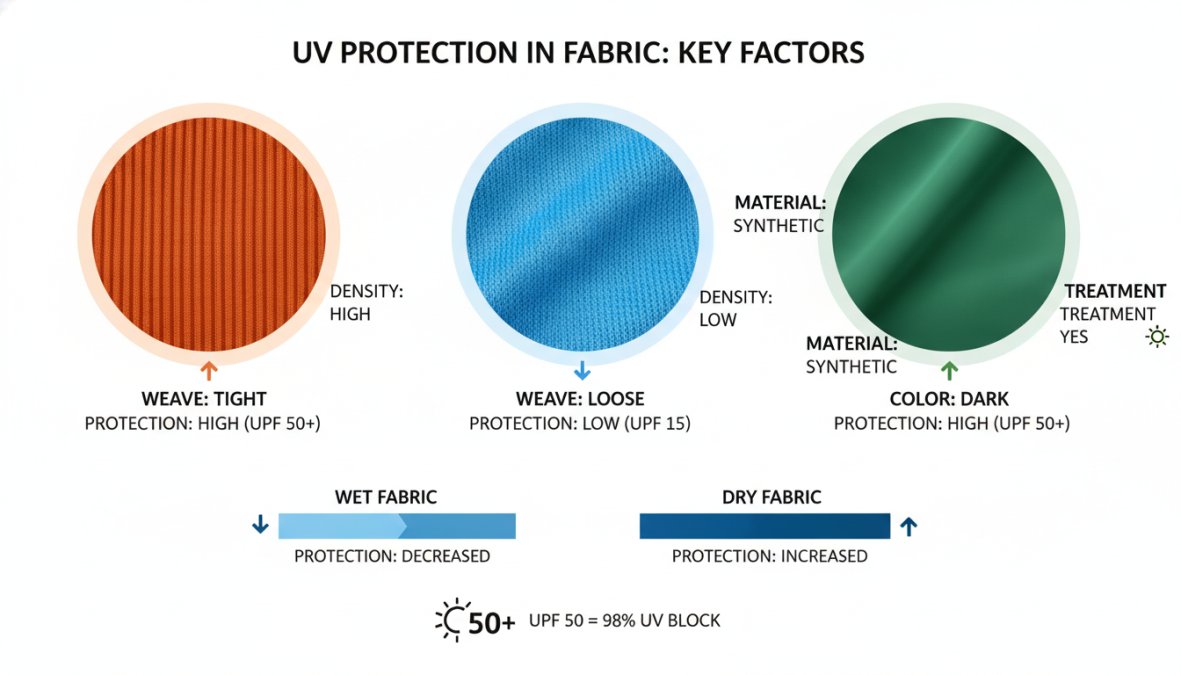
Fabric Weave, Color, and Density Impact
Four variables drive UV protection in clothing:
- Weave tightness: A tight weave leaves smaller gaps between threads, reducing UV transmission.
- Fiber type: Synthetic fibers like polyester and nylon naturally absorb UV radiation more effectively than natural fibers.
- Color: Darker colors and saturated dyes absorb more UV radiation than pale fabrics.
- Fabric density: Heavier, denser fabrics block more UV radiation.
This is why a standard cotton t-shirt rarely achieves UPF 50. Cotton fibers are naturally less UV-absorbent than synthetics, and most cotton weaves are not tight enough to compensate.
Wet vs. Dry UPF Ratings: What Changes in Water
UPF ratings are typically measured on dry fabric, and many garments perform differently when wet. Natural fibers like cotton can lose significant UV protection when saturated with water. Synthetic fabrics like polyester and nylon are more stable in water, which is why they dominate the swimwear market for sun protection.
If you are buying UPF clothing for water activities, look for garments made from synthetic fibers and check whether the manufacturer has wet-tested their rating.
How to Choose Sun-Protective Clothing for Your Family
Choosing the right sun-protective clothing requires more than reading a label. The garment rating is the starting point, but fit, coverage, and durability determine whether that rating translates into actual protection.
Reading Garment Ratings and Labels
Look for the UPF 50+ designation specifically. Some garments are labeled "sun protective" without a verified UPF rating, which tells you very little about actual UV transmission.
For children's swimwear and rash guards, the key checklist includes:
- UPF 50+ rating confirmed on label or product page
- Synthetic fiber construction (polyester or nylon preferred for water use)
- Tight weave with no visible gaps when held to light
- Full coverage design that stays in place during swimming
- Colorfastness tested
Layering and Coverage Gaps to Avoid
A common mistake is assuming any UPF garment provides complete protection. Gaps matter. A long-sleeve rash guard that rides up at the wrist, a neckline that sits too low, or a shirt that untucks during active play all create windows of unprotected skin.
Fit is a genuine protection issue. Garments that are too loose may stretch at the weave when pulled, temporarily reducing UV blocking effectiveness. Look for designs that stay in place during movement, particularly for children who are swimming or playing.
According to the World Health Organization's UV radiation and health resource, children are particularly vulnerable to UV damage because their skin has less melanin and their DNA repair mechanisms are still developing.
Does UPF Clothing Wash Out? Degradation Over Time
UPF clothing does degrade over time. Understanding why UPF 50 is important includes understanding how long that protection actually lasts. Repeated stretching, abrasion, and washing gradually break down the tight fiber structure that creates UV blocking. Chlorine and saltwater accelerate this process significantly.
Maintaining UPF Protection Through Proper Care
Practical care guidelines to extend UPF garment life:
- Rinse garments in cool fresh water immediately after pool or ocean use
- Wash in cold water on a gentle cycle using mild detergent without optical brighteners
- Air dry rather than using a tumble dryer
- Inspect garments regularly for thinning fabric, stretched weave, or fading
- Replace garments that show significant wear
The general guidance is to replace heavily used sun-protective swimwear annually if used frequently throughout a summer season. As noted by the American Cancer Society's guide to sun safety and protective clothing, physical signs of wear in sun-protective garments are reliable indicators that UV protection has diminished.
Why UPF 50 Is Worth the Investment for Sun Safety
The case for UPF 50 comes down to one straightforward reality: consistent protection is more valuable than perfect protection applied inconsistently. A UPF 50+ rash guard worn every time a child is in the water delivers reliable, measurable UV blocking without the compliance challenges that sunscreen requires.
For families who spend significant time outdoors, the cumulative benefit of replacing unrated clothing with UPF 50 rated garments is substantial. Skin damage from UV radiation is cumulative and largely irreversible. The protection habits established in childhood shape lifetime skin health outcomes.
A quality UPF 50 rash guard, properly cared for, provides a full season of reliable protection. When you factor in the volume of sunscreen that would otherwise be needed, the cost difference narrows considerably. The real value is behavioral: children protected by sun-protective swimwear are shielded even when they run back into the water before sunscreen can be reapplied, even when they forget to mention outdoor time, and even on overcast days when UV levels remain high.
Protecting children from UV radiation is one of the most straightforward long-term health investments a family can make. Bright & Bold Swimwear offers rash guards and swim sets designed for real water use, combining high-visibility colors that make children easy to spot in the pool with UPF-rated fabric built for active swimmers. Shop our best sellers and give your family sun protection that works every time they are in the water.
SHOP BEST SELLERS
Frequently Asked Questions
What does UPF 50 mean in clothing?
UPF 50 means the fabric blocks 98% of UV radiation, allowing only 1/50th of the sun's rays to pass through. This rating applies to both UVA and UVB rays, providing broad-spectrum protection. UPF 50 is the highest standard rating available for sun-protective clothing, making it ideal for extended outdoor activities and sensitive skin.
What is the difference between SPF and UPF ratings?
SPF (Sun Protection Factor) measures sunscreen's ability to protect skin, while UPF (Ultraviolet Protection Factor) measures clothing's protection. SPF focuses on UVB rays only, whereas UPF 50 protects against both UVA and UVB radiation. Clothing with UPF 50 provides consistent, all-day protection without reapplication, unlike sunscreen which degrades with sweating and water exposure.
Does UPF 50 clothing lose its protection over time?
UPF ratings can degrade with washing, sun exposure, and wear. Mechanical UPF (from tight weaves) holds up better than chemical UPF (from added treatments). To maintain protection, wash in cold water, avoid bleach, and limit direct sunlight storage. Quality UPF 50 garments typically retain effective protection for 2-3 years with proper care, though annual re-testing is recommended for frequently used items.
Is UPF 50 clothing better than sunscreen for sun safety?
UPF 50 clothing offers advantages over sunscreen: it doesn't wash off in water, requires no reapplication, and provides consistent protection all day. However, the best approach combines both. Use UPF 50 garments as your primary defense for extended outdoor time, especially for children, and apply broad-spectrum sunscreen to exposed areas like the face and hands for comprehensive skin cancer prevention.
This article was written using GrandRanker