

10 Ways to Keep Baby Safe in the Sun
Table of Contents
- 1. Choose High-Visibility Swimwear with UPF Protection
- 2. Apply Sunscreen for Babies Under 6 Months Safely
- 3. Dress Your Baby in Protective Clothing and Hats
- 4. Create and Use Shade During Peak UV Intensity Hours
- 5. Protect Eyes and Sensitive Skin from Direct Sunlight
- 6. Recognize Signs of Heatstroke in Infants and Cool Them Down
- 7. Keep Baby Cool in Summer with Hydration and Clothing Choices
- 8. Use Stroller Canopies and Parasols for Portable Shade
Last Updated: August 5, 2026
Keeping your baby safe in the sun requires a multi-layered approach combining physical barriers with smart timing and careful monitoring. At Bright & Bold Swimwear, we understand that parents want their children to enjoy outdoor time while staying protected from harmful UV rays, so we've compiled the most effective strategies for sunny days.
1. Choose High-Visibility Swimwear with UPF Protection
High-visibility swimwear does double duty: it makes your child easy to spot in and around water while providing sun protection. Look for pieces with UPF 30 or higher, which blocks approximately 97% of the sun's ultraviolet rays. Neon yellow, hot pink, and electric orange make children visible from a distance, crucial during pool time or beach visits.
Rash guards and swim sets designed with UPF protection offer full-coverage options that reduce surface area exposed to direct sunlight. Long-sleeve rash guard sets provide coverage for the arms, where many children experience painful sunburns. Children are more likely to wear swimwear they actually like, so combining function with appealing style matters.

Bright & Bold Swimwear offers rash guard sets and one-piece options in vibrant colors that appeal to both kids and safety-conscious parents.
2. Apply Sunscreen for Babies Under 6 Months Safely
The American Academy of Pediatrics recommends that infants under 6 months should avoid direct sun exposure whenever possible, relying instead on protective clothing, shade, and strollers with canopies.
If direct sun exposure cannot be avoided, mineral sunscreens containing zinc oxide or titanium dioxide are the safest choice. These ingredients sit on top of the skin and reflect UV rays rather than being absorbed, making them less likely to irritate delicate infant skin.
For babies 6 months and older, apply sunscreen with SPF 30 or higher to all exposed skin 15 minutes before going outside. Reapply every two hours, or immediately after swimming or sweating. Use approximately one teaspoon for the face and neck, and one tablespoon for the entire body of a young child.
Look for sunscreens labeled "hypoallergenic" and "tear-free" to minimize irritation. Broad-spectrum protection blocks both UVA and UVB rays, essential for comprehensive sun safety.
3. Dress Your Baby in Protective Clothing and Hats
Tight-weave fabrics block more sunlight than loose or thin materials. Prioritize long-sleeve shirts and pants made from breathable, lightweight fabrics designed to keep children cool while protecting skin from direct sunlight.
Swim shirts and rash guards offer both sun protection and comfort in water. Unlike regular t-shirts, which become heavy when wet, swim-specific garments dry quickly and maintain their protective qualities even when submerged. UPF 30 blocks 97% of UV rays, while UPF 50+ blocks 98%.
A wide-brimmed hat with at least a 2.75-inch brim all around protects the face, ears, and back of the neck, areas that sunburn easily and are often missed during sunscreen application. Neck drapes or flaps extending from the hat offer additional protection for the sensitive back-of-neck area.
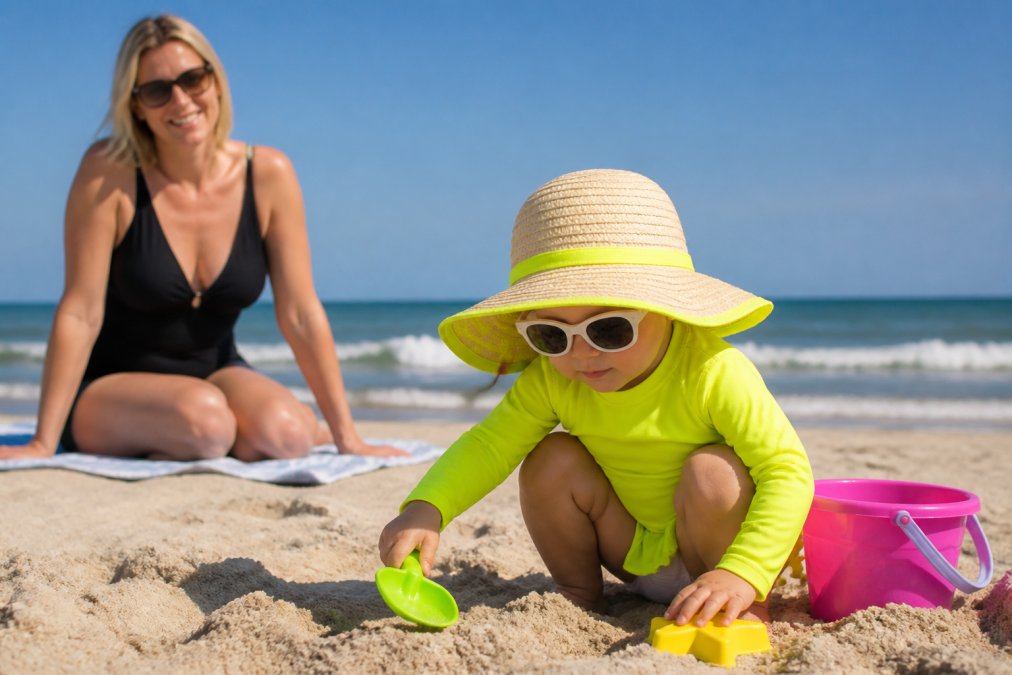
Lightweight, long-sleeve swim sets eliminate the need to coordinate separate pieces and ensure your child stays protected throughout water play. The key is finding pieces that your child actually wants to wear.
4. Create and Use Shade During Peak UV Intensity Hours
UV rays are strongest between 10 a.m. and 4 p.m., when the sun is highest in the sky. Planning outdoor activities outside these peak hours significantly reduces your child's sun exposure. Morning trips to the pool or beach before 10 a.m., or afternoon visits after 4 p.m., allow your child to enjoy water play with substantially less UV intensity.
When outdoor time during peak hours is unavoidable, a beach umbrella, pop-up tent, or portable shade structure provides a protected area where your child can rest and cool down. These solutions are especially valuable at the beach, where sand reflects UV rays and amplifies sun exposure.
Stroller canopies and sunshades specifically designed for baby gear offer convenient shade for younger children. A full canopy that extends to cover the entire stroller keeps your baby shaded while you move around.
Parks with mature trees provide natural shade that requires no setup or maintenance. When planning outdoor activities, choosing locations with existing shade structures, covered pavilions, gazebos, or dense tree cover reduces the need for portable shade solutions.
5. Protect Eyes and Sensitive Skin from Direct Sunlight
UV exposure to the eyes can cause cumulative damage over a lifetime. Babies and young children should wear sunglasses that offer UV400 protection, which blocks 100% of UVA and UVB rays. Sunglasses designed for infants and toddlers feature wrap-around designs that prevent light from entering from the sides.
The face and neck are particularly vulnerable to sunburn because skin in these areas is thinner and more sensitive. These areas also receive direct sun exposure even when children wear hats and protective clothing. Applying sunscreen to the face, ears, and neck is essential.
Infants and young children with sensitive skin conditions like eczema or dermatitis require extra care. Mineral sunscreens with zinc oxide or titanium dioxide are gentler on irritated skin than chemical formulas. Always do a patch test on a small area of skin before applying new sunscreen products to your child's face.
6. Recognize Signs of Heatstroke in Infants and Cool Them Down
Heatstroke in infants develops quickly and requires immediate action. Early warning signs include excessive fussiness, lethargy, rapid breathing, or skin that feels hot to the touch. A baby experiencing heatstroke may have a body temperature above 103°F.
If you suspect heatstroke, move your child to a cool location immediately. Remove excess clothing, apply cool (not cold) water to the skin, and use a fan to promote evaporation. Offer small amounts of cool water if your child is old enough to drink from a cup. Call emergency services if symptoms don't improve within 10 minutes or if your child loses consciousness.
Prevention is far more effective than treatment. Keep your baby hydrated, avoid prolonged sun exposure during peak hours, and dress them in lightweight, breathable clothing. Babies cannot regulate their body temperature as effectively as older children, making them more vulnerable to heat-related illness.
7. Keep Baby Cool in Summer with Hydration and Clothing Choices
Hydration is fundamental to preventing heat-related illness. Babies under 6 months get hydration from breast milk or formula, but older babies and toddlers need water, especially during extended outdoor time.
Lightweight, breathable fabrics help your child stay cool while maintaining sun protection. Cotton blends and moisture-wicking synthetic materials allow sweat to evaporate, which is how the body cools itself. Avoid heavy fabrics or dark colors that absorb heat.
Loose-fitting clothing allows air circulation and helps prevent overheating. Taking breaks in shade or indoors gives your child's body a chance to cool down. Even 15-20 minutes in air conditioning or under a shaded structure can significantly lower your child's core temperature.
Watch your child for signs of overheating: excessive sweating, flushed skin, rapid breathing, or unusual irritability. These signs indicate your child needs to cool down immediately.
8. Use Stroller Canopies and Parasols for Portable Shade
Stroller canopies and parasols provide convenient, portable shade for infants and toddlers during outdoor activities. A full canopy that extends completely over the stroller creates a shaded environment where your baby stays protected from direct sunlight while remaining visible and accessible.
UV-protective parasols designed to attach to strollers offer flexibility as sun angles change throughout the day. This adaptability is particularly valuable at the beach or in open parks where shade from trees isn't available.
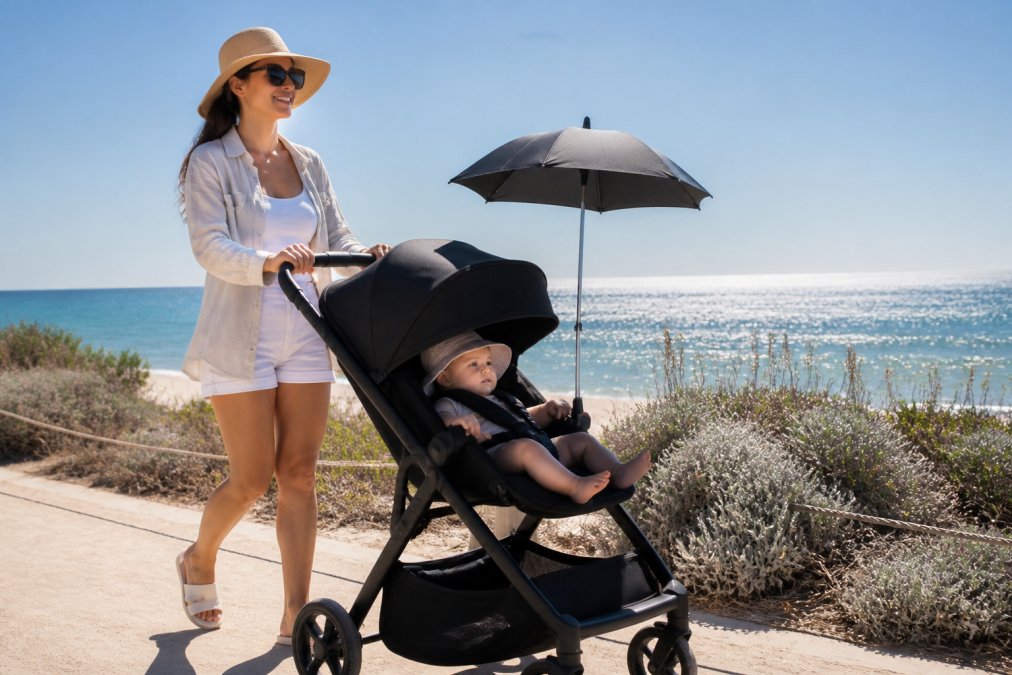
When selecting stroller shade solutions, look for options that provide complete coverage without restricting airflow. Mesh panels or vented designs allow air circulation while blocking UV rays. Some families use multiple shade solutions together, a stroller canopy combined with a portable beach tent or umbrella creates layers of protection.
Keeping your baby safe in the sun combines multiple strategies. No single approach provides complete protection on its own. The most effective sun safety comes from layering these methods: protective clothing with UPF ratings, broad-spectrum sunscreen applied correctly, shade during peak UV hours, and careful monitoring for signs of heat illness.
Bright & Bold Swimwear's high-visibility rash guards and swim sets combine sun protection with the visibility that helps you keep an eye on your child in and around water. Our collection includes options for both boys and girls, all designed with UPF 30+ protection built in. Shop our best sellers today and give yourself the peace of mind that comes from knowing your child is protected while enjoying summer activities.
| Strategy | Best For | Key Benefit |
|---|---|---|
| High-visibility swimwear with UPF | Water play and swimming | Combines sun protection with visibility |
| Mineral sunscreen (zinc oxide) | Babies under 6 months | Gentle on delicate skin, effective UV blockage |
| Protective clothing and hats | All-day outdoor activities | Consistent coverage without reapplication |
| Shade structures (umbrellas, tents) | Peak UV hours (10 a.m.-4 p.m.) | Reduces overall UV exposure significantly |
| UV-protective sunglasses | Eye protection | Prevents cumulative UV damage to developing eyes |
| Stroller canopies and parasols | Portable shade needs | Convenient, adjustable protection while moving |
| Hydration and cool clothing | Heat illness prevention | Maintains safe body temperature during outdoor time |
| Peak-hour avoidance | Maximum sun safety | Reduces UV intensity significantly |
Frequently Asked Questions
At what age can a baby start wearing sunscreen?
The American Academy of Pediatrics recommends keeping babies under 6 months out of direct sunlight and avoiding chemical sunscreens on their delicate skin. For babies 6 months and older, mineral sunscreen with zinc oxide or titanium dioxide is safest. Always choose broad-spectrum SPF 30 or higher, and reapply every two hours or after swimming. For babies under 6 months, focus on protective clothing, shade, and hats instead.
What are the signs of heatstroke in infants I should watch for?
Warning signs of heatstroke in infants include high body temperature (over 103°F), flushed or red skin, rapid breathing, lethargy or unusual drowsiness, lack of sweating despite heat, and irritability or confusion. Babies can develop heat illness quickly. If you notice these signs, move your baby to a cool area immediately, apply cool (not cold) water to their skin, and seek medical attention. Prevention is easier than treatment, keep babies hydrated, dress them in light fabrics, and limit sun exposure during peak hours.
How do I keep baby cool in summer while protecting them from the sun?
Choose lightweight, breathable fabrics in light colors that reflect heat rather than absorb it. Long-sleeve rash guards made from quick-dry material offer sun protection without overheating. Keep your baby hydrated by offering water frequently (if over 6 months old). Dress them in one fewer layer than you're wearing, and avoid tight clothing that traps heat. Use stroller canopies and seek shade during peak UV hours (10 a.m. to 4 p.m.). Babies lose heat through their heads, so a breathable, well-ventilated hat helps regulate temperature while blocking UV rays.
Why is high-visibility swimwear important for water safety?
High-visibility swimwear in bright neon colors makes it easier for parents and lifeguards to spot children quickly in the water. Drowning happens silently and fast, children can slip underwater in seconds. Bright, bold colors cut through the visual clutter of a pool or beach, reducing response time in emergencies. Combined with UPF protection, high-visibility swimwear serves double duty: it keeps your child visible and protects their skin from UV rays at the same time.
What's the difference between mineral and chemical sunscreen for babies?
Mineral sunscreens use zinc oxide or titanium dioxide as active ingredients, which sit on top of the skin and physically block UV rays. Chemical sunscreens absorb into the skin and convert UV rays into heat. For babies, mineral sunscreen is preferred because it's gentler on delicate, sensitive skin and poses fewer absorption risks. Mineral options like those with naturally sourced zinc oxide are less likely to cause irritation. Choose broad-spectrum formulas rated SPF 30 or higher, and always reapply every two hours or after water exposure.
This article was written using GrandRanker