

6 Best Rash Guards for Sensitive Skin: A 2026 Guide
Table of Contents
- Why Rash Guards Matter for Sensitive Skin
- What to Look for in the Best Rash Guards for Sensitive Skin
- Best Fabric for Sensitive Skin Rash Guards
- How to Prevent Chafing From Rash Guards
- UPF Clothing for Eczema: Protection Without Irritation
- Top Rash Guard Options for Sensitive Skin
- How to Choose the Right Rash Guard for Your Needs
- Fit, Sizing, and Breathability Considerations
6 Best Rash Guards for Sensitive Skin: A 2026 Guide
Last Updated: August 4, 2026
If your child develops red, irritated skin after swimming, you're not alone. Many parents discover that standard swimwear triggers uncomfortable reactions, itching, and rashes that make water time miserable instead of joyful. Finding the best rash guards for sensitive skin requires understanding fabric chemistry, seam construction, and how specific design choices prevent irritation. At Bright & Bold Swimwear, we've helped families navigate this challenge by focusing on what actually matters: hypoallergenic materials, seamless construction, and UPF protection that doesn't compromise comfort.
Why Rash Guards Matter for Sensitive Skin
A rash guard protects skin from sun damage while creating a physical barrier between delicate skin and pool chemicals, salt water, or sand. For children with sensitive skin, this barrier becomes essential. The constant friction of swimwear against wet skin, combined with chlorine exposure and UV radiation, creates a perfect storm for dermatological irritation. Contact dermatitis, an inflammatory response triggered by direct contact with irritating substances, is remarkably common in young swimmers, yet preventable with the right gear.

Standard swimwear often uses synthetic fibers treated with chemical finishes that trigger reactions in sensitive individuals. A quality rash guard designed specifically for sensitive skin addresses each of these factors through better fabric selection, strategic seam placement, and protective design.
What to Look for in the Best Rash Guards for Sensitive Skin
Choosing a rash guard for sensitive skin requires evaluating five specific factors that directly impact comfort and protection.

UPF Ratings and Sun Protection
UPF 50+ represents the highest sun protection factor available in textile form, blocking 98% of UVA and UVB radiation. For children spending extended time in the water, this matters significantly. Sun exposure triggers inflammatory responses in sensitive skin that can last for days. A rash guard with UPF 50+ protection reduces this cumulative stress, which means less irritation overall.
The fabric's construction affects UPF rating as much as the material itself. Tightly woven synthetic fibers provide better sun protection than loosely woven natural fabrics, which is why polyester and nylon blends dominate the rash guard market.
Material Composition: Polyester vs. Nylon vs. Spandex
Polyester dominates most rash guards because it's durable, quick-drying, and affordable. It resists chlorine degradation better than natural fibers, maintaining color and elasticity through hundreds of wash cycles. For sensitive skin, polyester's main advantage is that it doesn't absorb water and harbor bacteria the way cotton does.
Nylon offers superior softness and flexibility compared to polyester. It's lighter, dries faster, and feels more comfortable against skin immediately. However, nylon degrades faster under chlorine exposure, meaning colors fade and elasticity diminishes more quickly than with polyester.
Spandex (elastane) appears in most rash guards at 10-20% of the blend, providing the stretch that allows movement without restriction. The ideal ratio for sensitive skin is 80% polyester/nylon with 20% spandex.
Seamless Construction and Flatlock Stitching
Seam placement and construction method directly determine whether a rash guard prevents or causes chafing. Traditional stitching creates a raised ridge where two pieces of fabric join. Flatlock stitching solves this by folding the seam completely flat against the fabric surface, eliminating the friction point entirely.
Seamless construction, where fabric is knitted as one piece rather than sewn together, represents the ultimate solution for sensitive skin. However, seamless construction is significantly more expensive and less common in children's swimwear. The practical compromise: choose rash guards with flatlock seams placed strategically away from high-friction zones.
Best Fabric for Sensitive Skin Rash Guards
The ideal fabric for sensitive skin balances durability, comfort, and chemical resistance. A blend of 80% polyester and 20% spandex offers the best compromise for most children. Polyester provides chlorine resistance and quick-drying properties that prevent bacterial growth and odor.
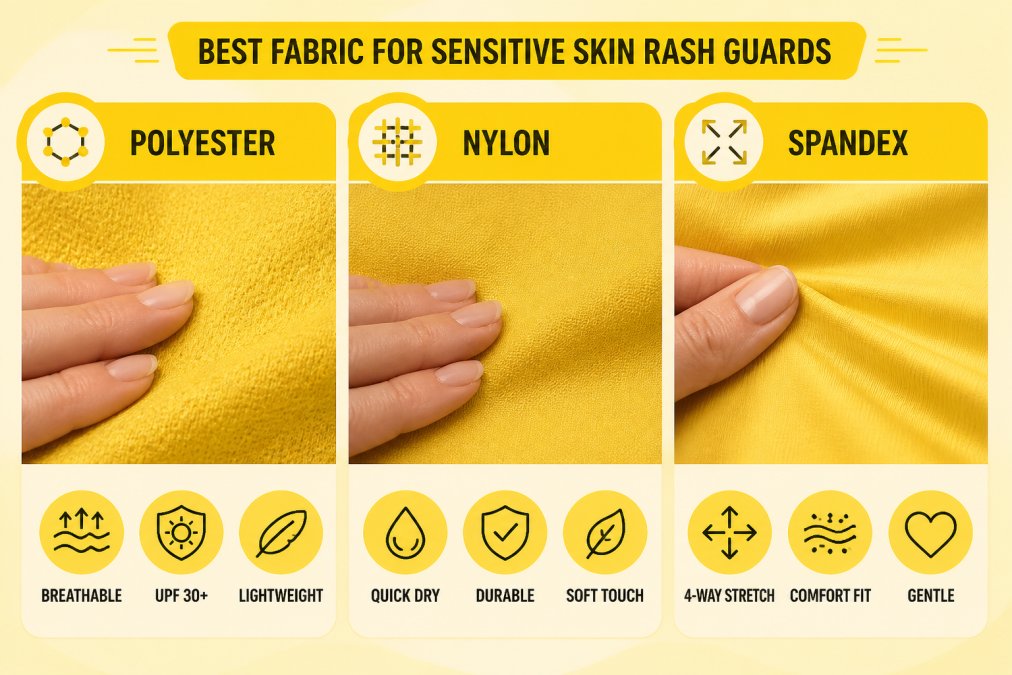
For children with extreme sensitivities, a cotton-aloe blend (45% cotton, 45% aloe vera, 10% elastane) provides hypoallergenic properties and anti-microbial benefits. Aloe vera naturally soothes irritated skin and prevents odor-causing bacteria from thriving. The tradeoff: cotton-aloe blends don't dry as quickly and don't offer the same chlorine resistance as pure synthetics.
Hypoallergenic fabric certifications matter more than marketing claims. Look for OEKO-TEX certification, which guarantees the fabric has been tested and verified to contain no harmful substances.
How to Prevent Chafing From Rash Guards
Chafing occurs when wet fabric moves repeatedly against skin, creating friction that breaks down the skin barrier. Prevention requires addressing fabric choice, fit, and proper care simultaneously.
Start with the right material. Polyester-spandex blends with flatlock stitching prevent most chafing issues before they start. Fit matters as much as fabric, a rash guard that's too tight creates compression that can irritate sensitive skin, while one that's too loose moves excessively during swimming. The ideal fit allows one finger to fit under the sleeve at the bicep and lies snug but not tight against the torso.
Moisture-wicking technology actively moves sweat and water away from skin, reducing the time fabric stays wet against the body. Rinsing immediately after swimming removes chlorine, salt, and other irritants before they have time to concentrate on fabric and skin. Air-drying rather than machine drying extends the life of elastic components.
UPF Clothing for Eczema: Protection Without Irritation
Children with eczema face a specific challenge: their skin barrier is compromised, making them more reactive to irritants, yet they need sun protection because UV exposure can trigger or worsen flare-ups. A polyester-spandex blend offers the ideal balance, polyester is hypoallergenic and doesn't trap moisture the way natural fibers do, while spandex provides the stretch that prevents tight, restrictive feelings.
The finishing process matters enormously. Rash guards treated with anti-microbial finishes prevent bacterial colonization, which is critical for eczema-prone skin. Silver ion technology and similar approaches are gentler than chemical antimicrobials. Long-sleeve coverage provides dual benefit for eczema: it protects from sun exposure while creating a physical barrier between skin and environmental irritants.
Top Rash Guard Options for Sensitive Skin
The following options represent different approaches to solving sensitivity issues, each addressing the core problem through different design priorities.
1. Long-Sleeve Coverage with Hypoallergenic Design
Long-sleeve rash guards provide maximum coverage, protecting the entire arm from shoulder to wrist. The Girls Long Sleeve Rash Guard Set, Full Coverage Top with UPF 30+ Protection from Bright & Bold Swimwear exemplifies this approach. It features full-length sleeves that extend to the wrists, providing uninterrupted UPF 30+ protection. The two-piece design allows independent sizing of top and bottom, accommodating different body proportions common in growing children.

The long-sleeve coverage reduces the need for frequent sunscreen reapplication, which itself can irritate sensitive skin. Instead of reapplying sunscreen every two hours, the rash guard maintains consistent protection throughout the swimming session.
2. Quick-Dry Technology with Moisture-Wicking Fabric
Quick-drying rash guards minimize the time fabric remains wet against skin, reducing both maceration and bacterial growth. The Boys Long Sleeve Rash Guard Swim Set, High-Visibility & UPF 30+ Protection uses moisture-wicking synthetic fibers that dry significantly faster than cotton or cotton-blend alternatives. After exiting the water, the rash guard dries to the touch within 15-20 minutes, compared to 45+ minutes for standard swimwear.
Quick-dry technology particularly benefits children who spend extended time at the pool or beach, preventing the extended damp contact that causes maceration and secondary irritation.
3. Chlorine-Resistant and Durable Construction
Chlorine degrades most swimwear fabrics over time, breaking down elasticity and causing color fading. For children swimming multiple times weekly, chlorine resistance directly impacts how long a rash guard remains comfortable and functional. The Girls Long Sleeve One Piece Swimsuit, Full Zip with UPF 30+ & Maximum Coverage uses premium polyester specifically selected for chlorine resistance, maintaining elasticity and color through dozens of wash cycles.
The full-zip front design also simplifies dressing and undressing, reducing the friction that occurs when pulling tight fabric over the head.
4. Four-Way Stretch for Comfort and Fit
Four-way stretch fabric stretches forward, backward, and diagonally, accommodating natural body movement without restriction. The Girls Swimsuit Rash Guard Set, Long Sleeve Crop Top with UPF 30+ Protection features four-way stretch that moves with the body rather than restricting it. During freestyle swimming, the arm performs a diagonal motion combining forward and lateral movement. Four-way stretch accommodates this motion naturally, while two-way stretch creates tension that can trigger irritation.
The stretch also matters for growing children, extending the usable lifespan and reducing the frequency of replacement.
5. Seamless Design to Prevent Skin Irritation
Seamless construction eliminates the friction points that cause chafing. The Boys Short Sleeve Rash Guard Swim Set | UPF 30+ High-Visibility Swimwear | Ages 2-7 uses flatlock seams positioned to avoid high-friction zones.
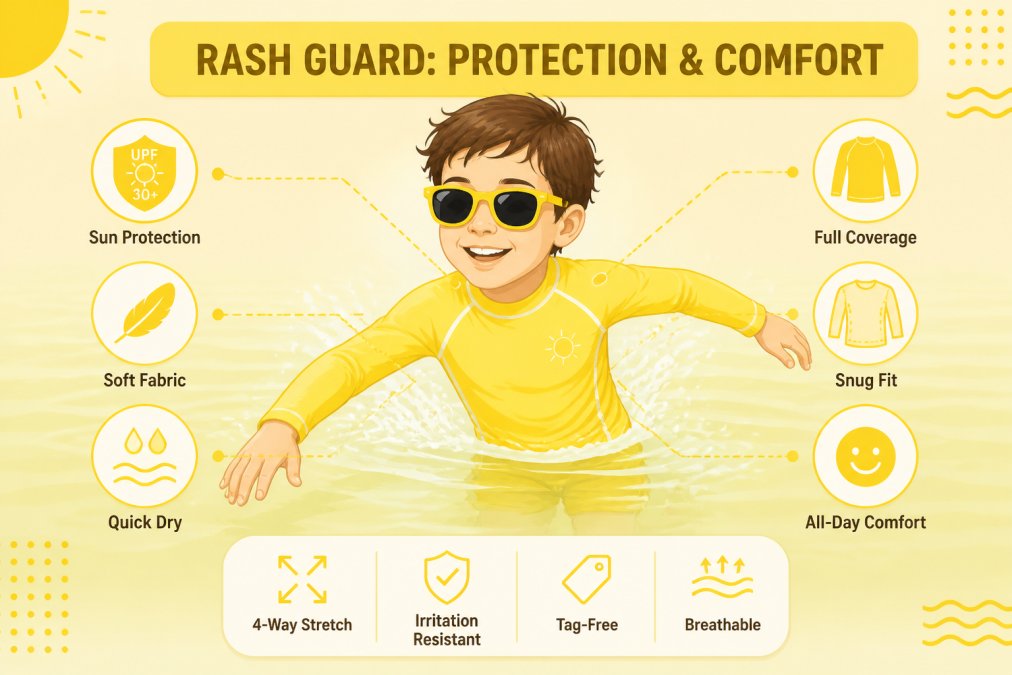
Flatlock stitching creates a completely flat seam that lies flush against the fabric surface. The seams on this rash guard are positioned along the sides and back rather than across the shoulders, further reducing friction during swimming.
6. Anti-Microbial Finish for Extended Wear
Anti-microbial finishes prevent bacteria and fungi from colonizing the fabric, reducing odor and irritation. The Girls One Piece Swimsuit, Zip-Up Short Sleeve with UPF 30+ Protection incorporates anti-microbial technology that prevents bacterial growth without irritating skin. Silver ion technology and similar approaches don't rely on harsh chemical antimicrobials that can trigger reactions.
Bacteria thrive in warm, damp environments, exactly what a wet rash guard provides. An anti-microbial finish prevents odor, discoloration, and skin irritation without requiring harsh chemical treatments.
How to Choose the Right Rash Guard for Your Needs
Selecting the best rash guard requires matching specific features to your child's individual needs. Start by identifying your child's primary sensitivity trigger. Does their skin react to sun exposure, chlorine, synthetic fibers, or friction? The answer determines which features matter most.
Next, evaluate the swimming frequency and duration. Children swimming multiple times weekly need chlorine-resistant fabrics that maintain integrity through frequent washing. Extended water time (2+ hours) requires quick-dry technology to prevent prolonged damp contact.
Consider the child's age and growth rate. Younger children (ages 2-4) grow rapidly and may outgrow rash guards within a season. A rash guard with superior stretch accommodates growth better than less flexible alternatives. Assess the child's tolerance for snug-fitting garments, some sensitive-skinned children find compression comforting, while others find it irritating.
Finally, consider the specific water environment. Chlorinated pools require more chlorine-resistant fabrics than salt water or fresh water environments.
| Selection Factor | Priority | Best Choice |
|---|---|---|
| Sun sensitivity | High | UPF 50+ with long-sleeve coverage |
| Chlorine sensitivity | High | Polyester-dominant blend with chlorine-resistant treatment |
| Friction sensitivity | High | Flatlock seams with four-way stretch |
| Frequent swimming | High | Chlorine-resistant with anti-microbial finish |
| Growing child | Medium | Four-way stretch with size flexibility |
| Extreme sensitivity | Medium | OEKO-TEX certified fabric with hypoallergenic dyes |
Fit, Sizing, and Breathability Considerations
Proper fit determines whether a rash guard protects without irritating. The ideal fit allows one finger to fit under the sleeve at the bicep and lies snug but not tight against the torso. The hem should reach the hip without bunching. Most quality rash guards offer detailed size guides based on age, height, and weight, use these rather than guessing.
Breathability matters more than many parents realize. A rash guard that doesn't breathe traps heat and moisture, creating an environment where irritation develops quickly. Quality synthetic fabrics with moisture-wicking properties allow air circulation even when wet.
The fabric weight affects both breathability and durability. The ideal balance for sensitive skin is a mid-weight fabric (200-250 gsm) that offers both durability and breathability. Sleeve length affects fit and comfort significantly, long sleeves provide maximum coverage but potentially feel restrictive if fit isn't precise, while short sleeves offer more freedom of movement but leave arms exposed.
Protecting sensitive skin during water activities requires prioritizing comfort alongside sun and chemical protection. The rash guards highlighted above address different sensitivity triggers through specific design choices: long-sleeve coverage, quick-dry technology, chlorine resistance, seamless construction, and anti-microbial finishes. Your child's individual needs determine which features matter most. Bright & Bold Swimwear's collection combines UPF 30+ sun protection with hypoallergenic design, flatlock seams that prevent chafing, and high-visibility colors that make children easy to spot in the water. Start with one of their rash guard sets, observe how your child's skin responds, and adjust coverage or fabric type based on real-world performance. Most families find that investing in a quality rash guard designed for sensitive skin eliminates the irritation that made water time stressful, transforming it into genuine enjoyment.
American Academy of Dermatology guidelines on sun protection for children
National Eczema Association recommendations for swimwear and sensitive skin
Consumer Product Safety Commission standards for children's swimwear
Frequently Asked Questions
What material is best for rash guards if I have sensitive skin?
Look for rash guards made from hypoallergenic synthetic blends like polyester-spandex or nylon-spandex combinations. These materials resist chlorine and dry quickly while minimizing irritation. Some brands offer natural alternatives like cotton-aloe blends with flatlock stitching to prevent chafing. Check for OEKO-TEX certification, which ensures the fabric has been tested for harmful chemicals and dyes that trigger contact dermatitis.
How do seamless rash guards prevent skin irritation?
Seamless construction eliminates the friction points where traditional seams rub against your skin, reducing chafing and dermatological irritation. Flatlock stitching is another option that keeps seams flat and away from sensitive areas. For children or anyone prone to contact dermatitis, seamless or flatlock-stitched rash guards significantly reduce the risk of developing rashes during extended water exposure.
What UPF rating should I look for in clothing for eczema?
Choose UPF 50+ protection to block 98% of UV radiation, which is especially important for eczema-prone skin that becomes more irritated by sun exposure. UPF 30+ offers adequate protection for shorter water sessions, but UPF 50+ provides maximum defense during all-day beach or pool activities. Combined with breathable, moisture-wicking fabrics, high UPF ratings help maintain your skin barrier without overheating.
Can rash guards cause skin irritation, and how do I prevent it?
Yes, traditional rash guards can cause irritation through rough seams, chemical dyes, or poor-quality synthetic fibers. To prevent this, select rash guards with seamless or flatlock construction, hypoallergenic fabric certifications, and quick-dry technology to reduce moisture buildup. Rinse your rash guard immediately after swimming to remove chlorine and salt, and ensure proper fit to avoid excess friction against your skin.
How do I know if a rash guard will fit my child properly?
A proper-fitting rash guard should feel snug but not restrictive, allowing full range of motion for swimming and play. The neckline should sit comfortably without digging in, and sleeves should reach the wrist or mid-forearm depending on the style. Check the manufacturer's sizing guide carefully, as compression fit varies between brands. A well-fitted rash guard reduces chafing and ensures your child stays comfortable throughout water activities.
This article was written using GrandRanker