

7 Most Common Causes of Drowning in Kids
Table of Contents
- 1. Lack of Swimming Ability
- 2. Lack of Close Supervision
- 3. Failure to Wear Life Jackets
- 4. Alcohol and Substance Use
- 5. Barriers and Pool Fencing
- 6. Medical Conditions and Seizure Disorders
- 7. Risk-Taking Behaviors
- Water Safety Rules for Kids
- Frequently Asked Questions
Last Updated: September 16, 2026
1. Lack of Swimming Ability
Swimming ability is the single most protective factor against the leading causes of drowning in young children. A child who cannot yet float, tread water, or reach the pool edge independently has no self-rescue option when something goes wrong. That is why formal lessons matter so much: the CDC drowning prevention resources identify learning basic swimming and water safety skills as a core layer of protection.
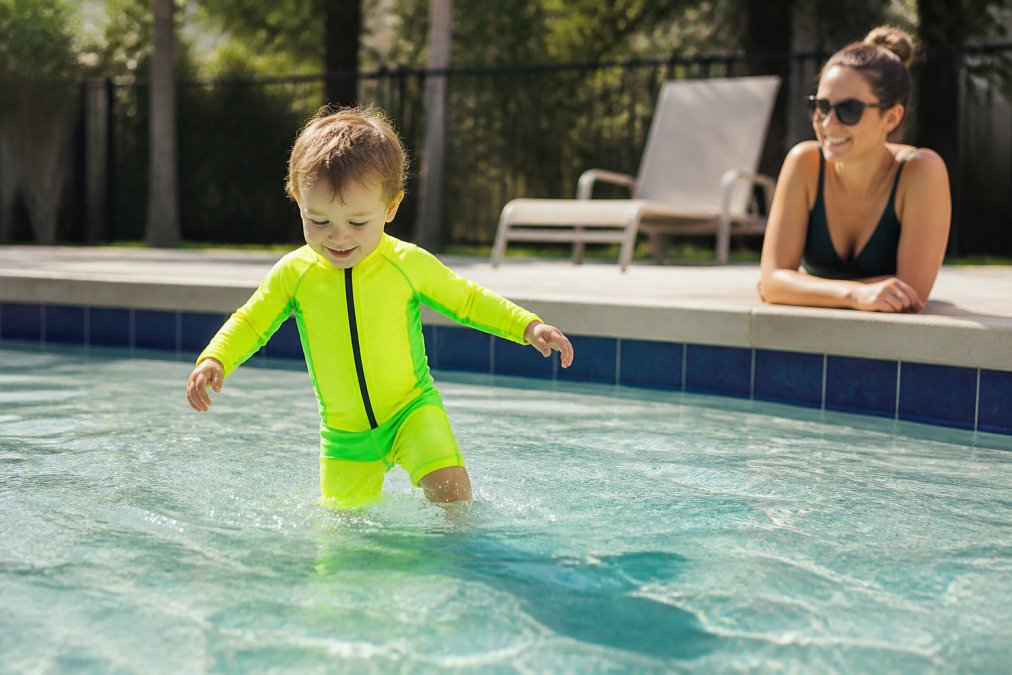
The Role of Swimming Lessons
Lessons build skills, but consistency builds swimmers. Short, repeated sessions beat one long weekly class, and children progress fastest when practice continues between lessons.
2. Lack of Close Supervision
Supervision is the most misunderstood control in water safety. Close supervision means an adult whose only job is watching the water, no phone, no conversation, no second task.
The Myth of the 'Water Watcher'
The "water watcher" idea works only as a formal role. Designating a watcher usually fails because the role has no handoff: one adult assumes they are covered, the other assumes the same, and nobody is actually watching.
3. Failure to Wear Life Jackets
A properly fitted life jacket is the only gear that keeps a child's airway above water without any action from the child. Floaties and inflatable rings are toys, not safety equipment, and they can deflate or slip off.
- The jacket is U.S. Coast Guard approved for your child's weight
- It cannot be pulled up over the chin when you lift it at the shoulders
- All straps and buckles are snug and the jacket stays in place when the child raises both arms
4. Alcohol and Substance Use
Alcohol impairment among supervising adults is one of the leading causes of drowning deaths, and the cause parents least expect to apply to their own family. A single drink slows reaction time, blurs peripheral vision, and reduces the ability to judge distance in water.
5. Barriers and Pool Fencing
Barriers buy time. A four-sided fence with a self-closing, self-latching gate separates a child from the water long enough for an adult to notice they are missing. That delay is the entire point.
The details that matter:
- Four-sided isolation fencing, not a fence that uses the house as one wall
- Gate latches positioned above a small child's reach
- No climbable objects, such as chairs, planters, or coolers, near the fence line
- Pool covers and alarms as backup layers, never as replacements
6. Medical Conditions and Seizure Disorders
Some children face drowning risk that has nothing to do with swimming skill. Seizure disorders, cardiac conditions, and autism spectrum diagnoses all raise the odds of an incident and change what a supervision plan needs to look like.
Why Seizure Disorders Carry the Highest Risk
During a seizure, a child loses muscle control and cannot right themselves, hold their breath on purpose, or call out. In that window, seconds to a couple of minutes, even a capable swimmer can slip under and stay under, with risk highest during the seizure and in the disoriented minutes after.
Cardiac Conditions, Autism, and Breath-Holding
- Cardiac conditions. Some heart rhythm disorders can cause sudden loss of consciousness in water, including in children with no prior symptoms. If a child has a known cardiac diagnosis, a cardiologist should be part of the water-safety conversation.
- Autism spectrum diagnoses. Wandering and elopement are common, and a child who seeks water may not respond to verbal warnings. Physical barriers and alarms matter more than rules alone.
- Breath-holding games. Repeated deep-breathing followed by a breath-hold can trigger loss of consciousness underwater in strong swimmers, a pattern sometimes described as shallow water blackout. It is not a contest. It is a known mechanism of drowning in healthy kids.
What a Written Supervision Plan Looks Like
A plan that lives in a parent's head does not survive a handoff to a grandparent, babysitter, or camp counselor. Write it down and share it. A workable plan covers:
- Who is watching, and when. Name the person and the time block.
- What the child's specific trigger is. Seizure, wandering, cardiac event, breath-holding.
- What the response is. Who calls 911, who stays with the child, who clears the water of other kids.
- What the child wears. A properly fitted life jacket in open water and on docks, every time.
- Who has been trained. CPR and first aid certification for every adult in the rotation.
Dry Drowning and Secondary Drowning: What the Terms Actually Mean
Search interest in "dry drowning" and "secondary drowning" spikes every summer, and most of what circulates online is misleading. The plain version:
- "Dry drowning" is not a recognized medical diagnosis. It is a lay term sometimes used for a laryngospasm, the airway closing after a brief water exposure, but the event happens at the time of the incident, not hours later.
- "Secondary drowning" is also a lay term. The clinical concept is delayed respiratory distress after a submersion injury, where inflammation in the lungs develops over hours. It is rare, and it follows a real submersion event, not a child who swallowed a mouthful of pool water.
- What actually matters: if a child had a submersion event, coughed heavily, or needed rescue, watch for trouble breathing, persistent coughing, chest pain, extreme tiredness, or unusual behavior in the hours after. Call a pediatrician or 911. Do not wait to see if it passes.
7. Risk-Taking Behaviors
Risk-taking is the cause parents most often dismiss as "not my kid." It shows up earlier than expected, driven by two forces unrelated to swimming ability: a developing brain that undervalues consequences, and a peer audience that rewards the dare.
The Developmental Timeline
- Ages 2 to 4. Risk-taking looks like wandering. A toddler who has slipped out a dog door or pushed open a sliding glass door is not being defiant, they are following curiosity with no concept of danger. Barriers, not lectures, are the fix at this age.
- Ages 5 to 7. Limit-testing begins. Jumping into the deep end without checking depth, swimming past the marked area, and holding breath to win a contest all appear here. This is the age when rules need to be rehearsed, not just stated.
- Ages 8 to 12. Peer audience becomes the dominant factor. Boys tend to take more physical risks in and around water, and the behavior intensifies when other kids are watching. A child who follows every rule alone will break them to impress a friend.
- Teens. Risk-taking shifts toward alcohol, open water, and swimming in unmarked areas. The supervision model changes from "watch them" to "know where they are and who they are with."
The Panic Response: The Mechanism Most Articles Skip
Most drowning-prevention content focuses on physical causes, no life jacket, no fence, no supervision. The behavioral mechanism underneath many of those incidents is the panic response, which explains why strong swimmers drown.
Rehearsal, Not Lecturing
Rules stated once do not survive a peer audience. Rules rehearsed out loud before every session do. A workable script:
- "What do we do before we get in?", Ask a grown-up.
- "Where do we stay?", Where I can stand, or near the wall.
- "What do we never do?", Hold our breath to win.
- "Who is watching us right now?", Point to the adult.
What to Watch For Before Trouble
Specific behaviors precede most incidents: lingering near the deep-end edge, competing with other kids, going quiet and still. A child who has stopped splashing and is just watching the water may be working up to something, or already in trouble.
Technology as a Backup Layer
The counter to risk-taking is not a longer lecture. It is a shorter rule, rehearsed more often, backed by a barrier and a watcher who is actually watching.
Water Safety Rules for Kids
Water safety rules for kids work best when there are few enough to remember and specific enough to act on. Five rules cover the situations that cause most incidents:
- Never swim alone. An adult must be watching, every time, including in backyard pools.
- Ask before you get in. No entering the water without a grown-up saying yes.
- Wear your life jacket on boats and docks. No exceptions, no matter how well you swim.
- Stay where you can stand. If you cannot touch the bottom, stay near the wall or an adult.
- No breath-holding contests. Ever. Not with siblings, not with friends.
| Cause | Highest-Risk Setting | Most Effective Fix |
|---|---|---|
| Lack of swimming ability | Any water | Consistent lessons plus practice between them |
| Lack of close supervision | Crowded pools, parties | Designated watcher with a physical handoff token |
| No life jacket | Open water, boats, docks | Coast Guard approved jacket, fitted before every trip |
| Alcohol impairment | Social swim settings | Off-duty watchers do not drink; rotate shifts |
| No barrier | Backyard pools | Four-sided fence with self-latching gate |
| Medical condition | Bathtubs, home pools | Written supervision plan shared with all caregivers |
| Risk-taking | Deep end, peer groups | Rehearse rules aloud before every session |
Frequently Asked Questions
What age group is at the highest risk for drowning?
Children ages 1 to 4 are at the highest risk for drowning, according to the CDC. This age group is naturally curious and mobile but lacks the swimming competency and judgment to navigate aquatic environments safely. Toddlers can slip away silently during a brief distraction, making close supervision and barriers essential. Enrolling children in swim lessons and using high-visibility swimwear can add layers of protection during this vulnerable stage.
How does lack of swimming ability impact drowning risk?
Lack of swimming ability is one of the most common causes of drowning. Children without formal swim lessons are nearly three times more likely to drown than those who have had lessons, per the CDC. Swimming competency teaches breath control, floating, and basic water rescue skills that buy critical seconds in an emergency. Programs like Bright & Bold Swimwear's Teach My Child To Swim guide can help parents build these skills at home.
What role does alcohol play in drowning incidents?
Alcohol impairment is a leading cause of drowning among teens and adults, contributing to up to 70% of water recreation deaths in some age groups. Alcohol reduces coordination, judgment, and reaction time, making it harder to stay afloat or respond to an emergency. For families, this means designating a sober adult to supervise children without distractions, as even one drink can slow reaction times when every second counts.
What are the most effective ways to prevent drowning in children?
Prevention protocols include four key layers: close supervision, barriers like pool fencing, swimming lessons, and life jackets. The CDC recommends a designated water watcher who avoids phone use, four-sided isolation fencing, and swim lessons starting at age 1. High-visibility gear, such as neon rash guards from Bright & Bold Swimwear, helps parents and lifeguards spot children quickly in crowded water, adding an extra visual layer of safety.
What are the primary environmental factors that contribute to drowning?
Environmental factors include unsecured pools, open water like lakes and oceans, and lack of barriers. Most child drownings happen in home pools, often during non-swim times when a child slips out unnoticed. Natural water bodies present hazards like currents, drop-offs, and low visibility. Pool fencing, alarms, and consistent water safety rules for kids reduce these risks by limiting access and ensuring adult supervision around any aquatic environment.