

Water Safety Tips for Young Children: A 2026 Guide
Table of Contents
- Why Water Safety for Young Children Matters
- Active Supervision and Constant Watch
- Recognizing the Signs of Drowning in Children
- Swim Lessons and Water Competency Skills
- Choosing a US Coast Guard-Approved Life Jacket
- Pool Fence Requirements for Home Safety
- Water Safety Beyond the Pool
- Emergency Response and CPR Basics
Last Updated: August 10, 2026
Why Water Safety for Young Children Matters
Drowning is a leading cause of unintentional injury death for children ages 1 to 4 in the United States. A child can slip beneath the surface in seconds, often without the splashing or calling for help that adults expect. Most drowning incidents are preventable through three core principles: active supervision, proper flotation devices, and teaching water competency early. At Bright & Bold Swimwear, we've designed our high-visibility swimsuits specifically to support supervision by making children easier to spot in the water.


This guide covers evidence-based approaches that reduce risk most effectively. You'll learn how to supervise properly, recognize drowning signs, choose safety equipment, and respond in emergencies.
Active Supervision and Constant Watch
Active supervision is the single most important factor in preventing child drowning. It means watching your child continuously without distraction, with full attention on the water.
Touch Supervision and Distraction-Free Watching
Touch supervision means you can reach your child within one arm's length at all times. For children ages 2-7, this is the gold standard. You're in or immediately beside the water, close enough to grab your child instantly if needed.
The key is staying distraction-free. A parent scrolling through their phone, chatting with another adult, or watching older siblings is not providing active supervision. Research consistently shows that parental distraction is a major factor in drowning incidents.
Here's what effective touch supervision looks like:
- Stay within arm's reach of your child at all times
- Keep your eyes on the water, not on your phone or other activities
- Avoid alcohol or any substance that impairs judgment or reaction time
- Assign one adult as the primary watcher; don't assume "someone" is watching
- Rotate supervision duties every 15-30 minutes so the watcher stays alert
- Never leave a young child alone in or near water, even for seconds
The most common mistake is thinking you can supervise while also playing with your child or teaching them to swim. Supervision is a dedicated job. Teaching and practicing skills are separate activities.

Recognizing the Signs of Drowning in Children
Drowning often looks different from what movies show. A drowning child often cannot call for help and may not splash or wave their arms dramatically.
A child experiencing submersion may show these signs:
- Head tilted back, mouth open at water level
- Inability to move toward safety despite appearing to be in the water
- Gasping or struggling to breathe
- Vertical body position in the water
- Glassy or unfocused eyes
- Lack of coordinated arm movements
The window for intervention is extremely narrow. If you notice any of these signs, remove the child from the water immediately and begin CPR if needed.
High-visibility swimwear matters here too. A brightly colored swimsuit makes it easier to spot your child quickly in the water. Bright & Bold Swimwear's neon and vibrant colors are designed specifically to stand out against water, pool decking, and surrounding environments.

Swim Lessons and Water Competency Skills
Swim lessons build water competency, the ability to move through water safely, hold breath, and respond to unexpected submersion. Children who have received formal swim instruction have lower drowning rates than those without training.
The American Red Cross recommends starting swim lessons as early as age 1, with more intensive instruction beginning around age 4-6. Even young toddlers benefit from water familiarization and basic survival skills like floating and rolling onto their back.
Effective swim lessons include:
- Breath control and holding breath underwater
- Floating on the back (a critical survival skill)
- Moving through water with coordinated strokes
- Getting out of the water safely
- Understanding water hazards and responding to emergencies
Swim lessons are not a substitute for supervision. A child who can swim is still at risk if left unsupervised. However, water competency significantly reduces that risk. The combination of lessons plus active supervision plus proper flotation devices creates multiple layers of protection.
Bright & Bold Swimwear has created a resource called "Teach My Child To Swim" designed to help parents understand the fundamentals of teaching water skills and complement formal swim lessons.
Choosing a US Coast Guard-Approved Life Jacket
A life jacket is one of the most effective pieces of water safety equipment available. However, many parents use the wrong type or fit it incorrectly, which significantly reduces its effectiveness.
Inflatable arm bands, water wings, and pool noodles are toys, not safety devices. A US Coast Guard-approved life jacket is designed and tested to keep a child's airway above water and support them in the correct position.
When choosing a life jacket for your child:
- Look for the US Coast Guard approval label
- Select the correct size based on your child's weight, not age
- Ensure straps are snug; you should not be able to slip your hand under them
- The jacket should not ride up over the child's chin or ears
- Test the fit in shallow water before relying on it in deeper areas
- Replace any jacket that shows signs of wear or damage
- Never use a life jacket as a substitute for supervision
The most common error is buying a life jacket that's too large, assuming the child will "grow into it." An oversized jacket shifts and can actually increase drowning risk. For young children ages 2-7, a properly fitted Coast Guard-approved life jacket should be worn whenever they're near open water.
Pool Fence Requirements for Home Safety
If you have a home pool, fencing is a critical barrier that prevents unsupervised access. Most states require residential pools to be enclosed by a fence at least 4 feet high on all sides with a self-closing, self-latching gate that opens away from the pool.
Beyond the fence itself, several other safety measures reduce risk:
- Install a pool alarm that alerts you if someone enters the water
- Use a safety cover when the pool is not in use
- Keep rescue equipment poolside
- Ensure all gates and doors leading to the pool are locked
- Remove toys and flotation devices from the pool when not in use
Drain Covers and Suction Entrapment Prevention
Drain covers prevent suction entrapment, where a child's hair, limbs, or body become trapped against a drain by water suction. The Virginia Graeme Baker Pool and Spa Safety Act (federal law) requires drain covers that prevent entrapment. If you have a home pool, ensure all drains have compliant, anti-entrapment covers that are intact and secure.
Water Safety Beyond the Pool
Water hazards exist far beyond swimming pools. Lakes, rivers, beaches, and even bathtubs present drowning risks for young children.
Natural Bodies of Water and Rip Currents
Beaches and lakes introduce additional hazards that pools don't have. Rip currents are narrow channels of fast-moving water flowing away from shore. A child caught in a rip current can panic and exhaust themselves trying to swim against it.
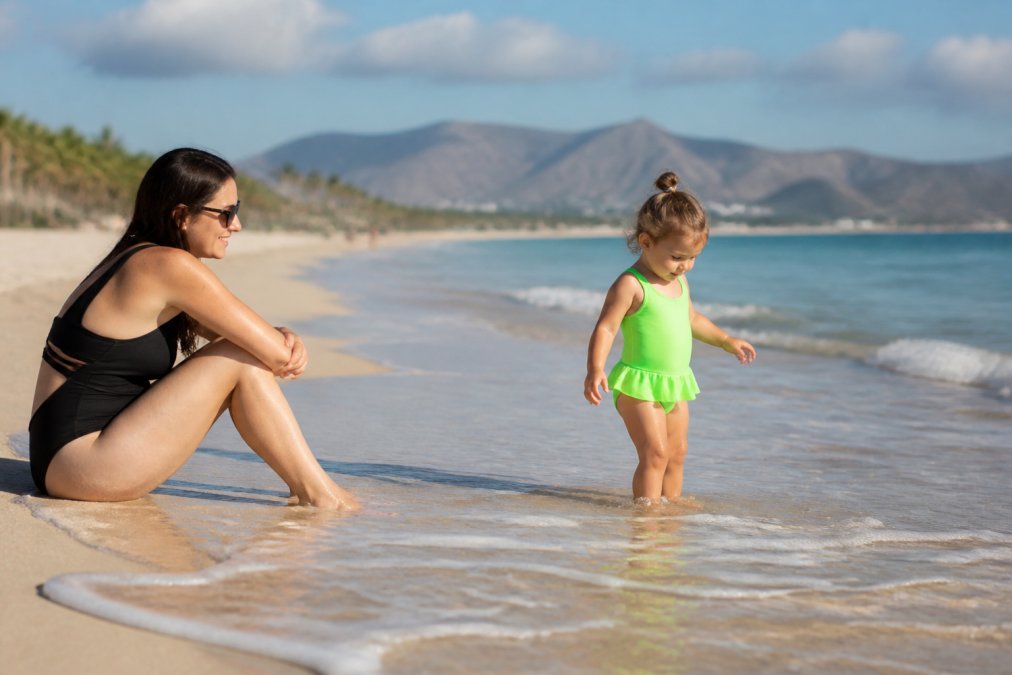
If your child is caught in a rip current, swim parallel to shore until you escape the current, then swim toward shore at an angle. At natural bodies of water, supervision becomes even more critical. Waves, currents, temperature changes, and murky water all increase risk. A child should wear a US Coast Guard-approved life jacket at all times near open water. High-visibility swimwear also becomes more important at beaches and lakes.
Infant Water Safety and Home Hazards
Infants and toddlers face drowning risks in places many parents don't expect. A child can drown in as little as 1-2 inches of water. This means:
- Never leave a young child alone in a bathtub, even for seconds
- Empty buckets, wading pools, and water tables immediately after use
- Keep toilet lids closed and use toilet locks if you have young children
- Supervise children near fountains, ponds, and other water features
Constant touch supervision applies to all water situations, not just pools and beaches.
Emergency Response and CPR Basics
Despite all prevention efforts, emergencies can happen. Knowing CPR can mean the difference between life and death.
CPR (cardiopulmonary resuscitation) involves chest compressions and rescue breaths to maintain blood flow and oxygen to the brain. For a child, the technique differs slightly from adult CPR.
Basic CPR steps for a child:
- Check responsiveness and call 911 immediately
- Place the child on their back on a firm surface
- Open the airway by tilting the head back slightly
- Give 30 chest compressions at a rate of 100-120 compressions per minute
- Give 2 rescue breaths
- Continue cycles of 30 compressions and 2 breaths until emergency responders arrive
Many organizations offer CPR certification courses specifically for parents and caregivers. The American Red Cross, American Heart Association, and local hospitals often provide these courses.
Even if the child appears to recover, seek medical attention. Secondary drowning can occur hours after a water incident when water in the lungs causes breathing problems.
Water safety for young children isn't about fear, it's about preparation and awareness. The strategies in this guide work because they address the multiple factors that contribute to drowning: lack of supervision, inability to respond to water emergencies, and uncontrolled access to water hazards. The combination of active supervision, proper flotation devices, swim lessons, and emergency preparedness creates a comprehensive safety net.
Bright & Bold Swimwear's high-visibility swimsuits support the supervision piece of this puzzle by making children easier to spot in the water. Combined with touch supervision, proper life jackets, swim lessons, and CPR knowledge, they're part of a complete water safety approach. Shop our collection of boys and girls swimsuits in vibrant, high-visibility colors designed to keep your child visible and safe.
Frequently Asked Questions
What are the signs of drowning in children?
Drowning often happens silently and quickly. Watch for gasping or irregular breathing, inability to call for help, head tilted back with mouth open, eyes glazed or closed, and vertical body position in the water. A child may appear to be playing but is actually in distress. This is why active supervision without distractions is critical, drowning can occur in seconds, and recognizing these signs early can save a life.
At what age should children start swim lessons?
The American Academy of Pediatrics recommends formal swim lessons for children ages 1 and older, though children under 4 benefit most from parent-child classes that build water comfort and basic skills. By ages 4-6, many children can learn fundamental survival skills like floating and treading water. Swim lessons reduce drowning risk significantly by building water competency, but they are not a substitute for supervision. Our Teach My Child to Swim guide offers parents structured steps to introduce water skills starting at age 2.5 and up.
How do I choose a US Coast Guard-approved life jacket for my child?
Look for the US Coast Guard approval label on the jacket, this ensures it meets safety standards. Choose the correct size based on your child's weight (not age), as fit is critical for effectiveness. The jacket should fit snugly with no gaps and keep your child's chin above water. Inflatable life jackets are not approved for young children; rigid foam or hybrid designs are safer. Ensure your child wears it consistently during water activities, not just in emergencies.
What pool fence requirements apply to home pools?
Most states require a four-sided fence at least 4 feet high with self-closing, self-latching gates around residential pools. Fence spacing must prevent a child from squeezing through, typically no more than 4 inches apart. Many jurisdictions also require drain covers that meet federal standards to prevent suction entrapment. Check your local and state regulations, as requirements vary. Fencing is a critical layer of protection that prevents unsupervised access, especially for very young children.
This article was written using GrandRanker