

7 Ways to Build Water Confidence in Toddlers
Table of Contents
- 1. Start Slow and Steady with Bath Time Basics
- 2. Make Water Play Fun and Pressure-Free
- 3. Understand and Address the Root of Water Fear
- 4. Use Simple, Consistent Language Your Toddler Understands
- 5. Celebrate Small Wins and Build Momentum
- Best Swimming Gear for Toddlers
- Toddler Water Safety Tips and Post-Swim Routines
- Troubleshooting Regression and Building Long-Term Confidence
- Frequently Asked Questions
Last Updated: September 4, 2026
Watching a toddler cling to your leg at the water's edge instead of splashing with friends can pull at any parent's heart. Water confidence isn't something children are born with; it's built through patient, playful exposure. This guide from Bright & Bold Swimwear outlines 7 ways to build water confidence in toddlers, focusing on trust, consistency, and safety at every step.

Drowning prevention is the ultimate goal behind every tip here, and a confident child is a safer child. We will show you exactly how to make water a source of joy rather than fear, starting tonight at bath time.
1. Start Slow and Steady with Bath Time Basics
Bath time is the perfect, low-pressure classroom for your toddler to discover that water is safe and fun, without the overwhelming noise and space of a public pool.
Let your child pour water over their own hands and feet with a cup to build sensory comfort and control. Gradually progress to pouring water over their shoulders and back while narrating, singing, and keeping the mood light, your calm encouragement signals this is positive.
A common mistake is rushing to full submersion or pouring water over the head before the child is ready. This can trigger fear and set back your progress. Let your toddler lead the pace, and always maintain eye contact and a smile. For more structured guidance, the American Academy of Pediatrics water safety guidelines recommend starting formal swim lessons around age 1, but the foundational comfort begins at home.

2. Make Water Play Fun and Pressure-Free
Play is the most effective tool for building aquatic skills. When water activities feel like a game, apprehension melts away. Focus on joy, not instruction, and avoid pressure to perform.
Bring floating toys, cups, and waterproof dolls into the bath. Encourage kicking with "motorboat" songs and practice blowing bubbles to build breath control playfully. Focus on creating positive associations with water play, not formal technique.
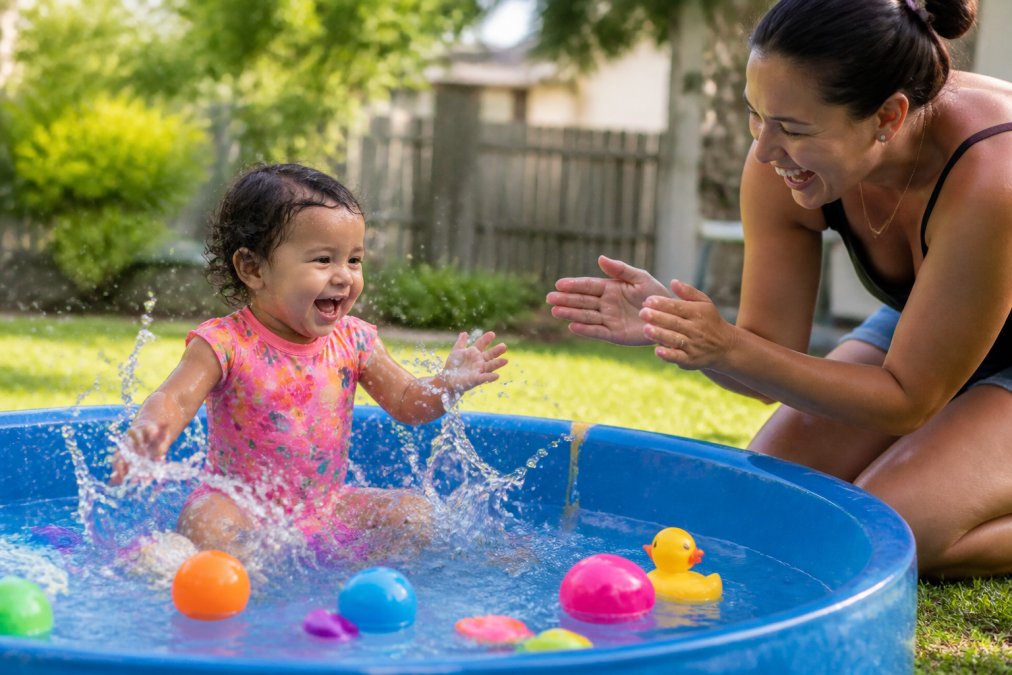
Keep sessions short and end on a high note before your child gets tired or cranky. This ensures the last memory is happy, making them more eager to return next time.
3. Understand and Address the Root of Water Fear
Before helping your toddler overcome water fear, understand its source. For many children, it's sensory-related: water on the face, loss of gravity, pool noise, or unfamiliar sensations can overwhelm a developing nervous system.
Observe your child to identify the trigger, splash, dark water, or floating sensation. Address it directly: visit quieter times if noise is the issue, or hold them securely if floating feels scary.
Acknowledge their feelings rather than dismissing them. Use phrases like "I see you're feeling scared. That's okay. We can just sit here and watch for a minute." Your toddler needs to know you are their safe harbor.
4. Use Simple, Consistent Language Your Toddler Understands
Use the same short, positive phrases every time you are in or near the water. This consistency helps your toddler predict what's coming next and builds security and trust.
Choose a few key phrases and stick to them: "Ready, set, blow bubbles," "Kick, kick, kick," or "Hold onto the wall." Avoid vague instructions like "be careful", say "Hold on tight" instead.
| Situation | What to Say | Why It Works |
|---|---|---|
| Entering the pool | "We hold hands to get in." | Sets a clear expectation of safety. |
| Water on the face | "Blow bubbles like a fish!" | Gives a specific, fun action to focus on. |
| Feeling hesitant | "Let's just sit on the step." | Removes pressure and offers a compromise. |
| Ending the session | "Time to hop out like a bunny!" | Makes the transition playful and predictable. |
5. Celebrate Small Wins and Build Momentum
Every small victory deserves big praise. Did your child put their chin in the water, let water pour over their head, or kick their feet? Celebrate it.
Positive reinforcement is far more effective than pointing out what they haven't mastered. Enthusiasm tells them they're on the right track and motivates the next step.
Use a simple sticker chart to track progress, a visual reminder of how far they've come. Practice several times a week rather than one long monthly session.
Best Swimming Gear for Toddlers
The right gear can make a significant difference in comfort and peace of mind. However, some common products can undermine water confidence or create false security.
Understanding floatation devices and their role:
Parents often turn to floatation aids hoping they'll prevent drowning, but the U.S. Consumer Product Safety Commission guidance on floatation devices makes clear that no device replaces active supervision. More importantly, some popular floatation tools can interfere with learning proper water skills.
Puddle jumpers and similar arm floaties: These keep toddlers afloat but can create false independence and delay natural buoyancy awareness. If you use them, treat them as a confidence tool for very young toddlers (under 2) in shallow water only, with supervision within arm's reach. educational toys for toddlers.
Life jackets (USCG-approved): A Coast Guard-approved life jacket will turn an unconscious child face-up in the water but restricts arm movement and creates unnatural body positioning. Reserve these for boating and beach trips, not swim practice.
Swim vests and trainer jackets: These are designed specifically for learning and allow more arm movement than life jackets. They provide buoyancy support while still allowing a child to practice kicking and arm movements. If you choose a trainer vest, look for one that is snug-fitting and has multiple adjustment points so it doesn't slip up around the neck.
What NOT to use: Inflatable rings, water wings, and homemade floatation devices offer no safety benefit. Noodles are great for play and kicking practice but should never be primary floatation.
Goggles and comfort gear:
Goggles can be transformative for toddlers sensitive to water in their eyes. Look for soft, flexible goggles with adjustable straps and anti-fog lenses. Let your toddler pick the color or style to increase the likelihood they'll wear them.

A well-fitting swimsuit matters, ill-fitting suits create discomfort and distraction. Choose one that fits snugly but allows full range of motion. Rash guards provide sun protection and help toddlers feel less exposed. Bright & Bold Swimwear offers Boys swimsuits and Girls swimsuits designed with both comfort and visibility in mind, so your child stays easy to spot while building confidence in the water.
Practical accessories that support learning:
- Swim caps: Help keep hair out of the face and reduce the sensation of water running down the head. Useful for children sensitive to water on their scalp.
- Kickboards: Once your toddler is comfortable in the water, a small kickboard gives them something to hold onto while practicing leg movements. This builds confidence and isolates the kicking motion.
- Dive rings or sinking toys: Once your child is ready, these toys encourage them to put their face in the water and practice breath control in a playful way.
- Quick-dry towels: A warm, absorbent towel ready immediately after exiting the water prevents chills and makes the transition more comfortable.
Swim Accessories like these can enhance your toddler's comfort and make each session more enjoyable.
The safety-first approach to gear:
Gear is a tool to support learning and comfort, not a substitute for supervision. The most important equipment you bring to the pool is your focused attention and calm, supportive presence.
Toddler Water Safety Tips and Post-Swim Routines
No amount of confidence replaces vigilant supervision. A "water watcher" is an adult who supervises without distractions. This responsibility should be formally handed off between adults to ensure no gap in supervision.
Even if your toddler is a confident paddler, they should never be in the water without an adult within arm's reach. Drowning is often silent and can happen in seconds. The Centers for Disease Control and Prevention drowning prevention data emphasizes that drowning is a leading cause of unintentional injury death for children, making constant supervision non-negotiable.
A consistent post-swim routine reinforces the positive experience. Have a warm, dry towel ready to prevent chills, and talk about the fun parts of the day. This calm reflection cements happy feelings and builds anticipation for the next swim.
Troubleshooting Regression and Building Long-Term Confidence
Regression is normal and often triggered by illness, a new sibling, or routine changes. If your child is suddenly fearful again, don't panic or push them, as this can reinforce the fear.
Gently step back a level. If they were comfortable blowing bubbles, return to splashing their hands. Rebuild that foundation with your calm presence and consistent language, this is a natural part of learning.
Long-term water confidence is built on a foundation of trust and positive experiences. By consistently applying these strategies, you are not just teaching a skill; you are giving your child a lifelong gift of safety and enjoyment. The ultimate goal is for your toddler to feel at home in the water, equipped with the basic aquatic skills recommended by the American Red Cross for a lifetime of safe swimming. Remember that progress is rarely linear, and your patience and support are the most important tools in your child's swim bag.
Building water confidence in your toddler is a journey of small, joyful steps that leads to a lifetime of safety. It requires patience, consistency, and the right tools to make every swim session a positive one. At Bright & Bold Swimwear, we believe that a child who is easy to see is a child who is easier to keep safe.
Our high-visibility swimwear, created by a family to protect yours, is designed to give you peace of mind while your little one builds their aquatic skills. Pair a bright rash guard with our educational resources to create the ultimate safe and fun swim experience. Get started with Bright & Bold Swimwear and give your child the gift of confidence and safety in the water.
Frequently Asked Questions
Why is my 2-year-old suddenly scared of the water?
Toddlers often develop water fear due to sensory sensitivity, fear of the unknown, or a startling experience like water in the face. At age 2, their awareness of new environments increases while their ability to communicate fears is limited. This is completely normal. The key is responding with patience and avoiding pressure. Let your child control the pace of water exposure, even if progress feels slow, consistency builds water confidence over time.
How can I help my toddler overcome a fear of water?
Start by understanding what specifically frightens your child, is it splashing, submersion, or just the unfamiliar environment? Address that specific concern through gradual exposure in calm, controlled settings. Use positive reinforcement for any brave attempt, no matter how small. Pair water play with trusted adults and favorite toys. Practice breathing techniques in fun ways (blowing bubbles, singing). Most importantly, stay calm yourself; toddlers pick up on parental anxiety. Many parents find that a structured guide like the Teach My Child To Swim resource helps them approach this methodically.
What role does high-visibility swimwear play in water safety?
High-visibility swimwear in bright neon colors helps parents and lifeguards spot your child quickly in busy pools, beaches, and lakes. This visual advantage becomes critical in crowded environments where traditional blue or black swimsuits blend into water. Combined with supervision, high-visibility gear reduces drowning risk by ensuring your child stays in sight. Pairing colorful, high-visibility swimwear with water confidence-building strategies creates a complete safety approach, gear protects visibility while your child learns essential water skills.
At what age should a toddler start formal swim lessons?
Most toddlers benefit from formal lessons starting around age 2.5 to 3, though readiness varies by child. Before formal lessons, water play and bath time exposure build comfort and acclimatization. If your toddler shows water anxiety, prioritize confidence-building at home first; lessons work best when your child is already comfortable with water exposure. The Teach My Child To Swim guide offers a 12-lesson framework for parents teaching at home, giving you flexibility to move at your child's pace before or alongside formal instruction.
This article was written using GrandRanker