

Benefits of Long Sleeve Toddler Swim Shirts
Table of Contents
- Why Long Sleeve Toddler Swim Shirts Matter for Water Safety
- Sun Protection and UPF Ratings: What Parents Need to Know
- Rash Guard vs Swim Shirt: Understanding the Difference
- What Should a Toddler Wear Swimming: Coverage and Comfort Combined
- High Visibility Toddler Swimwear: The Safety Advantage
- Fabric Performance and Care: Making Your Investment Last
- Temperature, Comfort, and When Long Sleeves Work Best
- Frequently Asked Questions
Last Updated: October 6, 2026
Why Long Sleeve Toddler Swim Shirts Matter for Water Safety
When you're standing poolside watching your toddler splash around, visibility is everything. Long sleeve toddler swim shirts are designed to do one critical job: make your child easy to spot in the water.
The benefits go beyond what meets the eye. A long sleeve toddler swim shirt provides sun protection that standard swimwear cannot match. It prevents chafing during active play. It keeps your child warm in cooler water. But the foundation of everything is visibility. You cannot supervise what you cannot see clearly. That's why we designed our swimwear around high-visibility neon colors, not because they're trendy, but because they work.
This guide covers what makes long sleeve toddler swim shirts an essential part of water safety, how to choose the right fit for your child's needs, and what to expect in terms of comfort and durability.
Sun Protection and UPF Ratings: What Parents Need to Know
UPF (Ultraviolet Protection Factor) measures how effectively fabric blocks ultraviolet rays. A UPF 30+ rating means the fabric allows only 1/30th of the sun's UV rays to penetrate. Long sleeve toddler swim shirts with UPF 30+ protection block harmful UVA and UVB rays whether your child is wet or dry.
Arms and shoulders are the areas where children burn fastest. Standard short-sleeve or sleeveless swimsuits leave these vulnerable zones completely exposed. When a toddler spends hours at the beach or by the pool during peak UV hours, unprotected shoulders and arms can burn quickly. Long sleeves help reduce this risk.
The protection works because the fabric itself does the blocking. This means the protection lasts through multiple washes. Many parents combine UPF swimwear with sunscreen on exposed areas like the face and neck, but the sleeved portions are covered without reapplication.
How UPF Coverage Works on Toddlers
Toddler skin is thinner and more sensitive than adult skin. The epidermis, the outer protective layer, is still developing, which means UV damage penetrates more easily. A single severe sunburn in childhood increases the risk of skin cancer later in life.
UPF-rated fabrics work by absorbing and reflecting UV rays before they reach the skin. The tighter the weave and the darker the color, the more effective the protection. Bright & Bold Swimwear's long sleeve swim shirts are constructed with a tight weave that maximizes UPF effectiveness while remaining breathable enough for active toddlers. Maintaining this consistent barrier requires understanding how water exposure influences UPF clothing effectiveness throughout a long day of play.
The protection is immediate and continuous. Unlike sunscreen, which requires reapplication and can wash off, UPF fabric provides consistent protection throughout the day. Your child can move freely without you worrying about missed spots or reapplication schedules.
Arms and Shoulders: The Most Vulnerable Areas
Arms and shoulders are exposed during almost every water activity. Whether your toddler is floating on their back, doing cannonballs, or learning to kick, these areas face direct sun exposure. Short-sleeved or sleeveless suits leave them unprotected.
Long sleeves cover from the shoulder all the way to the wrist, eliminating the most vulnerable zone. This is especially critical during peak UV hours, typically between 10 a.m. and 4 p.m., when the sun's rays are strongest.
For toddlers with fair or sensitive skin, long sleeves are often the difference between a comfortable day and a painful one. Some children burn so easily that even an hour in the sun without protection causes visible redness. A long sleeve swim shirt removes this concern entirely.
Rash Guard vs Swim Shirt: Understanding the Difference
The terms "rash guard" and "swim shirt" are often used interchangeably, but they refer to the same thing: a fitted, long-sleeved top designed for water activities. Both provide sun protection, both reduce chafing, and both come in two-piece or one-piece configurations.
The main difference is historical. "Rash guard" originated in surfing culture to prevent the friction between a surfboard and skin. "Swim shirt" is the broader term for the same garment worn for any water activity. For toddlers, both terms describe the same protective layer.
What matters more than the name is the construction. Look for fully lined tops that provide complete coverage and comfort. The lining prevents the fabric from riding up during active play, which is crucial for toddlers who are constantly moving.
What Should a Toddler Wear Swimming: Coverage and Comfort Combined
The ideal swimming outfit for a toddler balances three things: sun protection, freedom of movement, and comfort. A long sleeve toddler swim shirt paired with swim bottoms accomplishes all three.
The shirt provides UPF protection across the torso and arms. The bottoms offer security and coverage. Together, they're more effective than a one-piece suit for many toddlers because they allow for easier bathroom breaks and diaper changes, a practical consideration that matters during the potty-training years. Our Boys swimsuits and Girls swimsuits collections offer coordinated options designed to work together seamlessly.
Some parents prefer one-piece suits for maximum coverage and simplicity. Others choose two-piece sets for flexibility. Both work well. The key is choosing a suit your child will actually wear without complaint. A suit that fits well and feels comfortable is the one that stays on.
Fit Considerations for Active Toddlers
Toddlers move constantly. They climb, jump, dive, and play without thinking about their clothes. A swim shirt that's too loose will ride up during activity. One that's too tight restricts movement and causes discomfort.
True-to-size fit works best for most toddlers. This means ordering the size that matches your child's current measurements, not sizing up "to grow into." Toddlers outgrow swimwear quickly anyway, and an oversized suit won't provide the coverage and comfort you're paying for.
Boys Long Sleeve Rash Guard Swim Set — High-Visibility & UPF 30+ Protection →
Some toddlers prefer a snugger fit because it feels more secure. Others like a relaxed fit for more freedom. Consider your child's preferences when ordering. Many parents find that a relaxed fit works best during the active toddler years because it allows for the constant movement kids this age demand.
Chafing Prevention and Seam Construction
Chafing happens when wet fabric repeatedly rubs against skin. For toddlers in swim lessons or spending hours in the water, this becomes a real problem. Standard swimsuits with rough seams can cause painful red marks by the end of the day.
Long sleeve swim shirts designed for toddlers use flatlock seams or other soft seam construction that sits flat against the skin. This design prevents the friction that causes chafing. The fabric itself is typically soft and stretchy, which also reduces irritation.
Quick-drying fabric is another important feature. Wet fabric that stays damp all day increases chafing risk. Modern swim materials dry quickly, which means your child stays more comfortable between water sessions.
High Visibility Toddler Swimwear: The Safety Advantage
High-visibility neon colors are not a fashion statement, they're a safety tool. Bright neon stands out sharply against the blues and greens of water, making it easier for parents and lifeguards to locate a child instantly.
In a crowded pool or busy beach, this visual contrast saves seconds. Those seconds matter. A child who slips under the water is harder to spot in a standard-colored suit. In a high-visibility neon suit, the bright color cuts through the visual clutter of a busy aquatic environment.
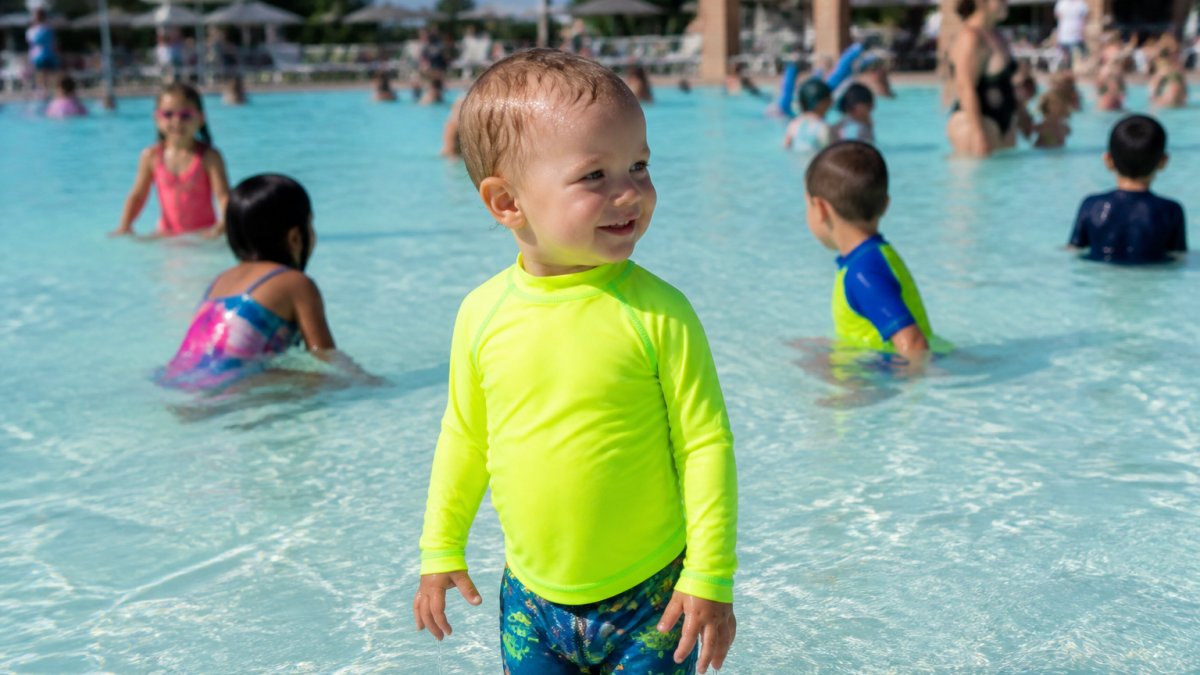
Research from the American Red Cross water safety guidelines emphasizes that visibility is one of the most effective drowning prevention tools. High-visibility clothing makes supervision easier and faster.
Fabric Performance and Care: Making Your Investment Last
Long sleeve toddler swim shirts are an investment in your child's comfort and safety. Understanding how to care for them ensures they last through multiple seasons and potentially multiple children.
Quick-drying fabric is engineered to shed water fast. This means your child stays more comfortable and the suit dries quickly between sessions. The tradeoff is that synthetic fabrics require specific care to maintain their properties.
Rinse the suit in fresh water immediately after pool or beach use. Chlorine and salt water break down fabric over time. A quick rinse removes these chemicals and extends the suit's life significantly. Wash in cool water with mild detergent, avoid bleach, which damages UV-protective coatings and fades neon colors. Air dry instead of machine drying, which can degrade elastic and fabric integrity.
The neon dyes used in quality suits are engineered to resist fading. Proper care means your child's suit stays bright season after season.
| Care Step | Frequency | Impact |
|---|---|---|
| Rinse in fresh water | After every use | Removes chlorine and salt |
| Wash in cool water | After 2-3 uses | Removes sunscreen and body oils |
| Air dry | Always | Preserves elastic and fabric |
| Check seams | Monthly | Catches wear early |
Temperature, Comfort, and When Long Sleeves Work Best
Long sleeves provide warmth in cool water. For toddlers learning to swim in spring or fall, or for families vacationing at lakes and beaches with cooler water temperatures, this warmth matters. A child who's comfortable stays in the water longer and enjoys the experience more.
In very warm water or during peak summer heat, some toddlers find long sleeves too warm. This is a legitimate concern. If your child complains about overheating, you have options. Short-sleeve alternatives exist, though they sacrifice some sun protection.
The key is matching the suit to the conditions. A long sleeve swim shirt is ideal for outdoor pool days, beach vacations, and any situation where sun exposure is significant. For indoor pool sessions or warm-water swimming, a short-sleeve option might be more comfortable.
Consider the water temperature and air temperature when choosing. A suit that's too warm won't be worn, and a suit your child refuses to wear provides zero protection. The best suit is one your child will actually put on without complaint.
Keeping your toddler safe in and around water requires multiple layers of protection. Supervision is always first. Swimming lessons matter. Explore our Best Sellers and Swim Accessories to find everything you need for a safe and enjoyable water experience.
Frequently Asked Questions
Do long sleeve toddler swim shirts actually protect against the sun?
Yes. Long sleeve swim shirts with UPF 30+ protection block harmful UVA and UVB rays whether wet or dry. The fabric itself reflects and absorbs UV radiation, providing continuous coverage across the arms and shoulders, areas where children burn fastest. This works best when combined with reapplied sunscreen on exposed skin and limiting peak sun hours (10 AM-4 PM).
What is the difference between a rash guard and a swim shirt?
The terms are often used interchangeably, but both offer sun protection and durability. The key difference lies in fit preference: choose a snug fit if your toddler is very active, or a relaxed fit if comfort and freedom of movement are the priority.
Will a long sleeve swim shirt be too hot for my toddler to wear all day?
Long sleeve swim shirts are designed with breathable, lightweight fabrics that dry quickly and allow water circulation against the skin. Most toddlers find them comfortable for full-day beach and pool use. However, in extremely hot conditions or if your child shows signs of overheating, a short-sleeve option or frequent water breaks may be better. Test the fit and fabric before a long outing to see what works for your child.
How do I choose the right fit for my toddler's long sleeve swim shirt?
Long sleeve swim shirts come in snug and relaxed fits. Snug fits reduce ride-up and chafing during active swimming, while relaxed fits offer more freedom of movement and comfort for children who prefer looser clothing. Check the sizing guide carefully, some styles run true-to-size, while others recommend sizing down for a snugger feel.