

Benefits of UPF 50 Swimwear for Kids: A Parent's Guide
Table of Contents
- What UPF 50+ Means for Children's Swimwear
- How UPF 50 Swimwear Protects Kids from UVA and UVB Rays
- Key Benefits of UPF 50 Swimwear for Kids
- How to Choose Kids Swimwear: Fit, Fabric, and Features
- High-Visibility Swimwear for Water Safety
- Sun Safety Tips for Children: Building Smart Habits
- Caring for UPF 50 Swimwear: Keeping Protection Strong
- Frequently Asked Questions
Last Updated: September 12, 2026
What UPF 50+ Means for Children's Swimwear
UPF 50 swimwear is the gold standard in sun-protective clothing for kids, blocking up to 98% of the sun's ultraviolet radiation.
Ultraviolet Protection Factor (UPF) measures how much UV radiation passes through fabric to reach the skin. A UPF 50 rating means only 1/50th of UV rays penetrate the material. For children, whose skin is more vulnerable to sun damage, this level of protection matters enormously.
SPF vs. UPF: What's the Difference?
SPF (Sun Protection Factor) applies to sunscreens and measures how well they protect against UVB rays. UPF (Ultraviolet Protection Factor) applies to fabrics and measures protection against both UVA and UVB rays.
The distinction matters because sunscreen requires reapplication every two hours and washes off in water. UPF clothing provides consistent, chemical-free protection without the hassle of constant reapplication.
According to the Skin Cancer Foundation's sun protection guidelines, clothing is often the most reliable form of sun defense, especially for children who resist sitting still for sunscreen application.
How UPF 50 Swimwear Protects Kids from UVA and UVB Rays
The science behind UPF protection comes down to fabric construction. Tightly woven materials with higher thread counts create a physical barrier that UV radiation cannot easily penetrate. But the full picture involves three distinct mechanisms working together.
UVA rays penetrate deep into the skin and contribute to premature aging and DNA damage. UVB rays cause sunburn and play a significant role in skin cancer development. Quality UPF 50 swimwear blocks both types effectively because it addresses the full UV spectrum, not just the burning rays.
The Three Mechanisms of Fabric UV Protection
1. Density and weave tightness. The tighter the weave, the smaller the gaps between threads, and the less UV radiation can pass through. A typical cotton t-shirt has a UPF of about 5-10, roughly equivalent to SPF 5-10 sunscreen. Technical swim fabrics engineered for UPF 50 have weaves dense enough to block 98% of UV radiation.
2. Fiber type. Polyester and nylon inherently absorb UV radiation more effectively than cotton or rayon. Polyester's molecular structure includes aromatic rings that absorb UV energy and dissipate it as harmless heat. This is why rashguards made from technical swim fabrics outperform ordinary cotton t-shirts, especially when wet.
3. Color and treatments. Darker colors absorb more UV radiation than lighter ones. Some fabrics also receive chemical UV absorbers or ceramic particles during manufacturing that enhance protection without adding weight or bulk.
Why Wet Performance Doesn't Drop
A persistent myth suggests that UPF clothing loses its protective qualities when wet. For quality swimwear fabrics, the opposite is often true.
When polyester and nylon fibers get wet, they swell slightly. This swelling tightens the weave structure, reducing the gaps between threads and actually increasing UV blocking capability. Some fabrics do experience reduced UPF ratings when saturated, particularly cotton and natural fibers, which can stretch and become more transparent when wet. But technical swim fabrics used in quality sun-protective swimwear maintain or improve their protection when wet.
The key is choosing swimwear specifically designed for water use. Everyday clothing worn into the pool may not perform the same way.
Why Sunscreen Alone Isn't Enough
Sunscreen is essential, but it has limitations that make UPF clothing a critical complement. Most parents apply less sunscreen than recommended, studies consistently show people apply only 25-50% of the amount used in lab testing. Even properly applied sunscreen needs reapplication every two hours, or more frequently after swimming or heavy sweating.
The American Academy of Dermatology's sun protection recommendations notes that no sunscreen provides 100% protection. Combining sunscreen on exposed areas with UPF 50 swimwear on covered areas creates a comprehensive defense strategy. For children enrolled in swim lessons or spending hours at public pools, this layered approach significantly reduces cumulative sun exposure.
Key Benefits of UPF 50 Swimwear for Kids
The advantages of UPF 50 swimwear extend well beyond sun protection. Parents consistently report that quality sun-protective swimwear simplifies their outdoor routines while keeping kids safer.
Primary benefits include:
- Consistent protection without reapplication - Unlike sunscreen, UPF protection doesn't wash off or wear away during water play
- Reduced sunburn risk - Coverage across shoulders, back, and arms protects areas parents commonly miss with sunscreen
- Chemical-free sun defense - Ideal for children with sensitive skin or sunscreen allergies
- Extended outdoor play - Kids can enjoy longer pool and beach sessions with less worry
- Durability - Quality UPF swimwear maintains protection through repeated wear and washing
For families managing multiple children, UPF 50 swimwear for kids eliminates the sunscreen battle. One less thing to argue about before getting in the water.
How to Choose Kids Swimwear: Fit, Fabric, and Features
Choosing the right sun-protective swimwear comes down to three factors: proper fit, quality fabric, and practical features that make dressing easier.
Fit matters more than you think. A swimsuit that's too loose allows UV rays to reach skin through gaps and shifting fabric. Too tight restricts movement and causes discomfort. Look for a snug but comfortable fit that stays in place during active swimming.
Fabric quality determines protection longevity. Look for chlorine-resistant and saltwater-safe materials that maintain their UPF rating through repeated exposure. Moisture-wicking, breathable fabric keeps kids comfortable during extended wear. Quick-dry technology means the suit is ready for the next swim session without staying damp for hours.
Features that help parents:
- Front zippers for easy on and off, especially with wet, wiggly children
- Long sleeves and full torso coverage for maximum protection
- Flatlock stitching to prevent chafing
- Durable stitching that withstands chlorine and saltwater
Bright & Bold Swimwear offers girls' long sleeve rash guard sets and boys' swimsuits designed with these features in mind.

The Wet vs. Dry Protection Myth
A persistent myth suggests that UPF clothing loses its protective qualities when wet. This isn't accurate for quality swimwear fabrics.
Some fabrics do experience reduced UPF ratings when saturated, particularly cotton and natural fibers. However, technical swim fabrics used in quality sun-protective swimwear maintain their protection when wet. In some cases, moisture causes fabric fibers to swell, actually increasing density and UV blocking capability.
The key is choosing swimwear specifically designed for water use. Everyday clothing worn into the pool may not perform the same way.
High-Visibility Swimwear for Water Safety
Drowning remains the leading cause of unintentional injury death for children ages 1-4, according to the CDC's drowning prevention data. High-visibility swimwear addresses a critical gap in water safety: keeping children easily seen.
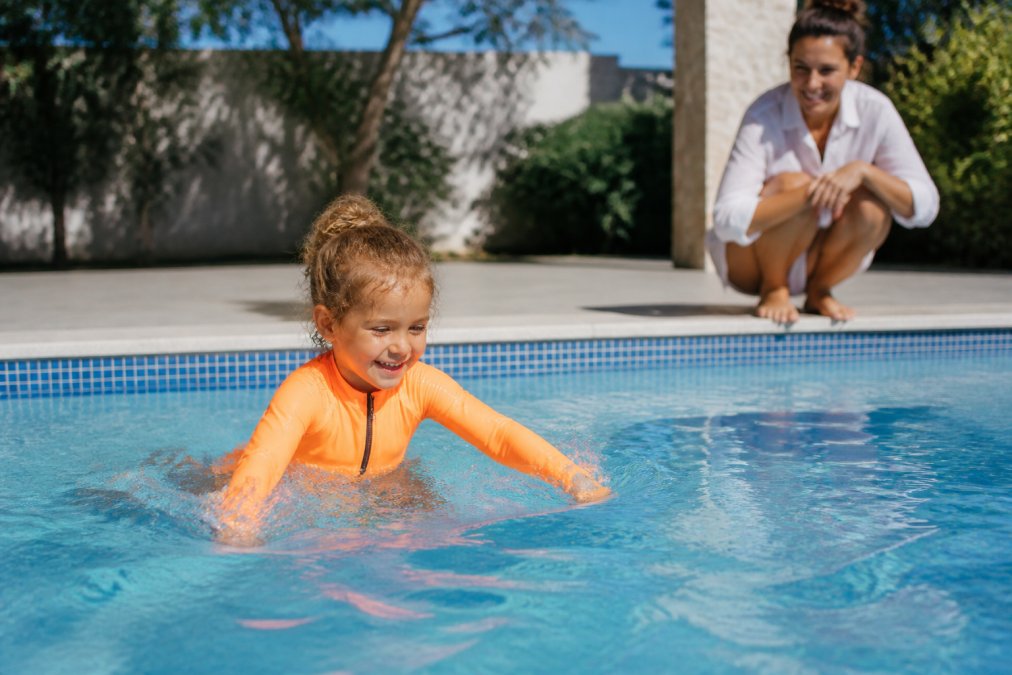
Bright colors like neon orange, yellow, and pink stand out against pool water, lake water, and ocean waves. In crowded pools or murky lake conditions, visibility can mean the difference between quick intervention and tragedy.
Bright & Bold Swimwear was created by a family to protect other families. Our high-visibility swimwear helps parents and lifeguards maintain visual contact with children in the water. The vibrant colors aren't just a style choice; they're a safety feature.
Sun Safety Tips for Children: Building Smart Habits
Sun safety habits start early and stick with children for life. Beyond quality swimwear, these practices reduce sun exposure and protect young skin.
Before heading outside:
- Apply broad-spectrum sunscreen to exposed areas 15-30 minutes before sun exposure
- Dress children in UPF 50 swimwear for covered protection
- Pack wide-brimmed hats and UV-blocking sunglasses
- Bring a beach umbrella or pop-up tent for shade breaks
During outdoor time:
- Seek shade during peak UV hours, typically 10 a.m. to 4 p.m.
- Reapply sunscreen every two hours on exposed skin
- Watch for signs of overheating and take frequent water breaks
- Keep infants under 6 months out of direct sunlight
Building lifelong habits:
- Make sun protection a non-negotiable part of outdoor routines
- Let children choose their own sun-safe accessories to build buy-in
- Model sun-safe behavior yourself
- Teach children why protection matters, not just that it's required
The EPA's SunWise program guidelines emphasize that childhood sun exposure significantly impacts lifetime skin cancer risk. Consistent protection now pays dividends for decades.
Caring for UPF 50 Swimwear: Keeping Protection Strong
Proper care extends the life of UPF swimwear and maintains its protective qualities. Fabric degradation happens gradually, but smart washing habits slow the process. Most guides stop at "rinse after swimming", but understanding why UPF protection fades helps parents make better decisions about when to replace gear.
What Actually Degrades UPF Protection
UPF ratings aren't permanent. The fabric's ability to block UV radiation declines over time due to several factors:
Chlorine and saltwater exposure. Pool chlorine is oxidizing, it breaks down the chemical UV absorbers and weakens synthetic fibers over repeated exposure. Saltwater is less chemically aggressive but can leave crystalline deposits that abrade fibers. Rinsing immediately after every swim is the single most effective habit for preserving UPF performance.
High-heat drying. Heat damages elastic fibers and can cause synthetic fabrics to shrink or warp, opening gaps in the weave. Skip the dryer entirely; lay flat or hang to dry away from direct sunlight.
Harsh detergents and fabric softeners. Fabric softeners coat fibers with a thin film that can reduce UV absorption. Bleach and harsh detergents break down the chemical treatments applied during manufacturing. Use a mild detergent or dedicated swimwear wash.
Mechanical abrasion. Excessive stretching, rough surfaces (pool decks, slides), and repeated wringing all wear down fabric integrity. Teach kids to avoid sitting on rough concrete while wearing their suit.
How Long Does UPF 50 Last?
Quality UPF swimwear maintains its rating through repeated washes with proper care. After that, protection may gradually decrease.
Signs it's time to replace:
- Fabric feels thinner or looks stretched when held to light
- Colors have faded significantly (dyes contribute to UV absorption)
- Elastic has lost its snap
- The suit no longer fits snugly (gaps let UV through)
The Hand-Me-Down Problem
Passing swimwear between siblings is common, but it carries a hidden risk. If you don't know the suit's history, how many washes, whether it was dried in a machine, how much chlorine it's seen, you can't assume it still provides full UPF 50 protection. Fading, stretching, and thinning fabric are visible signs, but degradation can happen without obvious cues.
For hand-me-downs, if the suit looks and feels like new, it probably still performs well. If it's been through a full season of regular swimming, it's best to treat it as a backup suit for short sessions rather than primary protection.
A Simple Care Routine
- Rinse immediately after every swim in cool fresh water, this takes 30 seconds and removes most chlorine and salt.
- Wash weekly with mild detergent, either by hand or on a gentle cycle.
- Skip softeners and bleach, they do more harm than good.
- Air dry flat or hanging, away from direct sun.
- Inspect monthly for fading, stretching, or thinning fabric.
Frequently Asked Questions
What does UPF 50 mean for children's swimwear?
UPF 50 means the fabric blocks 98% of UV radiation, allowing only 1/50th of UV rays to pass through. For children's swimwear, this rating provides reliable broad-spectrum protection against both UVA and UVB rays. Unlike sunscreen that needs frequent reapplication, UPF 50 swimwear offers consistent protection during water play. The tight weave and fabric density create a physical sun barrier that does not wash off or wear away during swimming.
Do UV swimsuits really work better than sunscreen alone?
UV swimsuits work alongside sunscreen, not instead of it. A UPF 50 swimsuit covers the torso, arms, and legs with consistent protection that does not need reapplication every two hours. Sunscreen is still needed for exposed areas like the face, neck, hands, and feet. Together, UPF 50 swimwear and sunscreen application create layered sunburn protection that dermatologists recommend for children, especially during prolonged sun exposure at pools or beaches.
How long does the sun protection in UPF swimwear last?
UPF protection lasts as long as the fabric remains intact. Chlorine, saltwater, and frequent washing gradually break down fibers, reducing fabric density and weave tightness. To extend protection, rinse swimwear in fresh cold water after each use, avoid hot dryers, and replace suits when fabric thins, stretches, or fades. With proper care, quality UPF 50 swimwear can maintain its rating for an extended period.
Can UPF 50 swimwear help prevent heat exhaustion in kids?
UPF 50 swimwear helps prevent sunburn, which reduces one risk factor for heat-related illness. Breathable fabric and moisture-wicking properties allow air circulation and sweat evaporation, helping kids stay cooler. However, UPF swimwear alone cannot prevent heat exhaustion. Parents should pair sun-protective clothing with shade breaks, hydration, and limiting prolonged sun exposure during peak hours. Watch for signs like fatigue, dizziness, or nausea during outdoor play.