

Best UPF 50 Clothing for Hiking: What to Wear
Table of Contents
- What UPF 50 Clothing Actually Does on the Trail
- How to Choose Sun Protection Clothing for Hiking
- Benefits of Sun Hoodies for Hiking
- Breathability, Moisture-Wicking, and Hot-Weather Comfort
- Sun Protection Clothing Care Tips
- High-Altitude vs. Desert Hiking: Adjusting Your UPF 50 Clothing
- Frequently Asked Questions
Last Updated: September 25, 2026
What UPF 50 Clothing Actually Does on the Trail
UPF 50 clothing is the gold standard for sun protection on the trail, blocking 98% of ultraviolet radiation before it reaches your skin (Sun Protective Clothing). This guide breaks down how to pick the best UPF 50 clothing for hiking, from fabric density to hood design.
Here's the number that matters: UPF 50 means only 1/50th of UV radiation passes through the fabric. Compare that to a standard white cotton t-shirt, which typically lands somewhere around UPF 5 to UPF 8. That gap is the difference between a sunburn on a long exposed ridge and finishing your hike with skin intact.
Skin Cancer Foundation sun protection guidance notes that clothing is one of the most reliable forms of sun defense because it doesn't wear off or need reapplying. That reliability matters on multi-hour hikes where sunscreen fades, sweat washes it away, and reaching for a bottle mid-scramble isn't practical.
Below, we'll walk through what to look for, why sun hoodies have become the default choice for thru-hikers and backpackers, and how to adjust your kit for high-altitude versus desert conditions. The best UPF 50 clothing for hiking is not the most expensive piece. It's the one you'll actually wear for eight hours straight.
How to Choose Sun Protection Clothing for Hiking
Choosing sun protection clothing for hiking comes down to understanding how the fabric actually blocks UV, then matching that to your body, your route, and your skin. Get those right and you can skip the mid-hike sunscreen break entirely.
Start with the UPF rating itself. UPF 50 is the highest tier recognized, and it's what you want for long exposure above tree line or on reflective surfaces like water and snow. Lower ratings still help, but they leave more room for UV transmission as fabric stretches, gets wet, or wears thin.
Mechanical vs. Chemical UV Protection
There are two ways a garment earns its UPF rating, and the difference matters if you have sensitive skin.
Mechanical (inherent) protection comes from the fabric itself: how tightly the yarns are woven, the fiber type, the color, and the weight of the material.
Fit, Stretch, and the UPF Trap
A loose, articulated fit keeps fabric off your skin, which improves both airflow and protection. Tight fabric stretched across your shoulders can actually lower its effective UPF because the weave opens up and lets more UV through. This is the single most overlooked detail in sun-protective clothing: a shirt that fits like compression gear protects less than the same shirt worn relaxed.
Coverage Checks
Long-sleeve designs protect your forearms and the back of your hands, two spots people forget until they're burned. A collar that stands up protects the back of your neck. Thumb loops keep sleeves from riding up when you're using trekking poles. A hood extends coverage to the ears and sides of the face.
Quick Pre-Purchase Checklist
- Fabric: Tightly woven polyester or nylon, sometimes blended with elastane for stretch. Synthetic fibers hold UPF better than cotton when wet.
- Protection type: Inherent (weave-based) if you want chemical-free and wash-durable; treated finishes can fade over time.
- Fit: Relaxed, not compressive. Stretched fabric loses effective UPF.
- Coverage: Long sleeves, high collar, thumb loops, and ideally a hood.
- Color: Darker and more saturated colors generally absorb more UV than pale pastels, though weave construction matters more than color alone.
- Certification: Look for a UPF rating on the label, not just marketing language.
A common mistake is buying a shirt that fits like activewear. Sun protection clothing for hiking should feel a little roomier than your gym gear, and that extra room is doing real work for your skin.
Benefits of Sun Hoodies for Hiking
Sun hoodies have become the single most popular piece of sun protection clothing for hiking, and the reasons are practical. A sun hoodie combines a long-sleeve shirt, a neck gaiter, and a hat into one lightweight layer.
Wear your sun hoodie as a base layer, not over a cotton t-shirt. Cotton traps moisture, defeats the moisture-wicking properties of the hoodie, and adds bulk. One quality layer beats two mediocre ones.
Breathability, Moisture-Wicking, and Hot-Weather Comfort
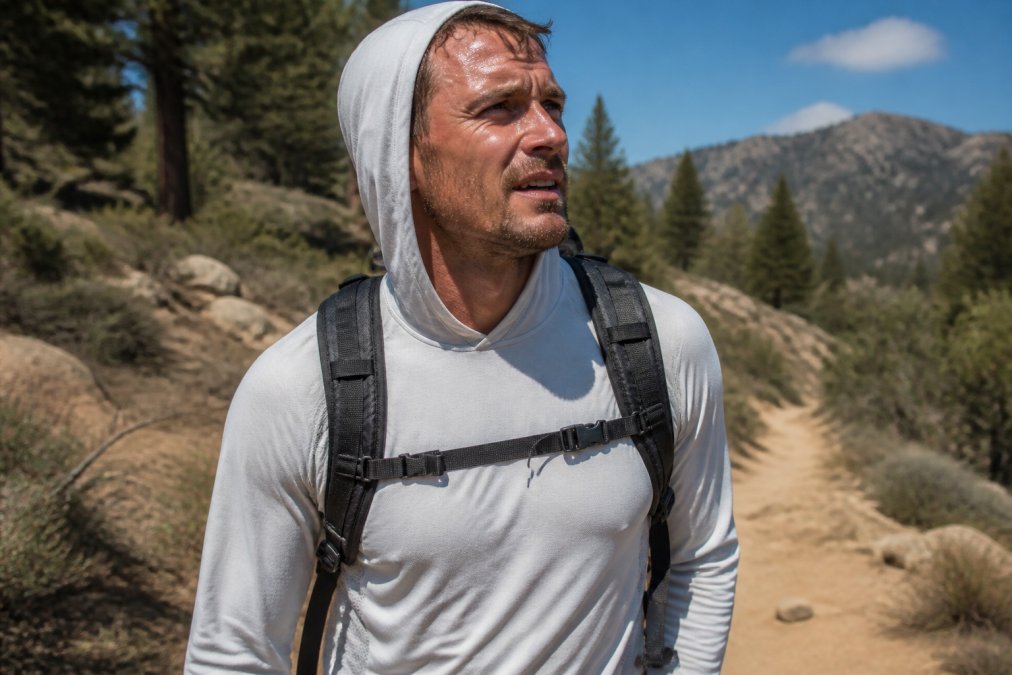
Ventilation features worth looking for:
- Mesh panels under the arms or down the back
- A quarter-zip or button placket you can open on climbs
- Lightweight fabric under 150 gsm for hot-weather hiking
- Thumb loops that don't add bulk at the wrist
Sun Protection Clothing Care Tips
Sun protection clothing care tips matter more than most hikers realize, because UPF ratings fade with wear. A shirt that starts at UPF 50 can drop over time if you wash and dry it wrong.
Follow these habits to keep your gear working:
- Wash in cold water with a mild detergent, not bleach or fabric softener
- Skip the dryer. Air dry in the shade to preserve the weave
- Avoid wringing or hanging by the hood, which stretches the fabric
- Check for thinning at the shoulders and elbows, the first spots to wear
- Retire the garment once it feels noticeably thinner or shows pilling
High-Altitude vs. Desert Hiking: Adjusting Your UPF 50 Clothing
High-altitude and desert hiking both demand UPF 50 clothing, but they stress different parts of your kit. Adjusting for each environment keeps you protected without overheating.
Building a Three-Layer System Around Your Sun Layer
Most guides treat a sun hoodie as a standalone item. In practice, it's the base layer of a three-layer hiking system, and thinking about it that way changes what you buy.
- Base layer (your sun layer): The UPF 50 hoodie or long-sleeve shirt sits against your skin. It manages moisture, blocks UV, and provides light warmth on cool starts.
- Mid layer (insulation): A fleece or light puffy goes over the sun layer when temperatures drop or you stop for a break. Because the sun layer is thin and smooth, it slides under insulation without bunching.
- Shell layer (protection): A wind or rain shell goes on top when weather turns. The sun layer stays on underneath, so you don't have to strip down and expose skin to swap layers.
Environmental Impact of Synthetic UV Fabrics
Sun-protective clothing is overwhelmingly made from synthetic fibers, and those fibers shed microplastics with every wash. That's a real trade-off worth naming: the same durability that makes polyester and nylon hold their UPF also makes them persistent in the environment.
A few practical ways to reduce the impact:
- Wash sun-protective gear in a filter bag designed to capture microfibers, or use a washing machine with a built-in filter.
- Wash less often. Synthetic sun layers resist odor and dry fast, so airing them out between hikes often replaces a full wash.
- Buy fewer, longer-lasting pieces. A well-made UPF 50 hoodie that survives several seasons sheds less over its life than three cheap ones that pill and get replaced.
- Look for brands that publish information about recycled content or bluesign-approved fabrics, which signal lower-impact manufacturing.
Quick Comparison of Adjustments
| Condition | Priority | Key Adjustment |
|---|---|---|
| High altitude | Block reflected UV | Add gloves, cover hands and face |
| Desert | Manage heat | Choose lighter color, more mesh |
| Variable weather | Layer flexibility | Sun hoodie as base under mid layer and shell |
| Water or snow | Reflect UV from below | Cover legs, wear sunglasses |
One gap most guides miss is skin sensitivity. If you or a family member reacts to chemical sunscreens, sun-protective clothing becomes the primary defense rather than a backup. Chemical-free protection means relying on fabric and shade instead of lotions, which is exactly what a good UPF 50 layer delivers. For families heading to the water after the trail, high-visibility swimwear plays a crucial role in the pool by keeping the most vulnerable skin covered and easy to watch.
Frequently Asked Questions
Is UPF 50 clothing worth it for hikers?
UPF 50 blocks about 98% of ultraviolet radiation, which matters on exposed trails where sunscreen alone often wears off from sweat and rubbing. A long-sleeve UPF 50 shirt or sun hoodie covers the shoulders, arms, and neck without reapplying every two hours. For thru-hiking, backpacking, or long day hikes, one piece of UPF 50 clothing replaces multiple sunscreen applications and reduces the risk of missed spots, making it a practical investment for anyone spending hours outdoors.
How does fabric weave affect UPF protection levels?
Tighter weaves and denser fabric block more UV transmission. Polyester and nylon typically outperform cotton because their synthetic fibers absorb UV more effectively, and adding stretch or moisture-wicking finishes does not usually reduce protection. Darker colors and unwashed fabric also tend to block more ultraviolet radiation. Look for a UPF rating on the label rather than guessing from thickness, since a lightweight woven polyester can outperform a heavy cotton tee.
Do I need to wear sunscreen under UPF 50 clothing?
For covered skin, sunscreen is generally unnecessary, but exposed areas like the face, ears, hands, and neck still need it. UPF 50 clothing protects only where it covers, and gaps at the wrists, collar, or hem can let ultraviolet radiation through. Many hikers pair a sun hoodie with a brimmed hat and sunscreen on the nose and cheeks. If the fabric stretches or gets wet, protection can drop, so reapply sunscreen to any skin showing beyond the garment.
How should I care for my UPF 50 hiking gear to maintain effectiveness?
Wash UPF 50 clothing in cold water with mild detergent and skip fabric softeners, which can coat fibers and reduce moisture-wicking. Tumble dry low or hang dry; high heat can shrink weaves and open gaps. Avoid chlorine bleach and harsh stain removers. Over time, abrasion from backpack straps and repeated stretching can lower protection, so inspect high-wear areas and replace garments that look thin or faded. Following these sun protection clothing care tips keeps UPF performance strong across many seasons.