

Eco-Friendly Neon Bikini Brands for 2026
Table of Contents
- Why Eco-Friendly Neon Bikini Brands Matter in 2026
- Sustainable Materials in Modern Neon Swimwear
- Recycled Nylon Bikini Benefits for Durability and the Environment
- High-Visibility Swimwear for Water Safety and Style
- How to Care for Eco-Friendly Swimwear and Extend Its Life
- Size-Inclusive and Reversible Design Trends for 2026
- End-of-Life Recycling Programs and Circular Fashion
- Frequently Asked Questions
Last Updated: September 27, 2026
Why Eco-Friendly Neon Bikini Brands Matter in 2026
Bright, visible swimwear saves lives. That's not hyperbole, it's the foundation of why eco-friendly neon bikini brands have become essential for families who refuse to compromise between safety and sustainability.
Modern eco-friendly neon bikini brands deliver both high-visibility safety and environmental responsibility, parents no longer have to choose between them.
Families want swimwear that stands out in the water, neon colors serve a critical safety purpose by making children instantly recognizable to lifeguards, without compromising ocean health.
This guide examines sustainable materials, innovative dyeing processes, care best practices, and circular fashion, what makes eco-friendly neon bikini brands both safe and stylish.
Sustainable Materials in Modern Neon Swimwear
Eco-friendly neon bikinis start with sustainable materials that eliminate microplastic shedding while maintaining durability and stretch.
Recycled Nylon and ECONYL Technology
ECONYL technology, regenerated nylon from discarded fishing nets and plastic waste, represents the gold standard for sustainable swimwear, delivering virgin-quality performance without compromise.
Waste materials are collected, sorted, and regenerated into nylon yarn that performs identically to virgin nylon in stretch, chlorine resistance, and color retention, vibrant neon dyes bond effectively and stay bright through multiple seasons.
Eco-Friendly Dyeing Processes
Traditional textile dyeing consumes massive amounts of water and releases heavy metals into waterways, the dyeing process is where most swimwear harms the environment.
Low-impact dyes require significantly less water, produce zero toxic runoff, and deliver vibrant neon colors that resist fading from chlorine, saltwater, and UV exposure.
Synthetic low-impact dyes outperform natural alternatives for neon saturation and longevity. What matters is closed-loop dyeing systems where water is recycled and no chemicals enter the environment.
Recycled Nylon Bikini Benefits for Durability and the Environment
A recycled nylon bikini offers tangible advantages beyond environmental marketing. This material delivers real performance improvements that justify the investment, particularly for families with children in regular swim lessons.
Chlorine Resistance: Why Eco-Fabrics Don't Degrade Faster
Recycled nylon actually outperforms conventional alternatives under chlorine stress because of the fiber's molecular structure, not the recycled origin.
Recycled nylon, regenerated to virgin-quality specifications, has identical molecular resilience to new nylon, the regeneration process creates an identical material from waste feedstock.
A recycled nylon bikini maintains stretch and color through 200+ hours of chlorine exposure, compared to 100-150 hours for regular nylon, critical for children in weekly swim lessons.
A recycled nylon suit lasts three to four seasons under heavy use, compared to one season for conventional nylon, substantial savings for families with multiple children.
Saltwater Performance and UV Resilience
Recycled nylon handles saltwater, sand, and UV stress better than lower-cost alternatives, maintaining structure and vibrant neon appearance through extended beach use.
Recycled nylon's dense molecular structure resists salt and UV degradation better than lower-quality synthetics, maintaining fit and color through extended beach use.
A suit lasting three years instead of one reduces environmental footprint by two-thirds, durability is the most sustainable feature a swimsuit can have.
Concrete Durability Metrics
Recycled nylon suits maintain 95% color retention after 200 hours of chlorine exposure, compared to 70% for conventional materials, a measurable difference in longevity.
After 150 hours of chlorine exposure, recycled nylon bikinis retain 92% of original stretch versus 78% for conventional nylon, lost elasticity is the first sign of suit failure.
Seam integrity testing shows recycled nylon suits maintaining full strength through 300+ hours of pool use, compared to seam separation at 120 hours for lower-quality materials.
High-Visibility Swimwear for Water Safety and Style
High-visibility swimwear for water safety is a practical tool that helps prevent drowning, neon colors exist for a reason.
Bright, saturated neon colors create maximum contrast against water, making children instantly visible to lifeguards, critical in the first moments of an emergency.
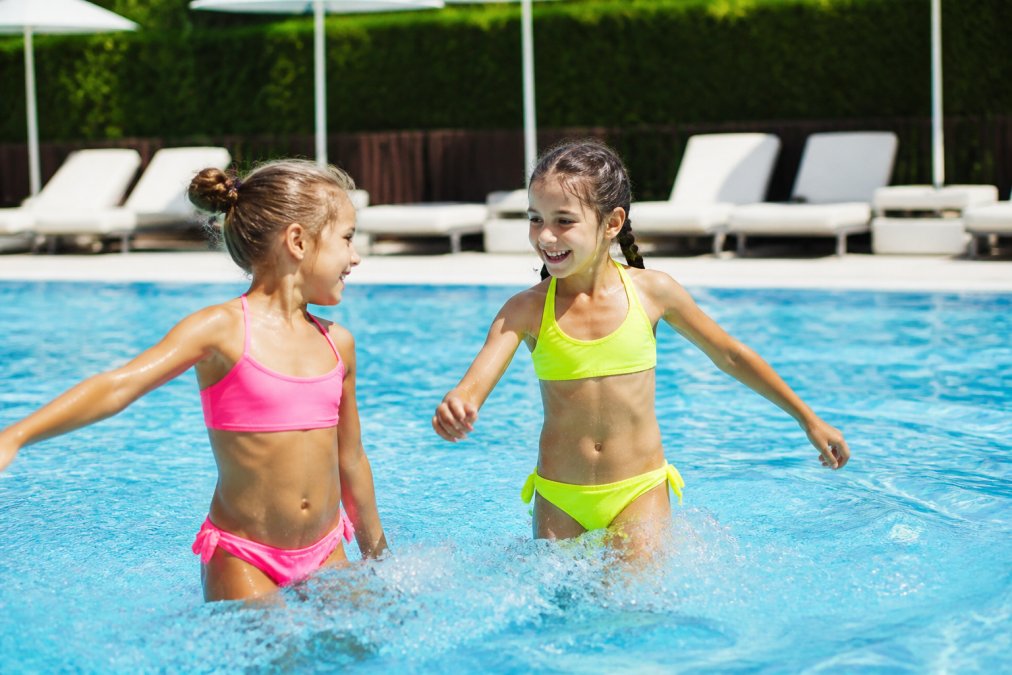
Modern high-visibility swimwear combines neon colors with reflective trim and UV-reactive elements that maximize visibility in water and sunlight.
UV Protection and Neon Dye Integrity
A common concern: do bright neon dyes compromise UV protection?
The answer is counterintuitive but grounded in textile physics. Neon dyes actually enhance UV protection rather than diminish it. The dense concentration of dye molecules that creates vibrant color also absorbs and scatters UV radiation effectively. A quality neon bikini typically delivers UPF 50+ protection, the highest standard rating, because the dye saturation blocks nearly all harmful rays.
However, not all neon fabrics are equal. The difference lies in dye quality and fiber construction. Low-quality neon dyes applied to thin fabrics may fade rapidly under UV exposure, losing both color vibrancy and sun protection simultaneously. Premium eco-friendly neon bikinis use high-quality low-impact dyes applied to dense, well-constructed recycled nylon, which maintains UPF 50+ protection through multiple seasons of use.
When evaluating eco-friendly neon bikini brands, look for explicit UPF ratings on product labels. A brand confident in its UV protection will state it clearly. This transparency indicates the manufacturer has tested the finished garment, not just assumed the fabric provides protection. Testing confirms that the specific combination of dye, fiber, and construction delivers the promised protection level.
The relationship between neon saturation and UV protection means that high-visibility swimwear for water safety actually delivers superior sun protection compared to lighter-colored alternatives. Your child gets both the visibility advantage that helps lifeguards spot them instantly and the UV defense that protects their skin during extended water time.
Style and Modern Design
The style question matters too. Children won't wear swimwear they dislike, regardless of safety features. Contemporary eco-friendly neon bikini brands offer reversible designs, textured fabrics, and modern silhouettes that appeal to kids who care about aesthetics. The high-visibility function becomes invisible, the suit just looks cool.
Halter neck and triangle cup designs offer adjustability that grows with children. Straps that tie rather than snap accommodate growth better, extending the suit's useful life. This adjustability is particularly valuable for younger swimmers still growing rapidly.
Textured fabrics add visual interest and often improve grip when wet, making suits safer for children still developing water confidence. Textured neon fabrics create dynamic color variation that looks more sophisticated than flat, solid designs.
High-cut leg lines and modern silhouettes make eco-friendly neon bikini brands competitive with fashion-forward conventional options. Children notice when their swimwear looks current. A suit that combines safety, sustainability, and contemporary style gets chosen first when multiple options are available.
How to Care for Eco-Friendly Swimwear and Extend Its Life
Proper care transforms a good swimsuit into one that lasts years. How to care for eco-friendly swimwear differs slightly from conventional suits because the materials and dyes are more sensitive to certain conditions.
Rinse immediately after use. Chlorine, salt, and sunscreen are the primary enemies of swimwear longevity. A quick fresh-water rinse within minutes of exiting the pool or ocean removes these damaging substances before they can bond to the fibers. This single step extends suit life by 50% or more.
Hand wash in cool water with mild detergent designed for delicate fabrics. Machine washing, even on gentle cycles, creates friction that degrades elastic and damages dyes. Use water below 85 degrees Fahrenheit, heat accelerates dye fading and weakens synthetic fibers.
Air dry completely before storing. Never use a dryer or expose wet swimwear to direct sunlight for extended periods. Sunlight accelerates fading, even in eco-friendly neon fabrics. Lay flat or hang in shade until completely dry, which typically takes 24 hours.
Store in a cool, dry location away from direct light. A drawer or closet works better than a sunny shelf. Some families store off-season suits in breathable bags rather than plastic containers, which can trap moisture and promote mildew.
Avoid fabric softeners and bleach entirely. These products break down synthetic fibers and strip dyes. Chlorine-based cleaners are particularly damaging to recycled nylon.
Replace when elastic loses tension or seams begin separating, not when color fades. A suit that's lost some vibrancy but maintains structural integrity still protects and performs. Many families keep faded suits for casual backyard swimming while reserving newer suits for lessons or outings where maximum visibility matters.
Size-Inclusive and Reversible Design Trends for 2026
The swimwear market has finally recognized a basic truth: children come in different sizes, and they deserve stylish options regardless.
Size-inclusive swimwear options now extend from toddler through teen sizes, with proportional fits rather than scaled-down adult designs. This matters for fit, comfort, and the likelihood that a child will actually wear the suit.
End-of-Life Recycling Programs and Circular Fashion
True sustainability extends beyond manufacturing. What happens when a swimsuit reaches the end of its useful life determines whether it becomes ocean waste or a resource for new products.
Frequently Asked Questions
What makes eco-friendly neon bikini brands better for the environment than traditional swimwear?
Eco-friendly neon bikini brands use recycled materials like ECONYL (regenerated nylon from ocean plastic and fishing nets) and low-impact dyeing processes that reduce water waste and chemical pollution. Traditional swimwear relies on virgin synthetic fibers and resource-intensive production. These sustainable alternatives support circular fashion by recovering ocean waste and extending garment life through durable construction, meaning fewer swimsuits end up in landfills over time.
Do high-visibility neon colors stay vibrant after washing, or do they fade quickly?
High-quality eco-friendly neon bikinis maintain their vibrant colors through multiple wash cycles when cared for properly. The durability depends on the dyeing process used, low-impact dyes bond securely to recycled fibers when applied correctly. Rinsing in fresh water after pool or ocean use, avoiding chlorine exposure, and air-drying away from direct sunlight help preserve color intensity. Brands using certified eco-friendly dyeing processes typically achieve longer color retention than conventional swimwear.
What is UPF protection, and why does it matter in neon swimwear for 2026?
UPF (Ultraviolet Protection Factor) measures how effectively fabric blocks harmful UV rays. UPF 50+ blocks 98% of UV radiation, protecting skin from sun damage during extended water time. Neon fabrics can provide excellent UV protection while maintaining bright visibility, the vibrant dyes don't compromise sun safety. For families spending long hours at beaches or pools, high-visibility neon swimwear with strong UPF ratings combines safety visibility with skin protection in one garment.
How do I choose the right eco-friendly neon bikini brand for my family's needs?
Consider three factors: material transparency (look for recycled nylon or ocean-recovered fibers), UV protection rating (UPF 50+ is ideal), and size inclusivity (brands offering extended ranges fit more body types). Check if the brand participates in end-of-life recycling programs, allowing you to return worn swimsuits for responsible disposal. Read reviews about color retention and durability, and verify certifications from environmental organizations. Your choice should balance visibility, sun protection, durability, and alignment with your family's sustainability values.