

How Long Does Swim Training Take: A Parent's Guide
Table of Contents
- What Does 'Learning to Swim' Actually Mean?
- How Long Does Swim Training Take by Age Group
- How Many Swim Lessons for a Toddler to Gain Water Confidence
- The Role of Lesson Frequency in Your Training Timeline
- Best Swimming Gear for Toddlers and Young Learners
- How to Overcome Fear of Water and Stay Consistent
- Building Skill-Based Milestones in Your Training Plan
- Conclusion
Last Updated: August 21, 2026
What Does 'Learning to Swim' Actually Mean?
When parents ask how long it takes for their child to learn to swim, they're usually asking about something different than what swim instructors mean by the term. Learning to swim encompasses everything from basic water confidence and floating to full proficiency with multiple strokes, breath control, and water safety skills.

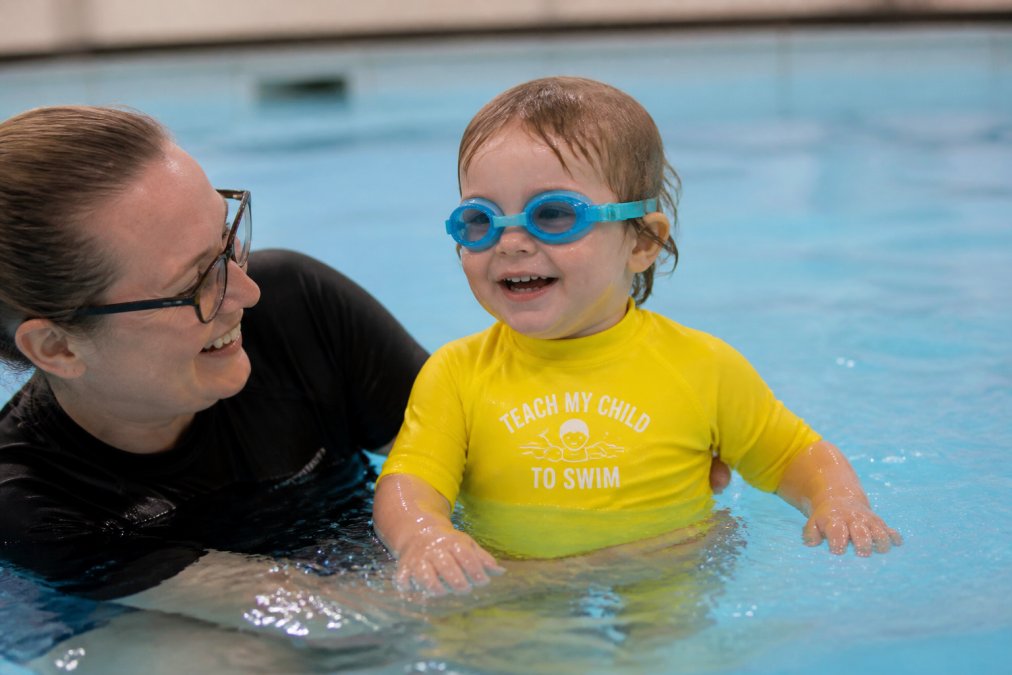
A toddler who can float independently on their back has learned something critical for survival. A school-age child who can swim 25 meters with proper freestyle technique has learned something different entirely. Most parents underestimate how long genuine proficiency takes because they conflate water confidence with swimming ability. Water confidence might take 8-12 weeks of consistent lessons (the American Academy of Dermatology). True swimming proficiency typically requires 6-12 months of regular training or longer, depending on age and starting point.
How Long Does Swim Training Take by Age Group
The timeline for swim training varies dramatically by age. Younger children typically need more lessons to build water confidence before stroke development can begin.
Toddlers (Ages 2-4)
Toddlers in swim training are primarily building water confidence and basic survival skills like floating and treading water. Most toddlers need 8-16 weeks of consistent weekly lessons to develop genuine water confidence, meaning they can enter water without extreme distress and float with assistance (the CDC).
The real milestone for toddlers is survival-oriented skills. A water-confident toddler can float on their back with initial support, understands not to panic in water, and responds to basic safety cues. Many parents find that 2-3 lessons per week accelerates progress compared to single weekly lessons, as frequency matters more than total duration for this age group.
Preschoolers (Ages 4-6)
Preschoolers can develop actual stroke technique and have better coordination than toddlers. A preschooler with no prior water experience typically needs 16-24 weeks of consistent weekly lessons to develop basic swimming ability, meaning they can move through water using recognizable stroke patterns and manage breath control for short distances (peer-reviewed research).
The distinction between water confidence and swimming ability becomes clearer at this age. A preschooler might feel comfortable in water after 8-10 weeks but still lack the coordination to swim independently. Intensive lesson programs can compress this timeline to 4-6 weeks, though consistency matters, progress often reverses if training gaps occur.
School-Age Children (Ages 6+)
School-age children progress faster through stroke technique development because their coordination, strength, and cognitive ability support complex motor learning. A child who has never swum before typically needs 12-20 weeks of consistent weekly lessons to develop basic independent swimming ability, swimming 25-50 meters with recognizable freestyle and backstroke, managing breath control, and demonstrating water safety awareness.
School-age children often progress faster than younger children because they can understand and apply technical feedback immediately. The total hours invested matter more for this age group than for younger swimmers.
How Many Swim Lessons for a Toddler to Gain Water Confidence
Water confidence is the foundation for everything else in swim training. A water-confident toddler enters the water without extreme fear, attempts to move through water, and shows willingness to try new skills. Achieving this typically requires 8-16 lessons spread over 6-12 weeks, depending on the toddler's starting point and lesson frequency.
A toddler with no prior water exposure usually needs more lessons than one who has played in a bathtub or kiddie pool regularly. The number of lessons matters less than the consistency and quality of those lessons. A toddler receiving two 30-minute lessons weekly for 8 weeks typically develops stronger water confidence than one receiving one lesson weekly for 16 weeks, even though both total 16 lessons.
Many swim schools recommend 2-3 lessons per week for toddlers specifically to build water confidence faster. Private lessons often accelerate water confidence development compared to group classes because the instructor can tailor the pace to the individual toddler's needs.
The Role of Lesson Frequency in Your Training Timeline
Lesson frequency directly affects how long swim training takes overall. A child receiving one 30-minute lesson per week needs approximately twice as long to reach the same proficiency level as a child receiving two lessons weekly. The spacing between lessons matters because skill retention decreases over time.
Two lessons per week creates better skill retention and faster progress for most learners. Three or more lessons per week accelerates progress even further, though diminishing returns kick in around three lessons weekly. Intensive lesson programs, multiple lessons daily over 2-4 weeks, compress training timelines significantly, a child might achieve in 15-20 intensive lessons what would take 12-16 weeks of single weekly lessons.
Consistency matters as much as frequency. A child receiving one lesson weekly for 24 consecutive weeks progresses more than a child receiving two lessons weekly for 8 weeks, then skipping 4 weeks, then resuming. Training gaps reverse progress, especially for younger learners.
Best Swimming Gear for Toddlers and Young Learners
The right swimming gear makes a tangible difference in how comfortable and confident your child feels in the water.
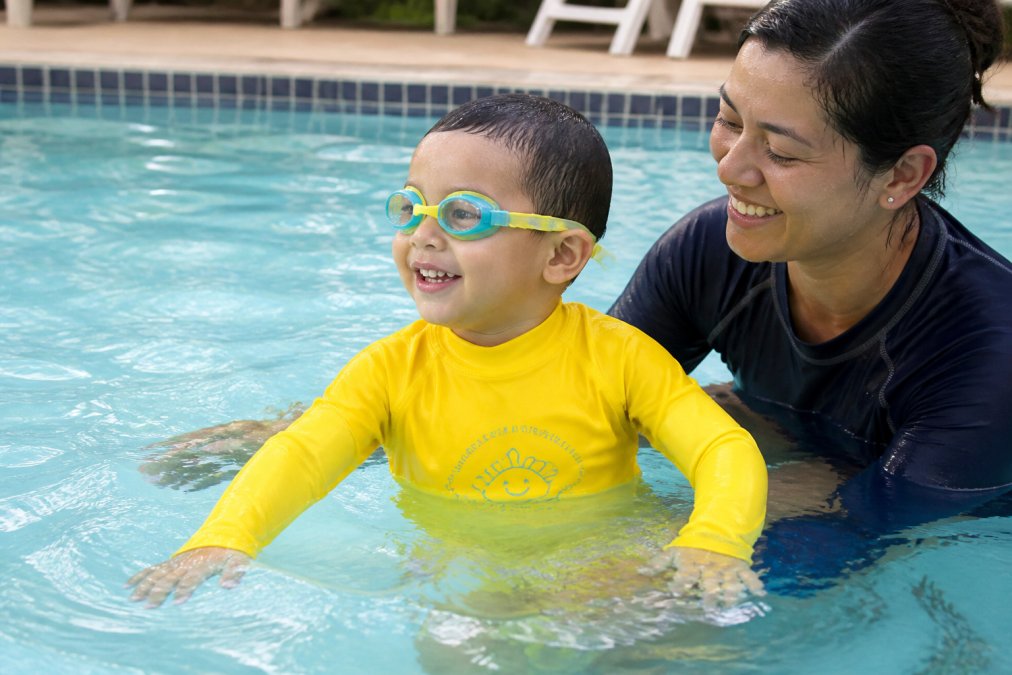
A well-fitting rash guard or swim shirt protects against sun exposure and reduces the shock of cold water on sensitive skin. For toddlers, the fit matters tremendously. Bright & Bold Swimwear's Boys swimsuits and Girls swimsuits include high-visibility options designed to fit toddlers properly while making them easy to spot in water, a critical safety feature.
Swim goggles help toddlers and young learners see underwater, which accelerates skill development. A child who can see clearly underwater develops confidence faster and can observe their own body position. Quality Swim Accessories like Kids Colorful Goggles designed for ages 3-12 offer both visibility and comfort.

Flotation aids like kickboards and pull buoys support skill development during lessons by helping children isolate specific movements. A child practicing kicks with a kickboard develops leg strength and coordination faster than one practicing without the aid.
The investment in quality gear pays dividends in comfort and confidence. A child who feels comfortable in their swimwear focuses on learning rather than adjusting gear or feeling cold.
How to Overcome Fear of Water and Stay Consistent
Water phobia is real and common in young children. Overcoming water fear takes time and patience. Forcing a frightened child into water typically reinforces the fear rather than reducing it. Gradual, positive exposure works better.
Consistency during the fear-overcoming phase is critical. Skipping lessons when a child shows fear means restarting the confidence-building process. Attending lessons regularly, even when progress feels slow, builds the neural pathways that transform water from a threat into a familiar, manageable environment. This process typically takes 8-16 weeks of consistent weekly lessons.
Many children overcome water phobia faster with private lessons than group classes. A private instructor can move at the child's pace and celebrate small victories. Parental attitude influences a child's water confidence significantly, a parent who models calm confidence helps the child develop positive associations with water.
Regular practice between lessons accelerates progress. A child who attends weekly lessons and practices in a bathtub or kiddie pool between lessons progresses noticeably faster than one who only attends formal lessons.
Building Skill-Based Milestones in Your Training Plan
Rather than tracking only total hours or weeks of training, breaking your child's swim development into specific skill milestones creates a clearer roadmap and helps you recognize progress.
Early milestones for toddlers include entering water without distress, floating with support, and tolerating water on the face. Intermediate milestones include floating independently, moving through water with some propulsion, managing breath control for short periods, and treading water with support. Advanced milestones include swimming recognizable strokes over increasing distances, managing breath control consistently, and demonstrating water safety awareness.
Tracking progress through milestones rather than just "weeks of lessons" helps you stay motivated during plateaus. Milestone-based tracking also helps you communicate with your child's instructor about specific goals. The timeline between milestones varies by age and individual child, so understanding this variation helps you maintain realistic expectations.
Conclusion
Learning to swim is a journey that unfolds differently for every child, but the timeline depends on clarity, consistency, and the right approach. Most toddlers gain water confidence in 8-16 weeks of regular lessons. School-age children typically reach basic swimming proficiency in 12-20 weeks of consistent weekly training. The specific timeline for your child depends on their age, starting point, lesson frequency, and the quality of instruction.
Bright & Bold Swimwear supports this journey by providing high-visibility swimwear that keeps your child visible in water while building confidence through comfortable, properly fitting gear. Our collection includes rash guards, swim sets, and accessories designed for young learners. Start your child's swim training with the right gear and realistic expectations, and you'll see steady progress toward water safety and genuine swimming ability.
Frequently Asked Questions
How many swim lessons does a child need to be water safe?
Water safety requires consistent instruction over months, not weeks. Most children need consistent lessons spread across 6-12 months to develop survival skills like treading water, floating, and breath control. The exact number depends on age, starting comfort level, and lesson frequency. Toddlers progress more slowly than older children and benefit from weekly lessons combined with regular practice. Safety is built through repetition and muscle memory, not rapid advancement.
What factors affect how quickly someone learns to swim?
Age, water phobia level, lesson frequency, and practice consistency are the biggest factors. Younger children (2-4) typically take longer to develop coordination and breath control than school-age kids. Adults often learn stroke technique faster but may struggle with water confidence initially. Weekly lessons show better results than sporadic instruction. Children who practice between lessons advance significantly faster. Prior water exposure and natural athleticism also influence the learning curve.
How often should a child practice swimming to improve skills?
Two or more lessons per week combined with supplemental practice yields the fastest progress. One lesson per week maintains skills but slows advancement. Between formal lessons, 15-20 minutes of pool time practicing specific drills helps build muscle memory and hydrodynamics awareness. Consistency matters more than duration, regular shorter sessions outperform occasional long sessions. Combining private coaching with group classes can accelerate skill acquisition while keeping costs manageable.
Can high-visibility swimwear help my child learn to swim faster?
High-visibility gear doesn't speed up learning, but it removes a major distraction for parents and instructors. When you can easily spot your child in the water, you stay calmer and more focused on their progress. This confidence helps you provide better encouragement and catch technique issues quickly. Bright colors also help young learners feel visible and secure, which can reduce water phobia and boost willingness to practice. The real benefit is peace of mind that lets you concentrate fully on their training.
This article was written using GrandRanker