

How to Prevent Drowning in Public Pools
Table of Contents
- Understanding Drowning and Why Prevention Matters
- Recognizing the Signs of Drowning
- Constant Supervision and Active Monitoring
- Swimming Lessons for Children
- CPR Certification for Parents and Caregivers
- Lifeguard Supervision Standards and Public Pool Safety
- Layers of Protection: Barriers, Alarms, and Equipment
- Emergency Preparedness and First Aid
Last Updated: August 12, 2026
Understanding Drowning and Why Prevention Matters
Drowning is the leading cause of unintentional injury death for children ages 1-4, yet it remains preventable through consistent awareness and preparation. Unlike dramatic movie scenes, real drowning is often silent and quick, a child can slip underwater in seconds, with brain damage occurring within minutes without oxygen. Prevention works best when multiple safeguards work together: supervision, water competency, barriers, and emergency readiness.
At Bright & Bold Swimwear, we understand that drowning prevention starts with visibility and awareness. When children wear high-visibility swimwear, parents and lifeguards can track their location instantly, even in crowded public pool environments.
Recognizing the Signs of Drowning
Real drowning is nearly silent. A child's instinctive response to water submersion, called the "drowning response," leaves them unable to call out or signal distress. Their mouth may slip below the surface while they appear to be treading water, going unnoticed by people nearby.
Signs of drowning include a child's head tilted back with mouth at water level, eyes glazed or closed, hair covering the forehead, or a vertical body position with minimal movement. A child struggling silently can lose consciousness in as little as two minutes, with permanent brain damage possible after four to six minutes without oxygen.
This is why active monitoring, not passive watching from a distance, is essential. A caregiver should maintain visual contact at all times and be prepared to respond immediately.
Constant Supervision and Active Monitoring
The single most effective way to prevent drowning in public pools is constant, focused supervision. This means an adult is watching your child continuously, without distraction, and is within arm's reach when necessary.
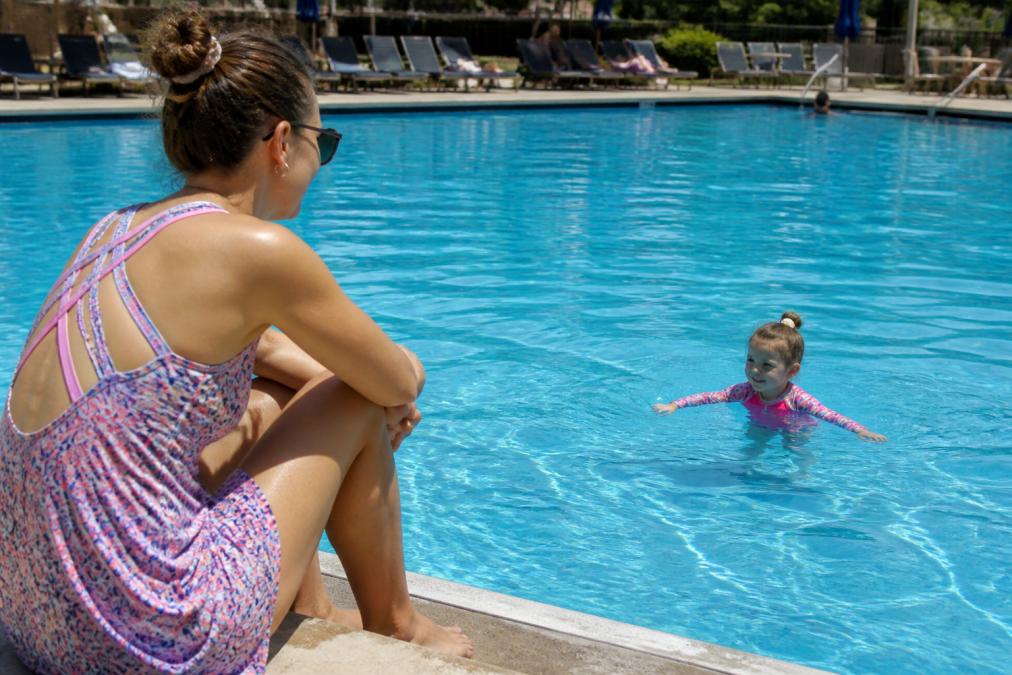
Touch Supervision and Visual Contact
For children under 6 years old, touch supervision is the gold standard, a caregiver maintains physical contact or is close enough to reach the child within one second. Visual contact means you can see your child at all times and know what they're doing. In a crowded public pool, position yourself strategically between your child and the pool exit, at a height where you can see clearly, and avoid any obstruction of your view.
Even strong swimmers need constant adult supervision. Supervision and water competency work together as layers of protection.
Avoiding Distractions at the Pool Deck
One of the biggest threats to constant supervision is distraction. A parent texting, talking with other adults, or watching other children cannot maintain the focus required to notice signs of drowning. Put your phone away during active supervision time, avoid lengthy conversations, and position yourself where you have an unobstructed view.
A practical approach is to designate a "water watcher", one adult whose only responsibility during a specific time period is watching the children in or near the water. Rotate this role every 15-30 minutes so no one becomes fatigued. This simple structure has proven effective in preventing drowning incidents.
Swimming Lessons for Children
Water competency, the ability to move through water safely and respond to water emergencies, is a foundational layer of drowning prevention. Research shows that formal swim instruction reduces drowning risk, particularly for young children. However, swimming ability alone is not sufficient protection. Even advanced swimmers need constant supervision, as fatigue, unexpected currents, or panic can overwhelm their abilities.
Bright & Bold Swimwear offers the "Teach My Child To Swim" resource guide, designed to help parents support their child's water safety journey. This guide covers foundational skills for children 2.5 years and older, providing a structured approach to building water competency.

When selecting swim lessons, look for instructors certified by recognized organizations and programs that emphasize water safety alongside swimming technique. Lessons should include survival skills like floating on the back and moving toward safety. Consistency matters, regular lessons (ideally 2-3 times per week) build skills and confidence faster than sporadic instruction.
CPR Certification for Parents and Caregivers
CPR certification for parents and caregivers is a critical component of drowning prevention and response. CPR can restore oxygen to the brain and heart, potentially preventing death or permanent brain damage. The first few minutes after a drowning incident are critical, CPR performed immediately by a bystander significantly improves survival outcomes.
Many organizations offer CPR certification courses, including the American Red Cross and American Heart Association. Certification typically requires a few hours of in-person training and covers infant, child, and adult CPR. Make CPR certification a priority if you're responsible for supervising children around water.
Familiarize yourself with basic rescue techniques: how to safely approach a child in distress, remove them from the water without putting yourself at risk, and position them for CPR if needed. Keep rescue equipment, like a reaching pole or rescue throw bag, accessible at your home pool or near public pools you frequent.
Lifeguard Supervision Standards and Public Pool Safety
Public pools are required to have lifeguards on duty during operating hours, but lifeguard presence alone does not eliminate drowning risk. During peak hours, a single lifeguard may be responsible for dozens of swimmers. Studies indicate that lifeguards miss drowning incidents, particularly when pools are crowded or when a drowning is silent.
Parental supervision is never replaced by lifeguard presence, it's an additional layer of protection, not a substitute for active adult monitoring. When using public pools, verify that lifeguards are on duty and positioned where they can see the entire pool. Avoid pools during peak hours when possible, as crowded conditions make it harder for lifeguards to maintain visual contact with all swimmers.
Layers of Protection: Barriers, Alarms, and Equipment
Effective drowning prevention relies on multiple overlapping safeguards. No single measure prevents all drowning incidents, but when multiple strategies work together, the risk decreases significantly. These layers include supervision, water competency, barriers, alarms, and appropriate safety equipment.
Pool Barriers and Self-Closing Gates
Physical barriers prevent unauthorized access to water and give adults time to respond if a child approaches the pool unsupervised. Self-closing gates automatically close behind a person who enters, preventing accidental access. Self-latching mechanisms ensure the gate closes securely without requiring manual effort. These features work even if adults forget to close the gate.
Floatation Devices and High-Visibility Swimwear
Floatation devices like life jackets provide an additional layer of protection, particularly for children who are not yet strong swimmers. A properly fitted, Coast Guard-approved life jacket keeps a child's head above water even if they become unconscious, providing time for rescue.
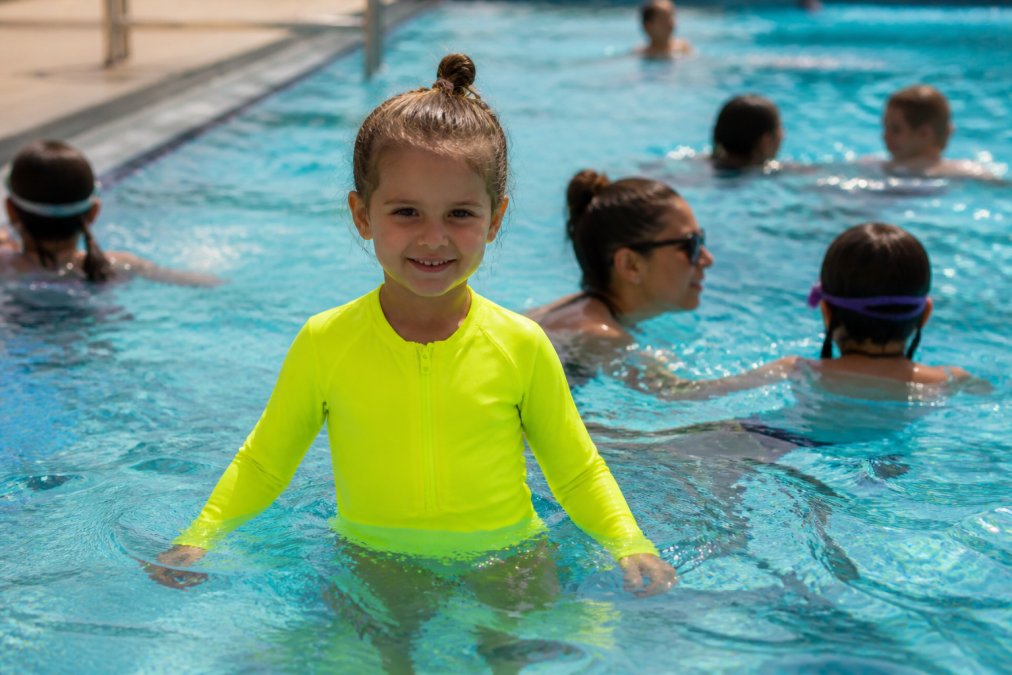
High-visibility swimwear makes children easier to spot in the water, particularly in crowded public pool environments. Bright neon colors contrast sharply with water and surrounding swimmers, allowing parents and lifeguards to locate a child quickly. High-visibility swimwear is not a replacement for supervision, but it enhances the effectiveness of active monitoring by making children more visible.
Bright & Bold Swimwear offers high-visibility options for both boys and girls, designed to be comfortable and stylish while maximizing visibility in water.

Emergency Preparedness and First Aid
Despite all preventive measures, emergencies can occur. Being prepared to respond quickly and effectively can mean the difference between a child who recovers fully and one who suffers permanent injury. If a child is pulled from the water unresponsive, begin CPR immediately if you're trained. Call emergency services (911) while performing CPR or have someone else call while you provide care.
After a child has been rescued from water, even if they appear to recover, seek immediate medical attention. A condition called "secondary drowning" or "dry drowning" can occur hours after a water incident, when fluid in the lungs causes breathing problems.
First aid supplies should be accessible at pools you frequent, including a first aid kit, rescue equipment like a reaching pole or throw rope, and a phone for calling emergency services. Know the location of the nearest AED (automated external defibrillator) at public pools.
Drowning prevention in public pools requires vigilance, preparation, and multiple layers of protection. By combining constant supervision, water competency training, CPR certification, and practical safety equipment, you significantly reduce your child's drowning risk. Bright & Bold Swimwear supports this mission by providing high-visibility swimwear that keeps children visible in crowded water environments, paired with educational resources like our "Teach My Child To Swim" guide. Shop our best sellers today and equip your family with the visibility and confidence needed for safe pool time.
Frequently Asked Questions
What are the most effective ways to supervise children in public pools?
Constant, active supervision is the single most effective drowning prevention tool. Use touch supervision for children under 5, keeping them within arm's reach at all times. Maintain uninterrupted visual contact, avoid distractions like phones, and assign one adult to watch each child. Establish a clear hand-off system if multiple caregivers are present. Position yourself at the child's level and watch for signs of drowning, which happen silently and quickly. High-visibility swimwear helps lifeguards and caregivers spot children instantly, adding another layer of protection to your supervision strategy.
How can I identify signs of drowning before it's too late?
Drowning is often silent and happens fast. Look for children who slip beneath the surface, have their head tilted back with mouth open at water level, or appear unable to move their legs. They may be vertical in the water with eyes wide or glazed, unable to call for help. Some children gasp or cough repeatedly. Unlike the dramatic scenes in movies, real drowning victims cannot wave or shout. If a child looks distressed but is still responsive, move them to shallow water and monitor closely. When in doubt, assume the child needs help and get them out of the water immediately.
Why is CPR certification important for parents taking children to public pools?
CPR certification equips you with the skills to restart a child's breathing and circulation in the critical minutes before emergency responders arrive. Many drowning victims survive if CPR is started within the first few minutes. Certification courses teach proper hand placement, compression depth, and rescue breathing techniques specific to children. Organizations like the American Red Cross offer courses that take just a few hours. Knowing CPR gives you confidence and capability to act decisively in an emergency, potentially saving your child's life or the life of another child at the pool.
What role do lifeguards play in preventing drowning at public pools?
Lifeguards are trained to scan the water constantly, identify distressed swimmers, and respond quickly to emergencies. However, lifeguards cannot watch every person simultaneously, especially in crowded public pools. They rely on caregivers to provide primary supervision of their own children. Lifeguard vigilance is most effective when parents also maintain active supervision. Understand that lifeguards are a safety layer, not a substitute for parental attention. Always maintain visual contact with your child even when lifeguards are present, and never assume someone else is watching your child.
This article was written using GrandRanker