

How to Spot a Drowning Child Quickly
Table of Contents
- What Drowning Actually Looks Like
- Understanding the Instinctive Drowning Response
- Physical Signs That a Child Is Drowning
- Why Drowning Is Often Mistaken for Playing
- Signs of Dry Drowning and Secondary Drowning
- Water Safety Tips for Parents to Prevent Drowning
- What to Do If You Suspect a Child Is Drowning
- Conclusion
Last Updated: August 11, 2026
What Drowning Actually Looks Like
Drowning is not the dramatic, splashing emergency most people imagine. In reality, spotting a drowning child quickly requires understanding what the instinctive drowning response actually looks like, it's often silent, still, and easy to miss. At Bright & Bold Swimwear, we've spent years educating parents and caregivers about water safety because recognizing the real signs of drowning can mean the difference between a child going home safely and a tragedy that changes a family forever.
The instinctive drowning response is the body's automatic survival mechanism when a child is in distress in the water. Unlike the Hollywood version, where a child thrashes and screams, the real thing happens quietly. A drowning child cannot call for help because their airway is occupied with gasping for air and water. Their body is locked in a vertical position, fighting against gravity and water physics. This is why drowning is sometimes called a "silent emergency", it requires knowing exactly what to look for.
A drowning child may be in plain sight, surrounded by other swimmers and even lifeguards, yet remain unnoticed because the signs are subtle. Understanding what drowning actually looks like is the first step toward prevention and rapid response.
Understanding the Instinctive Drowning Response
The instinctive drowning response is the body's involuntary reaction when a child's airway is compromised by water. This response overrides conscious thought and voluntary muscle control. When a child's mouth dips below the water surface, the larynx closes automatically to prevent water from entering the lungs. This same reflex makes it impossible for the child to call out or signal for help.
During this response, the child's body assumes a vertical position in the water, with their head tilted back and mouth at water level. Their arms move in an instinctive climbing motion, pressing downward and backward in an attempt to lift their mouth above the surface. This motion is ineffective for propulsion, it's simply the body's hardwired attempt to get air. The child cannot control these movements.
This response typically lasts only 20 to 60 seconds before the child loses consciousness. A child can progress from the instinctive drowning response to unconsciousness to brain damage in less than two minutes. Many drowning incidents occur in water less than 6 feet deep and within arm's reach of a supervising adult.
Physical Signs That a Child Is Drowning
Recognizing the physical signs that a child is drowning is critical for rapid intervention. These signs are often very different from what parents expect, which is why education is so important.
The most distinctive sign is the child's vertical body position in the water. A drowning child does not float horizontally like a swimmer. Instead, their body is upright, perpendicular to the water surface, with their head tilted back or mouth at water level. Their legs may be kicking weakly or not at all. This vertical position is a hallmark of aquatic distress and should trigger an immediate response.
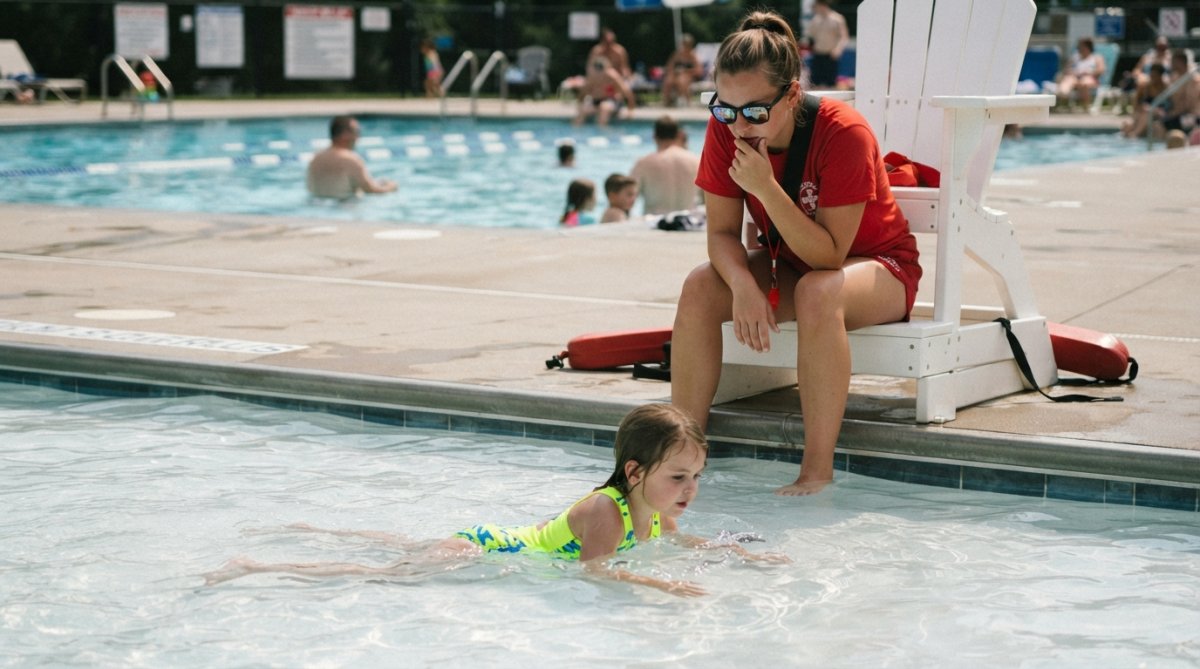
Head Position and Mouth Level
A drowning child's head is often tilted back, with their mouth at or just below the water surface. The mouth may be open, gasping for air, or trying to clear water. The child's eyes may be glassy or unfocused. This head-back position is not something the child chooses, it's part of the instinctive drowning response.
Watch for a child whose head position seems unusual. If a child's head is consistently tilted back or their mouth is at the waterline for more than a few seconds, this is a sign of distress. A healthy, comfortable swimmer keeps their head in a more horizontal position and moves it actively.
Arm and Leg Movements
A drowning child typically makes ineffective arm and leg movements that look almost robotic. The arms press downward and backward in a climbing motion, as if trying to climb an invisible ladder out of the water. These movements are weak and repetitive, not the energetic thrashing of active play.
The legs may show weak or absent kicking. The key difference between a drowning child and a child playing or learning to swim is the ineffectiveness of the movements. A child learning to swim makes purposeful movements toward a goal. A drowning child's movements are involuntary and don't result in forward progress.
Facial and Eye Indicators
The face of a drowning child often shows signs of respiratory distress that are subtle but important. The eyes may appear glassy, unfocused, or wide. The child may have a slack facial expression rather than a panicked one. Some drowning children appear almost calm because the involuntary response has taken over their conscious mind.
Look for changes in the child's normal expression or demeanor. If a child who was just playing suddenly appears vacant or unfocused, move closer and assess.
Why Drowning Is Often Mistaken for Playing
One of the most dangerous aspects of drowning is how easily it can be confused with normal water play. A child in the instinctive drowning response may look like they're bobbing, floating, or playing in the water. The vertical body position and repetitive arm movements might seem like part of a game to an untrained observer.
A drowning child's movements are involuntary and ineffective. A child at play is moving with purpose, changing direction, and interacting with their environment. A drowning child is locked in the instinctive response, unable to change their position or call for help.
The vertical body position is the biggest source of confusion. Parents sometimes see a child in this position and assume they're standing on the bottom or floating. In reality, a child in the instinctive drowning response is being held in that vertical position by involuntary movements and water physics. They cannot move horizontally and cannot stay above water for long.
This is why active supervision is critical. It means keeping your eyes on the child at all times, staying within arm's reach, and knowing the difference between play and distress.
Signs of Dry Drowning and Secondary Drowning
While the instinctive drowning response is the most common form of acute drowning, parents should understand dry drowning and secondary drowning. These conditions can develop hours or even days after a child has been in the water.
Dry drowning occurs when water enters the airway but not the lungs. The larynx spasms and closes, preventing water from reaching the lungs but also preventing normal breathing. Signs include persistent coughing, difficulty breathing, chest pain, lethargy, or unusual behavior.
Secondary drowning, also called delayed drowning, occurs when water has entered the lungs and causes inflammation or fluid buildup. Signs include persistent coughing, difficulty breathing, fever, lethargy, vomiting, or behavioral changes. Any child who has had a near-drowning incident or who has inhaled water should be evaluated by a healthcare provider, even if they seem fine at first.
Water Safety Tips for Parents to Prevent Drowning
Prevention is always better than rescue. Water safety starts with active supervision, proper training, and creating an environment where drowning is less likely to happen.
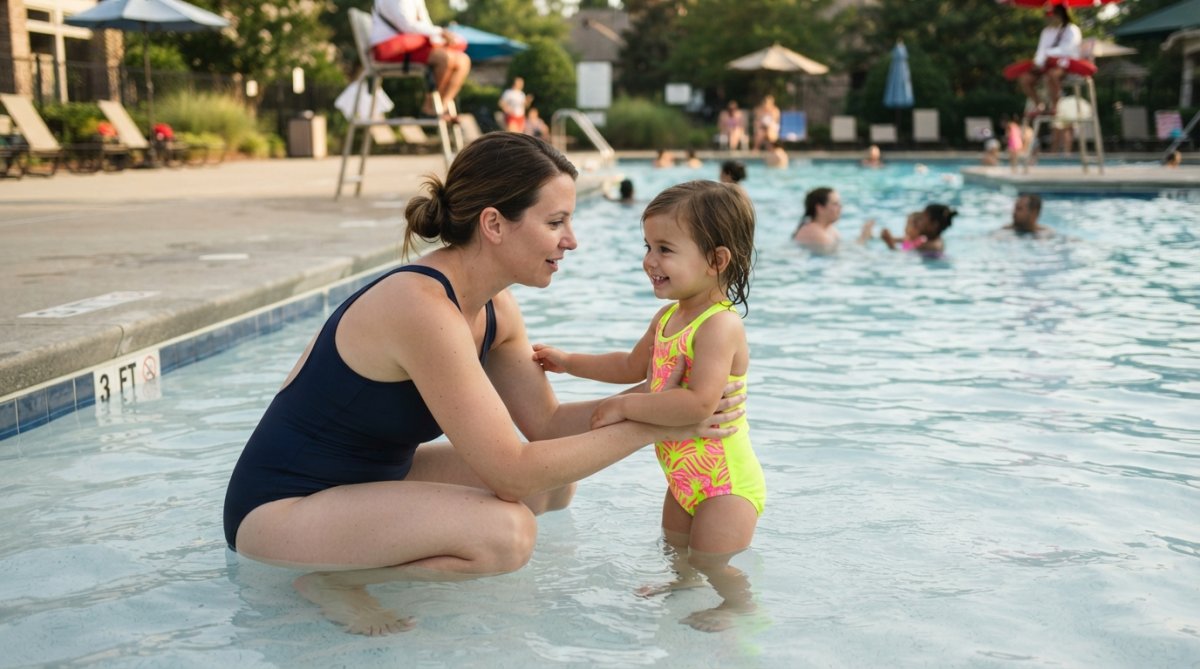
Active supervision is the foundation of water safety. Keep your eyes on your child at all times when they're in or near water. Put away your phone, avoid distractions, and stay within arm's reach. Designate one adult as the "water watcher" who is responsible for supervising the child and is not distracted by socializing. Drowning happens quickly and silently.
Enroll your child in swim lessons. Swimming lessons teach water safety skills and can reduce the risk of drowning. However, lessons are not a guarantee against drowning, they are one layer of protection. Even children with swimming experience can drown. Lessons should be combined with active supervision and other safety measures.
Use physical barriers around water. If you have a pool, install a fence with a self-closing, self-latching gate. Remove toys from the pool area when not in use. Keep rescue equipment nearby, including a life ring or reaching pole.
Consider high-visibility swimwear as an additional safety layer. Bright, neon-colored swimsuits make children more visible in the water, helping parents and lifeguards spot them quickly. At Bright & Bold Swimwear, our high-visibility options are designed with both safety and style in mind. Our boys' and girls' swimsuits feature vibrant neon colors that stand out in water, making it easier to keep track of your child. Combined with active supervision, high-visibility swimwear adds an extra measure of protection.

Teach water safety rules and make sure your child understands them. Explain that they should never go in the water without an adult present. Teach them to stay in designated swimming areas and to avoid diving into unfamiliar water. Make water safety a regular conversation.
| Safety Strategy | How It Works | Best Age |
|---|---|---|
| Active supervision | Constant visual monitoring within arm's reach | All ages |
| Swim lessons | Teaching water skills and comfort | 1 year and up |
| Life jackets | Flotation device for non-swimmers | 2-7 years |
| High-visibility swimwear | Bright colors for easy spotting | 2-7 years |
| CPR training | Emergency response capability | Parents and caregivers |
| Rescue equipment | Life rings, reaching poles, flotation aids | All environments |
What to Do If You Suspect a Child Is Drowning
If you suspect a child is drowning, act immediately. Time is critical, and every second counts.
First, remove the child from the water. If you're trained in water rescue, enter the water and bring the child to safety. If you're not trained, use a reaching pole or throw a flotation device. Do not enter the water unless you're confident you can do so safely.
Once the child is out of the water, assess their breathing and responsiveness. If the child is conscious and coughing, keep them calm and monitor their breathing. If the child is unconscious or not breathing, begin CPR immediately. If you're not trained in CPR, call 911 and follow the dispatcher's instructions.
Call 911 immediately if the child is unconscious, not breathing, or showing any signs of distress. Do not wait to see if the child improves on their own. Even if the child seems to recover quickly, they should be evaluated by a healthcare provider.
Keep the child warm and dry while waiting for emergency services. Remove wet clothing and wrap the child in a blanket. Monitor their breathing and responsiveness. Stay with the child and provide reassurance until emergency services arrive.
Knowing how to spot a drowning child quickly is one of the most important skills a parent or caregiver can have. Drowning is silent, fast, and often happens in plain sight. By understanding the physical signs of the instinctive drowning response, maintaining active supervision, and creating a water-safe environment, you can dramatically reduce the risk of drowning. High-visibility swimwear from Bright & Bold Swimwear adds an extra layer of protection by making your child more visible in the water. Combined with constant supervision, swimming lessons, and CPR training, you're giving your child the best possible chance of staying safe in and around water. Start with our best sellers and find the right high-visibility swimsuit for your child today.
Frequently Asked Questions
How long does it take for a child to drown?
Drowning can happen in seconds to minutes, often faster than many parents realize. A child can slip underwater and lose consciousness in as little as 2 minutes, with brain damage beginning within 4-6 minutes. This is why constant, active supervision is essential. Never rely on flotation devices or assume a child is safe just because they're quiet. The speed of drowning is one reason why spotting the early signs matters so much.
What is the difference between splashing and drowning?
Splashing is noisy, energetic, and playful, a child splashing is moving their arms and legs freely, calling out, and having fun. Drowning is silent or nearly silent. A drowning child has little energy for noise, their head stays low in the water, their mouth is at water level, and their body position becomes vertical. They may appear to be climbing an invisible ladder with ineffective arm movements. If you're unsure, assume it's an emergency and get closer to investigate.
How can I keep my child safe in the water?
Water safety starts with constant, active supervision, eyes on your child at all times, no distractions. Enroll your child in swim lessons to build water confidence and skills. Use high-visibility swimwear so your child is easy to spot in busy pools or open water. Learn CPR and first aid. Set clear water rules, never allow unsupervised water play, and use appropriate flotation aids for non-swimmers. Consider swim jackets for young children. Make water safety a family conversation, not just a rule.
What are the silent signs of drowning?
The instinctive drowning response is often silent because a child's body is fighting for survival. Look for a vertical body position, head tilted back or chin tilted up, mouth at or just below the water surface, glassy or unfocused eyes, hair covering the forehead, and very little arm or leg movement. A drowning child may not call for help or wave their arms, they're too focused on breathing. This is why many drowning incidents happen in plain sight, even with adults nearby. Knowing these signs can mean the difference between life and death.
This article was written using GrandRanker