

How to Wash Neon Swimwear to Prevent Fading
Table of Contents
- Why Neon Swimwear Needs Special Care
- Rinse Your Neon Swimsuit Immediately After Swimming
- How to Stop Swimsuits from Fading During Washing
- Best Detergent for Swimsuits and Neon Colors
- How to Remove Stains from Neon Swimwear
- How to Dry a Swimsuit Without Damaging It
- Your Neon Swimwear Care Checklist
- Conclusion
- Frequently Asked Questions
Last Updated: October 4, 2026
Why Neon Swimwear Needs Special Care
Neon swimwear stands out for a reason. The bright, bold colors that make your child instantly visible in the water are the same vibrant dyes that need protection from fading. How you wash neon swimwear to prevent fading makes the difference between a suit that stays brilliant season after season and one that dulls within weeks.
Chlorine, saltwater, sunscreen, and body oils all work against vivid neons. Machine washing and hot water accelerate fading. The good news: preventing fading is simple, understand what damages the dyes, then take a few protective steps.
This guide covers timing, water temperature, detergent choice, and drying methods to keep neon colors locked in and your child's swimsuit visible and safe.
Rinse Your Neon Swimsuit Immediately After Swimming
The single most important step happens before you ever reach the washing machine. Rinse your neon swimsuit immediately after swimming.
Fresh water is your first line of defense. Chlorine and saltwater continue breaking down dyes long after swimming. Rinse immediately to stop the damage.
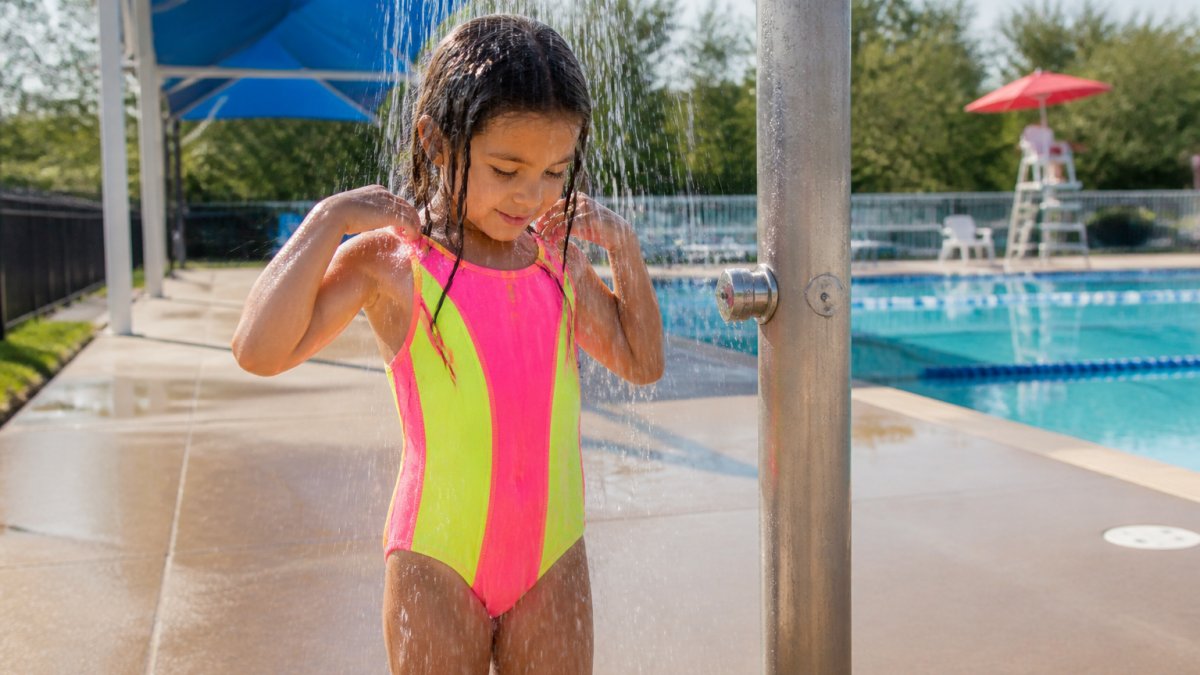
Removing Chlorine, Saltwater, and Sunscreen
Use cool or cold fresh water, hot water opens fibers and lets chlorine penetrate deeper. Hold the suit under running water and gently squeeze the fabric for 30 seconds to a minute. Pay special attention to legs, waistband, and areas with sunscreen.
For beach days, rinse saltwater the same way, salt crystals fade colors and weaken elasticity.
Sunscreen doesn't rinse away easily. If residue remains, soak in cool water for 10-15 minutes before washing to loosen it and protect the dyes.
How to Stop Swimsuits from Fading During Washing
How you wash neon swimwear to prevent fading comes down to temperature, method, and detergent choice.
Hand-Wash vs. Machine Wash
Hand-washing is best for neon colors, machine agitation stresses fabric and dyes. Fill a sink with cool water, add mild detergent, submerge the suit, and soak 5-10 minutes. Gently swish; don't scrub, wring, or twist. If you must machine-wash, use delicate cycle with cold water and a mesh bag, but hand-washing is gentler. Consistent care routines extend the lifespan of synthetic fibers, a principle that applies equally when washing activewear to maintain elasticity and color vibrancy.
Wash neon swimwear alone or only with other neon or dark-colored swimwear to prevent dye bleeding.
Best Detergent for Swimsuits and Neon Colors
Detergent choice directly affects color vibrancy. Harsh chemicals break down dyes and weaken elastic fibers.
Why Detergent pH Matters for Neon Dyes
Neon dyes are sensitive to pH changes. Alkaline detergents can shift color balance, making neons appear duller or more orange. Neutral or slightly acidic detergents can help preserve true fluorescent color.
Look for detergents labeled:
- Neutral pH or pH-balanced (typically 6.5 to 7.5)
- For delicate fabrics or for sensitive skin (these are formulated to be gentler and are usually pH-neutral)
- Wool wash or silk wash products (these are designed for protein fibers and are often pH-neutral, though they are safe for synthetic swimwear too)
Avoid detergents labeled "heavy-duty," "all-purpose," or "brightening" or "whitening." These are alkaline and contain optical brighteners or bleach alternatives that fade neon colors.
Specific Detergent Types to Use
Mild liquid detergents are your best choice. Liquids dissolve completely in cool water and rinse out cleanly. Look for:
- Gentle hand-wash liquids (often sold in the delicate-laundry aisle)
- Baby laundry detergents (formulated to be mild and pH-neutral)
- Wool or silk wash liquids (designed for delicate fibers and usually pH-neutral)
Powder detergents labeled "gentle" can work but are harder to rinse in cool water. Residue dulls colors over time. If using powder, dissolve in warm water first, then cool before adding the suit.
Avoid:
- Bleach or oxygen-based stain removers (these oxidize and fade neon dyes)
- Detergents with enzymes (these break down protein and can weaken elastic fibers)
- Fabric softeners or conditioning detergents (these leave a coating that traps chlorine and salt)
- Scented or dyed detergents (the added dyes can transfer to your swimwear)
How Much Detergent to Use
Use one-quarter to one-half teaspoon per sink of cool water, much less than regular laundry. Too much detergent traps chlorine and salt, dulls colors, and sets stains. Start with less; you can always add more.
Testing a New Detergent
Test new detergents on a hidden area first (inside seam or back waistband). If color remains true after 24 hours, it's safe for the whole suit.
Fabric-Specific Detergent Guidance
Check your care label: Polyester suits work with most gentle detergents. Nylon suits need the mildest option (baby detergent or wool wash) at one-quarter teaspoon per sink. Blended fabrics should be treated as nylon. Avoid enzyme detergents if your suit has spandex or elastane, as they weaken elastic fibers.
How to Remove Stains from Neon Swimwear
Stains happen. Treat them gently to remove the stain without removing the color, since neon dyes are vulnerable to common stain treatments.
Why Neon Dyes Need Gentler Stain Care
Neon dyes can be vulnerable to pH shifts, oxidizing agents, heat, and agitation. Commercial stain removers risk fading surrounding color, a faded halo is often worse than the stain.
Girls Sleeveless One Piece Swimsuit — Back Zip with UPF 30+ & High-Visibility →
Step-by-Step Stain Removal for Neon Swimwear
For fresh stains (sunscreen, algae, food, or drink):
- Rinse the stained area with cool fresh water immediately. Many stains rinse away completely if caught early.
- If the stain persists, submerge the entire stained area in cool water with a single drop of mild detergent (the same gentle product you use for washing). Let it soak for 15 to 30 minutes. The cool water and minimal detergent loosen the stain without triggering dye loss.
- Gently dab the stain with a soft cloth or sponge. Never rub or scrub, rubbing pushes the stain deeper and can damage the dyes.
- Rinse thoroughly with cool water.
- If the stain is gone, proceed to wash the suit normally. If it remains, repeat the soak and dab once more.
For protein-based stains (sunscreen, body oils, sweat):
Cold water is your ally. Heat sets protein stains, so never use warm or hot water. The cool-water soak method above works best. If you need extra help, add a tiny pinch of salt to the cool water, salt can help lift protein residue without the chemical aggression of commercial stain removers.
For rust stains (from pool equipment or metal fasteners):
Avoid vinegar, lemon juice, or other acidic solutions. These are often recommended for rust removal on regular fabrics, but the acidity can interact unpredictably with neon dyes, causing discoloration or uneven fading. Instead, soak the stained area in cool water with a drop of mild detergent for 20 to 30 minutes.
For stubborn or set-in stains:
If a stain does not come out after two gentle soaks and dabs, stop. Continuing to treat it risks fading the neon color around the stain. A faded suit is worse than a stained suit, and the stain will become less visible as the suit is worn and washed over time.
Fabric-Specific Considerations
Check your suit's care label for the fiber content. Most neon swimwear is polyester, nylon, or a blend:
- Polyester is generally more colorfast than nylon and can tolerate slightly longer soaks (up to 30 minutes) without risk.
- Nylon is more delicate and prone to dye bleeding. Keep soaks to 10 to 15 minutes and avoid any treatment beyond cool water and mild detergent.
- Blended fabrics (polyester-nylon or polyester-spandex) should be treated as nylon, use the gentler approach.
How to Dry a Swimsuit Without Damaging It
How you dry your neon swimwear to prevent fading is the final step in protecting those vibrant colors. Heat and direct sunlight are both enemies of neon dyes.
Never use a dryer. Heat shrinks the fabric, weakens the elastic, and accelerates fading. Air-drying is the only safe method.
Lay the suit flat on a clean, dry towel in a shaded area. Shade is critical. Direct sunlight continues to fade the dyes, even after washing.
If you need the suit dry faster, hang it in a shaded area. Use a padded hanger to avoid stretching. Don't wring the suit before hanging.
Never hang the suit in direct sunlight, even if that's the fastest drying option. The UV rays that make neon colors so visible in the water also fade them over time.
Allow at least 4 to 6 hours for air-drying, longer if humidity is high. Patience here pays off in color longevity.
| Step | Action | Why It Matters |
|---|---|---|
| Rinse immediately | Cool water, 30-60 seconds | Stops chlorine and salt damage |
| Soak if needed | Cool water, 10-15 minutes | Removes sunscreen and stubborn debris |
| Hand-wash | Mild detergent, gentle swishing | Protects dyes from harsh chemicals |
| Air-dry in shade | Flat or hanging, 4-6 hours | Prevents heat and UV damage |
Your Neon Swimwear Care Checklist
Use this checklist every time your child wears neon swimwear to keep the colors bright and the suit in great shape.
- Rinse with cool fresh water immediately after swimming
- Gently squeeze water through the fabric (don't wring)
- Soak for 10-15 minutes if sunscreen residue is visible
- Hand-wash in cool water with mild detergent
- Swish gently; never scrub or rub
- Rinse thoroughly with cool water until no soap remains
- Gently squeeze out excess water
- Lay flat or hang in a shaded area to air-dry
- Wait at least 4-6 hours before wearing again
- Store in a cool, dry place away from direct sunlight
- Wash alone or only with other neon or dark swimwear
- Never use bleach, oxygen-based stain removers, or hot water
Following this checklist keeps your neon swimwear looking vibrant season after season. The time you invest in proper care pays off every time your child jumps in the pool.
Conclusion
Protecting neon colors in swimwear comes down to one principle: cool water, gentle handling, and immediate care after each swim. The steps are simple. The payoff is a suit that stays bright and visible.
Bright & Bold Swimwear designs neon swimsuits specifically so parents and lifeguards can spot children instantly in the water. That visibility only works if the colors stay true. Our Girls Sleeveless One Piece Swimsuit with UPF 30+ and High-Visibility Neon and Girls Long Sleeve Rash Guard Sets are designed with vibrant neon fabrics, but proper care is your part of keeping them bright. Rinse right away, wash gently, and air-dry in shade. Your child's safety depends on visibility, and visibility depends on color. Shop our best sellers and discover how high-visibility swimwear makes pool time safer and brighter.

Frequently Asked Questions
How often should I wash neon swimwear to prevent fading?
Rinse your neon swimsuit with fresh water immediately after every swim, before chlorine, saltwater, or sunscreen dries on the fabric. Hand-wash with mild detergent after every 3-4 wears or whenever visibly soiled. This regular care prevents color loss and extends the vibrancy of high-visibility neon colors that help keep your child visible in the water.
Can I use vinegar soak on neon swimwear?
White vinegar can help remove chlorine and mineral buildup, but use it cautiously on neon fabrics. A 1:4 vinegar-to-water soak for 15-20 minutes may help, but always test on a hidden seam first. Vinegar is acidic and can potentially affect dye stability in bright neon colors. If your suit shows color bleeding or fading already, skip vinegar and rinse thoroughly with cool water instead.
What water temperature should I use when washing neon swimwear?
Always use cool or cold water when rinsing and hand-washing neon swimwear. Hot water opens fabric fibers and allows dyes to escape, accelerating fading. Cold water closes fibers and locks color in place. Even lukewarm water can fade neon colors faster than cold, so stick to the coldest tap water available for every rinse and wash.
How do I handle neon swimwear that has already started to fade?
If your neon suit has already lost some color, focus on preventing further fading by following strict care steps: rinse immediately after each swim, hand-wash in cold water with mild detergent, avoid direct sunlight while drying, and store in a cool, dark place. Dye transfer or bleeding that has already occurred cannot be reversed, but proper care will slow any additional color loss and preserve the remaining vibrancy.
The investment in proper neon swimwear care is an investment in safety and durability. A suit that fades loses its primary purpose: making your child easy to spot. Follow the steps in this guide, use the checklist before every wash, and your neon swimwear will maintain that eye-catching brightness that keeps your little ones visible and safe all season long.