

Long Term Skin Benefits of Wearing UPF Clothing
Table of Contents
- How UPF Clothing Delivers Long Term Skin Benefits
- Preventing Photoaging and Collagen Degradation
- Reducing Skin Cancer Risk Through Consistent Protection
- How Long Does UPF Clothing Last?
- Best Practices for Sun Protection With UPF Apparel
- Layering Strategies for Maximum UV Defense
- Frequently Asked Questions
Last Updated: September 24, 2026
How UPF Clothing Delivers Long Term Skin Benefits
The long term skin benefits of wearing UPF clothing come down to one advantage: protection that never washes off, never needs reapplying, and never leaves a gap. At Bright & Bold Swimwear, we build sun-protective swimwear for kids, and parents always ask the same question first: is a long-sleeve suit really enough on its own? Consistent coverage, day after day, is what changes your child's skin over a lifetime.
Most sun damage doesn't happen during a single afternoon at the pool. It accumulates in small, unremarkable doses: the walk to the car, the twenty minutes before you remember the sunscreen, the shoulders that burn every July because nobody re-applied after lunch. The American Academy of Dermatology's sun protection guidance makes the point plainly: no single method is enough on its own, and the strongest protection comes from stacking shade, clothing, and sunscreen together.
UPF clothing isn't a replacement for good sun habits; it closes the gaps the other habits leave open.
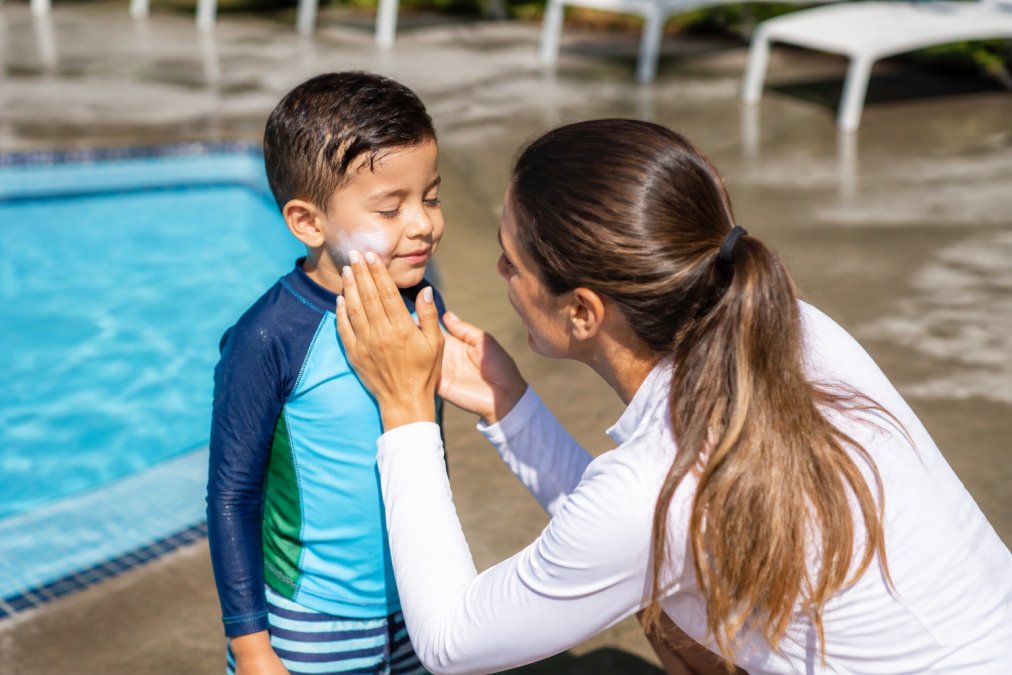
What UPF Ratings Actually Mean for Your Skin
Ultraviolet Protection Factor (UPF) measures how much UV radiation a fabric blocks before it reaches your skin. UPF 30 allows roughly one-thirtieth of UV rays through; UPF 50 allows about one-fiftieth. That difference matters over years of exposure, not just one swim season.
The Skin Cancer Foundation's overview of sun-protective clothing explains that UPF is measured on fabric rather than skin, which is why it accounts for both UVA and UVB rays at once. Our own suits carry UPF 30+ protection on select items, blocking harmful UVA and UVB rays whether the fabric is wet or dry.
Wet or dry matters more than most parents realize. A cotton t-shirt loses much of its protective value once soaked and stretched across the shoulders. Swim-specific sun-protective fabric holds its coverage in the water, exactly when kids are most exposed.
UPF vs SPF Clothing: Key Differences That Matter
UPF and SPF sound interchangeable but aren't. SPF (Sun Protection Factor) rates sunscreen and measures how long skin takes to burn with it versus without it. UPF rates fabric and measures how much UV radiation passes through the material.
The practical difference is maintenance. SPF needs reapplication every couple of hours, and more often after swimming or sweating.
Preventing Photoaging and Collagen Degradation
Photoaging is the cumulative breakdown of skin structure from repeated UV exposure, and it's the main reason sun protection pays off decades later. UV radiation damages collagen and elastin, the fibers that keep skin firm and even, showing up over years as wrinkles, laxity, and uneven tone.
How UV Radiation Breaks Down Skin Structure
UV exposure triggers free radical activity that degrades collagen and disrupts the skin barrier. UVA rays penetrate deeper and drive much of the photoaging process, while UVB rays are the primary cause of sunburn.
Reducing Skin Cancer Risk Through Consistent Protection
Skin cancer risk is tied to cumulative UV exposure, especially during childhood, which reframes sun protection from a summer convenience into a long-term health habit.
How Long Does UPF Clothing Last?
Most sun-protective garments hold their rated protection for years, but the UPF number on the tag isn't a permanent guarantee. It describes the fabric as manufactured, and real-world use gradually erodes that protection.
What Actually Breaks Down UPF Protection
UPF fabric works through two mechanisms: weave tightness and UV-absorbing or UV-reflecting treatments built into the fibers. Both can degrade, but they fail differently.
Girls Long Sleeve Rash Guard Set — Full →
A Realistic Timeline
There's no single expiration date, but a common pattern looks like this:
- Years 1-2: Protection is at or near the rated UPF, assuming normal use and proper care.
- Years 2-4: Gradual decline, especially in high-stretch areas like shoulders, knees, and the seat. The garment still protects, but not necessarily at the original rating.
- Beyond 4 years: Protection depends heavily on fabric condition. A well-cared-for suit may still be effective; a faded, stretched one likely is not.
How to Make UPF Clothing Last Longer
A few habits extend a garment's protective life:
- Rinse in cool water immediately after every swim to remove chlorine, salt, and sunscreen residue.
- Wash with a mild detergent on a gentle cycle, or by hand.
- Skip fabric softener and dryer sheets entirely.
- Air dry in the shade rather than in direct sun or a hot dryer.
- Avoid wringing or hanging by the shoulders, which stretches the fabric.
- Rotate between two suits so each gets rest and less frequent washing.
Signs Your UPF Garment Needs Replacing
Replace sun-protective clothing when the fabric is visibly worn, stretched thin, or faded enough that light passes through more easily.
- Fabric looks thin or threadbare when held up to light
- Elastic has lost its snap and the suit no longer fits snugly
- Color has faded noticeably from repeated chlorine and sun exposure
- Seams or stitching are pulling apart
- The garment no longer fits, which is the most common reason for kids
| Sign of Wear | What It Means | What to Do |
|---|---|---|
| Thin, see-through fabric | UV protection has likely degraded | Replace the garment |
| Faded color | Sun and chlorine breakdown | Replace if fabric feels weak |
| Stretched elastic | Coverage gaps at shoulders and legs | Size up or replace |
| Loose fit | Exposed skin as the child moves | Move to the next size |
Best Practices for Sun Protection With UPF Apparel
Best practices for sun protection combine coverage, timing, and consistency. No single step does the whole job, but a few habits together cover nearly everything.
- Choose long sleeves and full torso coverage for high-exposure days.
- Pair UPF clothing with sunscreen on faces, hands, and feet.
- Schedule outdoor swim time outside peak UV hours when possible.
- Rinse and air-dry sun-protective garments after every use.
- Keep a spare suit so coverage never depends on laundry day.
- Add a hat and sunglasses for face and eye protection.
Layering Strategies for Maximum UV Defense
Layering is the gap topic most sun-safety guides skip, and it's where real protection gets won. The goal isn't piling on more clothing, it's closing the gaps a swimsuit leaves open and making sure your layers don't create new ones when a child moves, plays, and swims.
The Coverage Gap Map
Think of sun protection as a map of exposed skin. A standard swimsuit leaves predictable gaps: shoulders, arms, upper back, chest, lower back and midriff, hips, and upper legs. A hat covers the scalp, ears, and neck; sunglasses protect the eyes and the thin skin around them.
Layering by Condition
Different days call for different layer stacks:
Pool day, peak sun: Long-sleeve rash guard as the base layer, full-coverage bottoms, brimmed hat, sunglasses. Sunscreen on face, hands, and feet. This stack covers the most skin with the fewest pieces.
Common Layering Mistakes
- Crop-length tops that ride up. A top ending above the waist leaves the lower back and midriff exposed during play. Full-length coverage removes that gap.
- Loose necklines and armholes. A wide neck or low armhole exposes the chest and underarm area. Look for a snug collar and fitted arm openings.
- Hats without neck coverage. A baseball cap shades the face but leaves the ears and back of the neck exposed. A brimmed hat with a neck flap covers more.
- Sunscreen as a substitute for coverage. Sunscreen is a finishing layer, not a foundation. It needs reapplication and misses areas children can't reach or parents forget.
- Forgetting the hands and feet. These are among the most sun-exposed and least protected areas. Sunscreen or UPF accessories close the gap.
Building the Habit
The parents who get this right aren't more disciplined than anyone else, they've made coverage the default, so protection happens without a decision. Keep a sun-safe kit ready: a long-sleeve rash guard, full-coverage bottoms, a brimmed hat, sunglasses, and sunscreen. When the kit is packed and the layers are familiar, sun protection becomes automatic rather than a daily negotiation.
Frequently Asked Questions
Does UPF clothing actually work for long term skin protection?
Yes. UPF clothing blocks both UVA and UVB rays, which are the primary drivers of cumulative sun damage. Unlike sunscreen, which can wear off or be applied unevenly, UPF fabric provides consistent protection as long as you wear it. Over years of regular use, this consistency reduces UV-induced skin damage that contributes to photoaging, hyperpigmentation, and melanoma risk.
How long does UPF clothing last before it stops protecting?
Most quality UPF garments maintain their rated protection for years, though this varies by fabric and care. To extend lifespan, wash in cold water, avoid fabric softeners, and air dry when possible. Inspect for thinning, stretching, or fading, which signal reduced UV radiation absorption.
What is the difference between UPF and SPF clothing?
UPF measures how much UV radiation fabric blocks, while SPF measures how long sunscreen protects skin before burning. UPF 30 blocks roughly 97% of UV rays; UPF 50 blocks about 98%. SPF applies to lotions and needs reapplication every two hours. UPF clothing offers broad-spectrum protection without reapplication, making it a reliable layer in any sun safety routine.
Can UPF clothing help prevent skin cancer?
UPF clothing reduces exposure to UVA and UVB rays, the main environmental cause of skin cancer. By covering skin that would otherwise be exposed, it lowers cumulative sun exposure over a lifetime. The Skin Cancer Foundation recognizes UPF apparel as an effective part of a comprehensive sun protection strategy alongside sunscreen, shade, and avoiding peak UV hours.