

5 Best Pool Safety Alarms for Toddlers
Table of Contents
- Why Pool Safety Alarms Matter for Toddlers
- Quick Comparison Table: Top 5 Pool Safety Alarms
- Types of Pool Alarms: Surface, Subsurface, and Wearable
- Pool Safety Layers of Protection: Why Alarms Alone Aren't Enough
- ASTM F2208 Pool Alarm Standards: What You Need to Know
- Best Swimming Gear for Toddlers: Beyond the Alarm
- Installation, Testing, and Troubleshooting False Alarms
- Conclusion: Choosing the Right Alarm for Your Family
Last Updated: August 22, 2026
Why Pool Safety Alarms Matter for Toddlers
Drowning is a leading cause of unintentional injury death for children ages 1-4 (the CDC). The urgency of this reality shapes everything parents do around water, from choosing swim lessons to selecting the right safety gear. This is where pool safety alarms enter the picture, they're a critical layer of protection that responds instantly to water displacement, giving you and your family precious seconds when those seconds matter most.
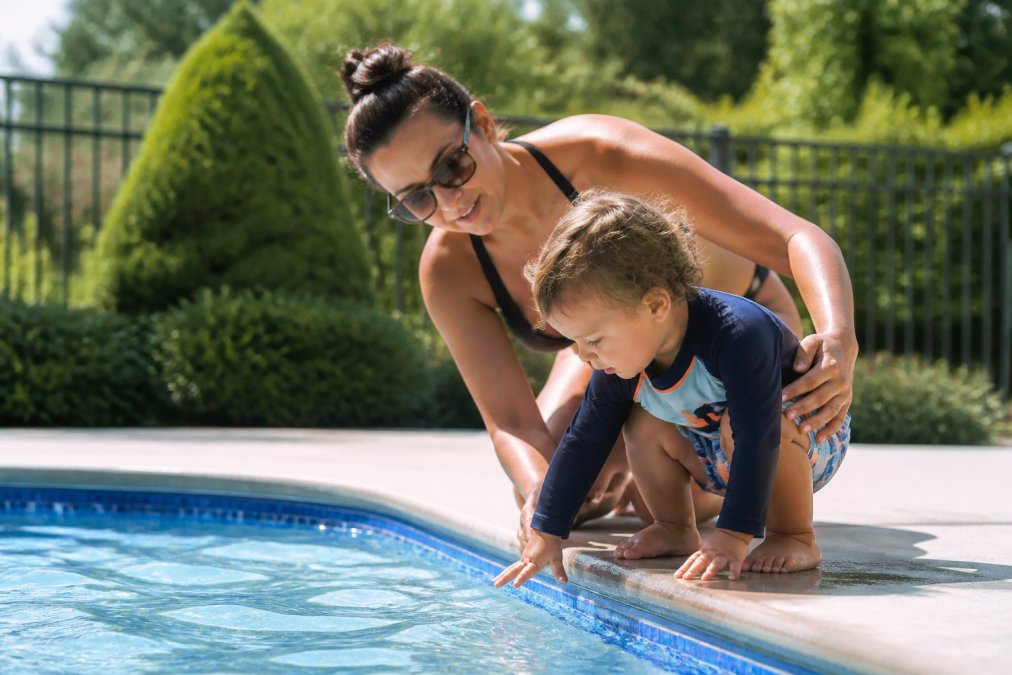
But here's what matters most: a pool safety alarm isn't a substitute for supervision. It's a backup system designed to alert you to unexpected water entry. Whether your child slips away during a moment of distraction or a visiting friend wanders toward the pool unsupervised, the right alarm gives you an audible alert that something has changed in the water.
The best pool safety alarms for toddlers work in different ways. Some detect surface waves and disturbances. Others monitor subsurface movement. A few use wearable technology that triggers when your child enters the water. Each approach has strengths and limitations, and understanding these differences helps you choose the right system for your family's specific situation.
At Bright & Bold Swimwear, we believe that layered protection saves lives. That's why we emphasize multiple safety strategies, from high-visibility swimwear that makes spotting your child easier, to proper swim instruction, to reliable alarm systems. The 5 best pool safety alarms for toddlers we've researched all meet rigorous safety standards and deliver real-world reliability when you need it.
Quick Comparison Table: Top 5 Pool Safety Alarms
| Alarm Type | Detection Method | Alert Type | Power Source | Best For |
|---|---|---|---|---|
| Surface Wave Detector | Monitors water surface disturbance | Audible alarm | Battery or AC | In-ground pools with consistent water level |
| Subsurface Sensor | Detects water displacement below surface | Audible + wireless alert | Battery | Above-ground and in-ground pools |
| Wearable Bracelet | Child-worn device triggers on water contact | Audible alarm + app notification | Rechargeable battery | Active toddlers in open water environments |
| Gate/Door Alarm | Monitors pool access points | Audible alarm | Battery or AC | Pools with defined entry points |
| Combination System | Multiple detection methods together | Layered alerts | Hybrid power | Maximum coverage for busy households |
Types of Pool Alarms: Surface, Subsurface, and Wearable
Pool alarms fall into three primary categories, each designed to catch different scenarios. Understanding how each one works helps you recognize which fits your household's layout and your family's routine.
Surface wave detection alarms sit at the pool's edge or float on the water. They sense sudden waves or disturbances caused by a child falling in or jumping unexpectedly. These work best in pools with relatively calm, consistent water levels. If you have wind-driven waves or frequent splashing from play, you may experience false alarms, which we'll address in detail later.
Subsurface sensors detect the actual displacement of water as a body enters the pool. These are often more sensitive than surface detectors because they respond to the mass of water being pushed aside, not just surface ripples. Many subsurface systems use pressure-sensitive technology or acoustic detection to identify the specific signature of a child entering the water versus a toy or leaf falling in.
Wearable alarms take a different approach entirely. Your toddler wears a small, waterproof bracelet or clip. The moment it contacts water, it triggers an alarm on the parent's receiver or sends a notification to your smartphone. These are particularly useful in open water environments like beaches or lakes where stationary alarms won't work.
Each type has a role in comprehensive pool safety. Many families find that combining two methods, say, a subsurface sensor plus a wearable device, creates the most reliable safety net. The redundancy matters because no single system catches every scenario perfectly.
Pool Safety Layers of Protection: Why Alarms Alone Aren't Enough
This is the critical insight that separates families who use alarms effectively from those who install them and feel falsely secure: an alarm is one layer in a much larger safety system. Drowning happens silently and quickly. An alarm helps, but it cannot replace constant, attentive supervision.
The most effective approach combines four distinct layers. First, active supervision, an adult's eyes on the child at all times, within arm's reach for very young toddlers. Second, physical barriers like fences, gates, and pool covers that prevent unsupervised access. Third, swim instruction and water comfort training, which builds your child's confidence and basic survival skills. Fourth, safety equipment including alarms, life jackets, and high-visibility swimwear.
This last layer is where Bright & Bold Swimwear's high-visibility collection fits into your safety strategy. Our bright, vibrant colors make spotting your child in the water significantly easier, whether they're in the shallow end during a lesson or playing with siblings. The UPF 30+ protection on select items adds sun safety to water safety, addressing two concerns simultaneously.
When you combine high-visibility swimwear, a reliable pool alarm, proper supervision, and swim instruction, you're not relying on any single system to save your child. You're creating redundancy. If supervision lapses for a moment, the alarm alerts you. If the alarm malfunctions, your child's bright swimsuit makes them instantly visible. If your child panics in the water, their swim training kicks in.
This layered approach is what safety experts and organizations consistently recommend. No single product, not even the best pool safety alarm, replaces the combination of all four elements working together.
ASTM F2208 Pool Alarm Standards: What You Need to Know
If you've looked at pool safety alarms, you've likely seen references to ASTM F2208. Understanding what this standard actually means helps you evaluate which alarms meet rigorous safety requirements and which ones cut corners.
ASTM F2208 is the American Society for Testing and Materials standard that specifically addresses safety requirements for residential pool alarm systems (astm.org). The standard sets minimum performance criteria for alarms to detect unauthorized entry into pools. This includes requirements for sensitivity, false-alarm rates, audible alarm volume (measured in decibels), and testing protocols.
To meet ASTM F2208 compliance, a pool alarm must:
- Detect a child-sized object entering the water within a specific timeframe
- Produce an audible alert of at least 85 decibels (loud enough to hear from inside a typical home)
- Minimize false alarms while maintaining sensitivity to actual water entry
- Function reliably across a range of water temperatures and conditions
- Include clear labeling and installation instructions
When you see "ASTM F2208 certified" on a product, it means the manufacturer submitted the alarm for independent testing and it passed. This certification doesn't guarantee the alarm will catch every situation, no alarm is perfect, but it does mean the product meets baseline safety performance standards. pool equipment storage.
However, ASTM F2208 compliance is not universal among all pool alarms. Some products meet the standard; others don't. This is one of the most important specifications to check when comparing options. If a manufacturer doesn't mention ASTM F2208 compliance, ask them directly before purchasing.
Best Swimming Gear for Toddlers: Beyond the Alarm
Pool safety extends well beyond alarms. The gear your child wears in and around the water contributes directly to their visibility, protection, and overall safety experience.
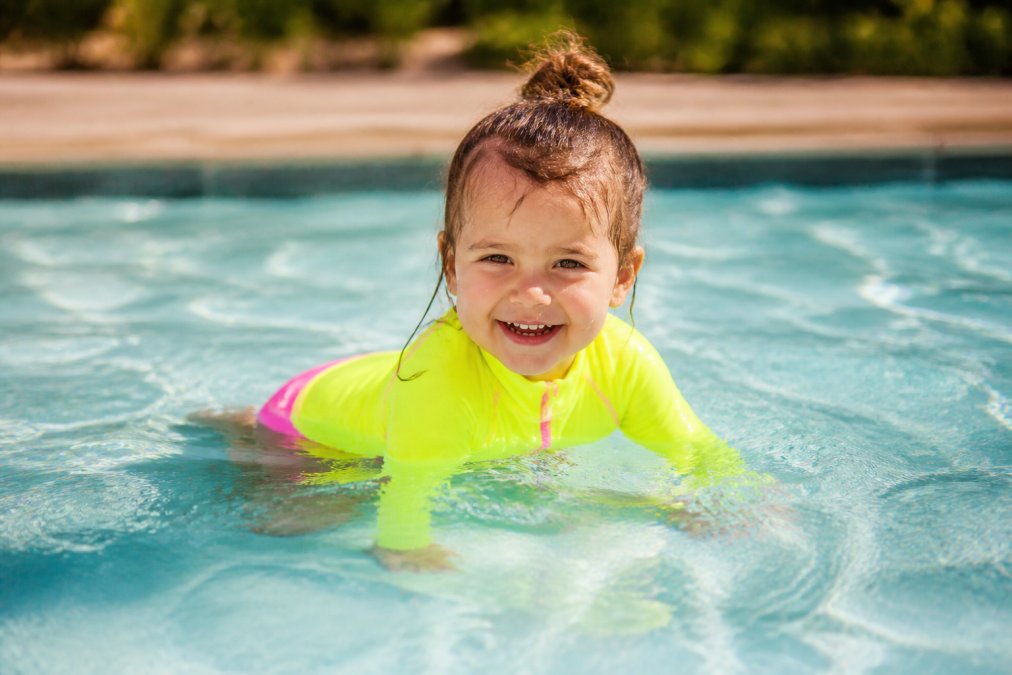
High-visibility swimwear is the foundation. Bright colors, neon pink, electric orange, vivid yellow, make your child instantly recognizable in the water. This matters more than many parents realize. In a busy pool environment with multiple children, a bright swimsuit cuts through visual clutter. Lifeguards spot your child faster. You locate them faster. In an emergency, rescuers can identify your child without hesitation.
Bright & Bold Swimwear specializes in exactly this type of protection. Our collection features bold, vibrant colors specifically chosen to maximize visibility in water. The high-visibility design serves a practical purpose: it keeps your child visible to you, to lifeguards, and to other adults in the environment. Paired with UPF 30+ sun protection on select items, these swimsuits address two safety concerns simultaneously, drowning prevention and sun damage prevention.
Rash guards add an additional layer. They provide sun protection, reduce friction-related irritation, and add visibility through their bright colors. Many families find that rash guards also help toddlers feel more secure in the water, creating a psychological comfort that translates to better behavior and more confidence during swim lessons.
Life jackets and flotation devices serve a specific purpose: they're not a substitute for supervision, but they do provide flotation assistance for weaker swimmers or in open water environments. A properly fitted, Coast Guard-approved life jacket keeps a child's head above water even if they panic or become fatigued (uscg.gov).
Swim shoes protect feet from pool deck heat and rough surfaces, reducing distractions that might pull your attention away from supervision.
The common thread connecting all these items: they work best when combined. A high-visibility swimsuit alone doesn't prevent drowning. A rash guard alone doesn't keep your child safe. But together with supervision, instruction, alarms, and barriers, each piece of gear contributes to a comprehensive safety strategy.
Installation, Testing, and Troubleshooting False Alarms
Once you've selected the right pool safety alarm for your family, proper installation and maintenance determine whether it actually protects you or becomes an unreliable nuisance.
Installation requirements vary by alarm type. Surface wave detectors typically mount on the pool deck or float on the water's surface. Subsurface sensors require placement in the water, often anchored to the pool floor. Wearable devices simply need to fit snugly on your child's wrist. Read the manufacturer's instructions carefully, improper installation is the leading cause of alarm failure.
Most pool alarms require testing before you depend on them. Manufacturers recommend monthly testing: deliberately triggering the alarm to confirm it responds as expected. For wearable devices, this means having your child wear it while you simulate water entry in a safe, controlled way. For stationary alarms, it means introducing the specific water disturbance the alarm is designed to detect.
False alarms happen. Wind-driven waves, splashing from active play, or even a leaf falling into the water can trigger some alarms, particularly surface wave detectors. This is frustrating, but it's also why understanding your specific alarm's sensitivity settings matters. Most quality alarms allow you to adjust sensitivity levels. A setting that's too sensitive creates false alarms that undermine your trust in the system. A setting that's too low might miss actual water entry.
If you're experiencing frequent false alarms:
- Check that the alarm is installed at the correct depth and distance from the pool edge
- Verify that sensitivity settings match your pool's specific conditions (a windy backyard pool may need different settings than a sheltered one)
- Ensure the alarm's sensor is clean and unobstructed
- Test the alarm's battery or power connection, low power can cause erratic behavior
- Consult the manufacturer's troubleshooting guide; many false-alarm issues have simple solutions
Battery maintenance is critical. Most pool alarms run on batteries. Dead or dying batteries don't just silence the alarm, they often trigger false alarms as the battery voltage drops. Check batteries monthly, especially before summer season when you'll use the alarm most frequently. Mark your calendar as a reminder.
Wireless receivers (for alarms that alert you remotely) have limited range. If you're inside the house with the door closed, you need to confirm you can actually hear the receiver alarm from where you typically spend time. Some parents keep the receiver in a pocket or bag during pool time to ensure they don't miss the alert.
Conclusion: Choosing the Right Alarm for Your Family
The best pool safety alarm for your family depends on your pool setup, your toddler's age and swimming ability, and your household's specific routine. A surface wave detector works well for a calm, in-ground pool with consistent supervision. A wearable device makes sense if you're heading to the beach or lake. A subsurface sensor provides reliable detection across most residential pool scenarios.
What matters most is understanding that an alarm is one piece of a larger safety puzzle. Bright & Bold Swimwear's high-visibility swimwear, combined with proper supervision, swim instruction, physical barriers, and a reliable alarm system, creates the layered protection that actually prevents drowning. Choose an alarm that meets ASTM F2208 standards, install it correctly, test it monthly, and maintain it consistently. Then pair it with the other safety strategies that together keep your child safe in and around water.
Your family's safety in the water starts with preparation and layers of protection working together. Explore Bright & Bold Swimwear's collection of high-visibility swimsuits and rash guards designed to keep your child visible and protected. When combined with a reliable pool alarm and proper supervision, our bright, vibrant designs help ensure that every moment in the water is safer for your child. SHOP BEST SELLERS and build your complete water safety strategy today.
Frequently Asked Questions
Q: What is the best pool safety alarm for toddlers?
A: The best pool safety alarm depends on your pool type and supervision style. Wearable alarms and subsurface wave-detection alarms offer real-time alerts when water displacement occurs. Surface alarms work well for in-ground pools. All quality options meet ASTM F2208 standards and include audible alerts, wireless receivers, and battery backup. Test any alarm in your specific pool before relying on it fully.
Q: Can a pool alarm replace adult supervision?
A: No. Pool safety alarms are one layer of protection, not a substitute for constant, attentive adult supervision. Drowning can happen silently and quickly, within seconds. An alarm detects water displacement after a child has entered the water, but it cannot prevent an accident. Always maintain eyes-on supervision, use barriers, teach water safety, and ensure someone trained in CPR is present.
Q: Do pool alarms meet ASTM F2208 safety standards?
A: Top-rated pool alarms meet ASTM F2208 standards, which specify requirements for pool alarm performance, including detection sensitivity, audible alert levels (minimum 85 decibels), and false trigger rates. When shopping, verify that any alarm you consider displays ASTM F2208 certification. This standard ensures the alarm will detect unauthorized water entry and alert you reliably.
Q: What features should I look for in a pool alarm for toddlers?
A: Key features include subsurface wave detection or wearable alert capability, audible alert rating of at least 85 decibels, wireless receiver with good connectivity range, waterproof rating suitable for your pool, battery backup and low-battery notification, easy installation, and minimal false trigger rates. For toddlers, consider wearable alarms that alert you the moment they enter water, providing faster emergency response.
Q: How do high-visibility swimsuits complement pool safety alarms?
A: High-visibility swimwear in bright colors makes your toddler instantly recognizable in the water, reducing response time if an incident occurs. Combined with a pool alarm's audible alert system, bright swimsuits provide a complete visual and audio safety approach. This layered protection strategy, alarm detection plus visual identification, helps lifeguards and parents spot your child faster, which is critical in drowning prevention.
This article was written using GrandRanker