

Beach Safety Tips for Families With Infants
Table of Contents
- Sun Protection and UV Safety for Infants
- Essential Beach Gear and Best Swimming Gear for Toddlers
- Water Safety and Swimming Precautions
- Hydration and Recognizing Signs of Heat Exhaustion in Babies
- Choosing the Right Beach Location and Timing
- Sand Safety, Nap Times, and Post-Beach Cleanup
- Emergency Protocols and Transportation Planning
- Conclusion
Last Updated: August 29, 2026
Sun Protection and UV Safety for Infants
Sun protection is the foundation of beach safety for families with infants. Infants under six months have skin that lacks sufficient melanin to filter ultraviolet radiation, making them especially vulnerable to sunburn and long-term UV damage (the American Academy of Dermatology). The American Academy of Pediatrics recommends keeping infants under six months out of direct sunlight entirely (aap.org). For older infants and toddlers, apply broad-spectrum sunscreen with UPF 50+ protection, preferring mineral-based formulas with zinc oxide or titanium dioxide, which reflect UV rays and cause fewer reactions in sensitive infant skin.
Protective clothing offers the most reliable defense. Long-sleeve rash guards and swim shirts with UPF 30+ built into the fabric provide continuous coverage without reapplication. At Bright & Bold Swimwear, our rash guards are designed specifically for active toddlers, combining high-visibility neon colors with sun-protective materials to address both safety visibility and UV protection in one piece of gear.

Wide-brimmed hats with at least three-inch brims protect the face, ears, and neck. Seek shade whenever possible, especially between 10 a.m. and 4 p.m. when UV rays are strongest. A beach umbrella or pop-up tent creates a designated safe zone where infants can rest and hydrate.
Essential Beach Gear and Best Swimming Gear for Toddlers
Preparing the right gear transforms a beach day from stressful to manageable. Beyond sunscreen and hats, you'll need items that address the unique challenges of keeping infants safe and comfortable in a sandy, salty environment.
High-Visibility Swimwear and Rash Guards
High-visibility swimwear serves a critical safety function. In water, a child wearing bright neon colors is spotted faster by parents and lifeguards, a difference that matters in emergencies. The vibrant colors cut through water glare and sand reflections, making it easier to track movement.
Rash guards are essential protective gear for toddlers. They cover the torso and arms, reducing sunburn risk and providing a barrier against sand abrasion. Many rash guards include UPF 30+ protection built into the fabric. When shopping for best swimming gear for toddlers, prioritize fit and comfort. A swimsuit that's too tight restricts movement; one that's too loose shifts in the water and loses its protective benefit.
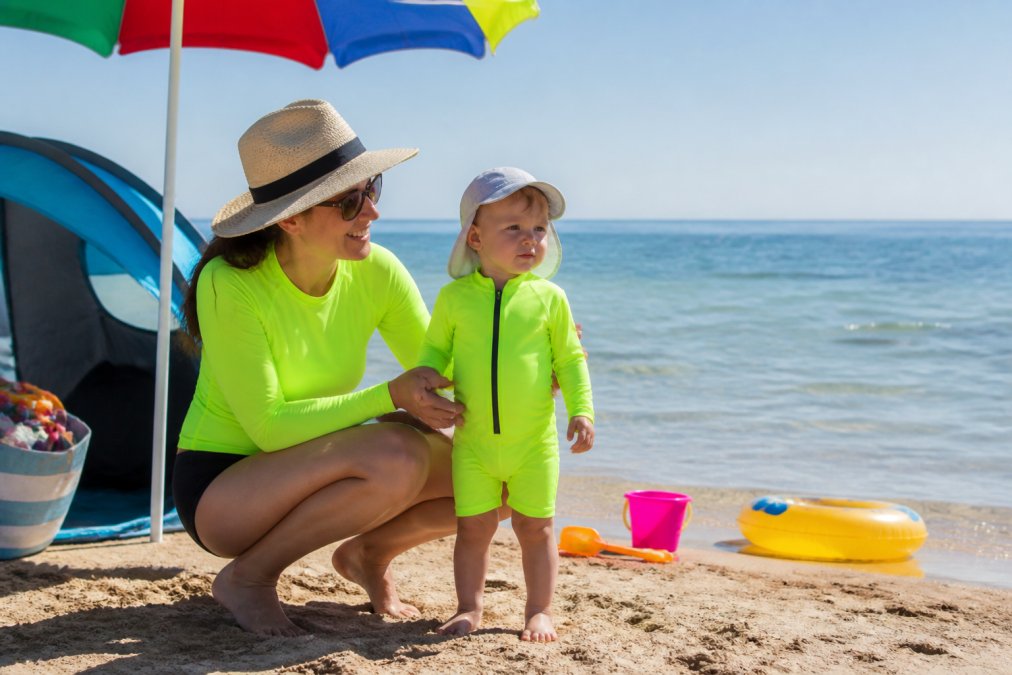
Bright & Bold Swimwear's boys and girls collections feature bold checker patterns and neon solids specifically chosen for visibility. The materials are chlorine-resistant and designed to hold their vibrant color through repeated washing.
Protective Clothing and Accessories
Beyond the swimsuit, layering with protective clothing extends your infant's safe beach time. Lightweight long-sleeve cover-ups in breathable fabrics allow movement while blocking direct sun. Swim socks with grip soles protect tender feet from hot sand and sharp shells. Swim diapers are non-negotiable for infants not yet toilet-trained; regular diapers absorb water and become heavy.
A wide-brimmed hat or visor keeps sun off the face. Zinc oxide sticks for the nose and ears offer targeted protection for high-exposure areas. Pack a lightweight beach bag with duplicate supplies: extra diapers, wipes, a change of clothes, and a dry rash guard. Having a backup swimsuit means you can change your infant into dry, clean gear if needed. Swim accessories like quick-dry towels and protective hats designed for young swimmers can streamline your packing and make transitions smoother.
Water Safety and Swimming Precautions
Water safety for infants requires constant, active supervision. Infants lack the physical development and judgment to keep themselves safe in water, so your vigilance is their only protection.
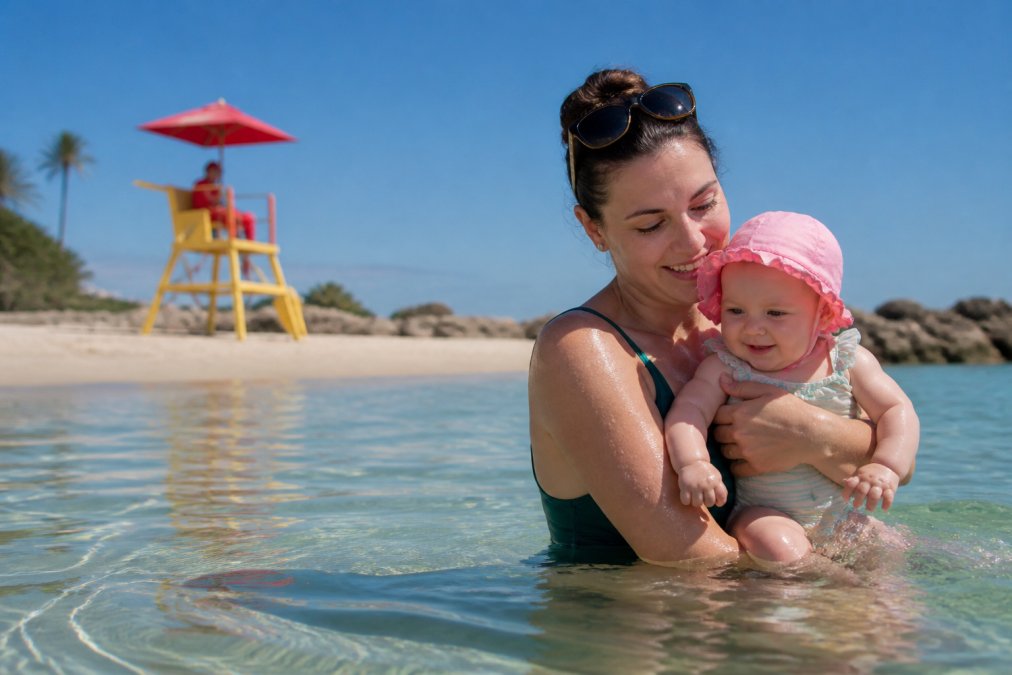
Never leave an infant unattended in or near water. Drowning happens silently and quickly, often without dramatic signs. An infant can slip underwater in seconds, and water aspiration can occur in less than two minutes. Keep your infant within arm's reach at all times and maintain constant eye contact.
Check water temperature before entering. Infants lose body heat rapidly in cool water. Water below 70°F can trigger cold-water shock responses in young children (the CDC). Choose beaches with warmer water, protected coves, or shallow areas heated by sun exposure.
Understand rip currents and beach hazards specific to your location. Rip currents are narrow channels of fast-moving water flowing away from shore. For infants, stay in shallow water where rip currents cannot form. Avoid areas near piers, jetties, or rocky outcrops.
Watch for sand holes created by other beachgoers. A deep hole can trap an infant's leg or arm. Fill holes as you encounter them and keep your infant away from areas where children have been digging.
Saltwater exposure carries specific risks. Salt irritates infant eyes, ears, and skin. Rinse your infant thoroughly with fresh water after leaving the ocean. If your infant swallows saltwater, monitor for vomiting or unusual letharness.
Hydration and Recognizing Signs of Heat Exhaustion in Babies
Infants cannot regulate body temperature as effectively as older children and adults, making heat exhaustion a serious concern at the beach. High temperatures, direct sun, and physical exertion combine to create conditions where an infant's core temperature rises dangerously fast.
Dehydration accelerates heat exhaustion. Infants lose fluids through perspiration and evaporation. If breastfeeding, continue nursing on demand; if formula-feeding, offer water or diluted formula more frequently than usual. Do not wait for your infant to seem thirsty, by then, dehydration is already progressing.
Signs of heat exhaustion in babies include excessive fussiness, lethargy, reduced urine output, dry lips and tongue, rapid or weak pulse, and skin that feels hot to the touch. Vomiting or refusal to eat can follow. If you notice these signs, move your infant to shade immediately, apply cool water to skin, and offer fluids. If symptoms don't improve within 15-20 minutes, seek medical attention.
Heat stroke is a medical emergency. Signs include confusion, loss of consciousness, seizures, or a temperature above 103°F. Call emergency services immediately if heat stroke is suspected.
Prevention is far more effective than treatment. Limit beach time during peak heat hours (10 a.m. to 4 p.m.). Take frequent breaks in shade. Dress your infant in light-colored, loose-fitting clothing that allows sweat to evaporate. Monitor your infant's behavior closely; increased fussiness or unusual quietness can signal overheating before obvious symptoms appear.
Choosing the Right Beach Location and Timing
Not all beaches are equally safe for infants. Choosing a location that minimizes hazards and maximizes your ability to supervise makes a measurable difference.
Sheltered coves with calm water are safer than open beaches exposed to strong waves and currents. Beaches with gradual slopes allow you to wade into shallow water where rip currents don't form. Check tide charts before visiting; low tide often exposes more shallow water and reduces wave energy. fabrics for baby skin.
Beaches with lifeguard presence provide an additional layer of safety monitoring, though lifeguards are not a substitute for parental supervision. Staffed beaches also tend to have better facilities, bathrooms, fresh water for rinsing, and first aid stations.
Timing your visit matters as much as location. Early morning visits (before 10 a.m.) mean cooler temperatures, lower UV intensity, and fewer crowds. Fewer people means more space to set up safely and reduced risk of your infant being accidentally struck. Visit during off-season or weekday hours when the beach is quieter.
Plan your visit for a duration your infant can handle comfortably. Most infants under two tolerate 1-2 hours of beach time before becoming overstimulated, hungry, or tired. Multiple shorter visits spread across a week are safer and more enjoyable than one long day.
Sand Safety, Nap Times, and Post-Beach Cleanup
Sand poses specific hazards that many parents underestimate. Fine sand gets into eyes, ears, noses, and diaper areas, causing irritation. Larger sand particles and shells can cut tender skin. Microorganisms in sand can cause skin infections if sand gets into cuts or abraded areas.
Keep your infant's hands as sand-free as possible during play. Rinse hands frequently with fresh water. Avoid letting your infant put sandy hands in their mouth. Watch for signs of sand in eyes or ears and rinse gently with fresh water if irritation occurs.
Nap times at the beach require careful planning. Set up your shade tent or beach umbrella in a location where you have clear sightlines to water and surrounding areas. Use a lightweight, portable crib or play yard if available. Never leave a sleeping infant unattended, even briefly.
Post-beach cleanup is essential for preventing skin irritation and infection. Rinse your infant thoroughly with fresh water immediately after leaving the beach, paying special attention to skin folds and diaper areas. Remove the wet swimsuit and rinse it separately. Pat skin dry gently rather than rubbing.
Check for cuts, scrapes, or rashes that may have developed during beach play. Clean any wounds with fresh water and mild soap, apply antibiotic ointment, and monitor for signs of infection. Apply moisturizer to sun-exposed skin after the post-beach rinse to restore skin barrier function and reduce irritation.
Emergency Protocols and Transportation Planning
Preparing for emergencies before they occur means you can respond effectively if something goes wrong. Know the location of the nearest lifeguard station, first aid station, and emergency services access point before you enter the water.
Carry a basic first aid kit containing bandages, antibiotic ointment, pain reliever appropriate for your infant's age, hydrocortisone cream for minor rashes, and tweezers for removing splinters. Include any medications your infant takes regularly, plus any emergency medications prescribed by your pediatrician.
Know the symptoms of water aspiration and secondary drowning. These can occur hours after water exposure, sometimes after your infant appears to have recovered fully. Signs include coughing, wheezing, difficulty breathing, lethargy, vomiting, or behavioral changes. If any of these appear after beach time, seek medical attention immediately and mention water exposure.
Transportation to and from the beach requires planning specific to traveling with an infant. Pack the car before leaving home. Keep a change of clothes, diapers, and supplies within reach during the drive. Use a rear-facing car seat appropriate for your infant's age and weight.
Bring more supplies than you think you'll need. Running out of diapers, wipes, or formula at the beach creates stress that distracts from supervision. Plan your return trip to align with your infant's schedule. Leaving before your infant becomes overtired makes the drive home safer and more pleasant.
If traveling to an unfamiliar beach, research the location in advance. Know the parking situation, restroom locations, and whether facilities are available. Arrive early enough to scout the area and set up safely before crowds arrive.
Conclusion
Beach safety for families with infants requires preparation, constant supervision, and the right protective gear working together. The combination of high-visibility swimwear, UPF-protective clothing, hydration planning, and location selection creates a comprehensive safety system that lets your family enjoy the beach with confidence.
Bright & Bold Swimwear's high-visibility rash guards and swim sets are specifically designed to address the supervision challenge that makes beach trips stressful for parents of young children. Our neon colors and UPF 30+ protection mean your infant stays visible and protected simultaneously. Get started with Bright & Bold Swimwear and give your family the visibility and sun protection that makes beach days safer and more enjoyable.
Frequently Asked Questions
What are the must-haves for a beach vacation with an infant?
Prioritize high-visibility swimwear, a UPF 50+ beach tent or umbrella for shade, swim diapers, a wide-brimmed hat, and plenty of fresh water. Bring a first-aid kit, sunscreen rated for infants, lightweight protective clothing, and a baby carrier for easy transport on sand. Pack snacks, electrolyte solutions, and a changing station setup. High-visibility gear helps lifeguards and other adults spot your infant quickly in the water, reducing drowning risk.
What should an infant wear at the beach for sun protection?
Dress your infant in UPF 30+ or UPF 50+ protective swimwear, a long-sleeve rash guard, and a wide-brimmed hat that covers the ears and neck. Light, breathable clothing in pale or bright colors reflects heat and provides coverage. Apply infant-safe sunscreen (SPF 30+) to exposed skin every two hours and after water play. High-visibility neon colors serve double duty: they protect against UV rays while making your child instantly recognizable to you and lifeguards in the water.
How do you recognize signs of heat exhaustion in infants at the beach?
Watch for excessive fussiness, lethargy, lack of sweating despite heat, rapid breathing, flushed or pale skin, or refusal to eat or drink. Infants may also show weakness or unusual quietness. Heat exhaustion can progress quickly in babies because they regulate temperature less effectively than older children. Move your infant to shade immediately, offer cool water or electrolyte solution, and apply cool (not cold) water to their skin. Seek medical attention if symptoms persist or worsen.
Is it safe to bring a 2-month-old baby to the beach?
Yes, but with careful planning. Infants under 6 months have more sensitive skin and less developed temperature regulation, so limit beach time to early morning or late afternoon when UV rays are weaker. Keep your infant in shade at least 80% of the time, use swim diapers in water, and avoid direct sun exposure. Consult your pediatrician before your first beach trip. Dress your infant in UPF-protective swimwear and keep hydration frequent. Stay near a lifeguard station and maintain constant physical contact or visual supervision in or near water.
This article was written using GrandRanker