

Chlorine Resistant vs Standard Swimwear: Key Differences
Table of Contents
- What Makes Swimwear Chlorine Resistant? A Quick Comparison
- How Chlorine Breaks Down Standard Swimwear Fabrics
- Material Differences: Polyester, PBT, and Elastane Explained
- How to Care for Chlorine Resistant Swimwear
- UPF 50 Sun Protective Clothing for Toddlers: What Parents Should Know
- Fit, Comfort, and the Stiffness Trade-Off
- Is Chlorine Resistant Swimwear Worth It? Durability and Value
- Frequently Asked Questions
Last Updated: September 14, 2026
What Makes Swimwear Chlorine Resistant? A Quick Comparison
Chlorine resistant swimwear is built from synthetic fibers that hold up against pool chemicals far longer than standard suits. This guide from Bright & Bold Swimwear explains the difference so you can buy suits that survive a full season of lessons.
The core difference is fiber chemistry. Standard suits lean on elastane for stretch, and chlorine attacks that fiber first. Chlorine-resistant suits replace most or all of the elastane with polyester or PBT, which resist breakdown and keep their shape and color.
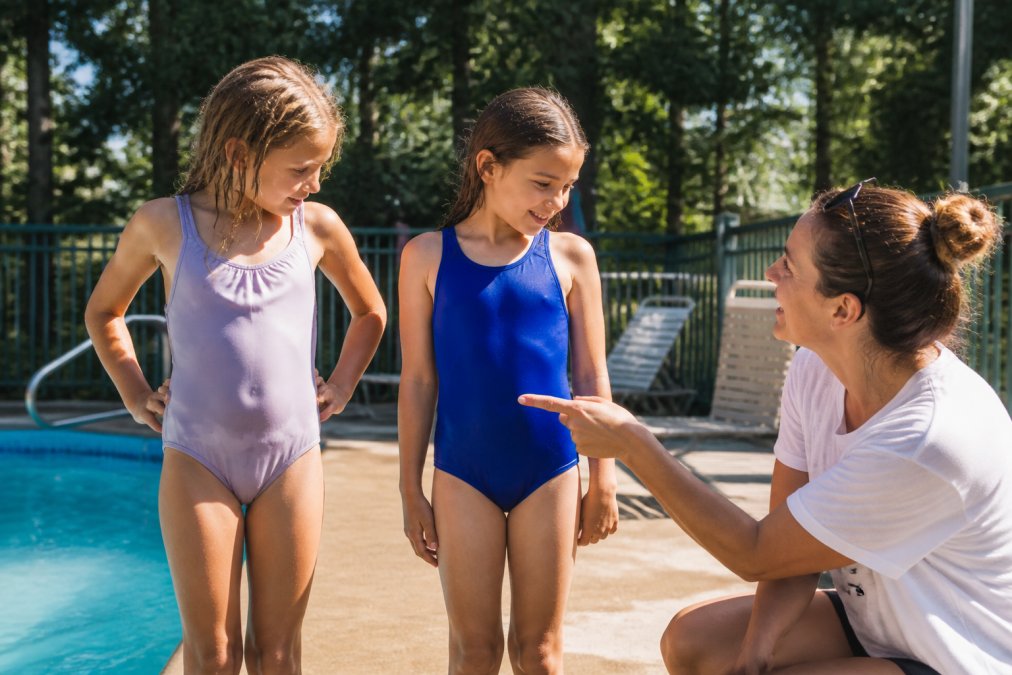
Side-by-Side: Chlorine Resistant vs Standard Swimwear
| Feature | Chlorine Resistant | Standard |
|---|---|---|
| Primary fiber | Polyester or PBT | Nylon with elastane |
| Stretch recovery | Moderate, holds shape | High at first, sags over time |
| Color retention | Strong | Fades within weeks |
| Typical lifespan | One or more seasons | Weeks to a few months |
| Feel | Firmer, less give | Soft, stretchy |
| Best for | Weekly lessons, lap swimming | Occasional leisure wear |
The table tells the story fast: if a child swims twice a week, a standard suit is a losing bet. A chlorine-resistant suit costs more upfront but replaces fewer suits per year.
How Chlorine Breaks Down Standard Swimwear Fabrics
Chlorine degrades swimwear through oxidation, and elastane is the weakest link. Hypochlorous acid, the active disinfecting form of chlorine, attacks the urethane linkages in elastane's polyurethane backbone. Once those linkages cleave, the fiber loses its elastic memory permanently, no matter how carefully you wash or dry the suit.
The damage shows up in a predictable order:
- Elasticity fades first, so the suit starts to bag and sag
- Color dulls next, especially in bright prints and dark solids
- Fibers thin and pill, and the fabric feels rough against skin
- Seams and straps lose tension and stretch out
This is why a suit that fit perfectly in June looks tired by August. Fiber fatigue accumulates with every exposure, and no amount of careful washing reverses it.
Pool Chemistry Variables That Change the Timeline
Not all pools damage swimwear at the same rate. The variables that matter most:
Free chlorine concentration. Pools at the recommended 1-3 parts per million (ppm) degrade elastane faster than pools at the lower end of that range (the CDC). Shocked or super-chlorinated pools, sometimes reaching 10 ppm or higher, can cause noticeable damage in a single session if a suit is worn too soon after treatment.
pH level. When pool pH drifts above the ideal 7.2-7.8 range, chlorine becomes less effective as a disinfectant but more aggressive toward elastane, and high pH promotes scale that abrades fibers. Low pH accelerates spandex oxidation and premature fading.
Cyanuric acid (stabilizer) levels. Outdoor pools use cyanuric acid to protect chlorine from sunlight. When it climbs too high, common in pools using stabilized chlorine tablets, chlorine sanitizes less effectively but still stresses elastane, which is why outdoor pool suits sometimes fade as quickly as indoor ones.
Saltwater pools. Saltwater pools generate chlorine through electrolysis, so the water still contains hypochlorous acid. The salt itself is not the primary threat, but constant low-level chlorination and higher total dissolved solids still break down spandex over time. Saltwater is gentler on skin and eyes, but not significantly gentler on standard swimwear.
Hot tubs and spas. Hot water accelerates chemical reactions, and spa chlorine or bromine levels are often higher than pool levels. A standard suit worn in a hot tub even a few times can fade and lose stretch fast. Chlorine-resistant suits handle hot tubs better, but heat still stresses any fabric over time.
Why Chlorine-Resistant Fibers Resist This Process
Polyester and PBT have a different molecular structure than elastane. Their polymer backbones lack the urethane linkages chlorine attacks, so hypochlorous acid has far fewer reactive sites to exploit. Polyester's aromatic rings and ester bonds are more chemically stable in chlorinated water, which is why a polyester suit can survive dozens of pool sessions while an elastane-rich suit fails after a handful.
PBT takes this further. Its crystalline structure is more tightly packed than standard polyester, slowing chlorine penetration. That tighter structure is why PBT feels slightly firmer than elastane but recovers its shape better than standard polyester.
The practical takeaway: the difference between chlorine-resistant and standard swimwear is not a coating or finish, it is the fiber itself. A standard suit cannot be made chlorine-resistant after the fact, and a chlorine-resistant suit needs no special treatment; it simply has fewer chemical weak points.
Material Differences: Polyester, PBT, and Elastane Explained
Three fibers decide how a suit performs: polyester, PBT, and elastane. The ratio between them predicts how long the suit lasts.
Polyester is the workhorse of chlorine-resistant swimwear. It resists chemical exposure, holds color well, and keeps its structure through repeated pool sessions, with less stretch than spandex as the trade-off for durability.
PBT (polybutylene terephthalate) is a premium polyester variant. It delivers better stretch recovery than standard polyester while keeping the same chlorine resistance, so suits feel less stiff without giving up longevity.
Elastane, also called spandex or Lycra, provides the stretch that makes standard suits feel soft. It is also the first fiber chlorine destroys. A suit with high elastane content feels great on day one and degrades fastest.
Nylon sits between the two extremes: softer than polyester but breaking down faster under chemical exposure, which is why all-nylon suits rarely survive a heavy swim schedule.
How to Care for Chlorine Resistant Swimwear
Rinsing immediately after every swim is the single most effective care habit for any suit, though the reasons differ by fabric. In a standard suit, rinsing slows elastane oxidation. In a chlorine-resistant suit, it removes sunscreen, body oils, and perspiration that clog the weave and reduce stretch recovery. Chlorine-resistant fibers resist chlorine itself, but not the buildup of other residues.
A simple routine keeps a suit in shape:
- Rinse in cool water right after leaving the pool
- Wash by hand with a mild detergent every few wears
- Skip the washing machine and dryer entirely
- Lay flat to dry in the shade, never in direct sun
- Rotate between two suits so each one fully dries
Care Differences: Chlorine Resistant vs Standard
The care routine is similar, but the stakes are different. A standard suit left damp in a swim bag for a few hours may already show stretched straps and a faded seat by the next wear. A chlorine-resistant suit tolerates more neglect, but still benefits from the same habits.
Here is where the two diverge:
Drying time. Polyester and PBT hold less water than nylon-elastane blends, so they dry faster, an advantage for rotation, though they can feel stiff if left to dry crumpled. Laying flat helps the fabric retain its shape.
Detergent choice. High-elastane suits can be damaged by harsh detergents, fabric softeners, and bleach. Chlorine-resistant suits are more tolerant, but fabric softener still leaves a coating that reduces stretch recovery. A mild, pH-neutral detergent is safest for both.
Sun exposure. UV radiation can break down elastane faster than chlorine. Chlorine-resistant polyester and PBT are more UV-stable, but direct sun still fades colors over time. Shade drying protects both fabric types.
Sunscreen and oils. This is the most overlooked care issue for chlorine-resistant suits. Sunscreen, body lotion, and natural oils leave residues that attract dirt and reduce the fabric's ability to shed water. A thorough cool-water rinse after every swim handles most of it; a gentle hand wash with mild detergent every few wears removes the rest.
What Not to Do
A few common practices shorten the life of any suit, including chlorine-resistant ones:
- Do not wring or twist the suit to remove water. Press it flat between towels instead.
- Do not hang a wet suit by its straps. The weight of the water stretches them out.
- Do not leave a wet suit in a plastic bag or a hot car. Heat and trapped moisture accelerate fiber breakdown.
- Do not use bleach or chlorine-based stain removers. They defeat the purpose of the fabric.
- Do not iron or tumble dry. Heat damages both elastane and polyester fibers.
The Bottom Line on Care
Chlorine-resistant swimwear is more forgiving than standard swimwear, but not maintenance-free. The same habits that keep a standard suit alive a few extra weeks will keep a chlorine-resistant suit performing for multiple seasons. A chlorine-resistant suit starts with a durability advantage that care preserves; a standard suit starts with a disadvantage that care can only slow down.
UPF 50 Sun Protective Clothing for Toddlers: What Parents Should Know
UPF 50 sun protective clothing for toddlers blocks at least 98% of UV radiation, and it matters most for kids who spend hours at outdoor pools. Young skin burns easily, and reapplying sunscreen on a moving toddler is unreliable at best.
Fabric UPF works differently from sunscreen: it does not wash off, needs no reapplication, and covers consistently as long as the garment fits. Look for these features:
- A UPF rating of 50 or higher on the label
- Dense, tight weave rather than sheer or stretched fabric
- Coverage across shoulders, back, and arms
- A fit that stays in place during active play
Wet fabric can lose some protective capacity, and a suit stretched tight lets more UV through, so a slightly relaxed fit protects better than a snug one. Bright & Bold Swimwear builds high-visibility suits with UPF protection on select items, so sun coverage and visibility work together.
The American Academy of Pediatrics sun safety guidance recommends shade, clothing, and sunscreen together rather than relying on any single method.
Fit, Comfort, and the Stiffness Trade-Off
The most common complaint about chlorine-resistant suits is stiffness, and it is a real trade-off. Less elastane means less give, and some swimmers notice immediately.
PBT blends largely solve this, restoring much of the stretch pure polyester lacks while keeping chlorine resistance intact, which is why they cost more and perform better.
A few practical notes for parents:
- Size up if your child is between sizes, since firmer fabric has less stretch
- Check the leg openings and straps for rubbing during active swimming
- Let your child pick the color or print, since buy-in matters more than most parents expect
- Expect a short break-in period as the fabric softens with wear
Comfort is not a luxury here. A suit a child refuses to wear protects no one, which is why high-visibility design and kid-approved colors belong in the same conversation as durability.
Is Chlorine Resistant Swimwear Worth It? Durability and Value
For families who swim weekly, chlorine-resistant swimwear is worth it because it replaces fewer suits per season. The math favors durability once you count how many standard suits a heavy swim schedule destroys.
Pricing depends on the brand, style, and size, so check current options directly. The better question is cost per season, not cost per suit.
Consider how often your child swims. Occasional lake trips and backyard splashes are fine in standard suits. Weekly lessons, swim team practice, and daily pool time belong in chlorine-resistant fabric.
Where a standard suit wins: it feels softer immediately, costs less upfront, and works for light use. Where it loses: color, shape, and stretch fade fast under regular chlorine exposure.
Bright & Bold Swimwear makes high-visibility suits for kids, and our boys swimsuits and girls swimsuits are built for families who swim often. Visibility and durability solve two problems at once when a parent is watching several kids in a crowded pool.
The CDC guidance on drowning prevention stresses close, constant supervision as the foundation of water safety, and gear that keeps a child easy to spot supports that effort.
For swim schools and boutiques, durability also affects replacement budgets. A suit that survives a full session of lessons costs less to keep in rotation than one that fades by mid-term.
Frequently Asked Questions
How can I tell if a swimsuit is chlorine resistant?
Check the fabric content label. Chlorine resistant swimwear is typically made from 100% polyester or PBT, while standard suits contain elastane or spandex. Look for terms like 'chlorine resistant' or 'chlorine-proof' on the tag. If the suit feels slightly less stretchy but smooth, it likely has a chlorine-resistant finish.
How long does chlorine resistant swimwear last compared to standard suits?
Chlorine resistant swimwear can last 3 to 5 times longer than standard suits with regular pool use. Standard swimwear may show fading, stretching, and fiber breakdown after 20-30 wears, while chlorine resistant fabrics maintain shape and color for 60-100 wears. Proper care, like rinsing after each use, extends that lifespan even further.
Does chlorine resistant swimwear protect against UV rays?
Not all chlorine resistant swimwear offers UV protection, but many styles do. Look for UPF 50 sun protective clothing for toddlers and children, which blocks 98% of UV rays. Chlorine resistance and UV protection are separate features, so check the label for both. Bright & Bold Swimwear offers UPF 30+ on select items, ideal for outdoor pools and beaches.
Why does standard swimwear lose its shape in pool water?
Chlorine attacks elastane (spandex) fibers, causing them to break down. This leads to sagging, stretching, and loss of elasticity. Standard swimwear relies on elastane for stretch, so repeated exposure to pool water quickly degrades the fabric. Chlorine resistant suits use polyester or PBT, which resist chemical damage and hold their shape much longer.
Choosing the right swimwear comes down to how often your child is in the water. Standard suits work for occasional use, but chlorine-resistant fabric is the better call for weekly lessons and daily pool time. Bright & Bold Swimwear builds high-visibility kids' swimsuits with UPF protection on select items, designed by a family to help yours stay visible and safe. Get started with Bright & Bold Swimwear and shop best sellers to find suits that last the season.