

Essential Features of High-Quality Rash Guards
Table of Contents
- What Makes a High-Quality Rash Guard Stand Out
- How Should a Rash Guard Fit
- Rash Guard Fabric and UPF Protection
- Rash Guard Colors for Water Visibility
- Durability and Construction Quality
- Breathability, Quick-Drying, and Comfort
- Rash Guard Care Instructions and Lifespan
- Choosing the Right Rash Guard for Your Child
- Frequently Asked Questions
Last Updated: October 16, 2026
What Makes a High-Quality Rash Guard Stand Out
A high-quality rash guard combines protection, comfort, and durability to keep your child safe and happy in the water. At Bright & Bold Swimwear, we design rash guards engineered for visibility, sun protection, and the active movement young swimmers need.

The best rash guards share core characteristics: UPF protection against UV rays, durable quick-drying fabrics that withstand chlorine and saltwater, a snug fit that doesn't restrict movement, and high-visibility colors that help parents and lifeguards spot children instantly.
What separates an average rash guard from a high-quality one comes down to fabric construction, stitching quality, and design details. A cheap rash guard may fade after a few washes or develop holes at the seams within a season, while a well-made one maintains its integrity, color vibrancy, and protective properties year after year.
The essential features of high quality rash guards aren't just about aesthetics, they're about safety and longevity, protecting your child through multiple seasons of swimming, lessons, and water play.
How Should a Rash Guard Fit
A rash guard should fit snugly against the body without being uncomfortably tight. The fabric should move with your child, allowing full range of arm motion for swimming strokes.

The neckline should sit comfortably without digging in or riding up. Long sleeves should extend to the wrist, and the torso coverage should reach the waistband of swim bottoms with no gap between pieces.
A common mistake is buying rash guards too loose: loose fabric creates drag, reduces sun protection coverage, and shifts during active movement. Overly tight rash guards restrict breathing and movement, making children reluctant to wear them.
Fit also varies by activity. Swim lessons and casual pool time suit a snug compression fit; surfing or water sports may call for slightly more room for layering; jiu-jitsu and no-gi training require a compression fit that stays in place during intense rolling.
True-to-size fitting eliminates guesswork. Bright & Bold rash guards are engineered with true-to-size proportions, so a size 4T rash guard fits like a size 4T shirt, snug, protective, and ready to move.
Rash Guard Fabric and UPF Protection
The fabric composition of a rash guard determines how well it protects against sun, resists fading, and performs in water. Quality rash guards use polyester-spandex blends that offer stretch, durability, and quick-drying properties. Polyester holds color vibrance through repeated washing and chlorine exposure.
UPF (Ultraviolet Protection Factor) rating measures how effectively a fabric blocks harmful UVA and UVB rays. UPF 30 blocks approximately 97% of UV rays, while UPF 50 blocks 98%. For most children, UPF 30 provides solid protection during typical swimming and water play.
UPF protection doesn't diminish when submerged, but the level depends on fabric thickness, weave density, and dye quality. Thin, loosely woven fabrics may not deliver their stated UPF rating, while high-quality rash guards use tightly woven materials that maintain protection even after dozens of washes.
Color choice matters for UPF performance. Darker colors and densely saturated neon hues block UV better than light pastels, which is why high-visibility neon rash guards deliver both safety and sun protection.
Breathability is a critical fabric consideration many parents overlook. A rash guard should let moisture and heat escape, preventing that clammy feeling. Lightweight polyester-spandex blends dry quickly and feel comfortable during extended water time, while thicker fabrics may trap heat and moisture.
Rash Guard Colors for Water Visibility
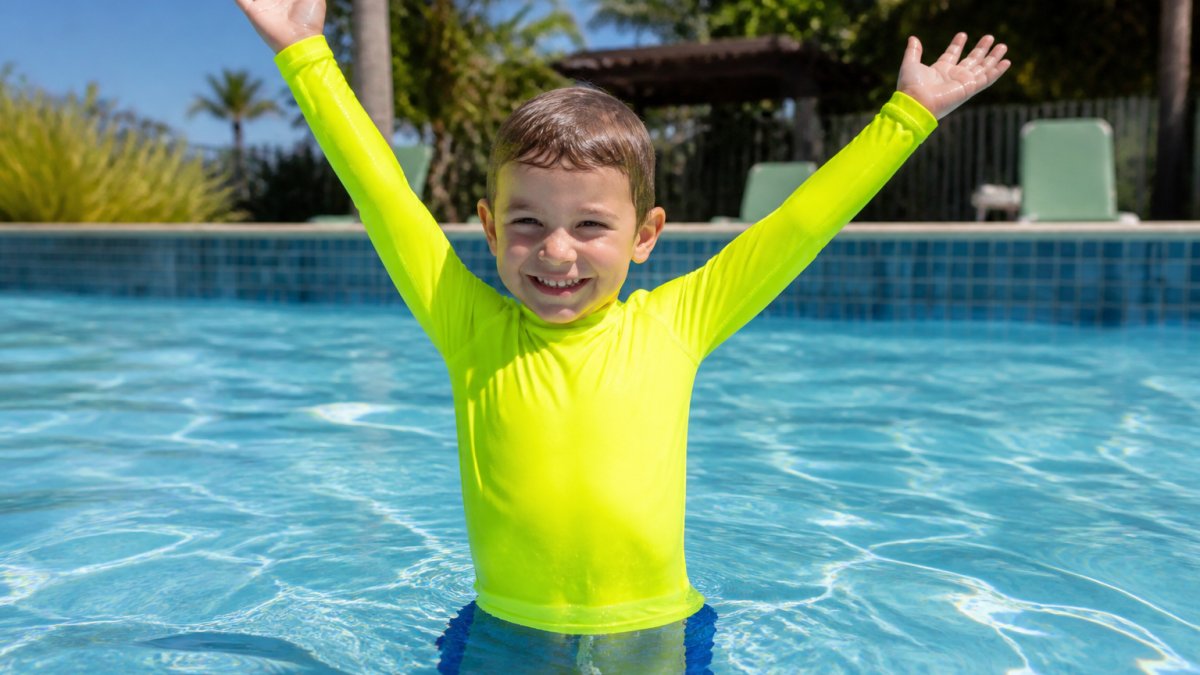
High-visibility colors aren't a trend, they're a safety essential. Bright neon colors like electric yellow, hot pink, lime green, and orange stand out dramatically against the blue and green of water. In crowded pools or busy beaches, a high-visibility rash guard makes your child instantly recognizable to parents and lifeguards.
Traditional swimwear colors like navy, black, and dark teal blend into water, making children harder to spot during active supervision. This is especially critical in chaotic environments where multiple children are swimming at once.
The science is straightforward: our eyes detect contrast more readily than individual colors. A neon rash guard creates maximum contrast against water, making it the easiest target for a scanning parent or lifeguard, whether your child is on the surface, just below the waterline, or moving across the pool.
Color vibrancy matters as much as the color choice itself. A faded, washed-out neon rash guard loses its visibility advantage. Quality rash guards use dyes engineered to resist fading from chlorine, saltwater, and sun exposure.
Some families worry bright colors look "too safety-focused" or that children will refuse them, but most kids love vibrant, eye-catching colors. The neon patterns in quality rash guards, stripes, checkers, smiley faces, and bold graphics, appeal to children's sense of fun while delivering serious safety benefits.
Durability and Construction Quality
Durability separates a rash guard that lasts one season from one that serves multiple children over several years. The foundation of durability is fabric quality, but construction techniques matter just as much.
Overlock and four-thread stitching are industry standards for quality rash guards, creating strong seams that resist fraying under active movement, repeated washing, and chlorine exposure. Single-thread or two-thread stitching fails more quickly, especially at stress points like armholes and necklines.
Seam placement and reinforcement reveal construction quality. High-quality rash guards reinforce vulnerable areas, shoulders, underarms, and the waistband, with extra stitching or binding that resists tearing through years of swimming lessons, pool parties, and beach vacations.
Fabric thickness also affects durability. Thin, flimsy rash guards feel cheaper and wear out faster. Quality rash guards use medium-weight polyester-spandex blends that feel substantial without being stiff or uncomfortable.
Zipper quality, when present, is another durability marker. A smooth-operating, corrosion-resistant zipper with a secure pull tab indicates a well-made rash guard. Cheap zippers snag, stick, and corrode quickly in chlorinated water. Quality zippers glide smoothly and last through hundreds of uses.
Boys Long Sleeve Rash Guard Swim Set — High-Visibility & UPF 30+ Protection →
The best way to evaluate durability is to examine seams closely before buying: look for tight, even stitching with no loose threads, reinforced stress points, and substantial fabric weight and density.
Breathability, Quick-Drying, and Comfort
Breathability determines whether your child will actually want to wear the rash guard. A rash guard that traps heat and moisture creates an uncomfortable, clammy sensation that children resist. A breathable rash guard feels light and dry, encouraging your child to wear it willingly.
Quick-drying fabric is essential between pool sessions. Quality rash guards use lightweight, fast-drying polyester-spandex blends that shed water and dry within minutes of leaving the pool, preventing that soggy feeling and letting your child move between activities comfortably.
Stretch and flexibility matter for all-day wearability. A rash guard should move with your child, not against them. Spandex content provides the stretch needed for comfortable swimming, diving, and active play.
Comfort also depends on fabric softness. Quality rash guards use smooth, soft polyester that feels pleasant against skin, while rough, scratchy fabrics cause chafing, especially around the neck and armpits. A comfortable rash guard becomes something your child wants to wear.
Neck collar design affects comfort significantly. A soft, reinforced collar sits comfortably without digging in or irritating the neck. Poorly designed collars create pressure points and chafing that make wearing the rash guard unpleasant.
Breathability, quick-drying performance, stretch, and soft fabric create the comfort foundation that makes children willing to wear protective swimwear, ensuring they receive the sun protection and visibility benefits you're investing in.
Rash Guard Care Instructions and Lifespan
Proper care extends the lifespan of a quality rash guard significantly. Most rash guards should be rinsed with fresh water immediately after pool or ocean use to remove chlorine, saltwater, and debris. This simple step prevents premature fading and material degradation.
Machine washing is typically safe, but cold water and gentle cycles preserve color and elasticity better than hot water or heavy-duty cycles. A mesh laundry bag prevents snagging, and air drying is preferable to machine drying, which can damage spandex and fade colors faster.
Avoiding fabric softeners and bleach protects the rash guard's integrity. Fabric softeners break down spandex fibers over time, reducing stretch and durability. Bleach fades colors and weakens fabric. Regular detergent is sufficient for cleaning rash guards effectively.
A well-maintained, high-quality rash guard typically lasts 2-3 years of regular use, and some families pass them down to younger siblings. Budget-quality rash guards may show fading, seam failure, or fabric thinning within a single season, making them more expensive long-term despite lower upfront cost.
Storage also affects lifespan. Rash guards should be stored in a cool, dry place away from direct sunlight when not in use. Prolonged exposure to heat and UV light degrades fabric and dyes even when the rash guard isn't being worn. Proper storage preserves color vibrancy and material integrity between seasons.
Choosing the Right Rash Guard for Your Child
Selecting the right rash guard depends on your child's age, swimming activity, and skin sensitivity. For toddlers in swim lessons, a long-sleeve rash guard with full coverage provides maximum sun protection and visibility.
Consider your child's skin type and sun sensitivity. Fair or sensitive skin benefits from longer sleeves and higher UPF coverage.
Activity type matters significantly. Competitive swimmers need compression fit and minimal drag. Water sports enthusiasts might prefer short sleeves for mobility. Children in jiu-jitsu or no-gi training need rash guards that stay in place during intense rolling and grappling.
Budget considerations are real, but investing in a quality rash guard pays dividends.
Bright & Bold Swimwear offers rash guards designed specifically for young swimmers aged 2-7. Our Boys Long Sleeve Rash Guard Swim Set and Girls Long Sleeve Rash Guard Set both feature UPF 30+ protection, high-visibility neon colors, and quick-drying fabric.
| Feature | Long Sleeve | Short Sleeve | Crop Top |
|---|---|---|---|
| Sun Coverage | Maximum | Moderate | Moderate |
| Breathability | High | Very High | Very High |
| Best For | All seasons | Summer, warm water | Warm weather, preference |
| Visibility | High | High | High |
| Quick-Dry | Fast | Very Fast | Very Fast |
The essential features of high quality rash guards, proper fit, durable construction, quality fabric, UPF protection, and high-visibility colors, keep your child safe, visible, and comfortable in the water.
Keeping your child visible and protected in the water is one of the most important safety investments you'll make.
Frequently Asked Questions
What fabric is best for a rash guard?
Polyester and polyester-spandex blends are the most common fabrics for quality rash guards. Polyester offers durability and quick-drying performance, while spandex (typically 5-20% of the blend) provides stretch and mobility. These materials resist chlorine and saltwater damage better than cotton, maintain their shape through repeated use, and dry faster between pool sessions. Look for fabric thickness that balances durability with breathability.
Do rash guards protect against the sun?
Yes. Quality rash guards offer UPF 30+ sun protection, which blocks harmful UVA and UVB rays both when wet and dry. UPF 30 blocks approximately 97% of UV rays. This protection is especially valuable during extended water play, beach days, and outdoor swimming where sun exposure is highest. High-quality rash guards maintain their UV-blocking properties through regular washing and wear.
How should a rash guard fit for maximum comfort and safety?
A quality rash guard should fit snugly but not restrict movement. The top should sit close to the body without bunching or gapping, cover the shoulders fully, and reach the waist or hips depending on style. Sleeves should allow full arm rotation for swimming strokes. The bottoms should stay secure without digging in. True-to-size fits eliminate guesswork; some styles offer sizing down for a snugger compression fit or sizing up for a looser feel depending on preference and activity level.
How do you care for a rash guard so it lasts?
Rinse your rash guard with fresh water immediately after pool or ocean use to remove chlorine and salt. Wash in cold water with mild detergent, avoid bleach and fabric softeners, and air-dry flat or on a hanger away from direct sunlight. Do not use a dryer, as heat damages elastic fibers and degrades UPF protection. Proper care preserves color vibrancy, fabric elasticity, and sun protection properties, extending the rash guard's lifespan through multiple seasons.
What color rash guard is best for water visibility?
Bright, high-visibility neon colors, such as neon yellow, neon green, neon orange, and bold pink, stand out best against the blues and greens of pools, lakes, and ocean water. These colors help parents and lifeguards spot children faster in crowded or chaotic water environments. Traditional dark colors like navy and black blend into water and are difficult to see. High-visibility rash guards combine safety with style, making it easier to keep an eye on young swimmers.