

How to Layer Sunscreen Under UPF Clothing
Table of Contents
- Why Layering Sunscreen and UPF Clothing Matters
- Choosing the Best Sunscreen for Under Clothing
- Step-by-Step: How to Apply Sunscreen Before Wearing UPF Clothing
- Does Sunscreen Stain UPF Fabric? Care and Maintenance
- UPF Clothing vs. Sunscreen Effectiveness: Which Offers Better Protection
- Common Mistakes When Layering Sunscreen and UPF Gear
- Conclusion
Last Updated: August 7, 2026
Why Layering Sunscreen and UPF Clothing Matters
Sun protection isn't a single solution, it's a combination. When you layer sunscreen under UPF clothing, you're creating a comprehensive defense against ultraviolet radiation that no single method can achieve alone. At Bright & Bold Swimwear, we understand that parents want their children protected from both UVA and UVB rays, which means thinking strategically about how these two protective layers work together.
The reality is that even the best UPF clothing leaves some skin exposed. Your child's face, hands, and the gaps where fabric meets skin still need protection. Sunscreen fills those gaps. But here's what most guides miss: not all sunscreens work equally well under clothing. Some formulations can interact with fabric in ways that reduce the effectiveness of either the sunscreen or the UPF rating itself.
Proper layering means understanding how to apply sunscreen, when to apply it, and how to maintain both the sunscreen and the fabric so each protective layer keeps working as intended. Done correctly, this approach gives your child the kind of comprehensive photoprotection that dermatologists recommend, especially for children who spend extended time in the water or outdoors.
Choosing the Best Sunscreen for Under Clothing
Not every sunscreen is ideal for wearing under UPF garments. The formulation matters because certain types interact differently with fabric, affecting both comfort and protection.
Mineral vs. Chemical Sunscreen Under UPF Fabric
Mineral sunscreen (also called physical sunscreen) contains zinc oxide or titanium dioxide. These sit on top of your skin and reflect UV radiation away. The advantage: they start working immediately and don't absorb into the skin. The drawback under clothing is that they can leave a white cast and may feel thicker or greasier, which some children find uncomfortable under a rash guard.

Chemical sunscreen absorbs into the skin and converts UV radiation into heat. These formulations tend to feel lighter and less visible, which makes them more comfortable under tight-fitting UPF garments. However, chemical sunscreens need time to absorb before you apply clothing, typically 10-15 minutes. Applying chemical sunscreen and immediately pulling on a rash guard can reduce its effectiveness because the sunscreen hasn't fully bonded with your skin.
For layering under UPF clothing, many families find that mineral sunscreen works better if your child tolerates the texture, because it doesn't require an absorption window. If your child prefers chemical sunscreen, the timing becomes critical: apply it first, wait the full absorption time, then dress in UPF gear.
Step-by-Step: How to Apply Sunscreen Before Wearing UPF Clothing
Proper application technique ensures even coverage and maximum protection. The order matters, and so does the amount.
Step 1: Start with clean, dry skin. If your child has been swimming or sweating, dry them completely. Sunscreen works best on dry skin because water can dilute the formulation and create uneven coverage. This takes just a few minutes and makes a measurable difference.
Step 2: Apply sunscreen generously to all exposed areas. Use about one-quarter teaspoon for the face, one-quarter teaspoon for each arm, and one-half teaspoon for the chest and back. Most people apply too little, the standard recommendation is enough to fill a shot glass for the entire body. For areas that will be covered by UPF clothing, you can apply less, but don't skip it entirely. Those areas still benefit from the extra layer of protection.
Step 3: Pay special attention to overlooked zones. The tops of ears, the back of the neck, the part line in hair, the tops of feet, and the inner wrists often get missed. These areas burn easily and are frequently forgotten. Make a mental checklist and work through it systematically.
Step 4: Wait for absorption (if using chemical sunscreen). If you've chosen a chemical formulation, wait 10-15 minutes before dressing your child in UPF clothing. This allows the sunscreen to fully bond with the skin. Mineral sunscreen can be followed immediately by clothing.
Step 5: Dress in UPF clothing. Once the sunscreen has set, put on the rash guard or UPF swimsuit. Make sure the garment fits snugly but comfortably, loose-fitting UPF clothing allows more UV radiation to reach the skin through gaps and movement.
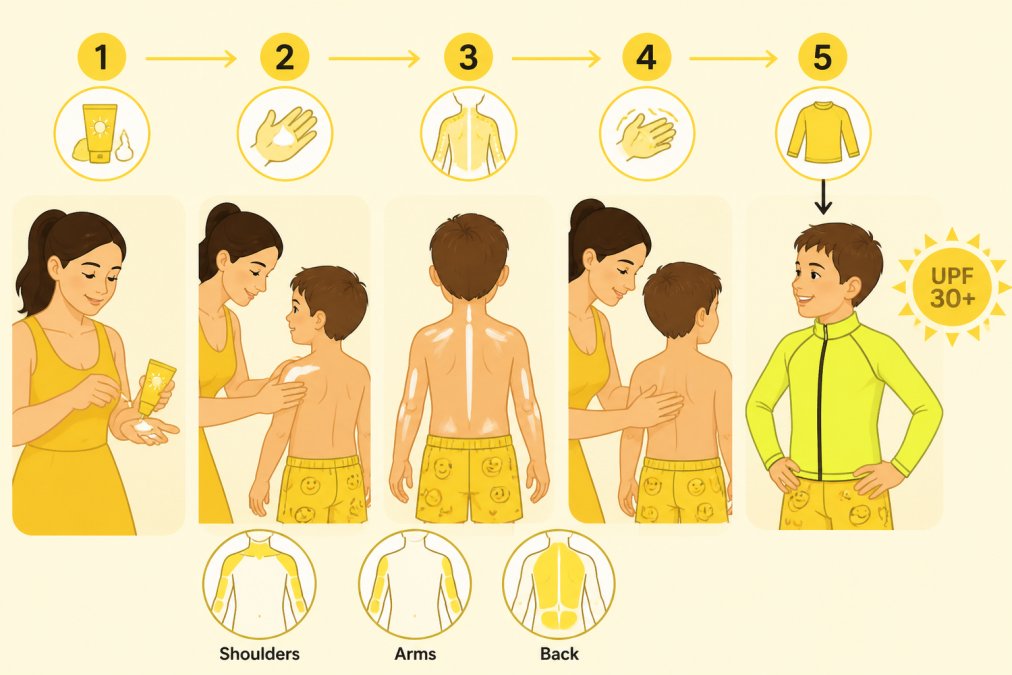
Timing and Absorption
The timing of sunscreen application affects its protective power. Apply sunscreen at least 15 minutes before sun exposure, even if you're using mineral formulations. This gives the product time to settle and bind to your skin properly. For chemical sunscreens, the 15-minute window is non-negotiable, applying it and immediately covering it with clothing reduces effectiveness.
If your child will be in the water, reapply sunscreen after swimming. Even water-resistant formulations break down in chlorine and saltwater. The standard guidance is to reapply every two hours, or immediately after water exposure, whichever comes first. This means you'll likely be reapplying multiple times during a full day at the pool or beach.
Coverage Areas You Can't Forget
Even with UPF clothing, certain areas remain exposed and vulnerable. Your child's face, ears, the back of the neck, hands, and feet all need sunscreen. The area where the rash guard meets the skin, the neckline, armholes, and leg openings, also needs protection because movement and stretching can expose skin that the fabric normally covers.
Many parents apply sunscreen to covered areas and assume it's protected. But during active play, children move constantly. A rash guard that fits perfectly at rest will shift and move during swimming or running. Sunscreen on those transition zones provides a safety margin.
Does Sunscreen Stain UPF Fabric? Care and Maintenance
Sunscreen can stain UPF clothing, especially if it contains certain ingredients or if it sits on fabric for extended periods. The good news is that proper care prevents most staining issues.
Sunscreen formulations vary in their staining potential. Sunscreens with avobenzone (a common UV filter in chemical formulations) are more likely to cause yellowing or discoloration on light-colored fabrics. Mineral sunscreens with zinc oxide or titanium dioxide are less likely to stain but can leave white residue if not properly rinsed.
The key to preventing stains is rinsing promptly. As soon as your child comes out of the water or finishes outdoor time, rinse the UPF garment in fresh water. This removes salt, chlorine, and excess sunscreen before any of these substances can set into the fabric. A quick rinse with a hose or in a shower takes 30 seconds and prevents hours of stain-fighting later.
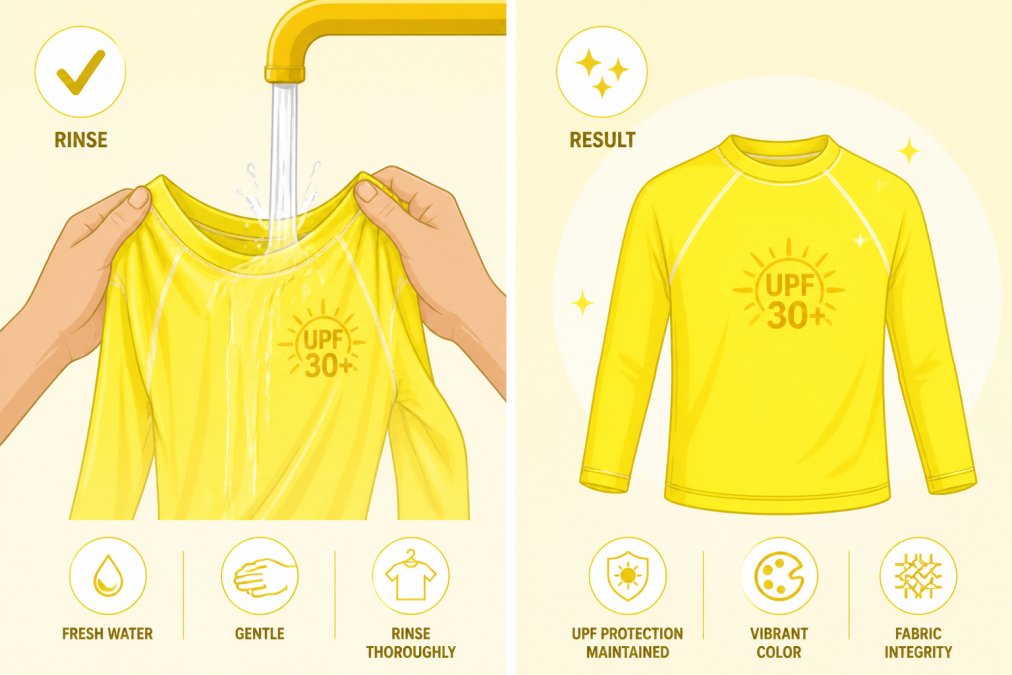
For deeper cleaning, hand-wash the garment in cool water with mild detergent. Avoid hot water, which can set stains and damage the UPF-protective fibers. Machine washing is acceptable, but use cold water and a gentle cycle. Dry the garment flat or hang it to dry, high heat from a dryer can degrade the UV-protective properties of the fabric.
If a stain does develop, treat it while it's fresh. Soak the garment in cool water with a small amount of mild detergent for 30 minutes, then gently rub the stained area. Rinse thoroughly and air-dry. Avoid bleach, which can damage both the fabric and the UV-protective coating.
UPF Clothing vs. Sunscreen Effectiveness: Which Offers Better Protection
This question assumes an either-or choice, but the data suggests the answer is both. UPF clothing and sunscreen each have strengths and limitations.
UPF clothing provides consistent, passive protection. Once your child is wearing a rash guard with UPF 30+ protection, that protection is in place for as long as the garment is worn. There's no reapplication needed, no absorption time, and no risk of missing spots. The fabric blocks ultraviolet radiation directly. However, UPF clothing only protects the areas it covers. The face, hands, feet, and any exposed skin still need sunscreen.
Sunscreen provides flexible, active protection. You can apply it to any exposed area, and it works on all skin tones equally. But sunscreen requires proper application technique, adequate quantity, and regular reapplication. Most people apply too little, miss spots, or forget to reapply after water exposure. Sunscreen also requires a window of time to work effectively, especially chemical formulations.
The research on combined protection shows that layering both methods significantly reduces sun damage risk compared to using either method alone. The American Academy of Dermatology recommends using multiple forms of protection, UPF clothing, sunscreen, hats, and seeking shade during peak sun hours (10 a.m. to 4 p.m.). This multi-layered approach is more effective than relying on any single method.
For children in water, UPF clothing is the foundation because it stays in place and doesn't wash off. Sunscreen fills the gaps. Together, they provide the broad-spectrum protection that dermatologists recommend for preventing sun damage and reducing melanoma risk.
Common Mistakes When Layering Sunscreen and UPF Gear
Understanding what not to do helps you get the most from both protective layers.
Mistake 1: Applying sunscreen and immediately dressing in UPF clothing. If you're using chemical sunscreen, this defeats the purpose. The sunscreen needs time to absorb and bond with your skin. Immediately covering it with fabric prevents proper absorption and reduces its protective power. Wait the full 10-15 minutes before dressing.
Mistake 2: Applying too little sunscreen. The standard recommendation is one-quarter teaspoon for the face alone. Most parents use one-tenth that amount. Insufficient sunscreen leaves gaps in protection. Use enough that you can see it on your skin before it absorbs, you should be able to rub it in and see it disappear, not apply a thin invisible layer.
Mistake 3: Forgetting to reapply after water exposure. Sunscreen breaks down in chlorine and saltwater. Even water-resistant formulations lose effectiveness after 40-80 minutes in the water. If your child swims, reapply sunscreen immediately after getting out. If you're at the beach all day, reapply every two hours at minimum.
Mistake 4: Choosing UPF clothing that's too loose. Tight-fitting UPF garments provide better protection because they stay in place during movement. Loose fabric shifts and gaps, allowing UV radiation to reach the skin underneath. The garment should fit snugly but not restrict movement or make your child uncomfortable.
Mistake 5: Using expired sunscreen. Sunscreen degrades over time, especially if it's been exposed to heat. Check the expiration date before using. If there's no date, replace it every year. Old sunscreen may not provide the stated level of protection.
Mistake 6: Neglecting the transition zones. The neckline, armholes, and leg openings of UPF clothing are high-movement areas where skin exposure changes constantly. These zones need extra attention with sunscreen because the fabric won't always cover them completely during active play.
Mistake 7: Assuming water-resistant means waterproof. Water-resistant sunscreen is designed to stay effective for 40-80 minutes in the water. After that time, or after toweling off, it needs to be reapplied. No sunscreen is truly waterproof, and all sunscreen eventually washes off.
Protecting your child from sun damage requires thinking beyond a single product or method. Layering sunscreen under UPF clothing creates overlapping defense where each layer compensates for the other's limitations. Sunscreen protects the exposed areas that clothing can't cover; UPF fabric provides passive, consistent protection for covered skin.
At Bright & Bold Swimwear, we design high-visibility rash guards and swimsuits with UPF 30+ protection specifically to be that foundation layer. Combined with properly applied sunscreen on exposed skin, our garments help give your family the comprehensive photoprotection that dermatologists recommend. Explore our range of boys swimsuits and girls swimsuits to find the UPF-protected base layer that works for your child's activities and comfort level. Get started with Bright & Bold Swimwear and give your child the visibility and sun protection they need for safer water play.
Frequently Asked Questions
Should you apply sunscreen under UPF clothing?
Yes. While UPF clothing blocks most ultraviolet radiation, no fabric blocks 100% of UV rays. Applying sunscreen under UPF clothing provides a second layer of defense, especially important for exposed areas like hands, face, and any gaps where fabric doesn't cover. This dual-layer approach is recommended by dermatologists for maximum photoprotection, particularly for young children at the beach or pool.
Does sunscreen damage UPF fabric or reduce its effectiveness?
When applied correctly, sunscreen does not damage UPF fabric or reduce its UV-blocking ability. However, some sunscreen ingredients can stain certain fabrics if not managed properly. The key is applying sunscreen first, allowing it to set for 10-15 minutes, then putting on UPF clothing. This prevents excess product from transferring to the garment and maintains both the sunscreen's protection and the fabric's integrity.
What's the best sunscreen for wearing under UPF clothing?
Mineral (physical) sunscreen works best under UPF clothing because it sits on top of the skin and doesn't require as much time to absorb. Look for broad-spectrum mineral sunscreen with zinc oxide or titanium dioxide. Chemical sunscreen can work too, but it needs 15 minutes to absorb into skin before clothing contact to avoid staining. Both types should be reef-safe and water-resistant for extended water activities.
How often should I reapply sunscreen when wearing UPF clothing?
Reapply sunscreen to exposed skin every two hours, or immediately after swimming or excessive sweating, even when wearing UPF clothing. The fabric itself doesn't need reapplication, UPF protection remains constant. However, any exposed areas (face, hands, ears, feet) lose sunscreen protection through water, friction, and perspiration. Focus reapplication on these vulnerable zones rather than trying to reapply under the clothing.
This article was written using GrandRanker