

How to Layer UPF Clothing for Maximum Protection
Table of Contents
- Why Layering UPF Clothing Matters for Sun Safety
- UPF Rating Explained: What the Numbers Actually Mean
- Sunscreen vs UPF Clothing: Which Protection Wins?
- How to Layer UPF Clothing: A Step-by-Step Guide
- Layering for Different Climates: Beach vs. High Altitude
- How to Care for UPF Clothing So It Lasts
- Common Layering Mistakes to Avoid
- Frequently Asked Questions
Last Updated: September 23, 2026
Why Layering UPF Clothing Matters for Sun Safety
Learning how to layer UPF clothing for maximum protection starts with one simple idea: more covered skin means less sun damage. Sun-protective apparel blocks ultraviolet radiation before it reaches your skin. When you layer it correctly, you cover the spots that single garments miss, like the neck, ears, and hands.
UPF Rating Explained: What the Numbers Actually Mean
A UPF rating tells you how much ultraviolet radiation a fabric blocks. UPF stands for Ultraviolet Protection Factor. A UPF 30 garment blocks about 97% of UV rays, while UPF 50+ blocks about 98%. That small gap matters during long days outdoors.
UPF 30 vs UPF 50+: Choosing the Right Level
UPF 30 is a solid daily choice for short outings and cloudy days. UPF 50+ is the better pick for beach trips, high-altitude hikes, and long pool sessions. For young children with fair skin, lean toward the higher number.
Sunscreen vs UPF Clothing: Which Protection Wins?
Sunscreen and UPF clothing are partners, not rivals. Clothing gives you steady, even coverage that never needs reapplying. Sunscreen fills the gaps on exposed skin, like the face, ears, and the backs of the hands.
Here is the practical split:
- UPF clothing: Covers large areas, works wet or dry, no reapplication
- Sunscreen: Handles small exposed zones, needs reapplication every two hours
- Shade: Cuts direct exposure during peak UV hours
How to Layer UPF Clothing: A Step-by-Step Guide
The best layering system uses three layers, each with a job. A base layer manages sweat, a mid-layer adds coverage and airflow, and accessories protect the edges. Build the system around your activity, not the other way around.
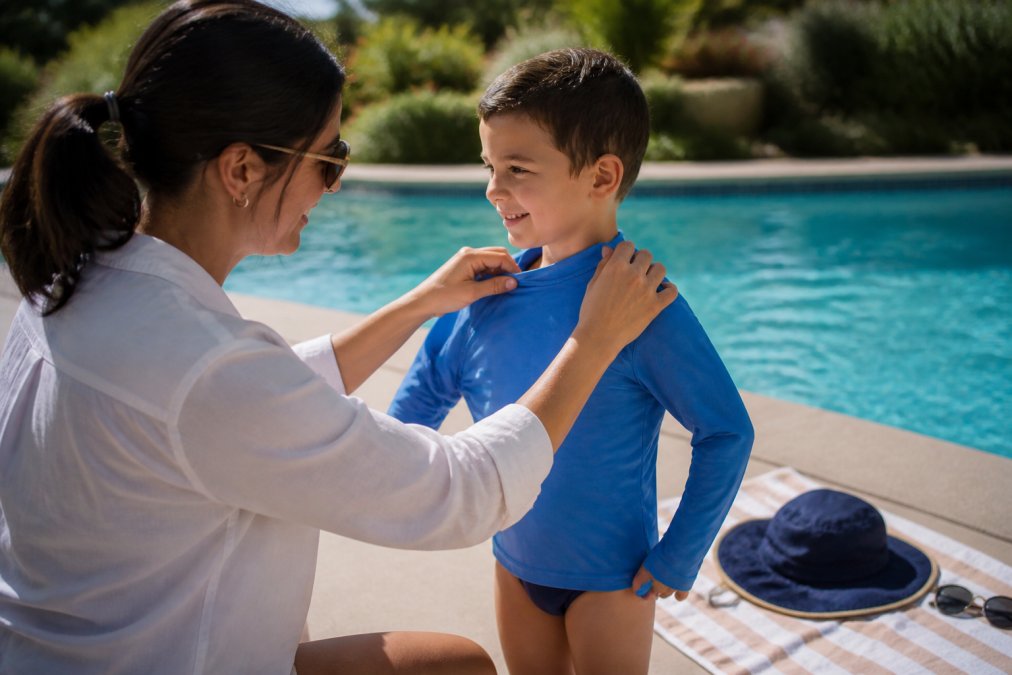
Step 1: Start With a Moisture-Wicking Base Layer
Choose a moisture-wicking base layer that sits close to the skin. Synthetic fibers like polyester and nylon pull sweat away and dry fast. This keeps kids comfortable and stops chafing during long water play.
Step 2: Add a Mid-Layer for Coverage and Breathability
The mid-layer adds coverage without trapping heat. A long-sleeve rash guard with a full torso works well here. Look for breathable fabric and a relaxed fit that lets air move.
Step 3: Finish With Protective Accessories
Accessories close the gaps that clothing leaves open. A wide-brim hat shades the face and neck. Sunglasses protect the eyes. Swim shoes cover the tops of the feet, which burn easily.
- Wide-brim sun hat
- UV-blocking sunglasses
- Swim shoes or water socks
- Light neck gaiter for high-altitude days
Layering for Different Climates: Beach vs. High Altitude
Most layering guides hand you one system and wish you luck. That approach falls apart the moment your environment changes. A beach day and a high-altitude hike demand different layering logic, and getting it wrong means either overheating or under-protecting. Here is how to adapt the three-layer system to each setting. Shifting your focus from the intense glare of mountain peaks to the reflective surfaces of the shoreline requires a nuanced coastal styling guide to maintain consistent UV defense.
Beach and Pool: Prioritize Airflow and Wet Performance
At sea level, heat and humidity are the real enemies. The sun's rays are intense, but so is the risk of a child overheating and stripping off every layer you carefully added.
Your beach layering rules:
- Base layer: A snug, long-sleeve rash guard in a light color. Light colors reflect heat rather than absorb it, and a snug fit keeps fabric from stretching out and opening gaps in the weave.
- Mid-layer: Skip it in the water. On land, a loose, breathable long-sleeve swim top adds coverage without trapping heat.
- Accessories: Wide-brim hat, UV-blocking sunglasses, and water shoes. Sand reflects UV upward, so the tops of feet and the underside of the chin burn faster than people expect.
High Altitude: Block Stronger Rays and Manage Temperature Swings
UV radiation intensifies as you gain elevation, and it reflects off snow, rock, and water. A high-altitude hike can deliver significantly more UV exposure than a beach day at the same temperature. At the same time, temperatures swing hard between sun and shade, and wind strips warmth fast.
Your high-altitude layering rules:
- Base layer: A moisture-wicking long-sleeve tee or light hoodie. Synthetic fibers like polyester and nylon move sweat away and dry quickly when you stop moving.
- Mid-layer: A full-coverage long-sleeve top with a higher UPF rating. This is where you want the denser weave and darker color, because both raise protection.
- Outer accessories: A neck gaiter, gloves, and a hat with a brim that covers ears. Ears and the back of the neck are common burn sites at elevation because people tilt their heads up to look at the view.
A Quick Comparison
| Factor | Beach / Pool | High Altitude |
|---|---|---|
| Primary concern | Overheating | Stronger UV + temperature swings |
| Base layer | Light-color rash guard | Moisture-wicking long-sleeve tee |
| Mid-layer | Loose swim top on land only | Full-coverage long-sleeve top |
| Key accessories | Hat, sunglasses, water shoes | Neck gaiter, gloves, brimmed hat |
| Common mistake | Over-layering in heat | Leaving ears and neck bare |
The Overheating Problem: How to Layer Without Heat Exhaustion
This is the concern that stops most families from layering at all. A child who is too hot will peel off every layer the moment you look away, and then they are fully exposed.
- Choose breathable fabrics. Tight weaves block UV, but they also trap heat if the fabric does not wick. Look for moisture-wicking synthetics that move sweat to the surface where it evaporates.
- Keep the base layer snug, the mid-layer loose. A snug base manages sweat. A loose mid-layer lets air circulate between the fabric and your skin.
- Time your layers. Add the mid-layer in early morning and late afternoon. Shed it during peak UV hours if you are in shade, and put it back on when you return to direct sun.
- Watch for warning signs. Flushed skin, headache, dizziness, or nausea mean it is time to cool down, hydrate, and find shade. Layering should never come at the cost of comfort.
How to Care for UPF Clothing So It Lasts
UPF protection is built into the fabric, not applied as a coating that washes away. That is good news for longevity, but it also means the weave itself is what you are protecting. When fibers break down, stretch out, or thin, gaps open between threads and UV radiation passes through. Care is really weave maintenance.
What Actually Degrades UPF Performance
Understanding the mechanism helps you avoid the habits that cause damage:
- Stretching. When fabric stretches, the spaces between threads widen. A garment stretched to its limit can drop well below its rated UPF. This is why fit matters as much as care.
- Abrasion. Rough surfaces like concrete pool edges, rock, and Velcro snag and thin the weave over time.
- Harsh chemicals. Chlorine and bleach can weaken fibers, and fabric softener coats them, which can reduce how effectively the fabric manages moisture and maintains its structure.
- Heat. High dryer temperatures can shrink or degrade synthetic fibers, distorting the weave.
A Simple Care Routine
- Wash cold on a gentle cycle. Cold water is gentler on fibers than hot water.
- Skip bleach and fabric softener. Both work against the fabric's structure and performance.
- Air dry when you can. If you must use a dryer, choose low heat. Air drying preserves the weave and extends the garment's life.
- Rinse after swimming. A quick rinse in cool water removes chlorine and salt, which can degrade fibers over time.
- Store flat or hanging. Folding along the same crease repeatedly can stress fibers in one spot.
How to Check If a Garment Still Protects
You do not need a lab to spot trouble. Hold the fabric up to a bright light or a window. If you can see pinpricks of light through it, the weave has thinned and the garment is likely no longer delivering its rated protection. Check the areas that take the most abuse first: shoulders, knees, and the seat.
When to Replace
Even with perfect care, UPF clothing does not last forever. Replace a piece when:
- It looks see-through when held to light
- The fabric feels thin or stiff in high-wear areas
- It has stretched out and no longer fits snugly
- The color has faded dramatically, which can signal fiber breakdown
Common Layering Mistakes to Avoid
Watch for these slip-ups:
- Wearing cotton as a base layer for water play
- Skipping accessories and leaving the neck and hands bare
- Choosing dark, heavy fabric on a hot beach day
- Forgetting that wet fabric can stretch and lose coverage
The second mistake is relying on clothing alone. Cover the exposed skin with sunscreen and plan around peak UV hours. Layering works best as part of a full sun-safety routine.
Frequently Asked Questions
Does layering UPF clothing increase the protection factor?
Layering two UPF 30 garments does not simply add up to UPF 60, but it does increase overall protection because less UV radiation reaches your skin. Each layer blocks a percentage of UVA and UVB rays, and doubling up reduces the total amount that gets through. The biggest benefit of layering is covering gaps where a single garment might shift or leave skin exposed, like the lower back or neck. For children, a base layer plus a mid-layer creates a reliable barrier during long outdoor activity.
Should you wear sunscreen under UPF clothing?
Sunscreen is still important for any skin your UPF clothing does not cover, such as your face, hands, and feet. Under the fabric itself, sunscreen is not necessary because the garment already blocks UV radiation. However, if you are wearing a loose-fitting or stretched garment, applying sunscreen underneath adds a backup layer of protection. The CDC recommends using broad-spectrum sunscreen with SPF 15 or higher on exposed areas, and pairing it with sun-protective apparel for the best coverage.
How long does UPF 50+ clothing last?
UPF 50+ clothing typically maintains its protection for the life of the garment if cared for properly. The UV protection comes from the fabric's tight weave, fabric density, and sometimes added treatments. Washing with harsh detergents, drying on high heat, or stretching the fabric can break down these qualities over time. To extend the life of your sun-protective apparel, wash in cold water, avoid fabric softeners, and air dry when possible. Inspect garments for thinning or holes, which reduce protection.
Can UV rays penetrate through thin clothing?
Yes, UV rays can penetrate thin or loosely woven fabrics. A standard white cotton t-shirt offers only about UPF 5 to UPF 8 protection, which is far below the UPF 30 minimum recommended for reliable sun safety. Fabric density, tight weave, and darker colors all improve UV blocking. Synthetic fibers like polyester and nylon often outperform natural fibers because they are engineered with tighter construction. When layering, choose garments with a UPF rating and hold them up to light as a quick test: if light passes through easily, UV rays will too.
Sun exposure adds up over a childhood, and the habits you build now protect your kids for years. Bright & Bold Swimwear makes layering easy with high-visibility rash guards and swim sets that pair UPF 30+ protection with colors you can spot from across the pool. Our long-sleeve sets cover from collar to waist, and our bright neon colorways help parents and lifeguards keep watch in crowded water. Get started with Bright & Bold Swimwear and build a sun-safety routine your family can stick with.