

How to Stop Kids Swimsuit Colors From Fading
Table of Contents
- Why Kids Swimsuit Colors Fade: Understanding the Culprits
- Best Swimsuit Colors for Water Safety and Durability
- Pre-Swim and Post-Swim Care Steps
- How to Wash Chlorine Out of Swimsuits Properly
- Sun Protective Clothing for Toddlers: Drying and Storage
- Fabric-Specific Care for Polyester and Spandex Blends
- Common Mistakes to Avoid When Caring for Swimsuits
- Keeping Your Child's Swimsuit Vibrant Year-Round
Last Updated: August 30, 2026
Why Kids Swimsuit Colors Fade: Understanding the Culprits
Chlorine, UV rays, and saltwater are the primary reasons kids swimsuit colors fade quickly. Understanding what causes the damage is the first step toward protecting your child's investment in high-visibility swimwear.
At Bright & Bold Swimwear, we've watched parents struggle with this exact problem: they buy vibrant, safety-focused swimsuits to keep their children visible in the water, only to watch those bright colors dull within weeks. The good news is that color fading isn't inevitable, it's the result of specific chemical and environmental factors you can control.
Chlorine and Its Impact on Synthetic Fibers
Chlorine is the primary culprit behind faded kids swimsuit colors. When chlorine contacts synthetic fibers like polyester and spandex, it breaks down the chemical bonds that hold dyes in place. Chlorine is an oxidizing agent that strips electrons from dye molecules, literally changing their chemical structure and making them colorless (peer-reviewed research).
Damage accelerates with exposure time. A child who spends 30 minutes in a chlorinated pool experiences less color degradation than one who spends two hours there. Over a full swim season, cumulative exposure creates dramatic fading. Since chlorine damage is irreversible at the molecular level, prevention, removing chlorine immediately after swimming, matters far more than treatment after the fact.
UV Degradation and Direct Sunlight Exposure
Ultraviolet light causes different color damage than chlorine. UV rays excite electrons in dye molecules, causing them to release energy as heat. This photodegradation fades colors from the outside in, making suits look dull even if the fiber structure remains intact.
Direct sunlight is particularly damaging. A swimsuit left in the sun for even a few hours shows visible color loss. Darker, more saturated colors like deep blues and purples fade faster than lighter shades because they absorb more UV energy (peer-reviewed research). Bright neon colors, engineered to reflect light for visibility, actually hold up better under UV exposure than traditional dark swimsuit colors, another reason high-visibility swimwear is worth the investment.
Saltwater and Water Chemistry Effects
Saltwater introduces additional challenges beyond chlorine. Salt crystals lodge in fabric fibers, and minerals in saltwater interact with dyes differently than fresh chlorinated water. Water pH also matters; water that's too acidic or too alkaline weakens the bonds between dye and fiber.
Hard water, which contains high levels of minerals like calcium and magnesium, contributes to color fading by forming deposits on fabric that interfere with how light reflects off dyes, making colors appear duller even if dye molecules haven't been damaged.
Best Swimsuit Colors for Water Safety and Durability
Not all swimsuit colors are created equal when it comes to visibility and colorfastness. Neon yellows, oranges, and bright pinks are specifically engineered to stand out against the blues and greens of water, making them the gold standard for child safety in aquatic environments.
These fluorescent dyes are more resistant to fading than traditional colors because they're synthetic compounds designed to reflect light rather than absorb it. A neon yellow swimsuit will fade, but it takes longer and the color loss is less dramatic than darker shades.
Bright & Bold Swimwear's collection uses high-visibility neon patterns because they serve dual purposes: they keep your child visible to lifeguards and parents, and they maintain their color better throughout the swim season. Our Boys swimsuits and Girls swimsuits are specifically designed with these fade-resistant, safety-focused colors in mind.
Pre-Swim and Post-Swim Care Steps
The window immediately after swimming is critical. Within minutes of leaving the pool or ocean, chlorine and saltwater begin damaging dyes. The faster you rinse, the less damage occurs.
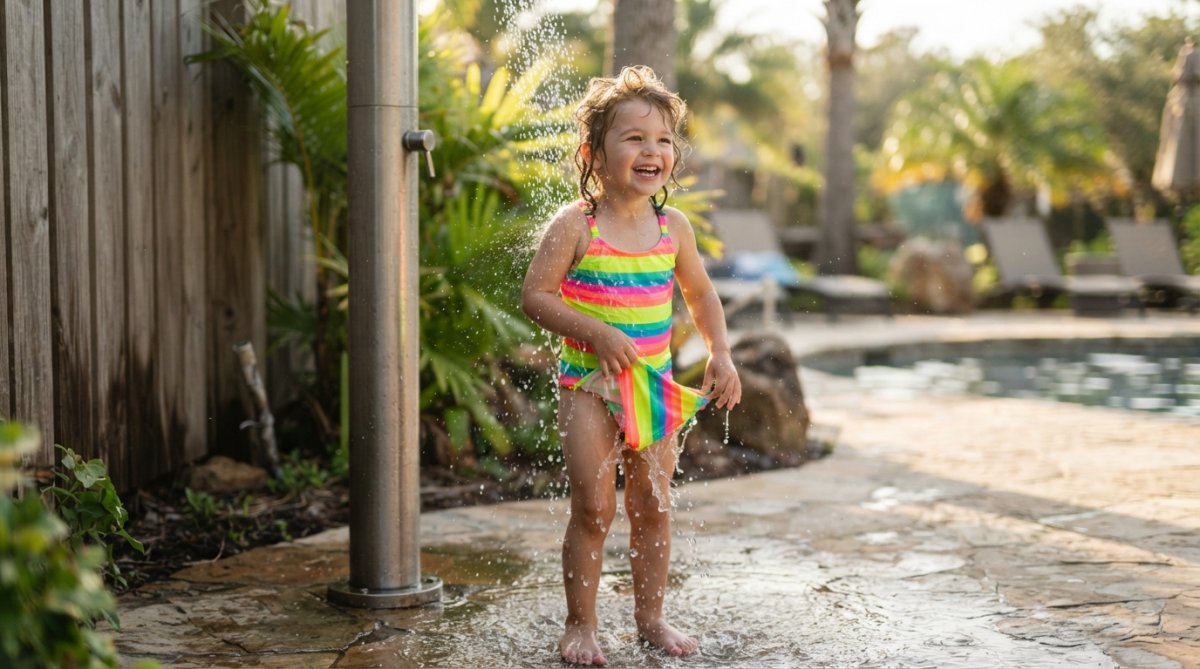
Rinsing Procedures After Swimming
Rinse your child's swimsuit with fresh water immediately after leaving the pool or ocean. Use cool water; warm water opens up the fiber structure and allows chlorine and salt to penetrate deeper.
Spend at least 30 seconds rinsing the entire suit, paying special attention to areas where chlorine concentrates, like the chest and shoulders. Use the rinse showers provided at public pools, or use your outdoor shower or garden hose at home. Rinse both the outside and inside of the suit, as chlorine penetrates the fabric completely.
Soaking Solutions to Remove Chlorine
After a quick rinse, soak the suit in fresh water for 10-15 minutes to remove residual chlorine embedded in the fibers. Fill a bucket or sink with cool fresh water and submerge the suit. Some parents add one tablespoon of white vinegar per gallon of water; the mild acidity helps neutralize chlorine, though the soaking itself provides the primary benefit.
Don't soak longer than 30 minutes, as extended soaking can allow water to penetrate fibers more deeply and weaken the elastic in spandex blends.
How to Wash Chlorine Out of Swimsuits Properly
After soaking, a gentle wash removes remaining chlorine and prepares the suit for storage. Aggressive washing damages the elastic and accelerates color fading.
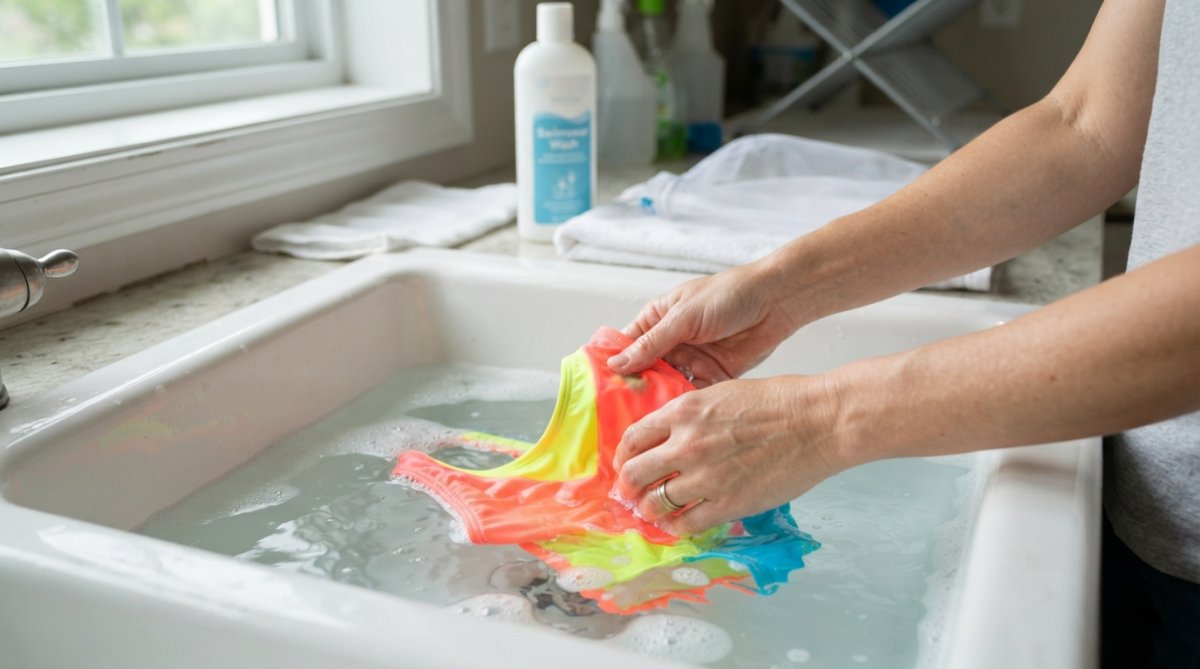
Hand Washing vs. Machine Washing
Hand washing is always better for kids swimsuits. Machine agitation, even on delicate cycles, stresses elastic fibers and causes colors to bleed more readily.
Fill a sink with cool water and add mild detergent designed for delicates or baby clothes. Submerge the suit and gently work soapy water through the fabric, paying attention to areas where sweat and sunscreen accumulate. Rinse thoroughly with cool running water until the water runs clear and soap smell is gone. This usually takes 2-3 rinses, as detergent residue can attract chlorine and salt.
Avoiding Harsh Chemicals and Detergents
Regular laundry detergents are too strong for swimsuit fabrics. They contain surfactants and brightening agents that strip dyes and weaken elastic. Avoid bleach, oxygen-based stain removers, and fabric softeners entirely, these chemicals accelerate color fading or reduce water-repellent properties.
Stick to mild, pH-balanced detergents designed for delicate fabrics. If a detergent is safe for wool or silk, it's safe for swimsuits.
Sun Protective Clothing for Toddlers: Drying and Storage
How you dry and store your child's swimsuit between uses matters as much as how you wash it.
Air Drying to Prevent Color Bleeding
Never put a wet swimsuit in the dryer. Heat damages the elastic and can set remaining chlorine or salt into fibers, making future fading worse.
Gently squeeze out excess water without wringing or twisting, which damages elastic and causes color bleeding. Lay the suit flat on a clean, dry towel in a shaded area. Shade is essential, even a few hours of direct sunlight while wet causes dramatic fading because wet fibers absorb UV light more readily than dry ones. preventing color fading.
Proper Storage Away From Direct Sunlight
Once completely dry, store the suit in a cool, dark place like a drawer, closet shelf, or storage bin away from windows. Direct sunlight streaming through windows fades colors even when the suit isn't being worn.
Avoid plastic bags for extended storage; moisture gets trapped and creates environments for mildew growth. A breathable cotton storage bag or drawer is better. Avoid hot attics or heating vents, as heat weakens spandex elasticity and accelerates oxidation that leads to color fading.
Fabric-Specific Care for Polyester and Spandex Blends
Most kids swimsuits are made from polyester and spandex blends. Polyester provides structure and is relatively resistant to chlorine damage, but dyes applied to polyester fade quickly. The key is removing chlorine before it interacts with dyes.
Spandex is more vulnerable to chlorine damage than polyester. Chlorine breaks down the long-chain polymers that give spandex its elasticity, causing suits to lose shape and become baggy. This is why immediate post-swim rinsing is critical, you're protecting both color and structural integrity.
Since spandex degrades above 140 degrees Fahrenheit, never use hot water for washing or drying. Cool water is always the right choice.
Common Mistakes to Avoid When Caring for Swimsuits
The most common mistake is delaying the post-swim rinse. Waiting until you get home allows chlorine and salt to sit in fabric for hours, deepening damage. If you can't rinse immediately at the pool, bring a spray bottle of fresh water and rinse before putting the suit in a bag.
Another frequent error is storing wet or damp swimsuits. Even slightly damp fabric is vulnerable to fading and creates environments where mildew grows. Always ensure complete dryness before storing.
Using hot water is also damaging. Cool water is always the right choice. Finally, exposing swimsuits to direct sunlight during drying or storage causes dramatic fading within days. Shade is non-negotiable.
Keeping Your Child's Swimsuit Vibrant Year-Round
Protecting kids swimsuit colors from fading requires consistency and understanding. Most of the work happens in the first few minutes after swimming.
A simple routine, rinse immediately with fresh water, soak for 10-15 minutes, hand wash gently, and air dry in shade, dramatically extends the life and vibrancy of your child's swimsuit. This routine takes less than five minutes of active work and can double or triple how long colors remain bright.
The investment in high-visibility swimwear like Bright & Bold Swimwear's collection is only worthwhile if the suit maintains its visibility throughout the season. A faded neon yellow swimsuit loses its safety advantage, defeating the entire purpose of choosing bright colors.
By understanding the specific threats to fabric integrity, chlorine, UV light, and saltwater, and taking targeted action against each one, you're protecting both the safety function and longevity of the garment. Your child stays visible in the water, and you get more seasons of use from the same suit.
Keeping your child safe in the water means maintaining the visibility that high-visibility swimwear provides. Bright & Bold Swimwear's vibrant, safety-focused designs are engineered to resist fading better than traditional swimsuit colors, but they still require proper care. Follow the post-swim rinsing, gentle washing, and shade-based drying practices outlined here, and your child's swimsuit will maintain its bright, protective colors throughout the season. The American Red Cross provides evidence-based guidance on water safety for young children. Start with one of our Best Sellers and commit to the care routine, your investment will pay off in both safety and durability.
Frequently Asked Questions
Does chlorine cause kids swimsuit colors to fade faster?
Yes, chlorine is one of the primary culprits behind swimsuit color fading. Chlorine breaks down the chemical bonds that hold dyes in place on synthetic fibers and reacts with dyes, causing them to lose vibrancy over time. Rinsing your child's swimsuit immediately after pool time and soaking it in fresh water helps remove chlorine residue before it can damage the fabric and dyes.
What are the best swimsuit colors for water safety that also resist fading?
Bright neon colors like fluorescent yellow, lime green, and orange are excellent for visibility and tend to maintain their intensity longer than pastels. These high-contrast colors stand out against the blues and greens of water, making them easier for lifeguards and parents to spot. High-visibility swimwear with UPF 30+ protection and proper care routines helps preserve these vibrant colors while keeping your child safe.
How often should I wash my child's rash guard or swimsuit?
Rinse your child's swimsuit with fresh water immediately after every swim session, this is the most critical step. For a full wash with mild detergent, do this 1-2 times per week depending on how frequently your child swims. Hand washing in cool water with gentle soap removes chlorine, salt, and detergent residue that can degrade fabric integrity and cause color bleeding. Air drying away from direct sunlight preserves the dyes and elasticity.
Can I use regular laundry detergent to wash kids' swimsuits?
Avoid regular laundry detergents, which are too harsh and contain agents that can accelerate color fading. Instead, use mild soap or gentle detergent designed for delicate fabrics. These products clean effectively without damaging synthetic fibers or stripping away the dyes that make high-visibility swimwear stand out in the water.
This article was written using GrandRanker