

Life Jackets vs Puddle Jumpers for Toddlers
Table of Contents
- Life Jackets vs Puddle Jumpers: Key Differences
- US Coast Guard Approved Life Jackets for Toddlers
- Pros and Cons of Each Flotation Device
- How to Choose a Toddler Swim Vest
- Toddler Water Safety Tips Beyond Flotation
- Common Misconceptions About Swim Aids
- Making the Right Choice for Your Child
- Conclusion
Last Updated: August 14, 2026
Life Jackets vs Puddle Jumpers: Key Differences
Understanding the fundamental differences between life jackets and puddle jumpers is essential for choosing the right water safety gear for your toddler. Both flotation devices keep your child safe in the water, but they work in distinctly different ways.

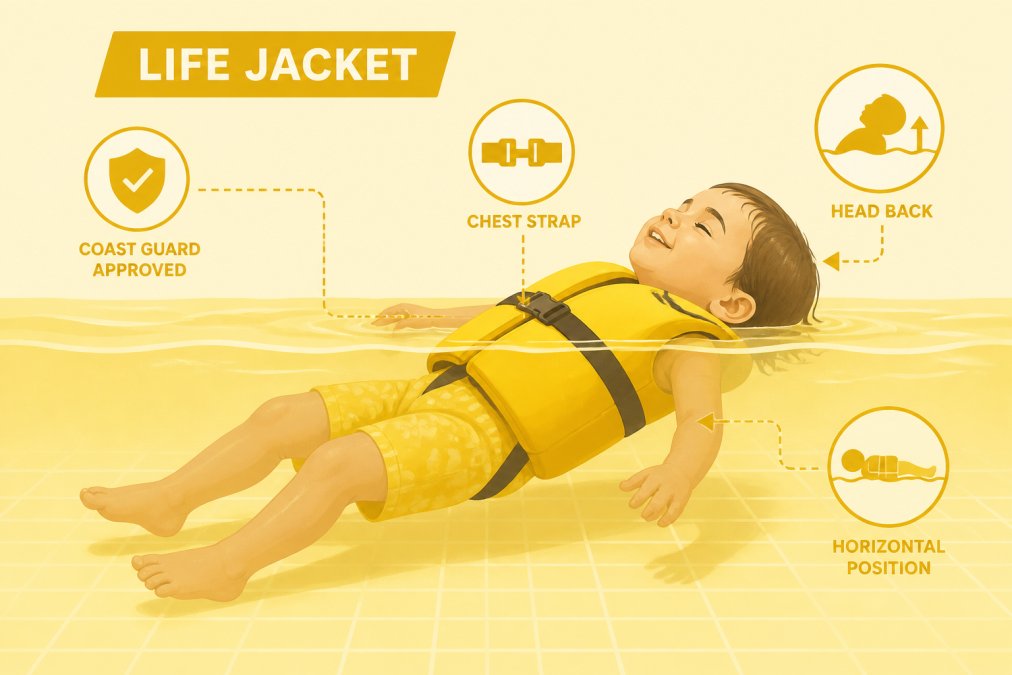
A life jacket is a personal flotation device (PFD) designed to provide consistent buoyancy across your child's entire torso using foam or inflatable chambers. When properly fitted, a life jacket keeps your child's head above water even if they become unconscious, the critical safety feature that distinguishes it from other swim aids.
Puddle jumpers are arm floats or inflatable vests that provide buoyancy primarily around the arms and upper body. They rely on your child's active participation to stay effective. The functional difference is stark: a life jacket provides passive flotation (it works whether your child cooperates or not), while a puddle jumper provides active flotation (it requires your child to position themselves correctly and move with purpose).
Body Positioning and Buoyancy
Coast Guard approved life jackets are engineered to maintain horizontal body positioning, keeping your child face-up with their head tilted back and airway clear of the water. This horizontal orientation prioritizes survival, if your child becomes exhausted or panicked, the life jacket automatically keeps their airway above the waterline.
Puddle jumpers allow and often encourage vertical positioning, with your child standing or moving upright in the water. This positioning is more natural for active play and learning water skills, but it means your child must actively stay afloat. If they stop moving or panic, there's no automatic mechanism keeping their airway clear.
US Coast Guard Approved Life Jackets for Toddlers
Understanding Coast Guard Approval
The U.S. Coast Guard sets rigorous standards for personal flotation devices through the Code of Federal Regulations. A Coast Guard approved life jacket has passed specific buoyancy tests, flotation retention tests, and safety performance evaluations. This approval means the device has been independently tested and verified to meet federal safety standards.
Not all water flotation devices carry this approval. Many puddle jumpers and swim vests are marketed as "swim aids" or "training devices" rather than approved PFDs. When you see "U.S. Coast Guard Approved" on a product label, it means that device has been tested to maintain buoyancy under specific conditions and can reliably keep a child's head above water.
Why Approval Matters for Your Child
An approved life jacket is designed to turn an unconscious wearer face-up in the water, a feature called "turning ability." This automatic response can be lifesaving if your child becomes exhausted, slips underwater, or panics. Unapproved swim aids offer no such guarantee. An approved life jacket represents a tested, verified commitment to your child's safety.
Pros and Cons of Each Flotation Device
Life Jacket Advantages and Limitations
Advantages:
Life jackets offer unmatched safety performance. They maintain buoyancy automatically, keep your child's airway clear of the water, and work whether your child is conscious and cooperative or not. For toddlers, this passive protection is invaluable because young children can panic, slip, or become exhausted quickly. Coast Guard approved life jackets also provide consistent, reliable flotation in unpredictable environments like lakes, rivers, and oceans.
Limitations:
Life jackets can feel restrictive and bulky, and many toddlers resist wearing them because they limit arm movement. Life jackets can also interfere with swimming technique development because they provide passive flotation, so your child doesn't develop the muscle memory needed for independent swimming. Additionally, life jackets can create a false sense of security for caregivers, active supervision remains essential.
Puddle Jumper Strengths and Drawbacks
Strengths:
Puddle jumpers feel less restrictive than life jackets and allow greater arm mobility and a more natural swimming position. Many children prefer the freedom puddle jumpers provide, which can make water time more enjoyable. Puddle jumpers also encourage active participation in the water, which can accelerate water confidence and swimming skills.
Drawbacks:
Puddle jumpers are not Coast Guard approved, which means they haven't passed federal safety testing. There's no standardized guarantee of how much buoyancy they provide or how reliably. Puddle jumpers require active participation, if your child becomes tired, panicked, or slips underwater, the puddle jumper won't automatically keep their airway clear. This means puddle jumpers demand constant, attentive supervision. Puddle jumpers can also create a false sense of independence, leading children to overestimate their abilities.
How to Choose a Toddler Swim Vest
Fit, Weight Capacity, and Secure Fasteners
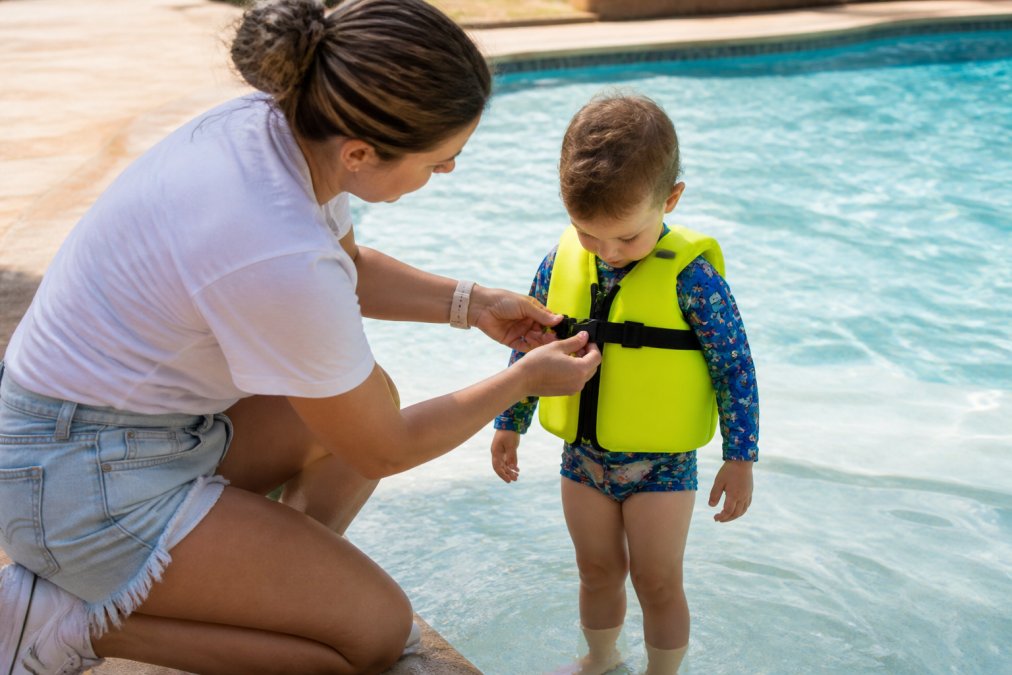
The most critical factor in choosing any flotation device is fit. A poorly fitting life jacket or swim vest won't provide reliable protection, regardless of its design or approval status.
Start by checking the weight capacity marked on the label. Your toddler's weight must fall within that range. Next, assess the fit around your child's torso, the device should fit snugly without being uncomfortably tight. You should be able to fit one finger between the device and your child's body. The armholes should be snug enough that the device doesn't ride up over your child's shoulders. Secure fasteners are essential: look for multiple attachment points including chest straps, waist straps, and crotch straps. Test the fit in shallow water under your supervision to observe how it positions their body.
Assessing Your Water Environment
Your choice between a life jacket and a puddle jumper should depend on where your child will spend time in the water. For open water, lakes, rivers, beaches, or backyard pools without lifeguards, a Coast Guard approved life jacket is the safer choice. Open water presents unpredictable conditions, currents, temperature changes, sudden depth changes, and no professional supervision. For backyard pools, consider your supervision capacity. If you can maintain constant, undivided attention, a puddle jumper with active supervision can work. If your attention will be divided or you're managing multiple children, a life jacket provides an additional safety margin.
Toddler Water Safety Tips Beyond Flotation
Active Supervision and Drowning Prevention
No flotation device eliminates the need for active, attentive supervision. Drowning happens quickly and silently, a drowning child often can't call for help because they're focused on breathing.
Active supervision means you're within arm's reach of your child at all times, watching them continuously without distraction. Even a child wearing a Coast Guard approved life jacket needs your constant attention. Establish clear water rules with your toddler: "We don't go in the water without a grown-up," "We listen for the whistle," "We stay in the shallow end." Consider enrolling your child in swim lessons to accelerate water confidence and teach essential survival skills.
Building Water Confidence While Teaching Swimming
Water confidence develops gradually through repeated, positive experiences. Start in shallow water where your child can touch the bottom. Let them splash, play, and become comfortable with water on their face and body.
Teach fundamental water skills progressively: floating on their back, moving through the water, controlling their breathing, and understanding water depth. Use positive reinforcement and celebrate small victories. Understand that flotation devices have trade-offs: a life jacket provides safety but may slow skill development, while a puddle jumper allows more active engagement but requires constant supervision.
Common Misconceptions About Swim Aids
Misconception 1: "Any flotation device prevents drowning."
Reality: Only Coast Guard approved life jackets are designed and tested to prevent drowning by maintaining automatic flotation. Puddle jumpers and other swim aids provide buoyancy but aren't engineered to protect your child during emergencies.
Misconception 2: "If my child is wearing a flotation device, I don't need to watch them as closely."
Reality: Flotation devices are not substitutes for active supervision. Devices can shift, be removed, or fail. Supervision remains the primary defense against drowning.
Misconception 3: "Puddle jumpers teach children to swim."
Reality: Puddle jumpers can support water confidence and comfort, but they don't teach swimming skills. They may actually slow skill development because your child doesn't develop the muscle memory needed for independent swimming.
Misconception 4: "Life jackets are too restrictive and will discourage water play."
Reality: Some children resist life jackets initially, but many adapt quickly, especially if you introduce them positively and consistently. The short-term adjustment is worthwhile for the safety benefit. Additionally, Bright & Bold Swimwear's high-visibility swimwear options provide another layer of protection by making your child easily visible in the water, complementing whatever flotation device you choose.
Misconception 5: "Horizontal positioning is unnatural and will confuse my child about how to swim."
Reality: Horizontal positioning is the standard for survival flotation because it keeps your child's airway clear. Children adapt to different body positions in water as they develop skills.
Making the Right Choice for Your Child
Choosing between a life jacket and a puddle jumper depends on your specific situation: your child's age and swimming ability, where they'll spend time in the water, your supervision capacity, and your priorities regarding safety versus skill development.
For toddlers in their first water experiences, especially in open water or unsupervised settings, a Coast Guard approved life jacket is the safer choice. For toddlers in supervised pool settings with lifeguards, or for children who already have some water confidence, a puddle jumper can support active learning and skill development. Many families use both: a life jacket for open water, beaches, and situations where safety is the priority, and a puddle jumper for pool time when the focus is on skill development.
Whichever device you choose, remember that it's one component of a comprehensive water safety approach. Active supervision, swim instruction, water safety rules, and your own water competence are equally important. The device itself is a tool that supports, but never replaces, your vigilance and care.
Keeping your toddler safe in the water requires understanding both the tools available and your role as a caregiver. While flotation devices provide important support, your attention and involvement remain the foundation of water safety. If you're looking for an additional layer of visibility and protection, consider pairing your chosen flotation device with high-visibility swimwear. Bright & Bold Swimwear's collection features vibrant, easily visible designs that help you spot your child instantly in the water, complementing whatever safety gear you choose. Explore our boys swimsuits and girls swimsuits to find options that combine safety with style your child will actually want to wear.
Frequently Asked Questions
Are puddle jumpers or life jackets better for toddlers?
Life jackets provide superior safety for toddlers because they're designed to keep children in a horizontal, face-up position if they slip underwater. Coast Guard approved life jackets are tested for drowning prevention and meet rigorous safety standards. Puddle jumpers are arm floats that don't provide the same level of head support or body positioning control, making them less reliable for water safety in pools or open water.
What should a 2-year-old wear in the water?
A US Coast Guard approved life jacket is the safest choice for a 2-year-old. Look for a jacket sized specifically for your child's weight range (typically 30-50 pounds for toddlers), with a snug fit, secure buckles, and a chest strap that keeps the jacket in place. Pair any flotation device with constant active supervision from an adult within arm's reach. Never rely solely on flotation aids, they're tools to support, not replace, attentive watching.
Why are puddle jumpers not recommended for toddlers?
Puddle jumpers don't support horizontal body positioning and offer minimal head support if a child becomes fatigued or slips. They can create a false sense of security because they feel supportive in calm pool water, but they don't keep a child's airway clear in emergencies. Additionally, puddle jumpers aren't Coast Guard approved for water safety and can actually interfere with natural swimming technique development, making the transition to independent swimming more difficult.
How do I know if a life jacket fits my toddler properly?
A properly fitting life jacket should be snug but not restrictive. The armholes should be tight enough that you can't pinch more than an inch of fabric, and the chest strap should fasten securely without gaps. Lift your child by the shoulders of the jacket, it should not ride up over their chin or ears. Check the weight capacity tag to ensure the jacket matches your child's current weight. Test the fit in water before relying on it, and always adjust straps and buckles before each use.
This article was written using GrandRanker