

Toddler Water Safety Tips for Beach Vacations
Table of Contents
- Why Toddler Water Safety Starts Before You Leave Home
- How to Supervise Toddlers at the Beach: The Active Supervision Method
- Ocean Safety for Toddlers: Understanding Waves, Currents, and Rip Currents
- Toddler Life Jacket Beach Essentials: Flotation Devices and Limitations
- Beach Safety Checklist for Families: Pre-Trip and On-Site Preparation
- Managing Heat, Hydration, and Beach Hazards Beyond the Water
- What to Do If Your Toddler Is Missing or in Distress
- Frequently Asked Questions
Last Updated: October 8, 2026
Why Toddler Water Safety Starts Before You Leave Home
Drowning is a leading cause of unintentional injury death for children ages 1-4 (the CDC).
Toddler water safety tips for beach vacations start with a simple truth: you can't supervise what you can't see. This is why we designed high-visibility swimwear specifically for young swimmers.
The safest beach trips combine three elements: proper gear, clear planning, and active supervision from the moment you arrive. This guide covers all three.
How to Supervise Toddlers at the Beach: The Active Supervision Method
Active supervision means constant, focused attention on your toddler while they're in or near the water. Not checking your phone. Not chatting with other adults. Eyes on your child, every second.
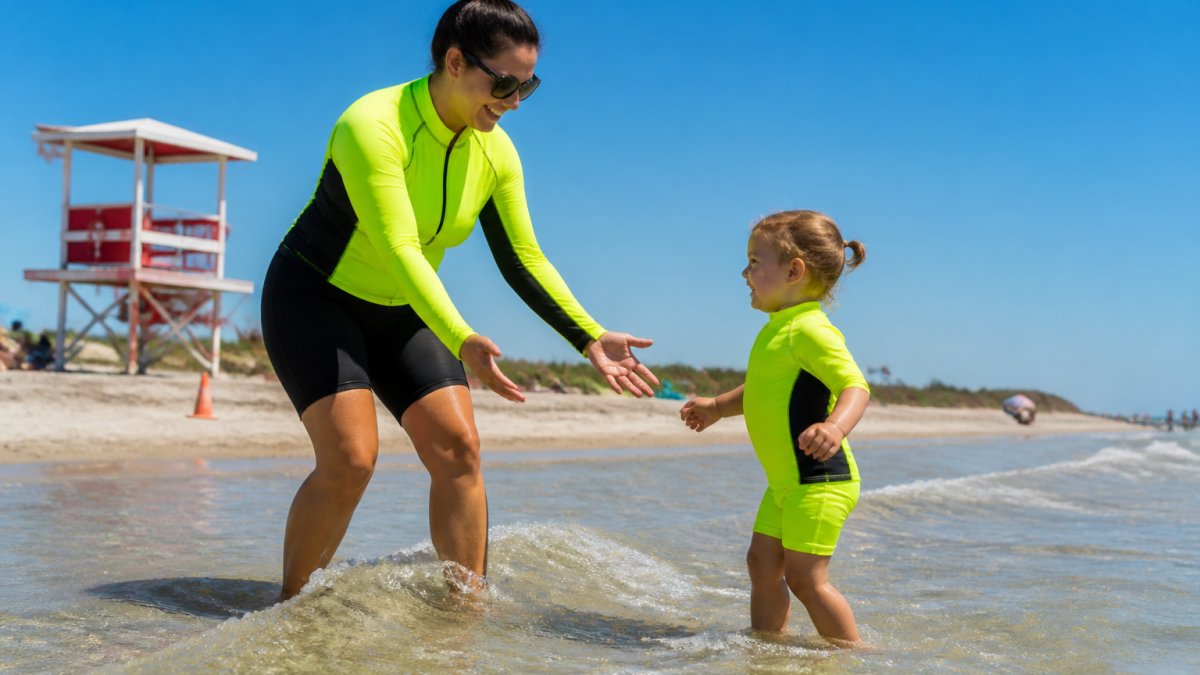
Keeping Toddlers Within Arm's Reach
The safest rule is simple: your toddler stays within arm's reach at all times. This means you can reach out and touch them instantly. Not five feet away. Not "close enough." Arm's reach.
Why this matters:
- A toddler can slip under water in seconds without making noise
- Drowning often happens silently and quickly
- Arm's reach gives you time to react
Practical steps:
- Wade into shallow water with your toddler, not on the sand
- Keep one hand free to hold their hand or support their body
- Never turn your back, even for a moment
Designating a Water Watcher
If you're at the beach with another adult, assign one person as the dedicated water watcher.
Rotate this role every 15-20 minutes so no one gets tired or distracted. A tired watcher is not an effective watcher.
What the water watcher does:
- Keeps eyes on your toddler constantly
- Counts children in the water regularly
- Watches for signs of distress
If you're alone with your toddler, you are the water watcher. Don't bring friends along expecting to supervise while socializing. It doesn't work.
Ocean Safety for Toddlers: Understanding Waves, Currents, and Rip Currents
The ocean is different from a pool. Waves, currents, and changing water conditions create hazards that don't exist in controlled settings. Understanding these dangers helps you make smart decisions about where and when your toddler enters the water.
Recognizing Beach Flags and Warning Signs
Most beaches post flag systems to communicate water conditions. Learn what your beach's flags mean before you arrive.
Common flag systems:
- Green flag: calm water, safe for swimming
- Yellow flag: moderate hazards (stronger currents, larger waves)
- Red flag: strong currents or hazards; swim with caution
- Double red flags: water closed to the public
Beyond flags, watch for warning signs:
- Rough, choppy water
- Discolored water
- Unusual foam or debris
- Fewer swimmers than usual (locals know when it's unsafe)
Choosing a Lifeguarded Swimming Area
Always swim in areas with active lifeguards present. A lifeguard can spot trouble faster than any parent and can respond immediately if something goes wrong.
How to find lifeguarded areas:
- Look for the lifeguard tower
- Swim between the flags marking the monitored zone
- Ask staff where lifeguards are stationed
- Avoid swimming outside designated areas
A lifeguard is not a substitute for your supervision. They're an additional layer of protection. You still stay within arm's reach and maintain active supervision.
Toddler Life Jacket Beach Essentials: Flotation Devices and Limitations
High-quality flotation devices are an important safety tool. But they're not a substitute for supervision, and not all flotation gear is created equal.
Why Inflatables Are Not Safety Equipment
Inflatable arm bands, floaties, and pool noodles are toys, not safety equipment. Parents often rely on them as if they provide protection. They don't.
Why inflatables fail:
- They deflate without warning
- They shift and slip off
- They give false confidence, reducing supervision
- They're not designed to keep a child's head above water
A toddler wearing inflatable armbands can still drown if they slip out of them or if the armbands fail. Never use inflatables as a substitute for supervision or a proper life jacket.
High-Visibility Swimwear as a Supervision Tool
This is where high-visibility swimwear makes a real difference. Bright colors help you spot your toddler instantly in crowded beaches or choppy water.
Our Boys Short Sleeve Rash Guard Swim Set and Girls Long Sleeve Rash Guard Set feature neon colors that stand out against blue and green water. Combined with UPF 30+ sun protection, they keep your toddler visible and protected.

What high-visibility swimwear does:
- Makes your toddler easier to spot instantly
- Helps lifeguards keep watch
- Reduces time spent searching in crowds
- Provides sun protection at the same time
Pair high-visibility gear with proper supervision, and you've covered two critical safety bases.
Beach Safety Checklist for Families: Pre-Trip and On-Site Preparation
Preparation prevents panic. Before you head to the beach, plan for safety.
What to Pack and Prepare Before You Go
Pack these essentials before leaving home:
Boys Short Sleeve Rash Guard Swim Set | UPF 30+ High-Visibility Swimwear | Ages →
- High-visibility swimwear for your toddler
- A properly fitted life jacket (Coast Guard-approved)
- Sunscreen (SPF 30+) and reapply every two hours
- A wide-brimmed hat and rash guard for extra sun protection
Before you go to the beach, research:
- Which beaches have lifeguards and their hours
- What the flag system means at your specific beach
- Parking, restroom, and shade availability
- Tides and water conditions for your visit date
Setting Water Rules and Emergency Plans
Sit down with your toddler before the trip and explain beach rules in simple language. Toddlers can't follow complex instructions, but they understand "stay with me" and "listen when I say stop."
Clear water rules:
- "We stay together in the water"
- "We listen to lifeguards"
- "We ask before going in the water"
- "We get out when I say it's time"
Create an emergency plan:
- Agree on a meeting spot on the beach if anyone gets separated
- Make sure your toddler knows your name (not just "Mom" or "Dad")
- Teach your toddler to find a lifeguard if they're lost
- Keep a recent photo of your toddler on your phone
Managing Heat, Hydration, and Beach Hazards Beyond the Water
The ocean isn't the only hazard at the beach. Heat, dehydration, and sharp objects create risks that catch parents off guard.
Sun Protection and Skin Care
Toddler skin burns quickly. Sunburn isn't just uncomfortable, repeated sun exposure increases skin cancer risk later in life.
Sun protection steps:
- Apply SPF 30+ sunscreen 15 minutes before water exposure (the American Academy of Dermatology)
- Reapply every two hours and after swimming
- Use a rash guard or swim shirt for extra protection
- Choose UPF 30+ swimwear like our Girls Long Sleeve Rash Guard Set
Watch for signs of sun poisoning:

- Blistering or severe redness
- Fever or chills
- Nausea or dizziness
If your toddler shows these signs, get to shade immediately and seek medical care.
Water Breaks, Snacks, and Preventing Fatigue
Toddlers get tired and dehydrated quickly. A tired, thirsty toddler becomes cranky and harder to supervise. They also make poor decisions in the water.
Hydration schedule:
- Offer fresh water every 15-20 minutes
- Avoid sugary drinks; they increase dehydration
- Watch for signs of dehydration: dry lips, decreased urination, irritability
- Bring more water than you think you'll need Maintaining these consistent hydration habits becomes even more critical when traveling with kids across different climates and time zones.
Snack and rest schedule:
- Take water breaks every 20-30 minutes
- Provide snacks with protein and carbs (crackers, fruit, cheese)
- Let your toddler rest in the shade between water sessions
- Watch for signs of fatigue: clumsiness, whining, slower movement
A well-fed, hydrated, rested toddler is a safer toddler.
Rocks, Sharp Shells, and Other Shoreline Hazards
Beaches have hazards beyond the water. Rocks, shells, and debris can cut feet and cause infections.
Common beach hazards:
- Sharp shells and shell fragments
- Rocks and uneven sand
- Sea glass and broken glass
- Driftwood splinters
Protection steps:
- Have your toddler wear water shoes or flip-flops on the sand
- Inspect the shoreline before letting them play
- Watch for sea creatures and ask lifeguards about local risks
- Bring tweezers to remove shell fragments
If your toddler steps on something sharp:
- Rinse the wound with fresh water
- Remove any visible debris with tweezers
- Apply antiseptic and a bandage
- Watch for signs of infection over the next few days
What to Do If Your Toddler Is Missing or in Distress
Despite your best efforts, emergencies happen. Knowing what to do in the first moments can save your child's life.
If your toddler goes missing:
- Alert a lifeguard immediately
- Search the water first, then expand to the beach and parking areas
- Call 911 and provide a description
- Show the recent photo you brought on your phone
If your toddler is struggling in the water:
- Call for the lifeguard immediately
- Enter the water and move toward your child
- Support their head above water
- Get them to shallow water or the beach
If your toddler is unresponsive after water exposure:
- Call 911 immediately
- Begin CPR if trained (chest compressions at a rate of 100-120 per minute)
- Don't wait for the child to cough up water; focus on breathing and circulation
- Continue CPR until emergency responders arrive
Drowning can happen silently and quickly. The best response is prevention through constant supervision, but knowing emergency steps gives you confidence and speed if something goes wrong.
Beach vacations should be fun for your whole family. At Bright & Bold Swimwear, we design high-visibility swimwear to make supervision easier by keeping your toddler visible at all times. Our Boys and Girls swimsuits combine vibrant neon colors with UPF 30+ sun protection, so your toddler stays easy to spot and protected from the sun.
Frequently Asked Questions
What are the most important toddler water safety tips for the beach?
The foundation of toddler water safety rests on active, constant supervision within arm's reach, choosing lifeguarded swimming areas, understanding ocean conditions like rip currents, using proper flotation devices (not inflatables), and setting clear water rules before play. High-visibility swimwear helps parents and lifeguards spot your child instantly in busy water environments, reducing the risk of drowning. Combine these strategies with knowledge of beach-specific hazards like rocks and sharp shells, proper hydration and sun protection, and a clear emergency plan for separation situations.
How closely should I supervise my toddler at the beach?
Your toddler should remain within arm's reach at all times during water play. This means you can touch them in one step without turning away. Assign one adult as the designated water watcher with no distractions, no phones, conversations, or splitting attention. This adult is responsible for constant visual contact and immediate response if the child enters water. Even strong swimmers and toddlers with swim lessons require this level of active supervision, as drowning can happen silently and in seconds.
What should my toddler wear for water safety at the beach?
Dress your toddler in a properly fitted life jacket or personal flotation device (PFD) approved by the U.S. Coast Guard if they're not a confident swimmer. Pair this with high-visibility swimwear in bright neon colors that stand out against blue and green water, this helps you and lifeguards spot them instantly. Add rash guards or long-sleeve swim sets for UPF 30+ sun protection, which also increases visibility. Avoid inflatable arm bands or pool floats as primary safety devices; they provide false security and can deflate unexpectedly.
What should I do if my toddler gets separated from me at the beach?
Alert a lifeguard immediately if one is present; they have training and communication tools to search quickly. Notify other beachgoers nearby and describe your child's appearance, including the color of their swimwear. Call 911 if your child has been missing for more than a few minutes. Before your trip, teach your toddler to stay in one place if separated and to find a lifeguard or uniformed adult. Take a photo of your child in their swimwear before entering the water so you have an accurate description. Establish a clear meeting point with your group in case anyone gets separated.