

UPF 50 vs Sunscreen for Beach Days
Table of Contents
- Understanding UPF 50 and Sunscreen Protection
- Key Differences Between UPF 50 and Sunscreen
- UPF 50 Rash Guard Benefits for Beach Days
- Sunscreen Application Best Practices at the Beach
- The Importance of High-Visibility Swimwear
- Pros and Cons for Your Beach Day
- The Best Approach: Combining Both Methods
- Conclusion
- Frequently Asked Questions
Last Updated: September 1, 2026
Understanding UPF 50 and Sunscreen Protection
When planning a beach day with your family, you're likely weighing two sun protection options: UPF 50 clothing and sunscreen. At Bright & Bold Swimwear, we understand that choosing between these methods, or combining them, requires understanding what each actually does. Both offer meaningful protection from ultraviolet radiation, but they work in fundamentally different ways.
What is UPF?
UPF (Ultraviolet Protection Factor) is a rating system that measures how effectively a fabric blocks ultraviolet rays before they reach your skin. A UPF 50 rating means the fabric blocks approximately 98% of both UVA and UVB rays (the FDA). Unlike sunscreen, which degrades with water exposure and sweat, UPF protection remains consistent as long as the fabric stays dry and intact.
What is SPF?
SPF (Sun Protection Factor) measures how long a sunscreen delays sunburn compared to unprotected skin. An SPF 50 sunscreen theoretically allows you to stay in the sun 50 times longer before burning than you could without it (the FDA). However, this rating assumes proper application, most people apply far less than recommended, significantly reducing actual protection. Sunscreen works through chemical or mineral ingredients that absorb UV radiation and convert it to heat, or reflect it away from the skin. The critical limitation: effectiveness depends on consistent reapplication, typically every two hours, and more frequently after swimming or sweating.
Key Differences Between UPF 50 and Sunscreen
Protection Duration and Reapplication
UPF 50 clothing provides continuous protection throughout your beach day without reapplication. Once your child puts on a UPF 50 rash guard, the protection remains constant whether they're playing in the sand, swimming, or resting under an umbrella.

Sunscreen requires vigilant reapplication. Water exposure, sweat, toweling off, and sand all reduce effectiveness. Most dermatologists recommend reapplying every two hours at minimum, and immediately after swimming (the American Academy of Dermatology). For families with active young children, this frequent reapplication often doesn't happen in practice, leaving gaps in protection.
Water Resistance and Sweat
UPF 50 fabric maintains its protective rating whether wet or dry. A child can swim continuously for hours in a UPF 50 rash guard without any reduction in sun protection.
Sunscreen, even water-resistant formulations labeled "80 minutes," loses effectiveness in water. Sweat compounds the problem, a child playing actively on a hot beach will sweat away sunscreen protection within minutes. UPF fabric, conversely, actually works better with moisture.
Coverage Area
UPF 50 rash guards and one-piece swimsuits provide full-body coverage in the areas most vulnerable to sun damage. Long-sleeve designs protect the shoulders, arms, and chest, where children burn fastest.
Sunscreen coverage depends entirely on application technique. Most people miss spots: the tops of feet, the back of the neck, ears, and the part line in hair.
UPF 50 Rash Guard Benefits for Beach Days
Continuous Protection Without Reapplication
A UPF 50 rash guard eliminates the reapplication problem entirely. Your child puts it on in the morning and maintains consistent protection until they change out of it. This is particularly valuable for young children (ages 2-7) who won't cooperate with sunscreen reapplication and for parents managing multiple children simultaneously.

For families at the beach for extended hours, this consistency prevents the sun exposure accumulation that happens when sunscreen protection lapses.
Reliable Coverage in Water
Children spend much of beach time in the water, where sunscreen protection becomes unreliable. A UPF 50 rash guard maintains full protection whether your child is wading, swimming, or diving. There's no need to exit the water for sunscreen reapplication.
Sunscreen Application Best Practices at the Beach
While UPF clothing offers advantages, sunscreen remains a valuable tool when applied correctly.
Proper Application Amount and Frequency

Most people apply roughly half the amount of sunscreen needed for full protection. The recommended amount is one ounce (about a shot glass full) for the entire body. Sunscreen should be rubbed thoroughly into skin, not just spread lightly across the surface. Pay particular attention to areas that burn easily: the nose, ears, tops of feet, and the back of the neck.
Reapplication timing is equally critical. Apply sunscreen 15 minutes before sun exposure begins, then reapply every two hours, or immediately after swimming, toweling off, or sweating heavily.
Timing and Reapplication Strategy
The first application should happen before leaving home or arriving at the beach. This allows the sunscreen to fully bind to skin before water exposure.
Between water sessions, reapply sunscreen while skin is still damp. After toweling off, wait a few minutes for skin to dry slightly, then apply fresh sunscreen. For extended beach days (6+ hours), consider a mid-day sunscreen break where your child sits in the shade while you apply a fresh coat.
The Importance of High-Visibility Swimwear
Beyond sun protection, visibility in water is a critical safety factor that often gets overlooked in sun protection discussions.
Visibility in Water Safety
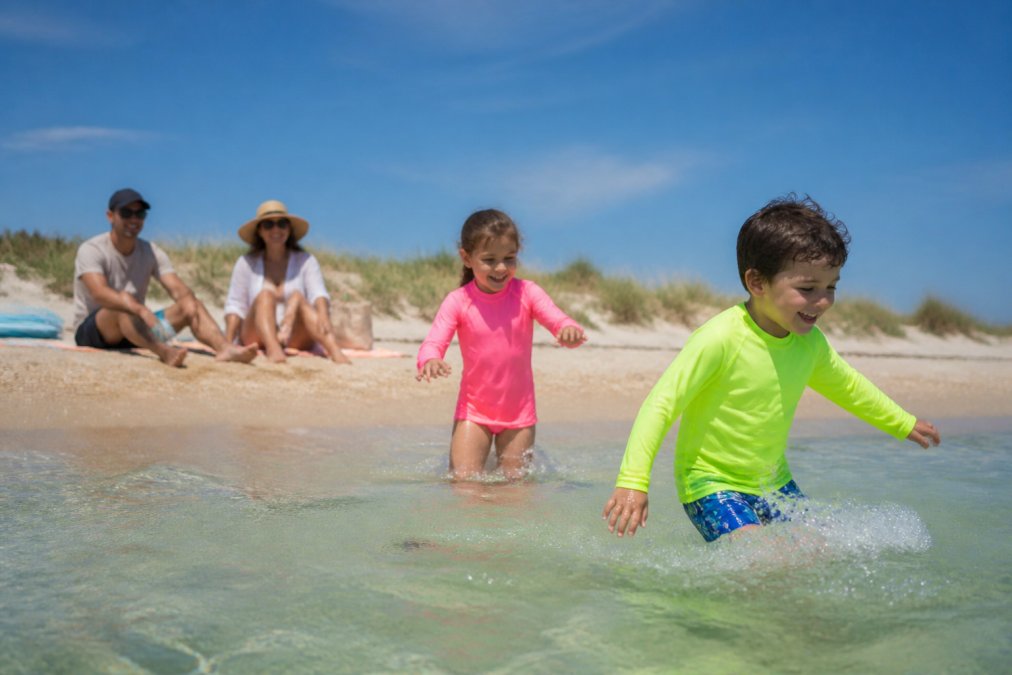
High-visibility swimwear serves a dual purpose: it protects skin from sun damage while making children instantly recognizable in water. Bright, neon colors cut through the blues and greens of ocean and pool environments, allowing parents and lifeguards to maintain visual contact even in crowded beach conditions.
Combined Protection Strategy
The most effective beach day approach combines UPF 50 clothing with strategic sunscreen use. Your child wears a UPF 50 rash guard for continuous sun protection and visibility, while sunscreen protects any exposed skin (face, hands, feet) that the garment doesn't cover. benefits of UV clothing.
For Bright & Bold Swimwear customers, this means selecting a UPF 30+ rash guard or one-piece suit as your foundation, then using sunscreen as a supplementary layer for exposed areas. Our Girls Long Sleeve Rash Guard Set and Boys Long Sleeve Rash Guard Swim Set both provide full-torso coverage with UPF 30+ protection.
Pros and Cons for Your Beach Day
UPF 50 Clothing: Advantages and Limitations
Advantages:
- Continuous protection without reapplication throughout the entire day
- Maintains effectiveness in water, eliminating the primary sunscreen failure point
- Provides high-visibility benefits that improve water safety
- Eliminates application technique errors
- No need to worry about sunscreen washing away during extended water play
- Particularly effective for young children who resist sunscreen application
Limitations:
- Leaves some skin exposed (face, hands, feet, parts of legs depending on garment style)
- Requires purchasing dedicated swimwear rather than using standard swimsuits
- Requires proper fit; gaps between garment and skin reduce protection effectiveness
- Durability of UPF rating depends on fabric care; washing and sun exposure gradually reduce effectiveness over time
Sunscreen: Advantages and Limitations
Advantages:
- Protects all exposed skin when applied correctly
- Works with any swimwear, no need to purchase specialized garments
- Provides flexibility in clothing choices
- Can be applied to face, ears, and other sensitive areas easily
Limitations:
- Requires frequent reapplication every two hours, and immediately after water exposure
- Effectiveness depends entirely on application technique
- Water exposure significantly reduces protection, even with water-resistant formulations
- Sweat washes away protection within minutes during active play
- Easy to miss spots: ears, back of neck, tops of feet, part lines
- Requires vigilant monitoring and reapplication discipline that's difficult to maintain with multiple young children
- Doesn't provide the visibility benefits of high-visibility swimwear
| Factor | UPF 50 Clothing | Sunscreen |
|---|---|---|
| Reapplication needed | No | Every 2 hours + after water |
| Water effectiveness | Maintains full protection | Degrades significantly |
| Application errors | Minimal impact | Major impact on actual protection |
| Exposed skin coverage | Depends on garment style | All exposed areas if applied correctly |
| Visibility benefit | Yes (high-visibility colors) | No |
| Initial cost | Higher (swimwear purchase) | Lower (sunscreen bottle) |
| Ongoing cost | Replacement every 1-2 years | Frequent repurchasing |
| Best for extended water time | Excellent | Poor |
The Best Approach: Combining Both Methods
The most effective strategy for beach days combines UPF 50 rash guards with targeted sunscreen application. Start with a UPF 50 rash guard or one-piece swimsuit as your foundation. This provides continuous, reliable protection for the largest areas of your child's body and maintains effectiveness in water. Then apply sunscreen to exposed areas: the face, ears, back of the neck, tops of feet, and any skin gaps between the garment and your child's body.

This combination reduces your sunscreen reapplication burden significantly. Instead of reapplying to your child's entire body every two hours, you're only reapplying to smaller exposed areas. The visibility benefit of high-visibility UPF clothing also enhances safety.
For families prioritizing sun protection and water safety, Bright & Bold Swimwear's rash guards and one-piece swimsuits are designed specifically for this combined-protection approach. Our garments use high-visibility neon colors that stand out in aquatic environments while providing UPF 30+ protection. The Girls Long Sleeve One Piece Swimsuit offers maximum coverage with a front zipper for easy on-and-off, while our Boys Long Sleeve Rash Guard Swim Set provides the same protection with a two-piece design that many boys prefer.
Conclusion
UPF 50 vs sunscreen isn't an either-or choice for beach days. UPF 50 rash guards excel at providing continuous, water-resistant protection that sunscreen cannot match. Sunscreen covers exposed skin that garments leave unprotected. Together, they create a comprehensive sun protection strategy far more reliable than either method alone.
When selecting UPF swimwear, choose garments specifically designed for extended water time, rash guards and one-piece suits with UPF 30+ ratings. Bright & Bold Swimwear creates high-visibility options that protect your child's skin while making them easier to spot in the water, combining sun safety with water safety in a single garment. Shop our best sellers to find the right fit for your family's beach days.
Beach days bring joy and memories, but sun damage and water safety concerns can create stress for parents. Bright & Bold Swimwear solves both through high-visibility UPF 30+ rash guards and swimsuits designed specifically for young swimmers. Our garments feature vibrant neon colors that help you keep visual contact with your child in water, while UPF protection shields their skin from harmful UV rays throughout the day, no reapplication needed. Start with one of our best-selling rash guard sets and experience the confidence that comes from knowing your child is protected and visible.
Frequently Asked Questions
Is UPF 50 better than sunscreen for beach days?
Neither is universally better, they protect differently. UPF 50 clothing provides continuous protection without reapplication and works reliably in water and with sweat. Sunscreen offers flexibility to cover exposed skin and face but requires reapplication every two hours or immediately after swimming. The best approach combines both: wear UPF 50 rash guards for core body coverage and apply sunscreen to exposed areas like the face, ears, and tops of feet. This layered strategy maximizes ultraviolet protection and reduces skin cancer risk.
Do I still need sunscreen if I wear a UPF 50 rash guard?
Yes. UPF 50 clothing covers your torso, arms, and legs, but your face, ears, neck, and the tops of your feet remain exposed to ultraviolet radiation. These areas are common sites for skin damage and melanoma. Apply broad-spectrum sunscreen (SPF 30 or higher) to all exposed skin and reapply every two hours or immediately after swimming. This combination ensures comprehensive protection during extended outdoor activity at the beach.
How often should sunscreen be reapplied at the beach?
Reapply sunscreen every two hours, or immediately after swimming, toweling off, or heavy sweating. Water-resistant sunscreen may last up to 80 minutes in water, but this varies by product and individual factors. Set a phone reminder to stay consistent. Don't skip reapplication just because you applied sunscreen in the morning, UV exposure accumulates throughout the day, and reapplication is essential for maintaining sun protection factor effectiveness. Pay special attention to areas that dry quickly, like shoulders and the tops of feet.
What makes high-visibility swimwear important for beach safety?
High-visibility swimwear in bright neon colors helps parents and lifeguards spot children quickly in water, especially in crowded beach environments where distractions are common. You can't supervise what you can't see. While high-visibility swimwear doesn't prevent drowning on its own, it reduces response time in emergencies by making children easier to locate. Pairing high-visibility rash guards with UPF 50 protection gives your child both visibility and sun safety, creating a more comprehensive approach to beach day protection.
This article was written using GrandRanker