

Is a Water Watcher Program Worth It for Family Vacations?
Table of Contents
- What Is a Water Watcher Program and Why Your Family Needs One
- How to Designate a Water Watcher for Your Family
- Water Safety Tips for Families on Vacation
- Best Swimming Gear for Toddlers: Making the Water Watcher's Job Easier
- Water Watcher Protocols for Different Vacation Environments
- Managing Supervision Rotation: Shift-Based Schedules That Work
- The Real Impact: Does a Water Watcher Program Actually Reduce Risk?
- Conclusion
Last Updated: August 24, 2026
What Is a Water Watcher Program and Why Your Family Needs One
A water watcher program is a designated supervision system where one responsible adult commits to actively watching children in or near water without distraction. This adult maintains constant vigilance, keeps visual contact at all times, and stays within arm's reach when supervising non-swimmers or weak swimmers.
Drowning happens silently and quickly, a child can slip underwater in seconds without noise or struggle. Most drowning incidents occur during family recreation, often with a caregiver present but distracted (the CDC). A water watcher program eliminates the dangerous assumption that "someone is watching" by designating one adult whose sole job is supervision. Everyone knows exactly who is responsible.
This system proves especially valuable on vacation. When families travel to beaches, lakes, or resort pools, supervision often falls apart due to multiple caregivers, unfamiliar environments, and relaxation mode. A structured water watcher program keeps that system intact, whether at your local pool or a vacation destination.
How to Designate a Water Watcher for Your Family
Choosing your water watcher starts with honest assessment. This person needs to be physically capable, mentally present, and comfortable saying no to distractions. A responsible adult, parent, grandparent, or older teen, works best.
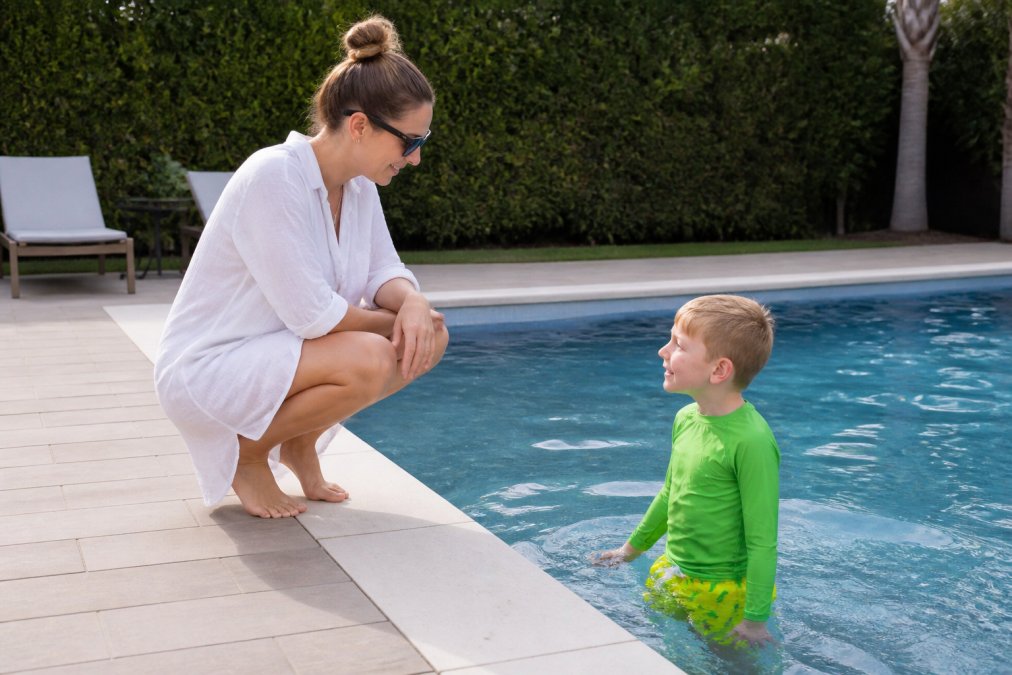
Explain what the role requires before arriving at your destination: no phone scrolling, no conversations that pull focus, no breaks. The water watcher stays in position for 15 to 30 minutes, then rotates out to prevent fatigue.
Document the rotation with a simple schedule showing who watches during which time blocks. Post it where everyone can see it. Brief your water watcher on each child's abilities, comfort level, and normal behavior so they can recognize warning signs.
Position matters critically. Your water watcher should sit or stand where they can see the entire water area without turning their head, positioned close enough to reach a child quickly, within arm's reach for non-swimmers.
Make the role official by telling your children who the water watcher is. Some families use a colored wristband or hat so kids know instantly who is "on duty."
Water Safety Tips for Families on Vacation
Establish a family water safety plan before your trip. Discuss what "staying together" means and agree on hand-holding rules for young children.
Teach water competency before vacation. Swimming skills create a safety layer, children who can float, tread water, and recover from slipping underwater have better odds if an accident happens.
Use personal flotation devices for non-swimmers. A properly fitted Coast Guard-approved life jacket is one of the most effective drowning prevention tools available. Bright & Bold Swimwear's Boys Long Sleeve Rash Guard Swim Set and Girls Long Sleeve Crop Top Rash Guard Set pair well with flotation devices, giving you visibility plus protection.


Scout the environment before children enter the water. Check for drop-offs, currents, or hazards. Ask staff about water conditions and dangers. Establish clear boundaries for where children can and cannot go.
Recognize trouble signs. Struggling swimmers often don't call for help. Look for unusual body position, silent mouth opening and closing, glazed eyes, or sudden stillness.
Best Swimming Gear for Toddlers: Making the Water Watcher's Job Easier
High-visibility swimwear directly supports your water watcher's job. A child in bright neon stands out instantly against blue water. Your water watcher can locate your child faster, even in peripheral vision.
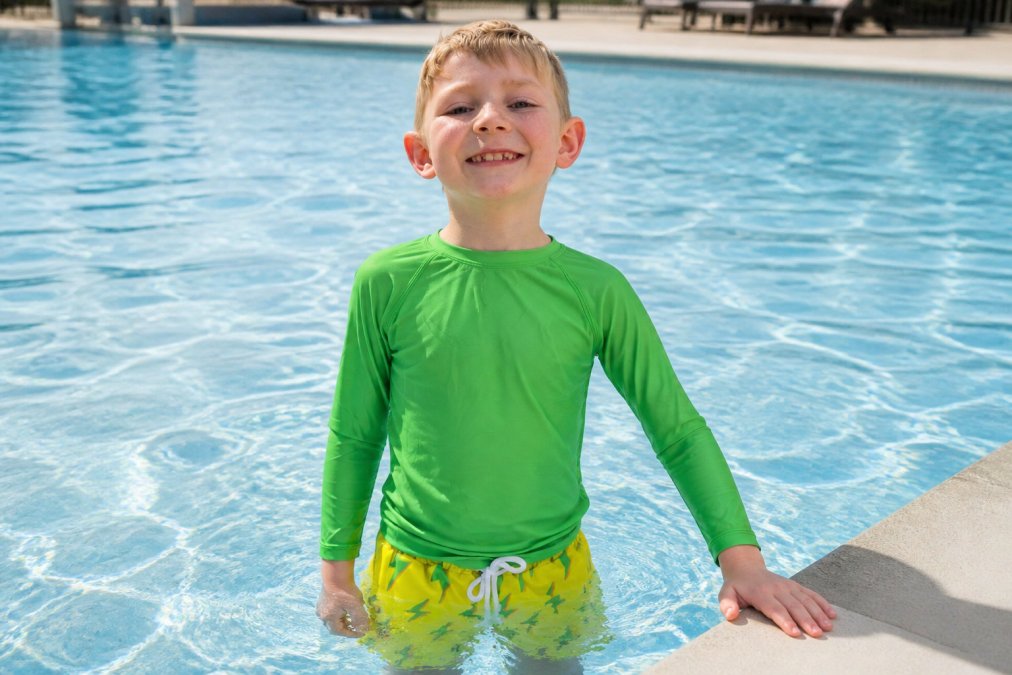
Bright & Bold Swimwear designs every color intentionally. Neon greens, oranges, and multi-color patterns aren't trends, they're visibility choices. When scanning a pool with dozens of children, a high-contrast suit cuts through visual noise.
Rash guards provide UPF 30+ sun coverage and create a visual marker that helps your water watcher identify your child quickly. Back-zip designs make changing and bathroom breaks easier during busy vacation days. family vacation planning.
A well-fitting suit that your child wants to wear keeps them in the water where your water watcher can see them. Consider a swim set pairing a rash guard with swim shorts or a swim skirt for flexibility and comfort.
Water Watcher Protocols for Different Vacation Environments
Supervision looks different depending on where you're swimming.
Resort and Public Pools: Position your group near the lifeguard station, but maintain your own active supervision. A lifeguard monitors the entire pool; your water watcher focuses only on your child.
Ocean Beaches: Waves, currents, and changing water depth create different challenges. Position your group in shallow water where your water watcher can maintain touch supervision. Consider using a personal flotation device for non-swimmers.
Lakes and Open Water: Visibility is often poor and water temperature can be cold. Your water watcher should stay even closer to children. Use high-visibility swimwear so your child stands out against murky water. Establish clear boundaries and don't let children wander into deep or unclear areas.
Vacation Rental Pools: Private pools often have no lifeguard. Your water watcher system is your only protection. Ensure your designated adult understands they're the sole safety layer.
Managing Supervision Rotation: Shift-Based Schedules That Work
Long vacation days exhaust even attentive water watchers. Fatigue reduces focus, which is why rotation works. Create a simple schedule listing all supervising adults and assigning time blocks of 20 to 30 minutes per person.
| Time Block | Water Watcher | Notes |
|---|---|---|
| 10:00-10:30 AM | Parent A | Full focus, no phone |
| 10:30-11:00 AM | Parent B | Full focus, no phone |
| 11:00-11:30 AM | Grandparent | Full focus, no phone |
| 11:30-12:00 PM | Parent A (rotation restarts) | Full focus, no phone |
Shorter rotations maintain sharper focus than longer ones. During breaks, off-duty watchers can relax, eat, or socialize. Communicate handoffs clearly by verbally confirming the next person is in position. Set a phone timer and switch when time's up, don't let shifts drift longer.
The Real Impact: Does a Water Watcher Program Actually Reduce Risk?
The evidence for active, focused supervision is clear. Drowning is preventable. Most drowning incidents involve a caregiver present but not actively supervising. A water watcher program directly addresses this gap.
According to the CDC's drowning prevention research, supervision is the most important factor in preventing child drowning. Children receiving consistent, attentive supervision have dramatically lower drowning risk.
Research from the American Academy of Pediatrics emphasizes that constant vigilance during water activities is essential. A water watcher program operationalizes this guidance into a concrete system with clear roles and time blocks.
Families report that the water watcher system reduces stress. When one person knows they're responsible for 30 minutes, they focus completely. Other adults can relax, knowing supervision is handled. The system adapts across age groups, supervision intensity changes, but the core principle remains: one person, full focus, clear responsibility.
High-visibility swimwear amplifies the impact. When your water watcher can spot your child instantly, response time improves. Bright & Bold Swimwear's designs make this easier by ensuring your child stands out.
A water watcher program transforms vacation water time from a source of anxiety into a manageable, safer experience. The system is simple: one adult, focused attention, clear time blocks, and rotation to maintain sharpness. When you pair this with high-visibility swimwear from Bright & Bold Swimwear, you're giving your water watcher every advantage.
Get started with Bright & Bold Swimwear's Best Sellers collection and build your water safety system before your next vacation. Bright neon colors, UPF 30+ protection, and thoughtful designs make supervision easier and water time more enjoyable for everyone.
Frequently Asked Questions
What does a water watcher do during family vacations?
A designated water watcher maintains constant vigilance over children in and around water, staying alert and free from distractions. Their sole responsibility is active supervision, watching for signs of distress, enforcing safety rules, and ensuring children remain within arm's reach when needed. Unlike a lifeguard, a water watcher is a caregiver or responsible adult who knows the specific children and can respond immediately to any water-related emergency.
Why is a water watcher program worth it if my child is taking swim lessons?
Swimming skills alone don't prevent drowning. Even children with water competency can panic, slip, or encounter unexpected hazards. A water watcher program adds a critical layer of protection through designated supervision and constant vigilance. Combined with proper swimming gear, like high-visibility swimwear that makes spotting easier, a water watcher system reduces drowning risk significantly and gives parents peace of mind during vacations.
How do I create an effective water safety plan for my family vacation?
Start by designating a primary water watcher and a backup. Establish clear boundaries for where children can swim and set rules about water-focused activities. Include communication signals for when children need help, assign specific supervision zones, and rotate watchers every 30 minutes to maintain focus. Document emergency contacts and nearest lifeguard location. Brief all caregivers, including grandparents or nannies, on the plan before the trip begins.
What's the best swimming gear to help a water watcher spot children quickly?
High-visibility swimwear in bright neon colors is one of the most effective tools. These colors stand out against the blues and greens of pools, lakes, and ocean water, making it easier for a water watcher to maintain visual contact. Pair this with properly fitting life jackets for non-swimmers and consider rash guards with UPF protection for extended sun exposure. The goal is gear that's both safe and comfortable enough that children will actually wear it all day.
This article was written using GrandRanker