

Is Pool Fencing Worth the Cost? A Complete Analysis
Table of Contents
- The Real Value of Pool Fencing: Beyond the Initial Price
- Pool Safety Barrier Requirements and Legal Compliance
- How Pool Fencing Reduces Drowning Risk
- Cost Breakdown: What You'll Actually Spend on Pool Fencing
- DIY vs Professional Pool Fence Installation: Which Saves Money Long-Term
- Insurance Savings and Home Resale Value Impact
- Best Swimming Gear for Toddlers: Layered Protection Beyond Fencing
- Maintenance Costs and Material Durability Over 10 Years
Last Updated: August 18, 2026
The Real Value of Pool Fencing: Beyond the Initial Price
Is pool fencing worth the cost? The answer depends on what you're measuring. Most families focus only on upfront expense, but the real calculation involves safety, legal compliance, insurance impact, and long-term home value. At Bright & Bold Swimwear, we understand that protecting children in and around water requires multiple layers of defense, and pool fencing is one critical component of that strategy.
Pool fencing serves as a critical safety barrier alongside active supervision, swimming lessons, and protective gear. When you factor in potential insurance savings, reduced liability risk, and documented impact on property resale value, the math often shifts dramatically in fencing's favor.
This guide breaks down the true cost of pool fencing, explores what drives expenses, and helps you determine whether this investment makes sense for your household. We'll also discuss how pool fencing works best as part of a layered protection strategy that includes high-visibility swimwear, active supervision, and swimming education.
Pool Safety Barrier Requirements and Legal Compliance
A pool safety barrier is a fence, wall, or structure that prevents unauthorized access to a swimming pool. Most states require four-sided fencing around residential pools, with specific height, spacing, and gate requirements to meet drowning prevention standards.
Common requirements include minimum fence height of 4 feet on all sides, maximum spacing between vertical bars or pickets (typically 4 inches or less), self-closing, self-latching gates with latches positioned high enough to be out of reach for young children, and no gaps underneath the fence that would allow a small child to crawl through.
The American Society for Testing and Materials (ASTM) publishes detailed safety standards for pool barriers that many states adopt into their building codes. Failing to meet these requirements can result in building code violations, fines, and increased liability if an accident occurs on your property.
Many homeowners underestimate the compliance piece. A fence that looks secure may not meet code requirements for latch height, spacing, or materials. When you hire a professional installer, compliance is typically built into the quote. DIY installations often miss these details, creating a false sense of security and legal exposure.
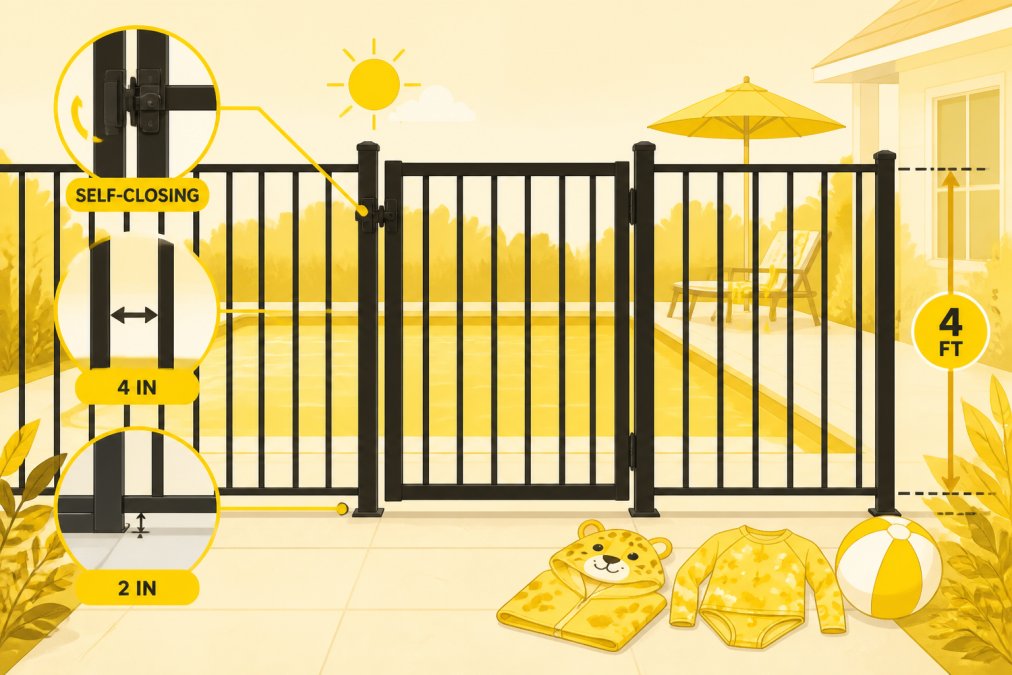
Contact your local authority having jurisdiction (AHJ) to confirm what applies to your property. Some areas require permits and inspections, which add to the timeline but ensure the installation meets standards.
How Pool Fencing Reduces Drowning Risk
Pool fencing doesn't eliminate drowning risk, but it reduces one specific pathway to tragedy: unattended access by young children. Drowning is the leading cause of unintentional injury death for children ages 1-4, and most incidents happen quickly and silently during non-swimming periods.
A properly installed four-sided fence creates a physical barrier that requires deliberate action to breach. This delay matters, it gives caregivers time to notice a child is missing and intervene before they reach the water. For toddlers and preschoolers, this barrier is particularly valuable because young children lack the judgment to understand water danger.
Research shows that fencing reduces the risk of unintentional drowning for young children. However, fencing works best as part of a layered approach that includes active supervision, swimming lessons, CPR training, and rescue equipment. The self-closing, self-latching gate is the most critical component, as it ensures the barrier remains effective even when caregivers are momentarily distracted.
Cost Breakdown: What You'll Actually Spend on Pool Fencing
Pool fencing costs vary dramatically based on material choice, pool size, local labor rates, and installation complexity. Understanding the component costs helps you make informed decisions.
Material Options and Their Price Ranges
Different fencing materials offer different balances of durability, maintenance, and appearance.
Aluminum Fencing is the most popular choice for residential pools. It's lightweight, corrosion-resistant, and doesn't require painting. Aluminum doesn't rot, warp, or splinter, and it meets code requirements easily with proper post spacing.
Vinyl Fencing offers low maintenance and resistance to rot without requiring painting. It's a solid choice for homeowners who want minimal upkeep.
Wrought Iron Fencing is the premium option, offering aesthetic appeal and exceptional durability. Wrought iron requires regular maintenance to prevent rust and repainting, which adds to long-term costs.
Tempered Glass Fencing provides unobstructed views while maintaining a safety barrier. Glass fencing costs significantly more than other materials and requires professional installation due to specialized hardware and safety requirements.
Wood Fencing is the most affordable option but requires the most maintenance. Wood must be treated to resist rot and splinters, repainted or stained regularly, and inspected for damage.
| Material | Maintenance | Durability | Best For |
|---|---|---|---|
| Wood | High | 10-15 years | Budget-conscious, short-term use |
| Vinyl | Low | 15-20 years | Low-maintenance preference |
| Aluminum | Very Low | 20-30+ years | Most residential pools |
| Wrought Iron | High | 30+ years | Aesthetic priority, high-end homes |
| Tempered Glass | Medium | 20-25 years | Premium, visibility priority |
Labor Costs and Installation Factors
Installation labor typically represents 40-60% of the total pool fencing project cost, depending on complexity. Several factors influence labor expenses: pool size and perimeter, ground conditions (soft soil, slopes, or rocky terrain increase difficulty), material selection, gate complexity, and permit and inspection requirements.
Labor costs vary significantly by region. Urban areas and regions with high cost of living typically have higher labor rates than rural areas. Spring and early summer are peak pool season, when installers charge premium rates due to high demand.
DIY vs Professional Pool Fence Installation: Which Saves Money Long-Term
The DIY versus professional installation decision hinges on skill level, time availability, tool access, and risk tolerance for code compliance.
DIY Installation saves on labor costs, which can represent 40-60% of the total project expense. However, building code compliance is the biggest risk. Missing code requirements for gate latch height, post spacing, or material specifications creates liability exposure if an accident occurs. If your installation fails inspection, you'll need to hire a professional to fix it, eliminating any cost savings.
Professional Installation handles permits, inspections, and code compliance. A licensed installer has experience with local requirements and includes a warranty on workmanship. If problems arise, the installer is responsible for corrections. Professional installers also have specialized tools and equipment, particularly for challenging installations like concrete decking that requires core drilling.
A practical middle ground exists: hire a professional for the most complex parts (gate installation, post setting, compliance verification) and handle simpler tasks yourself.
Insurance Savings and Home Resale Value Impact
Pool fencing affects your financial picture in ways that extend beyond the installation cost. Insurance and resale value represent significant financial factors that often justify the fencing investment.
Many homeowners insurance policies charge higher premiums for pools without proper fencing, while some insurers offer premium discounts specifically for compliant pool barriers. Additionally, a fence reduces your liability exposure. If an incident occurs, your legal position is stronger with a compliant fence than without one.
Homes with properly installed, well-maintained pool fencing appeal to families with young children by demonstrating safety commitment. Real estate professionals report that proper pool fencing can increase buyer confidence and property value perception, particularly in family-oriented neighborhoods. A pool without a fence may actually reduce property value in some markets because buyers worry about liability and code compliance issues.
Best Swimming Gear for Toddlers: Layered Protection Beyond Fencing
Pool fencing is one layer of protection, but it works best alongside other safety measures. For young children, high-visibility swimwear provides an additional critical layer by ensuring caregivers and lifeguards can quickly locate children in the water.
High-visibility swimwear uses bright, distinctive colors, neon orange, hot pink, vibrant yellow, that stand out dramatically against water backgrounds. This visibility advantage is particularly important in crowded pools, beaches, or when multiple children are present.
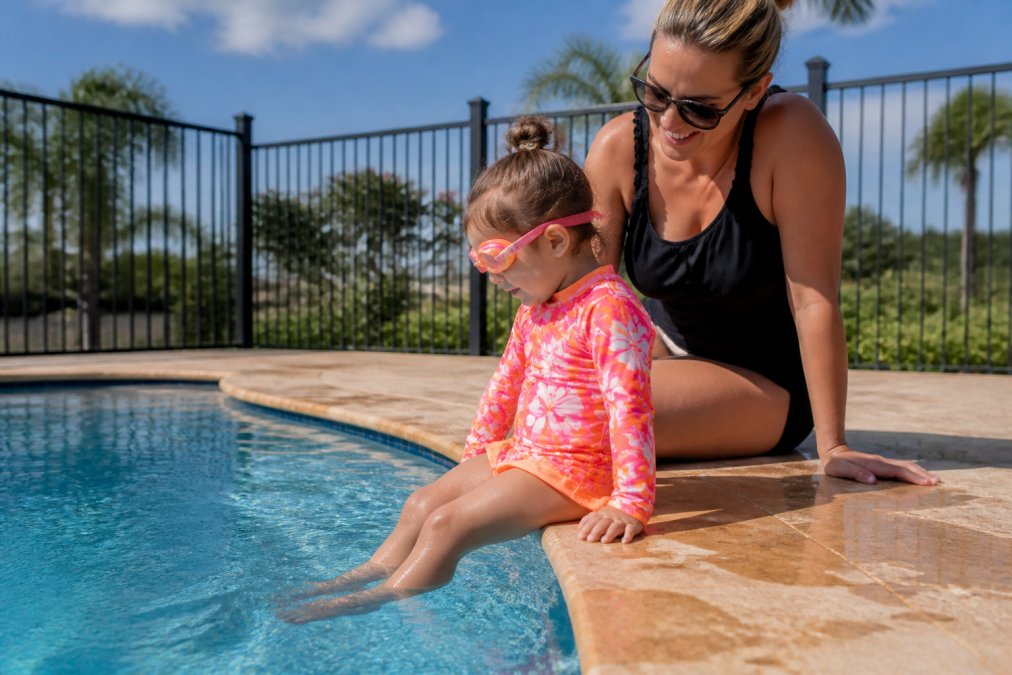
Bright & Bold Swimwear's collection of girls swimsuits and boys swimsuits specializes in high-visibility designs created specifically for young children. The collection features vibrant colors that make children easily identifiable in water while providing UPF 30+ sun protection. Our swim accessories and rash guards add another layer by providing sun protection and reducing thermal shock when entering cool water.
The combination of high-visibility swimwear, rash guards, and proper supervision creates a comprehensive protection strategy. While pool fencing prevents unauthorized access, high-visibility gear ensures that authorized swimmers remain visible to caregivers at all times.
Maintenance Costs and Material Durability Over 10 Years
The initial installation cost is just the beginning. Over a 10-year period, maintenance, repairs, and potential replacement represent significant expenses that vary dramatically by material choice.
Aluminum Fencing requires minimal maintenance, occasional cleaning removes dirt and debris. Most aluminum fences last 20-30+ years with proper care. Over 10 years, maintenance costs are typically limited to cleaning and occasional hardware replacement.
Vinyl Fencing also requires minimal maintenance and typically lasts 15-20 years. Over 10 years, you might need to replace a few panels if damage occurs, but overall maintenance is low.
Wood Fencing demands regular maintenance. Annual or biennial staining or painting is necessary to prevent rot and splinter development. Wood typically requires complete replacement within 10-15 years, making the true long-term cost significantly higher than the initial installation price.
Wrought Iron Fencing requires regular maintenance to prevent rust, but can last 30+ years with proper care.
Tempered Glass Fencing requires regular cleaning to maintain visibility but minimal structural maintenance, with 20-25 years typical lifespan.
| Material | 10-Year Maintenance | Typical Lifespan | Replacement Likelihood in 10 Years |
|---|---|---|---|
| Wood | High | 10-15 years | Likely partial or full |
| Vinyl | Low | 15-20 years | Unlikely unless damaged |
| Aluminum | Very Low | 20-30+ years | Unlikely |
| Wrought Iron | High | 30+ years | Unlikely |
| Tempered Glass | Low-Medium | 20-25 years | Unlikely unless damaged |
When calculating the true cost of pool fencing, add the 10-year maintenance estimate to the installation cost. A wood fence that costs less upfront may cost more over 10 years when maintenance is factored in. Aluminum costs more initially but typically costs less overall when maintenance is considered.
Pool fencing is worth the investment when you view it as a commitment to safety, legal compliance, and property value rather than a simple expense. The combination of drowning risk reduction, insurance savings, resale value impact, and liability protection often justifies the investment. When paired with high-visibility swimwear, proper supervision, and swimming education, pool fencing becomes part of a comprehensive protection strategy that keeps children safe in and around water. Explore our collection of high-visibility swimsuits designed to complement your safety barriers and ensure your family's pool time is both fun and protected.
Frequently Asked Questions
Does a pool fence actually reduce drowning risk for young children?
Yes. A four-sided isolation fence that completely surrounds the pool is one of the most effective barriers against unintentional drowning. When combined with supervision, swimming lessons, and high-visibility gear like bright swimsuits, fencing provides critical protection. Drowning is the leading cause of unintentional injury death for children ages 1-4, and barriers that prevent unsupervised access are proven to reduce this risk significantly.
What are the legal pool safety barrier requirements in my area?
Most states require four-sided fencing around residential pools, with specific height requirements (typically 4 feet), gate specifications (self-closing and self-latching), and post spacing standards. Many jurisdictions follow ASTM standards for residential pool barriers. Building codes vary by location, so check with your local building department or city code enforcement office for exact requirements in your area before installation.
Can I save money with DIY pool fence installation, or should I hire a professional?
DIY installation can reduce labor costs, but professional installation ensures compliance with local building codes, proper post spacing, correct gate mechanics, and warranty coverage. Mistakes in installation may require costly corrections or fail inspection. If you have construction experience, DIY is viable; otherwise, professional installation protects your investment and provides peace of mind that your barrier meets safety standards.
Will installing a pool fence lower my homeowner's insurance premiums?
Many insurance companies offer discounts for homes with compliant pool barriers, though the discount amount varies by insurer and location. Some policies may require fencing as a condition of coverage. Contact your insurance agent to ask about pool safety discount opportunities; the savings over several years can offset a portion of the fencing cost, making the investment more financially attractive.
What's the best way to layer pool safety protection for young children?
Combine multiple safeguards: a four-sided fence with self-closing gate, constant adult supervision, swimming lessons, CPR training, and high-visibility swimwear that helps caregivers spot your child instantly in the water. Bright, vibrant colors make children stand out, especially in busy pool environments or from a distance. This layered approach, barrier, visibility, skills, and supervision, provides the strongest protection against drowning accidents.
This article was written using GrandRanker