

Why Touch Supervision Is Important at Pool
Table of Contents
- What Touch Supervision Means
- Why Touch Supervision Is Critical for Drowning Prevention
- Active Adult Supervision: The Foundation of Water Safety
- Building Layers of Pool Protection Around Your Child
- The Water Watcher Program and Designated Supervision
- Drowning Prevention Tips for Every Pool Visit
- Common Supervision Mistakes Parents Make
- Making Touch Supervision Work in Real Life
Last Updated: August 16, 2026
What Touch Supervision Means
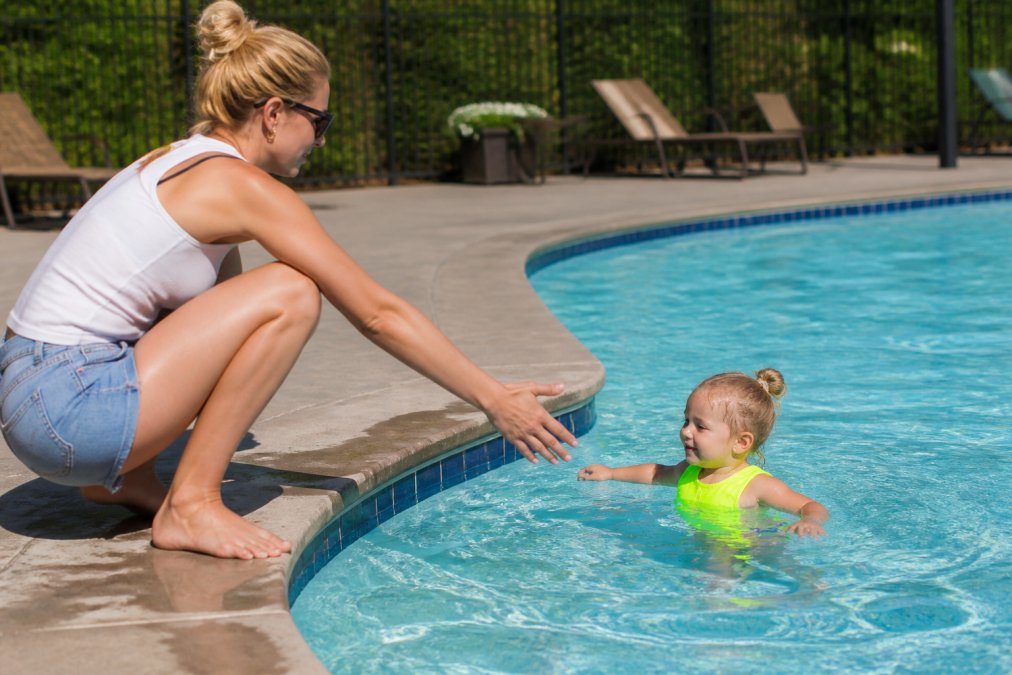
Touch supervision is keeping a child within arm's reach while they're in or near water, maintaining constant physical contact or the ability to grab them instantly. It's the gold standard of water safety for young children, particularly ages 2-7 who cannot reliably swim or respond to emergencies. Unlike passive watching from across the pool, touch supervision means you're positioned close enough to reach your child without taking a step.
This distinction matters enormously. A parent sitting poolside while a child plays in shallow water isn't practicing touch supervision if there's any gap between them. A caregiver scrolling through their phone, even while positioned nearby, isn't providing the constant vigilance that touch supervision demands.
At Bright & Bold Swimwear, we emphasize touch supervision as the foundation of water safety because visibility and proximity work together. When your child wears high-visibility swimwear in bright neon colors, you can spot them instantly in crowded pools. Combined with touch supervision, this creates a powerful safety layer that dramatically reduces drowning risk.

Why Touch Supervision Is Critical for Drowning Prevention
Drowning happens silently and fast. Most people imagine dramatic splashing and yelling, but a child can slip underwater and lose consciousness in seconds, often without noise. Touch supervision is critical because it guarantees you can intervene before a child's situation becomes fatal.
Proximity equals response time. If your hand is within reach, you can pull your child to safety before they inhale water. Research consistently shows that drowning is the leading unintentional injury death for children ages 1-4, and the vast majority of these deaths occur when an adult was present but not providing active supervision.
Touch supervision also prevents the "supervision gap," that moment when responsibility shifts between caregivers and no one is actively watching. At public pools, lifeguards provide an important safety layer, but they cannot replace parental responsibility. A lifeguard monitoring dozens of swimmers cannot provide the same level of attention you can give your own child.
When you combine touch supervision with high-visibility swimwear from Bright & Bold Swimwear, you create redundancy in your safety system. If your child somehow slips from your reach, the vivid colors make them instantly identifiable in the water, helping both you and any lifeguard respond faster.
Active Adult Supervision: The Foundation of Water Safety
Active adult supervision means you are fully present, undistracted, and focused on your child's safety while they're in or near water. This goes beyond simply being at the pool, your phone is put away, your attention is on the water, and you're positioned to respond instantly to any emergency.
The difference between passive and active supervision is the difference between life and death. Passive supervision creates dangerous gaps. Active supervision requires constant vigilance. Your eyes should be on your child nearly 100% of the time they're in the water.
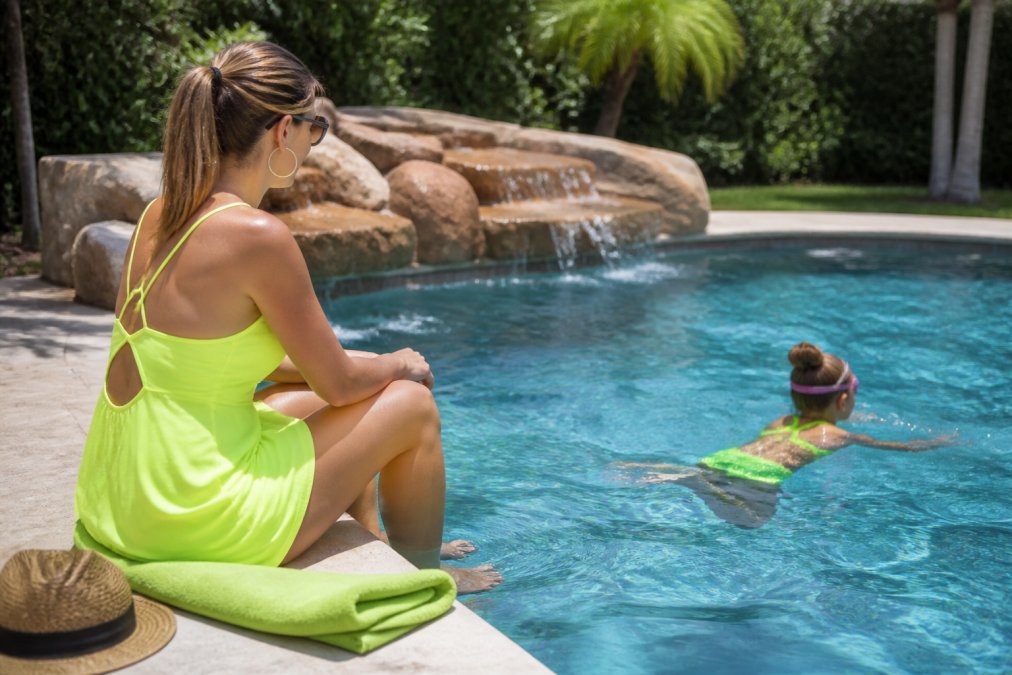
Supervision fatigue is real. After 15-20 minutes of focused watching, your attention naturally drifts. This is precisely when accidents occur. To maintain active adult supervision, rotate responsibilities if multiple adults are present. One person watches while others relax. Switch every 15-20 minutes so the designated watcher stays fresh. Remove distractions: phones go in a bag, not in your hand. Position yourself where you can see your child's face and body at all times.
Building Layers of Pool Protection Around Your Child
Layered pool protection means you're not relying on a single safety measure. Instead, you're stacking multiple safeguards so that if one fails, others catch the risk.
The first layer is active adult supervision and touch supervision. This is non-negotiable and irreplaceable.
The second layer is water competency. Teaching your child to swim, or at least to float and move toward safety, reduces drowning risk. However, swimming ability is not a guarantee. Even strong swimmers can panic or slip.
The third layer is visibility. When your child wears bright neon colors, you can locate them instantly in crowded pools. The Bright & Bold Swimwear collection offers UPF 30+ protection in vibrant colors specifically designed to be seen. Rash guard sets and one-piece options provide both sun protection and visibility.
The fourth layer is pool rules and environmental controls. Establish clear rules: no running, no diving in shallow water, no going to the deep end without an adult. Keep rescue equipment poolside and know CPR.
The fifth layer is lifeguard presence at public pools, though lifeguards should never replace your own supervision.
When these layers work together, active supervision, visibility, water competency, rules, and lifeguard presence, you create a comprehensive safety system that dramatically reduces risk.
The Water Watcher Program and Designated Supervision
The Water Watcher program is a simple but powerful framework for managing supervision responsibility, particularly in group settings or when multiple adults are present. One adult is designated as the active watcher, and everyone else knows that person is responsible for constant visual monitoring.
A Water Watcher wears a special badge, armband, or simply has a clear designation that everyone recognizes. Their only job is to watch the water. After a set time, typically 15-20 minutes, they pass the responsibility to another adult.
The Water Watcher program works because it eliminates the "diffusion of responsibility" problem. When one person is clearly designated, accountability is clear. To implement it, designate the first watcher before anyone enters the water. Set a timer for 15 minutes. When the timer goes off, the current watcher signals the next designated watcher, who takes position. No one leaves their post until the next watcher is in position and ready.
Many swim schools and community pools now use the Water Watcher program as part of their safety protocols. You can implement it informally at home or family events by simply designating one adult as the watcher and rotating every 15-20 minutes.
Drowning Prevention Tips for Every Pool Visit
Drowning prevention requires a practical, systematic approach to every pool visit.
Establish a supervision zone. Before your child enters the water, identify the area where they'll be playing. Position yourself so you have a clear, unobstructed view. If you're in the water, stay close enough to touch them at all times.
Dress your child in high-visibility swimwear. The Bright & Bold Swimwear collection offers rash guard sets and one-piece options in neon colors that make children instantly visible. This is especially important at crowded public pools.
Remove all distractions. Before you get to the pool, commit to putting your phone away, in a locker, in your bag, out of reach. Distractions are the primary reason supervision fails.
Know the water depth and your child's abilities. Some children are confident in shallow water but panic in deeper areas. Know exactly where your child can safely play based on their height and swimming ability.
Teach basic water safety rules. No running on the deck. No pushing or dunking. No going to the deep end without permission. No playing in the water without an adult present.
Learn CPR and basic water rescue. If something goes wrong, knowing CPR could save your child's life. Many community centers offer CPR certification courses.
Watch for signs of distress. A child in distress may not yell or splash. They might be silent, with their mouth at water level, eyes wide, unable to call for help. Trust your instincts.
Establish clear communication with other caregivers. If your child is with a nanny, grandparent, or other caregiver, make sure they understand your supervision expectations and the Water Watcher protocol.
Common Supervision Mistakes Parents Make
Understanding common mistakes helps you avoid them.
Assuming lifeguards replace parental responsibility. Lifeguards provide an important safety layer, but they cannot watch your child the way you can. Never assume a lifeguard is watching your child specifically.
Overestimating your child's swimming ability. Swim lessons reduce risk but don't eliminate it. Even strong swimmers can panic or get into trouble.
Supervision by proximity instead of active attention. Being at the pool isn't the same as supervising. Many drowning deaths occur when a parent was present but distracted.
Switching supervision without confirming handoff. Always confirm the handoff explicitly. Use the Water Watcher protocol to make responsibility clear.
Underestimating how fast drowning happens. A child can lose consciousness in seconds. By the time you notice something's wrong, it may be too late.
Letting supervision fatigue lower your guard. Plan for this by rotating watchers. Don't expect yourself to maintain perfect focus for an hour straight.
Ignoring the importance of visibility. A child in dark or dull-colored swimwear is harder to spot in a crowded pool. High-visibility swimwear like Bright & Bold's neon options makes a real difference.
Making Touch Supervision Work in Real Life
Touch supervision requires practical strategies to maintain, especially with active young children learning to swim.
Start early and make it normal. If you begin touch supervision when your child is young, they'll expect it. As they grow and their swimming ability improves, you can gradually increase distance, but the foundation of supervision remains.
Position yourself strategically. If you're in the water, stay at your child's level. If you're on the deck, sit at the edge with your feet in the water. This positioning allows you to reach your child instantly.
Make supervision interactive. Play with your child in the water. Practice floating. Encourage them to jump to you. This keeps your attention focused and makes water time fun.
Use high-visibility gear as a support system. When your child wears bright neon swimwear from Bright & Bold, you can maintain visual contact even if you momentarily look away.
Communicate expectations clearly. Tell your child exactly what you expect: "You stay in the shallow end. I'm right here watching. If you need help, you tell me."
Plan for supervision rotations. If you're at a pool with other adults, establish a rotation system. Designate watchers, set timers, and switch every 15-20 minutes.
Recognize your limits. If you're tired, stressed, or distracted, acknowledge it. Either focus fully on supervision or wait for a time when you can.
Adjust as your child grows. As your child becomes a stronger swimmer, you can gradually increase supervision distance. But even older children benefit from knowing an adult is watching and ready to help.
Touch supervision is the single most effective drowning prevention strategy available to parents. It requires commitment, constant attention, and sometimes uncomfortable proximity to your child in the water. But the payoff is simple: your child comes home safe. Combined with high-visibility swimwear that makes children instantly recognizable, water competency training, and clear safety protocols, touch supervision creates a comprehensive protection system. At Bright & Bold Swimwear, we've built our entire mission around supporting parents who take water safety seriously. Our high-visibility rash guard sets and one-piece swimsuits are designed to work alongside your supervision efforts, making it easier to keep your child visible and safe. Start with touch supervision, add visibility, and commit to active adult supervision every single time your child is near water. These fundamentals don't change, they're the foundation of keeping children safe in aquatic environments.
Frequently Asked Questions
What is the difference between touch supervision and watching a child at the pool?
Watching means you can see your child, but touch supervision means you are within arm's reach and can physically reach them in seconds. Touch supervision is the gold standard because drowning happens silently and quickly, often in less than two minutes. A child can slip underwater without making noise or splashing. Being at arm's reach lets you respond instantly if your child panics, slips, or gets into trouble. Watching from across the pool or from a chair gives you no time to react.
At what age can children be left unsupervised in a pool?
Children should never be left completely unsupervised in or near a pool, regardless of age or swimming ability. Even strong swimmers can experience sudden cramps, panic, or accidents. The American Academy of Pediatrics recommends constant, attentive supervision for children through age 12. For very young children (ages 1-4), touch supervision at arm's reach is essential. For older children and teens, active supervision combined with other safety layers, like lifeguards, buddy systems, and CPR-trained adults, significantly reduces drowning risk.
Why is active supervision critical for drowning prevention?
Active supervision means you are focused, alert, and positioned to respond immediately. Drowning is the leading cause of unintentional injury death for children ages 1-4, and most drownings happen in seconds without warning signs. A child can slip underwater silently while you think they're playing. Active supervision eliminates distractions like phones, conversations, or reading. You watch for signs of distress, know where every child is at all times, and can reach them instantly. This constant vigilance is the single most effective way to prevent drowning.
How can parents minimize distractions while supervising swimmers?
Put your phone away completely, not just on silent, but out of sight. Avoid conversations that pull your attention from the water. If you're supervising multiple children, use a buddy system or rotate supervision with another adult. Never leave the pool area, even briefly. Wear polarized sunglasses to reduce glare and see underwater more clearly. Position yourself where you have a clear view of the entire pool and can reach any child within seconds. If you feel tired or distracted, ask another adult to take over supervision. Your full attention is your child's best protection.
This article was written using GrandRanker